Airbag Fabric for Silage Coverage: China Wholesale Supplier
Higher GSM does not guarantee airtight integrity.
To prevent silage spoilage, buyers must prioritize high-tenacity polyester base fabrics with double-sided PVC dip-coating over standard tarpaulin weights. The critical specification is not just total weight, but the tensile strength of the weave and the continuity of the coating to ensure an anaerobic seal under tension. Standard cargo covers lack the seam peel strength required for airbag inflation and will rupture during filling or degrade rapidly under tropical UV exposure.
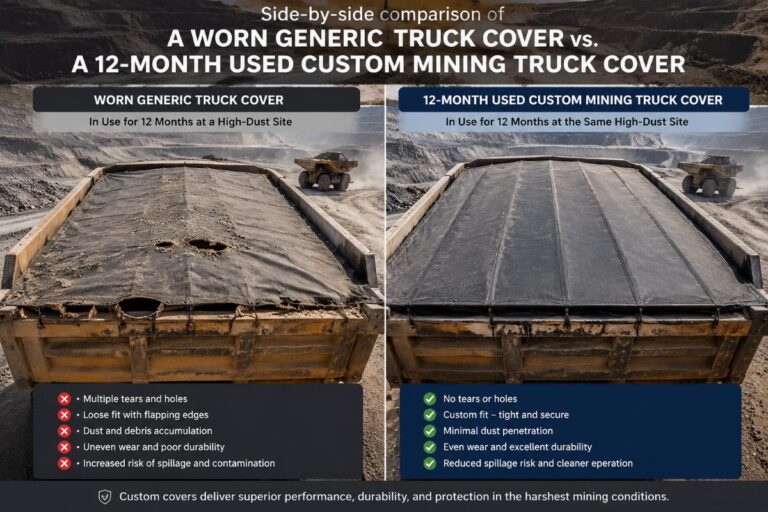
The transition from general-purpose tarps to specialized agricultural containment materials often happens after a costly failure. I recall standing in a dusty field in northern Nigeria, watching a farm manager kick at the remnants of what was supposed to be a sealed fermentation system. He had used a standard 680gsm PVC sheet, commonly sold for truck covers, to create silage bags. The logic seemed sound on paper: it was waterproof and heavy. However, the material was never designed for the constant radial tension of an inflating airbag or the intense ultraviolet radiation of the Sahel region. Within two months, the plasticizers had migrated, the fabric became brittle, and micro-cracks formed along the weld lines. Oxygen seeped in, ruining thousands of tons of feed. That scene reshaped how I evaluate material specifications, moving beyond simple weight metrics to understand the mechanical demands of airbag fabric for silage coverage.
Why Do Standard Tarps Fail as Silage Airbags?
General cargo tarps are engineered for static weather protection, not dynamic pneumatic pressure.
The fundamental error in many procurement decisions is assuming that waterproof equals airtight. Silage fermentation requires a strictly anaerobic environment. Any oxygen permeation leads to aerobic bacterial growth, heating, and mold. Standard tarpaulins often use a calendered coating process where PVC paste is pressed onto the fabric. This can leave microscopic pinholes or uneven thickness, which are acceptable for rain defense but catastrophic for gas barrier performance.
Furthermore, the mechanical stress on a silage airbag is unique. As the bag fills, the fabric stretches radially. Standard woven polyethylene or low-grade polyester bases have high elongation rates. When they stretch, the coating cracks. In contrast, technical airbag fabric for silage coverage utilizes high-tenacity polyester yarns with low elongation. This ensures the fabric maintains its structural integrity without deforming excessively, keeping the coating intact.
| Failure Mode | Standard Tarpaulin Behavior | Silage-Grade Airbag Fabric Behavior |
|---|---|---|
| Coating Adhesion | Prone to delamination under cyclic stretching | Chemically bonded via dip-coating for uniform adhesion |
| UV Resistance | Surface chalking and brittleness within months | Stabilized formulation resisting prolonged solar exposure |
| Seam Integrity | Heat-welded seams may peel under internal pressure | Reinforced welding with high peel strength retention |
| Oxygen Permeability | Micro-porous due to calendering gaps | Dense, continuous barrier preventing gas exchange |
[NEED_CITE: comparison of oxygen permeability rates between calendered and dip-coated PVC fabrics]
A buyer from a cooperative in Latin America once reported that their initial batch of silage covers burst at the seams during the first fill. Upon inspection, we found that the seam peel strength was sufficient for hanging vertically as a curtain but failed when subjected to the outward pressure of an expanding airbag. This highlights why generic specifications are insufficient. The manufacturing process for airbag fabric for silage coverage must prioritize seam weld compatibility, ensuring the bond between fabric panels is as strong as the material itself.
Key Specifications for Silage-Grade Airbag Fabric
Focus on tensile strength and coating continuity rather than just GSM.
When sourcing airbag fabric for silage coverage, the weight per square meter (GSM) is often the first number buyers check. While a higher GSM generally indicates more material, it does not automatically translate to better performance if the base fabric is weak. A heavy fabric with a loose weave will still tear under point loads. The core requirement is a tight, high-density weave of high-tenacity polyester. This provides the necessary tear strength and dimensional stability.
The coating process is equally critical. Double-sided PVC dip-coating ensures that the polymer penetrates the weave, creating a monolithic structure. This prevents the "wicking" effect where moisture or gases travel through the capillaries of the fabric threads. For tropical climates, the PVC compound must include robust UV stabilizers and anti-migratory plasticizers. Cheap plasticizers evaporate or leach out over time, causing the fabric to harden and crack.
| Specification Parameter | Low-End Generic Cover | Premium Silage Airbag Fabric |
|---|---|---|
| Base Fabric | Standard Polyester or PP | High-Tenacity Polyester with Tight Weave |
| Coating Method | Calendered or Single-Side | Double-Sided Dip-Coating |
| UV Stabilization | Basic or None | High-Performance Additives for Tropical Climates |
| Cold Crack Resistance | Poor below freezing | Flexible at low temperatures |
| Seam Peel Strength | Standard | Enhanced for Pneumatic Pressure |
[NEED_CITE: industry standards for tensile strength in agricultural containment fabrics]
In our production facilities, we adjust the PVC formulation based on the end-use environment. For clients in regions with extreme temperature fluctuations, we increase the flexibility agents to prevent cold cracking. This attention to chemical composition is what separates a disposable cover from a durable airbag fabric for silage coverage solution. A distributor in West Africa noted that after switching to a fabric with enhanced UV stabilizers, the lifespan of their silage bags extended significantly, reducing the frequency of replacement purchases and minimizing downtime during harvest seasons.
How to Verify Quality Before Bulk Order?
Request specific test reports for seam strength and UV resistance, not just general datasheets.
Many suppliers provide generic certificates that list basic physical properties like weight and width. These are insufficient for verifying the suitability of airbag fabric for silage coverage. Buyers should demand test reports that specifically address tear strength, seam peel strength, and UV aging resistance. The ISO and ASTM standards provide methodologies for these tests, and reputable manufacturers will have data from accredited laboratories.
One effective verification method is to request a sample and perform a simple bend test at low temperatures. If the sample cracks when folded after being chilled, it will likely fail in cooler nights or during storage in temperate zones. Additionally, inspect the edge of the fabric. A high-quality dip-coated fabric will have a smooth, uniform edge where the coating fully encapsulates the yarns. If you can see individual threads protruding or if the coating looks uneven, the barrier integrity is compromised.
- Check Seam Weld Samples: Ask for a welded sample piece. Try to peel the seam apart by hand. It should require significant force and ideally tear the fabric before the weld separates.
- Verify UV Hours: Look for data indicating resistance to thousands of hours of UV exposure. Generic tarps may only withstand a few hundred hours before degrading.
- Assess Coating Uniformity: Hold the fabric up to a light source. Pinholes or thin spots will be visible as brighter areas. Consistent opacity indicates a uniform coating layer.
[NEED_CITE: standard testing protocols for coated textile durability]
A procurement officer for a large agricultural group once shared that they began requiring third-party lab tests for every container load. This rigorous approach helped them identify a batch where the UV stabilizer concentration was inconsistent. By catching this early, they avoided a potential disaster where hundreds of silage bags could have failed simultaneously. This level of due diligence is essential when selecting airbag fabric for silage coverage for large-scale operations.
Cost vs. Lifespan: Calculating True ROI
Higher initial investment in premium fabric reduces spoilage losses significantly.
The price difference between standard PVC tarpaulin and specialized airbag fabric for silage coverage can be noticeable. However, evaluating cost solely on a per-square-meter basis ignores the economic impact of silage spoilage. If a cheaper cover fails and allows oxygen to enter, the resulting mold can ruin the entire contents of the silage bag. The value of the lost feed often dwarfs the savings on the fabric.
Moreover, durable fabric lasts for multiple seasons. A high-quality, UV-stabilized airbag cover can be reused several times if handled correctly. In contrast, a brittle, low-grade cover may need replacement after a single season, especially in harsh climates. When calculating return on investment, buyers should factor in the cost of replacement labor, disposal of spoiled feed, and the purchase of new covers.
- Spoilage Prevention: Effective anaerobic sealing preserves nutrient content and volume.
- Reusability: Robust fabrics withstand multiple filling and emptying cycles.
- Operational Efficiency: Fewer failures mean less emergency maintenance and monitoring during fermentation.
[NEED_CITE: economic analysis of silage loss due to poor covering materials]
We have seen cooperatives in Southeast Asia shift their budget allocation from buying larger quantities of cheap material to investing in fewer, higher-specification units. The result was a net reduction in annual spending because the frequency of purchase dropped, and the quality of the preserved silage improved. This strategic shift underscores the importance of viewing airbag fabric for silage coverage as a critical component of the storage system, not just a disposable accessory.
Conclusion
Selecting the right material prevents costly aerobic spoilage and ensures feed quality.
Standard tarpaulins lack the tensile strength, coating continuity, and UV resistance required for silage airbags. Buyers must prioritize high-tenacity polyester bases and double-sided dip-coated PVC to maintain an anaerobic seal. Verifying seam strength and UV stability through specific test reports is essential before committing to bulk orders. Investing in durable airbag fabric for silage coverage reduces long-term operational costs by minimizing spoilage and extending product lifespan.