Precision Coating Control — 610gsm weight maintained across full production runs with in-line coating weight verification per roll.
Technical Specifications
| Parameter | Value |
|---|---|
| Product Type | PVC Coated Tarpaulin Fabric |
| Weight | 610gsm (18oz) |
| Width Range | 0.914m to 3.42m |
| Mesh Count Options | 20×20 / 20×18 / 23×23 / 30×30 |
| Coating Material | PVC |
| Flame Retardant | Available in flame retardant grades — confirm the grade required for your market (grade not stated) |
| UV Treatment | Anti-UV treatment available (test basis not stated) |
| Surface Properties | Oilproof, stain resistant, acid and alkali resistant |
| Water Resistance | Waterproof coated construction |
| Anti-Mildew | Antimicrobial treatment available |
| Color | All colors customizable |
| Key Features | High intensity, good elasticity, temperature and weather resistant, anti-oxidation |
Application Suitability
| Application | Exposure & Requirement |
|---|---|
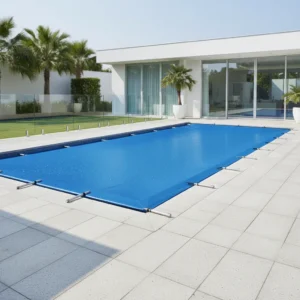
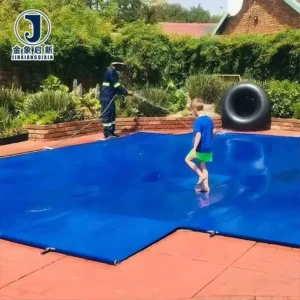
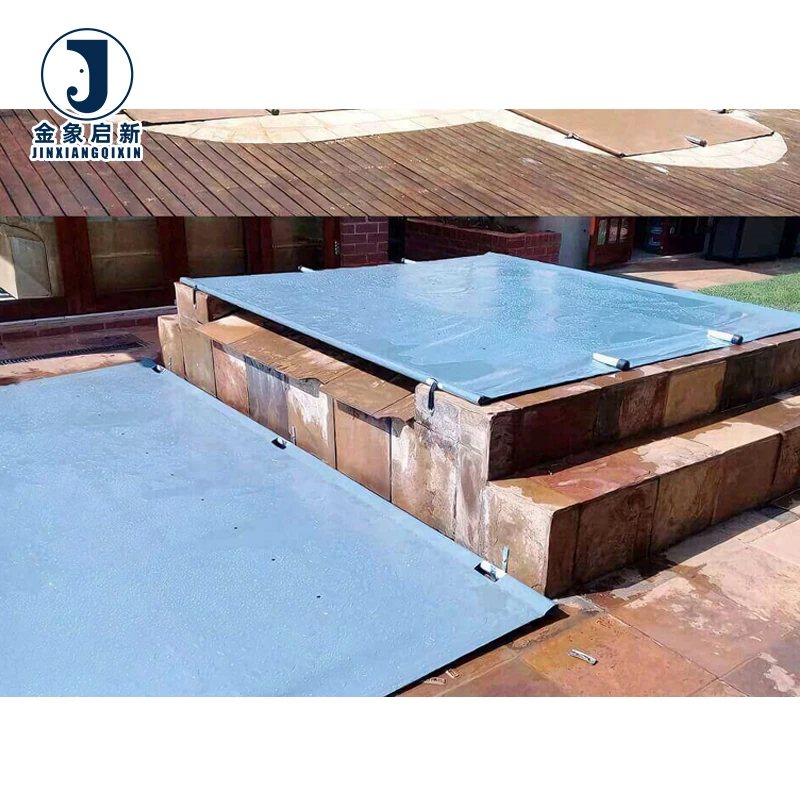
| Swimming Pool Covers | Permanent outdoor exposure, UV degradation, water pooling load, chemical splash from pool treatment agents |
| Truck Side Curtains | Constant flexing during transit, road debris impact, abrasion at tie-down points, full sun exposure |
| Trailer Flatbed Covers | Point load from cargo edges, wind flutter at speed, rain and temperature cycling |
| Boat Covers | Saltwater exposure, UV reflection from water surface, abrasion against gunwales |
| Construction Roofing | Temporary weather barrier, foot traffic during installation, puncture risk from tools and materials |
Why Generic Pool Covers Fail at the Seam Long Before the Fabric Does
Welded seams on lightweight PVC pool covers degrade under sustained UV and thermal cycling while the base fabric still holds — the joint becomes the failure point.
Fleet operators and facility managers specifying PVC pool cover aftermarket supplier solutions often discover that the fabric body remains intact while welded seams split within a single season. The issue traces back to coating adhesion at the overlap zone, where heat welding parameters were set for thinner material and the 610gsm coating layer did not fully fuse. [NEED_CITE: weld seam failure modes in heavy-duty coated fabrics per ISO 1421 peel testing] When pool covers span large surface areas, thermal expansion and contraction place repeated stress on every seam line, and inadequate weld penetration accelerates crack propagation.
Matching Mesh Density to Flex and Abrasion Demands
Selecting the right PVC pool cover aftermarket supplier starts with understanding that mesh count directly affects how the fabric handles repeated flexing. A 20×20 construction offers higher yarn density per unit area, distributing load across more intersection points and resisting tear propagation when the cover flexes over pool edges or trailer bows. For applications where the cover remains largely stationary, a 20×18 or 23×23 mesh provides adequate strength at lower weight per square meter. The 610gsm coating weight ensures sufficient PVC build-up to encapsulate each yarn intersection, preventing moisture ingress at the weave.
Width Selection Eliminates Panel Joins on Large Pool Spans
Supplied in widths up to 3.42m, this PVC pool cover aftermarket supplier fabric reduces the number of welded panel joins required for standard residential and commercial pool dimensions. Every additional seam introduces a potential failure point under thermal cycling and UV exposure. Wide-format rolls allow fabricators to cover typical pool widths with a single panel or minimal joins, then reinforce only the perimeter hem and eyelet zones where tie-down loads concentrate. [NEED_CITE: seam density correlation with long-term weathering performance in coated pool covers]
Understanding How 610gsm Weight Relates to Real-World Performance
The 610gsm (18oz) specification represents the combined weight of base fabric and PVC coating on both sides. This weight class sits in the heavy-duty range for pool and transport covers, providing sufficient rigidity to resist sagging under water pooling while remaining flexible enough for seasonal removal and reinstallation. The coating-to-fabric ratio determines peel strength and weld integrity — at 610gsm, there is adequate coating thickness to achieve full fusion during heat welding without burning through to the base fabric. Mesh count works in parallel: a 30×30 construction at this weight delivers higher tensile strength for applications requiring maximum load resistance, while 20×20 offers better elongation and flexibility for covers that must drape over complex shapes.
The Hidden Cost of Specifying Without Verified Test Data
Ordering PVC pool cover aftermarket supplier fabric without confirmed flame retardant grade or UV test basis creates downstream risk. If the cover must meet a specific fire classification for public pool facilities or transport safety regulations, receiving material with no documented grade means the installation fails inspection. Similarly, anti-UV treatment claimed without a test report leaves the buyer unable to predict coating breakdown rate under local sun exposure conditions. [NEED_CITE: UV exposure testing standards for coated flexible fabrics] Batch-to-batch color variation across multiple rolls compounds the problem — once installed side by side, mismatched panels become visually unacceptable and require full replacement.
Why Jinxiang Supports Transport and Pool Cover Fabrication
Three full production lines with 36 sets of coating and finishing equipment maintain consistent 610gsm weight across bulk orders, with in-line weight verification at every production stage. The 10-person R&D team develops samples to exact pool or trailer dimensions before bulk production begins, confirming fit, weld behavior, and treatment performance. Dedicated QA/QC at each stage includes 100% pre-shipment inspection with roll-level packing lists. Custom width capability up to 3.42m eliminates unnecessary panel joins, and full color customization ensures batch consistency across multiple rolls for large fleet or facility orders.
Documentation & Verification
- Material specification sheet stating 610gsm, base fabric denier, mesh count and coating weight per roll
- Flame retardant test report confirming grade against your target market compliance requirement
- Anti-UV treatment test report with exposure basis and retention rate after accelerated weathering
- Pre-shipment inspection record with 100% roll inspection and dimensional verification
- Roll packing list with individual roll weight, width, length and color reference
- ISO and CE certificates available for audit and customs clearance support
Fabrication, Handling & Storage
- Heat welding at temperatures calibrated for 610gsm PVC coating thickness to ensure full fusion without base fabric damage
- Reinforce eyelet and hem zones with additional PVC strips to distribute tie-down load across the full coating layer
- Store rolls upright on pallets in shaded, ventilated areas to prevent pressure marks on the PVC surface
- Allow rolls to acclimate to site temperature before unrolling to avoid coating cracking in cold conditions
- Clean with mild detergent and soft brush; avoid solvent-based cleaners that degrade the PVC coating surface
- Cut panels with sharp blades at recommended angles to minimize fraying at the base fabric weave
Specify Your Pool or Transport Cover Requirement
Provide the application scenario, including pool dimensions or trailer model, exposure conditions, and any fire or UV compliance requirements for your market. Confirm the width needed to minimize panel joins, color matching requirements across multiple rolls, and whether you need fabric by the roll or fabricated covers with reinforced hems and eyelets. Sample development to your exact dimensions and treatment specification is available before bulk production commitment.
Frequently Asked Questions
Q: What thread count works best for pool covers versus truck tarps?
A: Pool covers that remain stationary benefit from 20×18 or 23×23 mesh, balancing strength with flexibility for seasonal handling. Truck tarps experiencing constant flexing and road abrasion perform better with 20×20 or 30×30 construction, where higher yarn density resists tear propagation at tie-down points and cargo edges.
Q: Do you provide test reports for UV resistance and flame retardancy?
A: Test reports are available for both anti-UV treatment and flame retardant grades. The specific grade and test standard depend on your target market compliance requirement — confirm the classification needed for your installation before production, and the corresponding test report is included with documentation.
Q: Can you match a specific color across multiple roll orders?
A: Color matching is maintained through batch-controlled pigment dosing and in-line color reference verification. For large pool or fleet orders requiring multiple rolls, all rolls are produced in a single campaign to ensure visual consistency when installed side by side.
Q: What is the maximum width available for seamless pool cover applications?
A: Widths up to 3.42m are available, allowing most residential and commercial pool spans to be covered with a single panel or minimal joins. Wider pools require welded panel joins, which are reinforced with full-penetration heat welding to match base fabric strength.
Q: How do welded seams perform compared to the base fabric lifespan?
A: Welded seams on 610gsm PVC fabric, when executed at correct temperature and pressure for this coating thickness, achieve peel strength approaching the base fabric tensile value. Seam longevity depends on proper welding parameters and reinforcement at high-stress zones such as eyelet lines and corners.