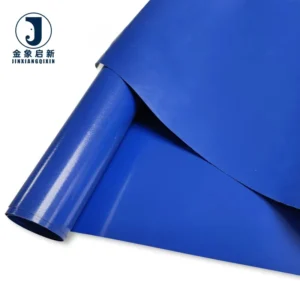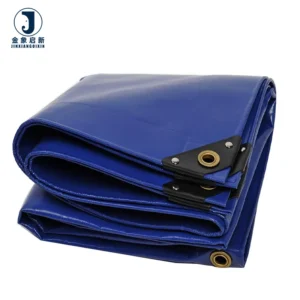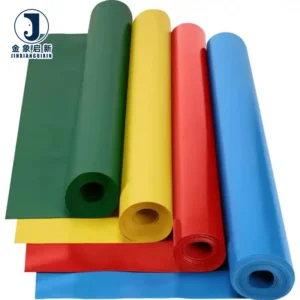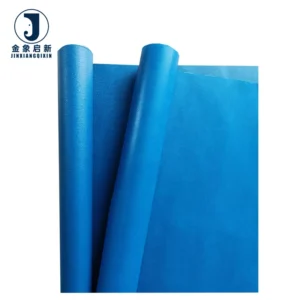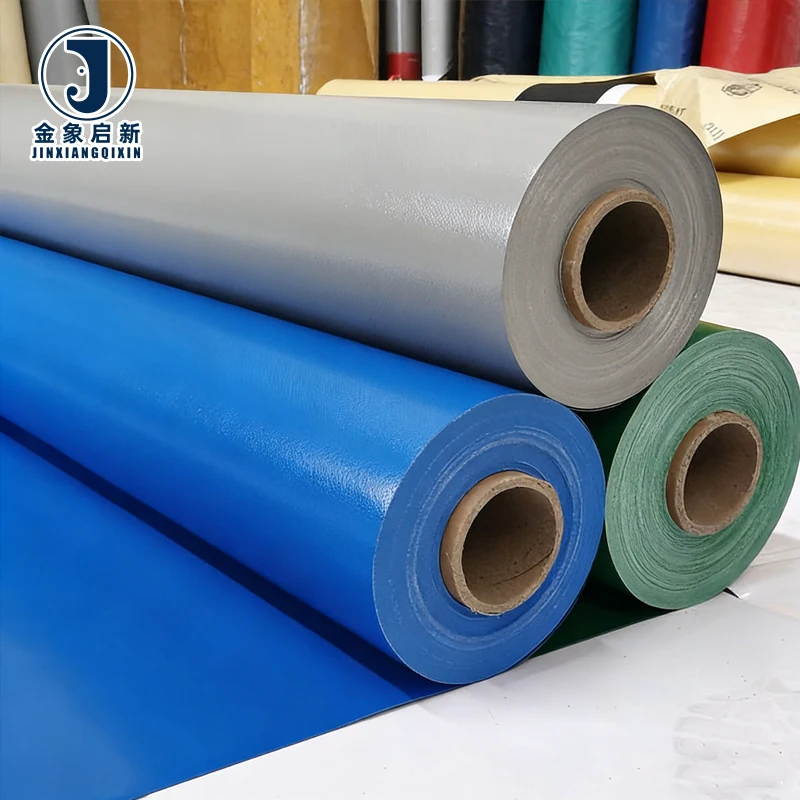
Process-Controlled Coating — Consistent PVC adhesion across every roll, ensuring truck and trailer covers withstand road abrasion and flex stress without delamination.
Technical Specifications
| Parameter | Value |
|---|---|
| Product Type | PVC Coated Tarpaulin Roll |
| Weight Options | 610gsm, 650gsm, 800gsm |
| Base Fabric | PVC Coated Polyester |
| Finish Options | Glossy or Matte (available) |
| Water Resistance | Water Resistant |
| Flame Retardant | Available in flame retardant grades — confirm the grade required for your market |
| UV Treatment | Anti-UV treatment available — request test report for specific performance data |
| Tensile Strength | High Tensile Strength — test standard not stated, request verification per batch |
| Fabric Pattern | Ripstop Woven |
| Colour | Custom colour available (Blue referenced) |
| Format | Roll |
| Certification | ISO, CE |
Application Suitability
| Application | Exposure & Requirement |
|---|---|
| Truck side curtains | Constant flexing at load points, road spray, UV exposure, tie-down tension |
| Trailer top covers | Direct weather exposure, wind load, pooled water resistance |
| Fleet vehicle covers | Repeated deployment and folding, abrasion from cargo contact |
| Transport equipment fabrication | Model-specific cutting, weld seam integrity, batch colour matching |
Why PVC Tarpaulin Roll for Truck Cover Selection Demands More Than GSM Alone
A quoted weight tells you what you are paying for — it does not tell you what will survive three winters on a highway.
Fleet operators and transport builders have learned the hard way that two rolls with identical GSM labels can perform completely differently once installed on a trailer. The base fabric denier, weave density, and coating adhesion all contribute to real-world durability, yet these variables rarely appear on a quotation. When the cover flexes at the load point hundreds of times per journey, the failure almost always starts where the fabric meets the weld — not where the GSM number sits on paper. [NEED_CITE: tensile and tear test methods for coated fabrics per ISO 1421]
Fitment Precision for Fleet Operations
A PVC Tarpaulin Roll for Truck Cover applications must be cut to match the exact vehicle profile, not a generic template that leaves gaps at the corners or excess material flapping in highway wind. These rolls enable fabricators and fleet workshops to produce covers that match specific trailer models, placing reinforcement exactly where the load flexes and where tie-down straps concentrate stress. The ripstop woven construction helps contain any local puncture from spreading across the panel.
Side Curtain Stress and Road Exposure
Side curtain fabric on trucks and trailers endures a punishing combination of mechanical flexing, diesel exhaust contamination, and constant UV bombardment. The PVC coating on these rolls provides water resistance against rain and road spray, while the ripstop base fabric resists tear propagation when the curtain is tensioned across the trailer frame. [NEED_CITE: PVC coated fabric weathering and mechanical fatigue in transport applications]
Understanding GSM in Context with Base Fabric Construction
The 610gsm, 650gsm, and 800gsm grades offered here represent total coated weight — but that number alone does not determine how the material handles at the weld line or under tie-down tension. A heavier coating does not automatically mean higher tear resistance if the base fabric uses a lower denier yarn or a looser weave. The ripstop woven pattern referenced in these rolls introduces a grid structure that limits tear spread, which matters significantly when a truck cover is subjected to point loads from straps or cargo edges. Coating adhesion to the base fabric also plays a critical role: if the PVC layer separates from the polyester during thermal welding, the seam becomes the first failure point regardless of how heavy the overall construction is. Specifying the right grade requires matching the duty cycle of the vehicle — a long-haul trailer running daily in exposed conditions needs a different balance of coating weight and base fabric density than a yard cover used intermittently.
The Hidden Cost When Roll Specifications Do Not Match the Vehicle
A cover fabricated from a roll that was specified purely on price-per-kilogram often reveals its shortcomings within the first season. Seams that separate at the weld line, colour that drifts noticeably between panels installed on the same trailer, and eyelets that pull through fabric that lacks local reinforcement all trace back to procurement decisions made at the roll stage. When a fleet operator replaces a failed cover prematurely, the cost of the replacement fabric is only a fraction of the total — there is vehicle downtime, cargo exposure claims, and the labour to remove and refit. [NEED_CITE: premature tarpaulin failure modes in commercial transport]
Why Procurement Teams Source These Rolls for Fleet Applications
Three full production lines allow batch scheduling that keeps fleet-sized roll orders on track without sacrificing coating consistency across multiple production runs. The 10-person R&D team handles colour matching and width customisation so that every roll in a multi-roll order arrives with uniform appearance — critical when panels are installed side by side on the same trailer. Dedicated QA/QC at every production stage means GSM weight is checked during coating, not just at the end, reducing the chance of underweight material reaching the dispatch bay. Sample rolls can be developed within days for fabricators who need to validate weld parameters and eyelet placement before committing to a full container order. [NEED_CITE: pre-shipment inspection standards for coated technical textiles]
Documentation & Verification
- Material specification sheet stating GSM, base fabric construction, and colour reference per roll
- Weight verification record confirming quoted GSM matches actual measurement before dispatch
- Test reports for UV and flame retardant grades when specified on the purchase order
- Batch colour consistency check documented across all rolls in a single order
- ISO and CE certificates available for compliance and customs documentation
- Pre-shipment inspection record with photographic evidence of roll condition
Fabrication, Handling & Storage
- Weld temperature and dwell time should be tested on sample pieces of the selected GSM grade before production
- Store rolls horizontally on padded supports to prevent permanent creasing in the PVC coating layer
- Eyelet placement requires local reinforcement patches on 610gsm and 650gsm grades to prevent pull-through
- Avoid unrolling in sub-zero conditions where the PVC coating becomes brittle and may crack
- Clean with neutral pH detergent only — solvent-based cleaners can degrade the ripstop coating bond
- Plan cutting layout to align ripstop grid with expected stress directions on the finished truck cover
Requesting a Quotation That Matches Your Fleet Requirements
To receive an accurate specification and lead time, share the trailer models in your fleet, the expected duty cycle for each vehicle type, and whether the cover will function as a side curtain or a full top cover. Indicate the target colour and whether you need flame retardant documentation for your operating region. Specify if you require roll stock only or if fabricated panels with eyelets and hems are preferred.
Frequently Asked Questions
Q: How do I choose between 610gsm, 650gsm, and 800gsm for different truck cover applications?
A: Lighter duty yard covers and short-haul vehicles typically suit 610gsm, while daily long-haul side curtains and top covers benefit from 650gsm or 800gsm. The ripstop base fabric contributes significantly to tear resistance at each grade. Request sample rolls to test weld parameters and tension behaviour before committing to a bulk order.
Q: How are welded seams reinforced at flex points where load movement concentrates stress?
A: The ripstop woven pattern helps contain tear propagation at weld lines. For high-stress zones, fabricators apply additional PVC strip reinforcement over the seam. We recommend testing weld temperature and pressure on sample material from your specific GSM grade to confirm adhesion before full production.
Q: How is batch-to-batch colour consistency controlled across multiple rolls for one fleet order?
A: Each production run is checked against the confirmed colour reference during coating and again at pre-shipment inspection. All rolls within a single order are verified side by side before dispatch to ensure uniform appearance when panels are installed adjacent to each other on the same vehicle.
Q: What roll widths are available to match specific trailer dimensions without excessive material waste?
A: Width availability depends on current production scheduling and your order volume. Share your trailer panel dimensions and required quantities so the technical team can recommend the most material-efficient roll width and cutting layout for your fabrication process.
Q: Can I receive a sample roll to validate performance before placing a bulk order?
A: Yes, sample rolls are developed within days for custom colour, GSM, and treatment requirements. Use the sample to confirm weld seam integrity, eyelet pull-through resistance, and colour accuracy under your local lighting conditions before authorising full production.