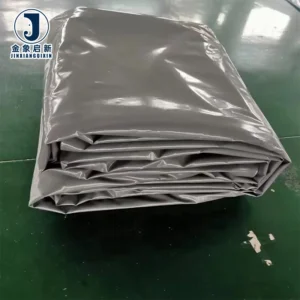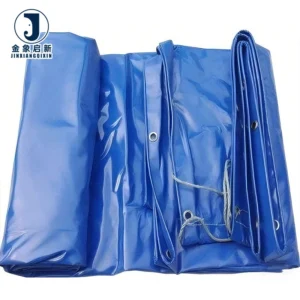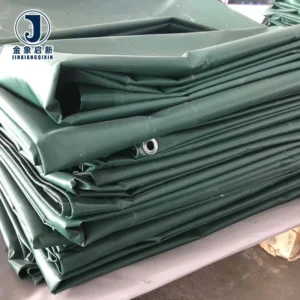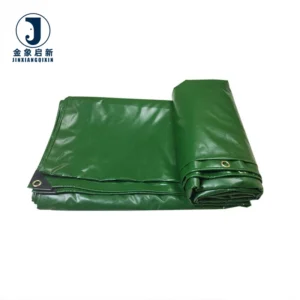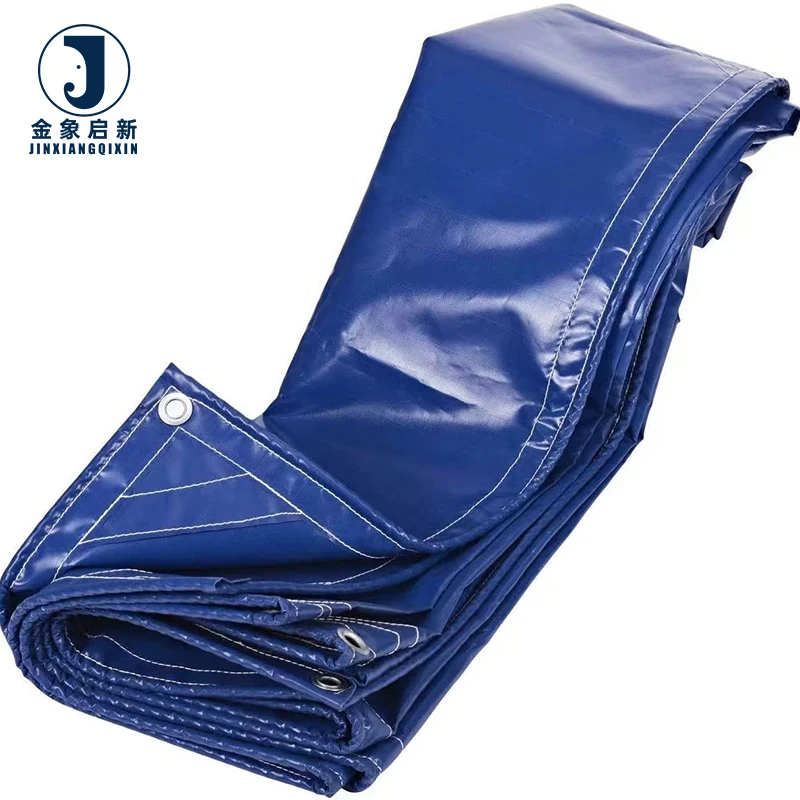
Coating weight control — Our 10-person R&D team verifies GSM and base fabric adhesion at every stage, ensuring 680GSM RIPSTOP PVC Tarpaulin arrives matching the quoted specification for truck curtain and trailer cover builds.
Technical Specifications
| Parameter | Value |
|---|---|
| Product Type | PVC Coated Tarpaulin |
| Base Fabric Denier Options | 200Dx300D, 500Dx500D, 840Dx840D, 1000Dx1000D |
| Coating Material | PVC |
| Surface Finish | Available in glossy or matte |
| Temperature Range | -15°C to 70°C |
| UV Treatment | Customized (test basis not stated in source) |
| Flame Retardant | FR treated (grade not stated in source) |
| Anti-Mildew | Anti fungal treated |
| Waterproof Rating | Waterproof, rain-resistant |
| OEM/ODM & Printing | Accepted |
Application Suitability
| Application | Exposure & Requirement |
|---|---|
| Side curtain fabric for trucks and trailers | Constant flexing, road abrasion, UV exposure, wind flap stress |
| Flatbed and tipper truck covers | Heavy load friction, tie-down strap tension, weather impact |
| Construction site equipment enclosures | Puncture risk from sharp edges, dust ingress, prolonged sun exposure |
Why a Generic-Size Cover Fails Your Fleet Before the Season Ends
Exact model fitment prevents the wind flap and seam fatigue that destroy loosely cut tarps.
When a PVC coated tarpaulin for truck and trailer cover applications is cut to a generic size rather than a specific vehicle dimension, the resulting loose fabric flaps in transit. That flapping concentrates stress on the welded seams at the points where the load flexes most. I have seen heavy-grade coated rolls fail at the weld line simply because the cover was not tensioned correctly across the trailer body [NEED_CITE: tensile and tear test methods for coated fabrics per ISO 1421].
Matching the Trailer Dimension to the Fabric Cut
A PVC coated tarpaulin for truck and trailer cover use must account for the specific corner radius, side rail height and rear door clearance of the trailer model. When the pattern is developed from the vehicle drawing rather than a standard rectangle, the hem line sits flat against the body and the eyelets align with the tie-down rails. This removes the slack that causes abrasion against the load edge.
Reinforcement at the Flex and Tie-Down Zones
The perimeter of a transport cover takes the highest strap tension and the sharpest bending cycles. Reinforcing the hem and spacing the eyelets to match the trailer’s load-rated anchor points ensures the strap force transfers into the base fabric rather than tearing through a single point. The ripstop weave limits tear propagation if a single thread breaks under tension [NEED_CITE: tear propagation resistance in coated technical textiles].
Denier and Weave: What Holds the Load Together
The base fabric denier options range from 200Dx300D to 1000Dx1000D. Higher denier yarns provide greater tensile strength and resist the cutting action of sharp load edges, while the ripstop weave pattern creates a grid that stops a small puncture from unzipping across the entire panel. For side curtain applications where the fabric flexes every time the trailer is loaded, the 840Dx840D or 1000Dx1000D options provide the structural backbone needed to resist fatigue cracking over repeated cycles.
Coating Adhesion and Heat-Welded Seams
The PVC coating must bond to the base fabric with sufficient peel strength to survive the flexing of a moving load. If the coating delaminates at the weld line, the seam opens regardless of the fabric weight. The heat-welding process melts the PVC coating on both panels to fuse them into a single layer, which requires a coating formulation that flows and bonds consistently at the weld temperature. Our 36 sets of professional equipment include dedicated welding rigs that maintain the temperature profile needed for this material grade [NEED_CITE: DIN 53354 tensile testing of coated fabrics].
The Hidden Cost of Batch Colour Variation
When a fleet operator orders multiple covers in one shipment, any colour variation between rolls becomes immediately visible once the panels are installed side by side on adjacent trailers. This forces a full replacement of the affected panels to maintain fleet appearance, adding freight cost and downtime. Colour reference documentation per order and batch-consistent coating formulation prevent this rework.
Why Sourcing Direct from the Coating Line Matters
- Process control over coating weight: The GSM is verified at the coating head, not just at the final roll, ensuring the 680GSM RIPSTOP PVC Tarpaulin matches the quoted weight.
- R&D sample development: The 10-person team develops cut-to-model samples within days so fleet operators can confirm fitment before the production run begins.
- Full production line capacity: Three lines and 36 sets of equipment support bulk volume for fleet-scale orders without splitting the batch across different machines.
- 100% pre-shipment inspection: Every roll is checked for coating adhesion, seam strength and eyelet pull-out before dispatch, documented in the inspection record.
Documentation & Verification
- Material specification sheet stating actual coating weight and base fabric denier
- Pre-shipment inspection record confirming size and eyelet placement match trailer drawing
- Colour reference documented per order to prevent visible panel variation
- UV and flame-retardant test reports provided where grades are specified
Fabrication, Handling & Storage
- Use a wedge temperature matched to the PVC coating formulation for consistent peel strength at the weld.
- Space eyelets to align with the trailer tie-down rail pitch to distribute strap load evenly.
- Store rolls upright on a flat pallet to avoid permanent creasing across the 680GSM coating.
- Allow the fabric to warm to above 10°C before unrolling to prevent low-temperature cracking.
- Use a mild detergent without solvents to clean the glossy or matte surface without degrading the top coat.
What We Need to Quote Your Fleet Requirement
To specify the correct base fabric denier and treatment package, please provide the truck or trailer model dimensions, the typical load type and your regional compliance requirements for flame retardancy or UV exposure. If you need custom colour matching to a fleet livery, a physical sample or RAL reference allows us to confirm the formulation before the production run.
Frequently Asked Questions
Q: How is truck cover sizing matched to specific trailer models?
A: We work from the vehicle manufacturer’s body drawing or a physical measurement template to develop a cut pattern that accounts for corner radius and door clearance. A sample is produced for fitment trial on the actual trailer before the bulk run is authorized.
Q: What eyelet spacing and hem reinforcement options are available for tie-down loads?
A: Eyelet spacing can be set to match the trailer’s tie-down rail pitch, typically at intervals suited to the strap tension rating. The hem is folded and welded with an additional reinforcement strip to distribute the pull-out force across the ripstop base fabric.
Q: How is colour consistency maintained across multiple covers in a fleet order?
A: Each production run is mixed as a single batch against a documented colour reference. The coating formulation is held constant, and the pre-shipment inspection includes a visual comparison of all rolls to confirm no panel-to-panel variation exists before dispatch.
Q: What is the UV treatment test basis for long-term road exposure?
A: UV treatment is customized based on the market requirement. You should confirm the specific test standard, such as hours of exposure or a regional grade, required for your transport application so the correct additive package can be specified.
Q: How are welded seams tested at high-flex zones before shipment?
A: The welded seams at the perimeter and corner flex points are subject to a peel test during the 100% pre-shipment inspection to confirm the coating adhesion exceeds the minimum threshold required for the ripstop base fabric grade.