Coated fabric process control — Every roll of PVC tarpaulin produced on our three full production lines undergoes stage-by-stage QA to verify coating adhesion and base fabric integrity before it reaches the welding table.
Technical Specifications
| Parameter | Value |
|---|---|
| Product Type | Inflatable Tent |
| Core Material | PVC Tarpaulin |
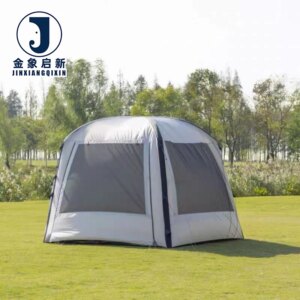
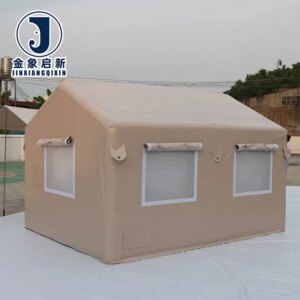
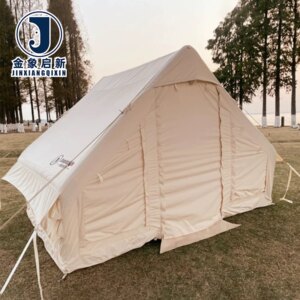
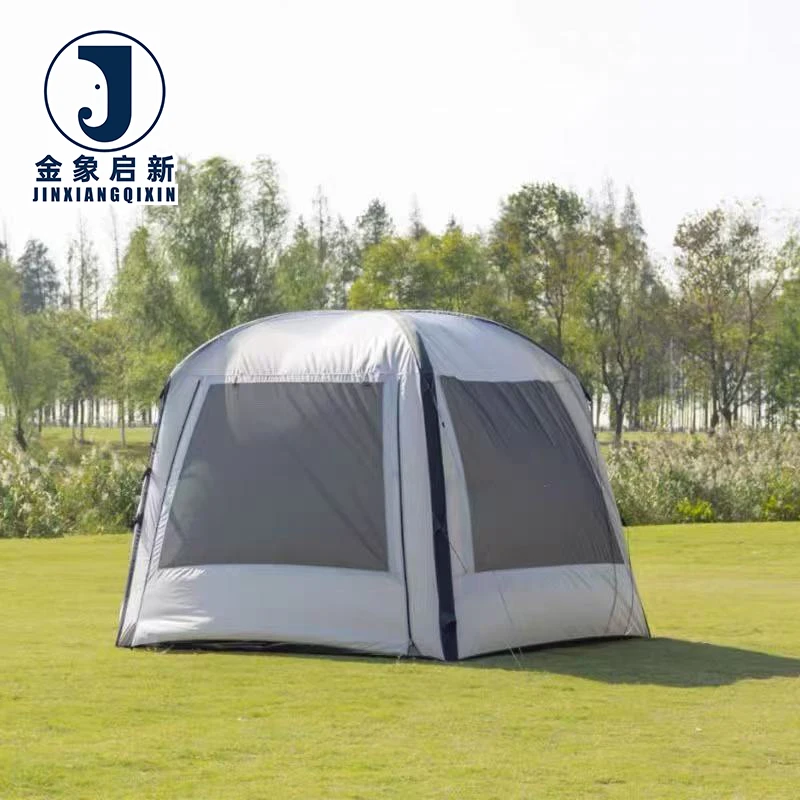
| Product Forms | Automatic Inflatable 3-5 Person Camping Shelter |
| Waterproof | Fully coated waterproof construction |
| UV Resistance | Available with anti-UV treatment — confirm the UV grade required for your market |
| Fire Retardancy | Available in flame retardant grades — confirm the grade required for your site |
| Anti-static | Available with anti-static treatment — confirm the standard required for your application |
| Tear Resistance | Tear-resistant coated fabric construction |
| Customization | OEM & ODM: sample customization, pattern printing, material selection, product design |
| Standards | ISO9001, ISO14001, ISO45001, CE |
Application Suitability
| Application | Exposure & Requirement |
|---|---|
| Transport fleet roadside emergency shelters | Rapid deployment, wind load on inflatable frame, repeated inflation cycles, road-side abrasion |
| Logistics hub temporary field offices | Extended outdoor exposure, UV and rain resistance, frequent relocation and re-inflation |
| Remote mining corridor personnel shelters | Dust ingress, temperature extremes, fire-retardant compliance for enclosed worksite use |
| Construction site temporary command posts | Heavy equipment proximity, puncture and tear risk, anti-static requirements near fuel stores |
Why Inflatable Tents Fail at the Weld Line Before the Fabric Does
Seam integrity under cyclic inflation pressure determines service life more than fabric weight alone.
When an inflatable tent is deployed on a transport corridor or logistics staging area, the air beams flex every time wind loads shift or the structure is re-inflated after relocation. The welded joints at beam junctions carry concentrated stress that the surrounding PVC tarpaulin does not see. If the heat-welding parameters do not match the coating formulation, the bond fails at the flex point while the fabric itself remains intact. [NEED_CITE: ISO 1421 tensile and peel test methods for coated fabrics]. Sourcing teams often specify a heavy GSM and assume the structure is durable, yet the Inflatable Tent for Truck and Transport fails at the seams within the first season of field use.
How PVC Tarpaulin Coating Weight Affects Air Beam Performance
The inflatable frame of a commercial shelter depends on the PVC coating to hold inflation pressure without stretching or creeping over time. A coating that is too thin relative to the base fabric denier will allow the yarns to shift under internal pressure, causing the beam to bulge unevenly. The Inflatable Tent for Truck and Transport must balance coating weight against the need for the fabric to remain flexible enough to fold and pack for rapid redeployment at the next logistics stop.
Welding Parameters and Coating Adhesion on Inflatable Structures
Hot-air welding on PVC tarpaulin requires the coating layer to reach a precise softening temperature so that two panels fuse into a single bonded joint. If the coating formulation varies between batches, the welding temperature that produced a strong seam on the sample may under-weld or scorch the production run. Our 10-person R&D team establishes a welding parameter window for each material batch, ensuring that the Inflatable Tent for Truck and Transport maintains consistent seam peel strength across every air beam junction. [NEED_CITE: hot-air welding parameters for PVC coated polyester fabrics].
Reading the Specification Sheet Beyond GSM
Coating weight alone does not predict how well an inflatable tent fabric resists tearing at the seam allowance. The base fabric denier and weave density determine how far a tear propagates once a puncture occurs at a high-stress point near an air valve or tie-down loop. A tightly woven high-denier polyester base limits tear extension even when the PVC coating is scored by sharp gravel at a roadside stop. The surface finish — glossy or matte — also affects field cleaning: a glossy PVC face sheds dust and road grime faster at logistics hubs, while a matte finish reduces glare when the tent serves as a daytime command post on a construction corridor.
What Happens When Material Grade Is Not Verified Before Production
A logistics operator orders inflatable shelters for driver rest stations along a mining haul road, specifying fire-retardant fabric for enclosed-site compliance. The tent arrives and passes visual inspection, but the site safety officer requests a fire classification certificate that the supplier cannot produce. The entire batch is rejected, the project timeline slips, and the operator must source replacement shelters at short notice. [NEED_CITE: fire-retardant classification requirements for temporary structures on industrial sites]. Batch colour variation across a large order of inflatable tents creates a visible mismatch when two units are erected side by side at a logistics hub, undermining the professional appearance the fleet operator intended.
Why Procurement Teams Source Inflatable Tent Fabric Here
Deep coating process control developed over decades of PVC tarpaulin production means air beam weld parameters are set from actual material behaviour, not generic tables. Three full production lines and 36 sets of processing equipment allow the Inflatable Tent for Truck and Transport to be manufactured at volumes that match fleet rollout schedules. Dedicated QA and QC staff inspect every production stage — from base fabric incoming check through coating weight verification to final inflation pressure testing — so that seam failures are caught before dispatch. The 10-technician R&D team develops pre-production samples that let you confirm material thickness, colour, and weld behaviour before committing to a full order.
Documentation & Verification
- Material specification sheet stating base fabric denier, coating type, and GSM for each inflatable tent order
- Fire-retardant and anti-static test reports matched to the grade specified for your site compliance
- Pre-shipment inspection record covering inflation pressure hold test and waterproof verification
- ISO9001, ISO14001, ISO45001, and CE certificates included in the dispatch documentation package
- Roll packing list with batch traceability for every PVC tarpaulin shipment
Fabrication, Handling & Storage
- Hot-air weld temperature must match the specific PVC coating formulation — request our parameter sheet before fabrication
- Store inflated air beams partially pressurized in cool conditions to prevent PVC coating crease marks
- Avoid dragging PVC tarpaulin panels across abrasive surfaces during field erection at transport stops
- Use PVC-compatible cleaners only; solvent-based products can soften the coating and weaken weld bonds
- Allow cold-stored inflatable tent fabric to reach ambient temperature before unfolding to prevent coating crack
What to Include in Your Inquiry
Provide the deployment environment — roadside, mining corridor, or logistics hub — so we can recommend the appropriate fire-retardant grade and anti-static treatment. Specify the number of units, colour requirements, and whether you need finished inflatable tents or PVC tarpaulin rolls for your own fabrication line. Confirm whether pattern printing or branding is required so the R&D team can include print adhesion data in the pre-production sample package.
Frequently Asked Questions
Q: How are welded seams tested for flex-point durability on inflatable structures?
A: Each production batch undergoes peel strength testing at welded joints following established coated fabric test methods. We also conduct a sustained inflation pressure hold test on finished air beams to verify that seams do not creep or delaminate under continuous internal pressure before the Inflatable Tent for Truck and Transport is cleared for dispatch.
Q: What fire-retardant and anti-static certifications are available for site compliance?
A: Fire-retardant and anti-static treatments are available in multiple grades. The specific test report and classification certificate are matched to the grade you specify during inquiry. We confirm the applicable standard — whether for mining, construction, or transport corridor use — before production begins so that documentation arrives with your shipment.
Q: How do you ensure batch-to-batch color and material consistency across large orders?
A: Every PVC tarpaulin production run is checked against the approved sample for colour reference and coating weight. Our QA staff verify GSM and visual appearance per roll before the inflatable tent enters the welding stage, reducing the risk of visible colour mismatch when multiple shelters are deployed side by side at a single site.
Q: What customization options exist for size, printing, and material thickness?
A: OEM and ODM customization covers material thickness adjustments, pattern printing, colour matching, and dimensional changes to suit specific transport or logistics shelter layouts. The R&D team produces a pre-production sample so you can evaluate weld behaviour, print adhesion, and inflation performance before bulk manufacturing of the Inflatable Tent for Truck and Transport begins.
Q: How is the pre-shipment inflation pressure test conducted before dispatch?
A: Finished inflatable tent air beams are inflated to operating pressure and held for an extended period under QA observation. The test verifies that welded seams and valve fittings maintain pressure without measurable drop, and a waterproof check is performed simultaneously. Results are recorded in the pre-shipment inspection report included with your documentation.