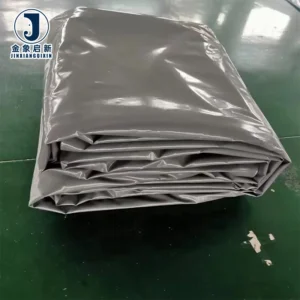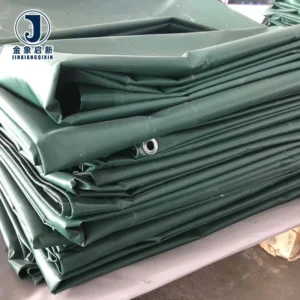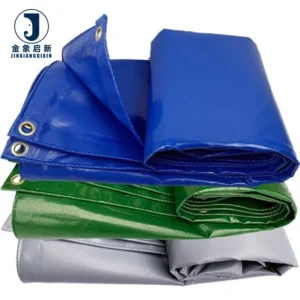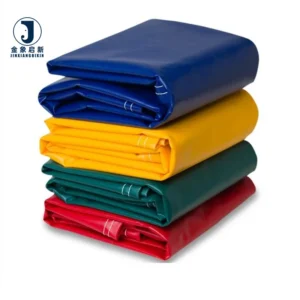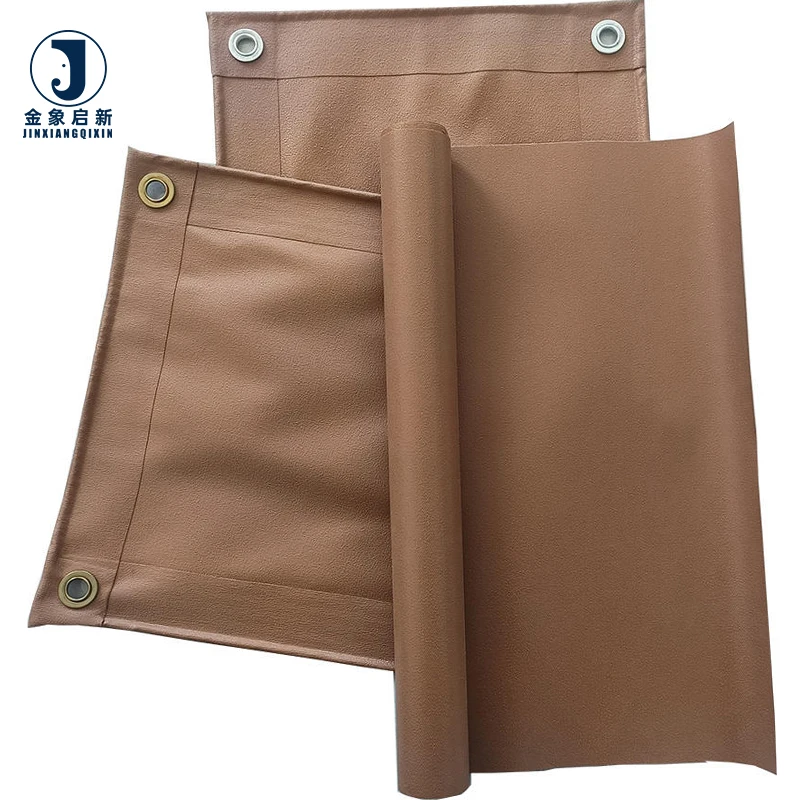
Coating Adhesion Control — nearly 30 years of process data behind every roll of 1000D PVC coated tarpaulin, ensuring coating weight matches the quoted grade across long-haul transport covers.
Technical Specifications
| Parameter | Value |
|---|---|
| Product Type | PVC Coated Tarpaulin |
| Base Fabric Denier | 1000D Polyester |
| Weight | 550GSM / 900GSM (confirm grade for your application) |
| Coating Material | PVC |
| Waterproof | Yes |
| Flame Retardant | Available in flame retardant grades — confirm the grade required for your market |
| Anti-Static | Available — test basis to be confirmed at inquiry |
| Anti-Cold | Available |
| Anti-Mildew | Available |
| UV Treatment | Available — test basis to be confirmed at inquiry |
| Outdoor Service Life | Suited to extended outdoor exposure |
| Custom Sizing | Available to vehicle model or project dimension |
Application Suitability
| Application | Exposure & Requirement |
|---|---|
| Long-haul trailer side curtain | Constant flex fatigue at hinge zones, road spray, wind-loaded abrasion against cargo edges |
| Flatbed and tipper load cover | Strap tension at tie-down points, UV and weather exposure across varying climate corridors |
| Fleet standardisation programme | Colour and weight consistency across mixed trailer types, brand-identifiable livery |
| Roof and temporary structure cover | Prolonged UV and rain exposure, thermal expansion and contraction cycles |
| Flood barrier and emergency cover | Continuous water contact, rapid deployment and repeated folding |
What Generic-Size Covers Cost Fleet Operators Over a Year
A truck cover cut to a generic size shifts stress to the wrong points, and the seams fail long before the fabric does.
Fleet managers ordering PVC Coated Tarpaulin for Truck covers from catalogue sizes often find the corners gap open in crosswinds while the tie-down eyelets sit inches off the strap anchor. The result is not a small inconvenience — it is cargo exposure, re-securing stops at roadside lay-bys, and replacement covers ordered mid-contract. Covers fabricated to the exact trailer model with eyelets positioned to the load-securing pattern remove these failure points at the source [NEED_CITE: fleet tarpaulin replacement frequency and cause analysis].
Model-Specific Fitment Eliminates the Gap-and-Stress Cycle
Each PVC Coated Tarpaulin for Truck application starts with the trailer model drawing or a physical measurement template. The cover is then cut and welded to wrap the load envelope without excess fabric that flaps in transit or short fabric that pulls at the hem. Reinforced hems carry the tie-down load across a broader fabric area rather than concentrating it at a single eyelet row.
Welded Seams at the Flex Points Where Stitching Fails
On a moving trailer, the fabric flexes every time the chassis articulates or the load shifts under braking. Stitched seams perforate the base fabric and create thousands of needle holes along the stress line — entry points for moisture and initiation points for tear propagation. Heat-welded seams fuse the PVC coating layers into a continuous bond, removing the perforation line entirely [NEED_CITE: welded versus stitched seam performance under cyclic flex loading].
How GSM and Denier Together Determine Cover Durability
The 1000D polyester base fabric provides the tensile skeleton that resists tearing when straps cinch down or wind catches an exposed corner. GSM alone tells you how much PVC sits on that skeleton — heavier coating adds abrasion mass and weather barrier thickness, but it also adds dead weight that the trailer carries every kilometre. The 550GSM grade balances cover weight with daily handling ease for side curtain operations, while the 900GSM grade adds the coating mass needed for flatbed covers exposed to sharp cargo edges and prolonged road debris impact. Neither grade is universally better; the selection depends on route severity and cargo class.
The Cost of Colour Drift Across a Mixed Fleet
When a fleet orders replacement covers in separate batches over a contract period, slight pigment variation between production runs becomes visible the moment two covers hang side by side on adjacent trailers. The fleet looks patchwork, and brand livery loses credibility at every loading bay. Colour reference locking at the inquiry stage — with a signed swatch held against the production batch — prevents this roll-to-roll drift [NEED_CITE: colour consistency standards for fleet livery and architectural fabric]. Specifying the Pantone or RAL reference with each order, rather than relying on a verbal description, gives the QA team a measurable target at the inspection bench.
Why Sourcing From a Transport-Focused Line Matters
Deep process control over coating weight means the 550GSM or 900GSM grade on your quotation is the grade measured on the roll at pre-shipment inspection, verified by cut-and-weigh sampling. Three full production lines and 36 sets of professional equipment support bulk fleet orders without splitting them across subcontracted coating houses. The 10-person R&D team develops samples within days when a new trailer model enters your fleet, so fitment is confirmed before production starts rather than discovered at first installation. Dedicated QA/QC at every stage catches seam delamination and eyelet pull-through before the cover leaves the facility.
Documentation & Verification
- Weight verification per roll against the stated 550GSM or 900GSM grade before dispatch
- Material specification sheet listing base fabric denier, coating weight and all applied treatments
- Test report for flame retardant or anti-static treatment where specified for corridor compliance
- Pre-shipment inspection record covering welded seam integrity and eyelet pull-out strength
- Colour reference swatch matched to production batch and included with shipping documents
Fabrication, Handling & Storage
- Heat-weld seams at manufacturer-recommended temperature for 550GSM or 900GSM PVC coating to avoid delamination
- Position eyelets inside reinforced hem tape zones to distribute tie-down strap tension across the base fabric
- Store rolls horizontally on pallets in shade to prevent permanent creasing through the PVC coating layer
- Allow cold-stored rolls to reach ambient temperature before unrolling to prevent coating crack at the fold line
- Use non-solvent cleaners on the PVC surface to preserve anti-mildew and UV treatment effectiveness
- Repair minor field tears with compatible PVC patch material heat-bonded to the coating surface
What to Include in Your Inquiry
Provide the trailer make, model and year, or a dimensioned sketch showing overall cover size, hem style and eyelet spacing. State the operating corridor so that any flame retardant or anti-static treatment can be matched to the regulatory requirement. Confirm whether you need fabricated covers or roll stock for your own workshop, and specify the target colour reference. Sample development is available before production commitment to verify fitment and finish.
Frequently Asked Questions
Q: How do you cut tarpaulin to match my specific trailer model and what measurements do you need?
A: We work from the trailer manufacturer’s body drawing or a measurement template you provide — overall length, width, drop depth, and the position of buckles, rails and strap anchors. A paper or CAD template is reviewed before cutting, and a sample cover is offered for physical fitment check on your trailer before the batch runs.
Q: What eyelet spacing and hem reinforcement options are available for high-tension tie-down points?
A: Eyelets can be spaced to match your existing strap pattern, typically set inside a double-layer reinforced hem with PVC webbing tape. At high-load corners, additional patch reinforcement distributes strap tension across a broader fabric area, reducing pull-through risk on long-haul routes.
Q: How do you verify GSM on arrival and what documentation comes with each shipment?
A: Every roll undergoes cut-and-weigh sampling at pre-shipment inspection, and the results are recorded on the inspection report included with your packing list. The material specification sheet confirms the base fabric denier, coating weight and any treatments applied, so you can cross-check against your original purchase order.
Q: What is the seam welding method at flex points and how does it compare to stitched seams?
A: High-frequency or hot-air welding fuses the PVC coating layers into a continuous bond without perforating the 1000D base fabric. Unlike stitched seams, which create needle holes along the stress line, welded seams eliminate moisture entry points and tear initiation sites where the cover flexes during transit.
Q: How do you control colour consistency across multiple covers ordered for a mixed fleet?
A: A signed colour swatch or Pantone reference is locked at order confirmation and held at the coating line for batch matching. Every roll in the order is inspected against this reference under standard lighting before packing, preventing visible drift between covers installed on adjacent trailers.