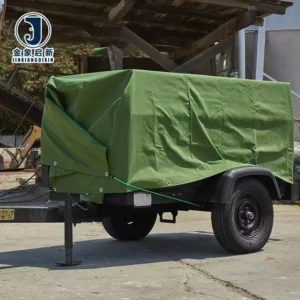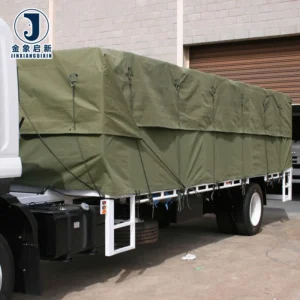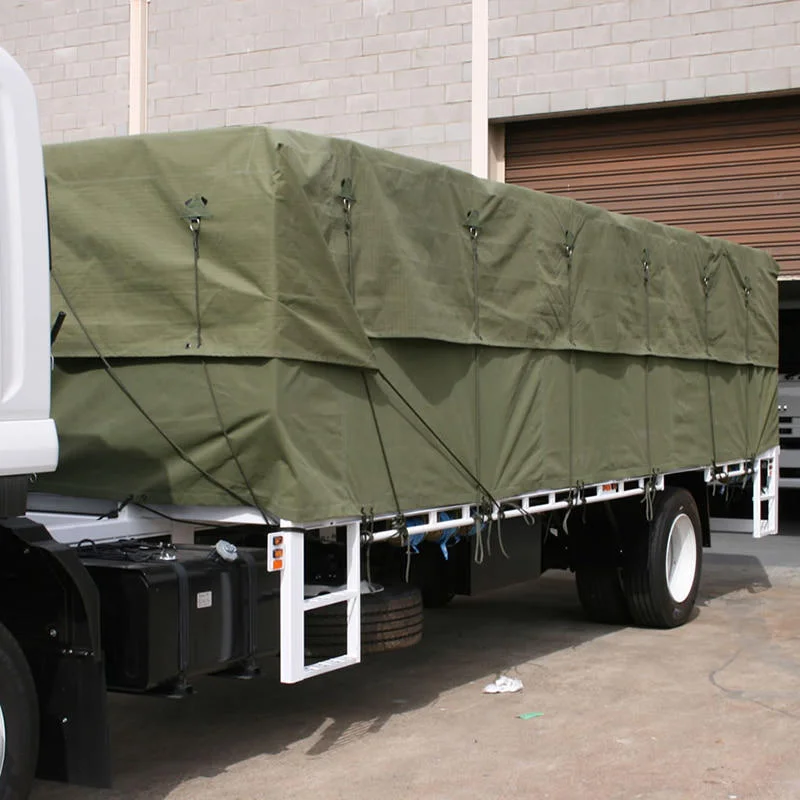
Precision-Engineered Truck Covers — Every cover is patterned from the exact trailer bed drawing, with QA sign-off at each production stage to ensure dimensional accuracy before dispatch.
Technical Specifications
| Parameter | Value |
|---|---|
| Product Type | Canvas Tarpaulin / Truck Tarp Cover |
| Material | Silicone canvas tarpaulin |
| Weight (GSM) | 250gms-600gms (grade selectable per load and route) |
| Characteristic | Waterproof, wear-resistant, scratch resistant, tensile resistant |
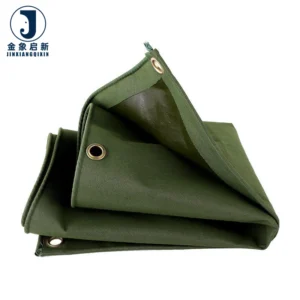
| Edge Finishing | Edge wrapping, punching, buttonhole |
| Color | Customizable per fleet livery |
| Customization | Size, edge treatment, and reinforcement layout available |
| Standards | ISO, CE |
Application Suitability
| Application | Exposure & Requirement |
|---|---|
| Flatbed Trailer Load Protection | Sustained highway wind load, road debris impact, abrasion at tie-down points, full weather exposure |
| Retractable Trailer Systems | Repeated flexing and folding cycles, tension across the roller mechanism, friction at guide rails |
| Cargo Truck Weatherproofing | Rain ingress prevention, UV exposure on long-haul routes, secure fitment over irregular loads |
| Transport Equipment Builder Integration | Model-specific fitment for OEM builds, compatibility with side curtain tracks and ratchet systems |
Why Generic Sizing Fails on the Highway — And What a True Truck Tarp Cover for Fleet and Trailer Solves
A cover cut to the trailer’s actual bed dimensions eliminates the cargo exposure and grommet tear-out that plague generic-size tarps.
I have seen too many fleet operators buy off-the-shelf covers that are technically "close enough" in length and width, only to find the corners lift at highway speed and the grommets rip out within weeks because the hem does not align with the trailer’s tie-down rail. The material bunches, flaps, and eventually fails at the stress points. A true truck tarp cover for fleet and trailer is patterned from the vehicle drawing, not from a catalogue approximation, so the eyelets land exactly where the straps need them [NEED_CITE: dimensional verification methods for custom-fit transport covers].
Pattern-to-Vehicle Fitment Eliminates Transit Shift
When a truck tarp cover for fleet and trailer is cut from the exact trailer bed drawing, every hem falls where it should and every eyelet aligns with the tie-down rail below it. This is the difference between a cover that stays put at 90 km/h and one that requires re-tying at every rest stop. The silicone canvas base conforms to irregular load profiles without excessive slack, reducing the wind catch that accelerates fabric fatigue at the grommets.
Reinforcement Where the Load Flexes Most
The highest failure point on any retractable or flatbed cover is not the field of the fabric — it is the edge where tie-down straps pull against the hem under road vibration. Edge wrapping, punching, and buttonhole reinforcement are configured to match the trailer’s specific tie-down configuration, distributing strap load across a wider canvas area rather than concentrating it on a single grommet. This targeted reinforcement is what separates a cover that lasts through a full season from one that needs patching after the first long haul [NEED_CITE: reinforcement engineering for heavy-duty transport tarpaulins].
Understanding the GSM Range and What It Actually Governs
The 250gms-600gms range spans from light regional delivery work to heavy long-haul highway exposure. GSM alone does not determine strength — the base canvas denier and weave density work together with the silicone coating weight to produce the final tensile and tear resistance. A 400gsm cover built on a high-denier base fabric with tight weave can outperform a 550gsm cover made on a looser, lower-denier weave. Selecting the right grade means matching the GSM to the load type, route severity, and frequency of deployment rather than simply choosing the heaviest option available. The silicone coating contributes waterproof performance and surface abrasion resistance while maintaining fabric flexibility across temperature swings encountered on cross-country routes.
The Cost of Specifying Without a Trailer Drawing
Ordering canvas truck covers without providing the exact trailer model and tie-down layout leads to predictable problems: eyelets that miss the rail by several centimetres, hems that sit too high or too low to seal the load edge, and excess fabric that flaps and abrades against itself in transit. These issues do not show up in the warehouse — they appear on the road, where re-covering a shifting load in bad weather is both a safety risk and a delivery delay. Fleet operators who batch-order for mixed trailer types need a separate drawing for each model, not a single nominal size applied across the fleet [NEED_CITE: fleet tarpaulin fitment failure analysis].
Why Sourcing This Canvas Truck Tarp Cover Here Makes Sense
Production runs on three full lines with 36 sets of equipment, so fleet-scale orders move through without bottleneck or excessive lead time compression. The 10-person R&D team works from your trailer drawings to develop the cut pattern, eyelet layout, and edge reinforcement specification before the main production run begins. Every roll and finished cover goes through dedicated QA at each production stage, with 100% inspection before dispatch — dimensional checks against the trailer drawing are part of the pre-shipment record. Colour consistency is controlled across all rolls within a single order so that covers deployed side by side on adjacent trailers show no visible mismatch. Custom samples are developed within days for fitment approval before bulk release.
Documentation & Verification
- Material specification sheet stating the confirmed GSM grade, silicone canvas base, and coating type for each line item
- Pre-shipment inspection record with dimensional check against the submitted trailer model drawing
- ISO and CE certificates included with the shipping documentation package
- Roll or piece packing list with count verified against the fleet deployment schedule
- Colour reference sample retained on file for consistency matching on repeat orders
Fabrication, Handling & Storage
- Heat-welding parameters must be adjusted to the selected GSM grade — heavier silicone canvas grades require higher temperature and dwell time settings
- Edge wrapping and buttonhole reinforcement should be inspected after fabrication to confirm alignment with the tie-down rail spacing on the target trailer
- Store rolls and finished covers in a dry, shaded area to prevent silicone coating surface marking and compression creasing
- Unfold heavy-grade covers on a clean surface before installation to avoid dragging abrasive debris across the coating
- Clean with mild detergent and water only; solvent-based cleaners can degrade the silicone coating surface over repeated use
- Field repairs on minor punctures can be made with compatible silicone-coated fabric patches and adhesive per the supplier’s repair guide
What to Include in Your Enquiry
Provide the specific truck or trailer model, bed dimensions, and tie-down rail configuration so the cut pattern can be developed accurately. State the GSM grade required for your typical route exposure and load type, along with any colour or fleet branding requirements. Indicate whether you need finished covers with edge wrapping and eyelets installed, or roll stock for your own fabrication operation.
Frequently Asked Questions
Q: How do I measure my trailer for a custom-fit canvas tarp cover?
A: Supply the trailer model designation along with the load bed length, width, and the height of any side rails or headboard. Include the tie-down rail hole spacing and position so the eyelet layout can be matched precisely. If the trailer has a retractable mechanism, provide the roller diameter and guide rail profile so the cover pattern accounts for the system geometry.
Q: What GSM grade should I specify for heavy-duty highway transport?
A: Higher GSM grades within the 250gms-600gms range are generally selected for long-haul routes with sustained wind load and road debris exposure. The right grade also depends on the base canvas denier and how frequently the cover is deployed and folded. Share your route profile and load type so the appropriate grade can be confirmed before sampling.
Q: Can the grommet spacing be matched to my existing tie-down rail pattern?
A: Yes. The punching and buttonhole layout is configured from your trailer’s tie-down rail drawing so that each eyelet aligns directly with a strap anchor point. This eliminates the need to double-strap or improvise attachment points. Provide the rail hole spacing and edge distance for accurate pattern development.
Q: How is colour consistency ensured across a fleet order placed in multiple batches?
A: A colour reference is established and retained on file at the time of the first order. All subsequent production runs are matched against this reference during the coating stage, and the retained sample is available for your verification. Confirm the Pantone or RAL reference at enquiry stage for the most accurate match across batches.
Q: What documentation ships with the order?
A: Each shipment includes a material specification sheet stating the confirmed GSM and canvas base, a pre-shipment inspection record with dimensional verification, ISO and CE certificates, and a packing list with piece or roll count. Test reports for specific treatments are available where applicable and should be requested at the quotation stage.