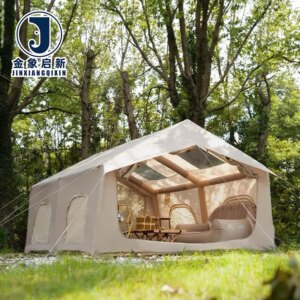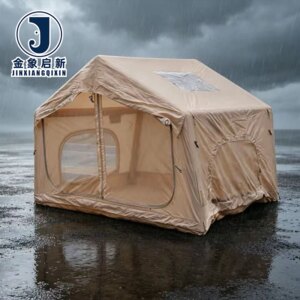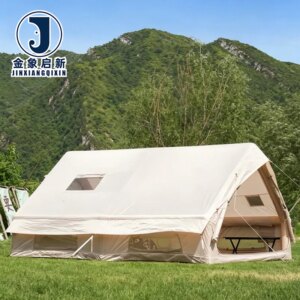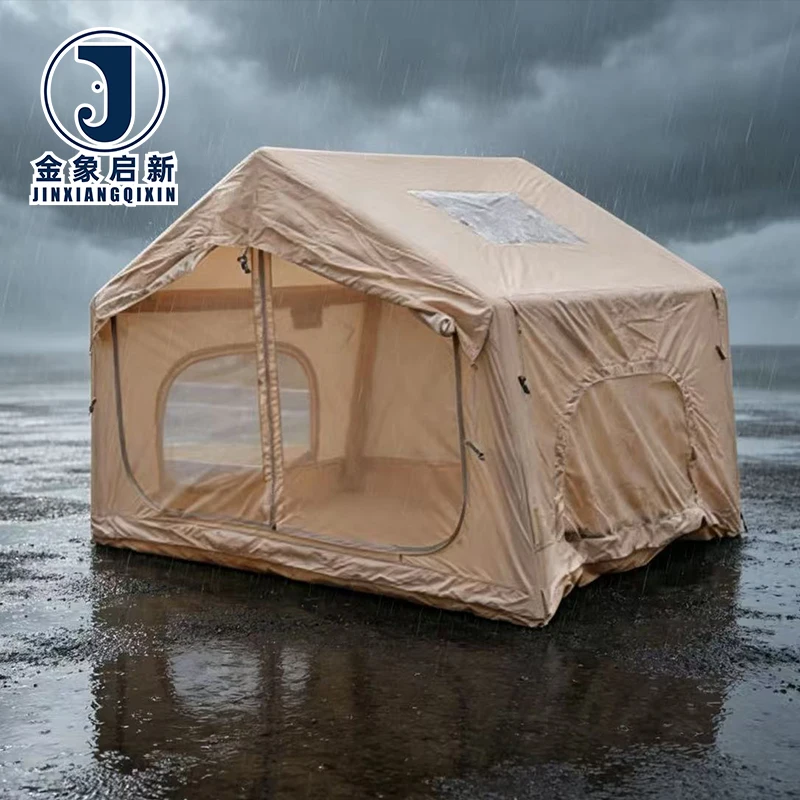
Proven Fabric Engineering — Nearly 30 years of focused coated fabric process control ensures that the PVC tarpaulin used in every Inflatable Tent for truck and transport meets batch-to-batch coating weight and adhesion standards before it leaves the line.
Technical Specifications
| Parameter | Value |
|---|---|
| Product Type | Inflatable Tent |
| Core Material | PVC tarpaulin |
| Key Performance | Waterproof, UV-resistant (test basis not stated in source), tear-resistant |
| Capacity | 5-8 Person |
| Opening Mechanism | Automatic opening |
| Season Rating | 4-Season |
| Customization Service | OEM & ODM (sample customization, pattern printing) |
| Quality Control System | Strict full-process quality inspection with dedicated QA&QC staff |
| Standards | ISO9001, ISO14001, ISO45001, CE |
Application Suitability
| Application | Exposure & Requirement |
|---|---|
| Fleet staging and roadside breakdown shelter | Road grime splash, high wind loading, frequent deployment and pack-down |
| Temporary field office at transport depots | Prolonged UV exposure, all-day weather contact, interior workspace stability |
| Mobile weather shelter for equipment operators | Heavy rain, equipment abrasion against fabric, rapid setup for time-sensitive tasks |
Why Stated Waterproof Claims Fail When It Matters Most on the Road
A waterproof Inflatable Tent for truck and transport only delivers if the seam integrity matches the fabric rating.
Fleet operators routinely deploy shelters at breakdown sites and staging yards where standing water and driving rain test every welded joint. When the waterproof claim rests solely on the PVC tarpaulin surface without verified seam construction, water finds the stitch line or heat weld before the first shift ends. Field crews then spend hours managing interior moisture instead of completing roadside repairs or depot inspections [NEED_CITE: seam integrity testing for PVC tarpaulin assemblies]. The cost shows up as damaged tools, delayed dispatch, and warranty disputes that erode trust between fleet managers and their shelter suppliers.
Covering the Crew When the Load Cannot Move
An Inflatable Tent for truck and transport serves as the critical workspace when a trailer is down or a delivery schedule demands overnight staging. The automatic opening mechanism allows a two-person crew to establish a dry, sheltered command area in minutes rather than wrestling with pole-and-sleeve assemblies in wind and rain. This rapid deployment directly protects billable hours for fleet operators running tight logistics schedules where every hour of roadside delay compounds across the delivery network.
Surviving the Yard Environment Day After Day
Transport depots and staging yards expose temporary structures to diesel particulate, tire spray, and concentrated UV that consumer-grade tents simply cannot withstand. The PVC tarpaulin core material used in this Inflatable Tent for commercial outdoor shelter resists the chemical and abrasion load typical of working yard environments. Tear-resistant construction handles the repeated inflation, deflation, and rough packing that mobile field operations demand over a service cycle [NEED_CITE: tear resistance requirements for industrial temporary shelters].
Reading Beyond the Basic Spec Sheet
The waterproof performance of PVC tarpaulin depends on both coating continuity and base fabric density; a lighter base fabric may accept a full coating but will flex more under wind load, stressing the heat-welded seams over repeated deployments. UV-resistant treatment must be verified against a recognized test basis to confirm that the fabric will not embrittle after extended yard exposure, and buyers should request the specific test report rather than accepting a generic claim. The 4-season rating indicates intended use across temperature ranges, but the actual low-temperature flexibility and high-temperature dimensional stability depend on the plasticizer system used in the PVC compound — information that should be confirmed with the material specification sheet before committing to a bulk order.
The Cost of Overlooking Weld and Seam Specifications
When a buyer specifies only the fabric weight and ignores the weld parameters, the seam becomes the weakest link in the entire Inflatable Tent for truck and transport structure. Under wind load and repeated inflation cycles, poorly controlled heat welds peel apart at the flex points long before the PVC tarpaulin itself shows any degradation. Fleet operators then face emergency shelter failure at the worst possible moment — during a roadside breakdown in heavy weather — and the replacement cost is minor compared to the operational disruption and cargo exposure that results [NEED_CITE: weld failure modes in inflatable PVC structures].
Direct Mill Control Over the Fabric That Reaches Your Site
The production process for this Inflatable Tent for commercial outdoor shelter runs on 3 full production lines with 36 sets of professional processing equipment, giving the mill direct control over coating weight consistency from the first roll to the last. A 10-technician R&D team handles material selection, pattern printing, and custom sizing to match specific fleet branding or site layout requirements. Dedicated QA and QC staff conduct full-process quality inspection, catching coating defects and weld inconsistencies before they reach the packing stage rather than after the container is loaded. OEM and ODM customization is supported through sample development within days, allowing fleet operators to validate fit, colour, and reinforcement details before authorizing mass production.
Documentation & Verification
- Material specification sheet confirming PVC tarpaulin grade and coating weight for each Inflatable Tent for truck and transport order
- Batch test report for UV-resistant performance upon request, stating the specific test basis applied
- Pre-shipment inspection record covering welded seam integrity and fabric surface consistency
- ISO9001, ISO14001, ISO45001, and CE certificates included with commercial shipment documentation
- Roll packing list detailing quantity and weight per carton for container loading verification
Fabrication, Handling & Storage
- Heat weld temperature and dwell time must be set to the specific PVC tarpaulin coating weight to avoid delamination at seam edges
- Reinforcement patches at inflation valve and tie-down points should be applied with compatible PVC adhesive and heat-activated bonding
- Store deflated and rolled on a flat surface to prevent permanent creasing in the PVC tarpaulin coating layer
- Avoid dragging the packed tent over abrasive surfaces during transport to protect the outer PVC coating from scoring
- Clean with mild detergent and soft brush; avoid solvent-based cleaners that can attack the plasticizer system in the PVC compound
- Inspect welded seams and valve attachments before each deployment to catch early signs of peel or fatigue cracking
Moving from Inquiry to Confirmed Specification
To specify an Inflatable Tent for commercial outdoor shelter that actually performs in your operating environment, provide the typical deployment conditions including wind exposure, expected rain intensity, and surface type at the setup location. Confirm the UV-resistant test basis your market requires and whether any flame retardant grade is needed for site compliance. Specify the customization scope — pattern printing, branding placement, or custom sizing — and indicate whether sample approval is required before production release.
Frequently Asked Questions
Q: How is the UV-resistant performance of the PVC tarpaulin verified before shipment?
A: UV-resistant performance is supported by test reports where applicable. Buyers should request the specific test basis and exposure duration stated on the report, then cross-check the material specification sheet included with the shipment to confirm the treatment matches the quoted grade for their intended outdoor exposure conditions.
Q: What OEM and ODM customization is available for fleet-branded inflatable tents?
A: Customization covers pattern printing, custom sizing, and reinforcement at high-stress points. A pre-production sample is developed for buyer approval, confirming colour accuracy, print registration, and weld placement before mass production begins, ensuring the delivered Inflatable Tent for truck and transport matches the approved specification.
Q: How does the automatic opening system hold up under repeated field deployment?
A: The automatic opening mechanism is designed for the inflation and deflation cycles typical of mobile field operations. The PVC tarpaulin fabric’s tear-resistant construction supports the stress at valve and fold points during repeated setup and pack-down over rough terrain without premature fatigue at the welded seams.
Q: What documentation accompanies each commercial order shipment?
A: Each shipment includes the material specification sheet, ISO9001, ISO14001, ISO45001, and CE certificates, a pre-shipment inspection record covering seam and fabric checks, and a detailed roll packing list. Batch test reports for UV-resistant or waterproof performance are provided where applicable to support site compliance verification.
Q: How should the tent fabric grade be specified for 4-season fleet operations?
A: Specify the expected temperature range and weather exposure for your operating region, then request the material specification sheet detailing the PVC tarpaulin coating weight and plasticizer system. Confirm low-temperature flexibility and waterproof performance align with your 4-season deployment requirements before authorizing production.