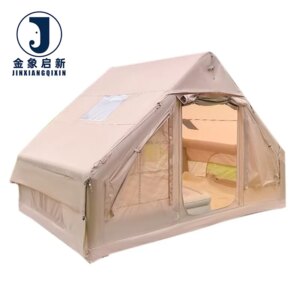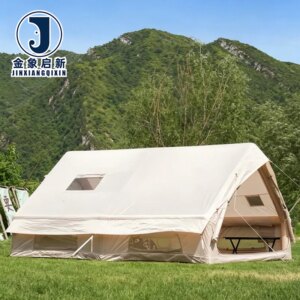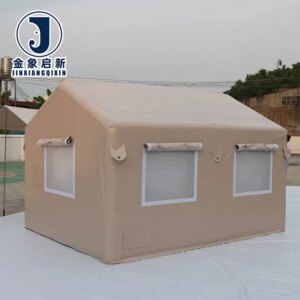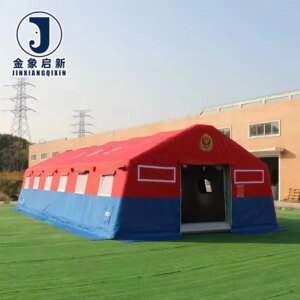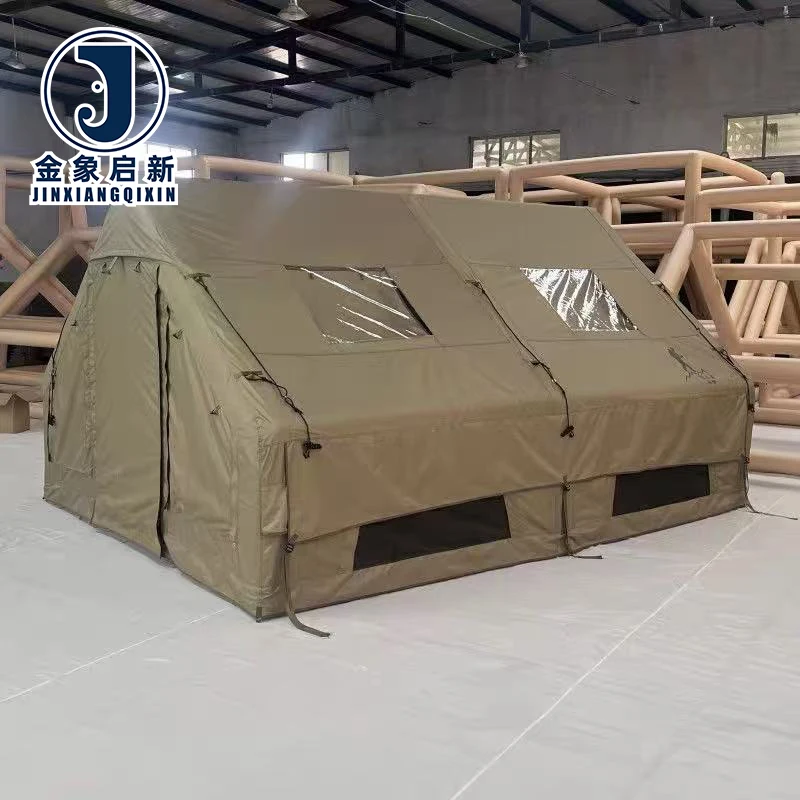
Deep Process Coating Control — A near-30-year PVC coated fabric specialist managing adhesion and coating weight across three production lines, ensuring every inflatable tent structure meets verified material specifications before dispatch.
Technical Specifications
| Parameter | Value |
|---|---|
| Product Type | Inflatable Tent |
| Core Material | PVC tarpaulin |
| Product Forms | Inflatable structure |
| Key Performance | Waterproof, UV-resistant (test basis not stated in source), tear-resistant |
| Customization Service | OEM & ODM — sample customization, pattern printing |
| Production Facility | 9,180 m² with 3 full production lines |
| Processing Equipment | 36 sets of professional equipment |
| R&D Team | 10 technicians |
| Quality Control | Full-process QA & QC with 100% pre-shipment inspection |
| Certifications | ISO9001, ISO14001, ISO45001, CE |
Application Suitability
| Application | Exposure & Requirement |
|---|---|
| Temporary site offices at construction projects | Wind load on inflatable beams, daily crew traffic, dust and moisture ingress |
| Equipment storage shelters in remote operations | Prolonged UV exposure, temperature fluctuation, abrasive ground contact |
| Mobile command centers for infrastructure maintenance | Rapid deployment cycles, repeated inflation and deflation, weather sealing |
| Temporary covered workspace for outdoor industrial events | High foot traffic, variable weather, branding and signage integration |
| Disaster relief rapid deployment | Extreme time pressure, diverse climatic conditions, transport and handling stress |
Why Material Specs Determine Whether Your Inflatable Tent Survives the First Storm
A quoted specification means nothing if the delivered roll cannot hold a weld under real inflation pressure.
Sourcing inflatable shelters that arrive with unverified material specs, inconsistent batch quality, or missing certifications delays projects and creates compliance risk. When a PVC-coated fabric is lighter than the stated GSM, the inflatable beams flex beyond their design envelope, and the welded seams open before the fabric itself shows any sign of strain. Buyers who skip pre-shipment verification routinely discover colour drift between rolls only after the structure is fully erected and visible to the end client [NEED_CITE: coating weight verification methods for PVC tarpaulin per ISO 2286]. The Inflatable Tent manufacturer you choose must provide documentation that ties every roll to its quoted specification, not just a generic data sheet.
Coating Adhesion and Inflatable Beam Integrity
The performance of any inflatable structure depends on the bond between the PVC coating and the base polyester fabric. When coating adhesion is weak, the air beams delaminate under cyclic inflation, creating bubbles that eventually split along the weld line. Jinan Jinxiang maintains process control over coating weight and adhesion across all three production lines, producing PVC tarpaulin that holds a clean heat-weld seam — the single most important fabrication requirement for custom inflatable shelter structures used in disaster relief and industrial operations.
UV-Resistant Formulation for Extended Outdoor Deployment
Inflatable tents deployed at construction sites or remote mining operations face continuous sun exposure that degrades untreated PVC within weeks, causing surface chalking and loss of tensile strength. This fabric is available in UV-resistant grades — confirm the specific treatment level required for your deployment climate and duration. The R&D team can adjust the UV stabiliser package to match the expected service environment, and test reports are provided where applicable to support the claim. Procurement teams specifying an Inflatable Tent for multi-week or multi-month outdoor use should request the UV test data matched to their regional solar exposure conditions [NEED_CITE: UV degradation test methods for coated fabrics].
Reading the Specification Sheet Beyond GSM
Coating weight alone does not determine how an inflatable tent fabric will behave under load. The base fabric denier and weave density govern tensile and tear strength, while the coating formulation controls waterproofing, flexibility, and weld receptivity. A lighter base fabric with a heavy coating may show high GSM on paper but fail at the weld because the coating-to-yarn ratio is unbalanced. Conversely, a tightly woven high-denier base with moderate coating weight often delivers better seam strength and long-term air-beam stability. Buyers evaluating a custom inflatable shelter should review the full construction — base fabric, coating method, and finished weight — rather than selecting on GSM alone.
The Hidden Cost of Skipping Pre-Shipment Fabric Verification
When a batch of inflatable tent fabric arrives below the quoted GSM, the consequences cascade through the entire fabrication process. The heat-weld parameters calibrated for the expected material thickness no longer produce a full-penetration seam, and the beams fail during inflation testing. Colour variation between rolls forces the fabricator to sort and match panels, adding labour and delaying delivery. If the UV-resistant treatment is absent or below specification, the structure degrades visibly within the first season, triggering warranty claims and damaging the fabricator’s reputation with their end client [NEED_CITE: batch consistency requirements for coated fabric procurement].
Why Fabricators Source Inflatable Tent Material Here
Three full production lines running 36 sets of professional processing equipment give the capacity to fulfil bulk roll orders with consistent coating weight across every batch. The 10-person R&D team develops custom samples within days, adjusting PVC formulation, thickness, and pattern printing to match your inflatable structure design. A dedicated QA and QC team inspects every production stage, with 100% pre-shipment inspection verifying that each roll meets the material specification sheet before it leaves the factory. OEM and ODM capability covers the full range from raw roll stock to finished printed panels, letting inflatable tent manufacturers consolidate their material sourcing under one certified supply chain (ISO9001, ISO14001, ISO45001, CE).
Documentation & Verification
- Material specification sheet stating base fabric denier, coating type, and finished GSM for each roll
- UV-resistance and treatment test reports matched to the specific batch where applicable
- ISO9001, ISO14001, ISO45001, and CE certificates provided for compliance audits
- Pre-shipment inspection record documenting coating weight, colour, and weld integrity checks
- Roll packing list with batch traceability for receiving QC at your fabrication facility
- Certificate of origin and customs documentation for international inflatable tent material shipments
Fabrication, Handling & Storage
- Heat-weld temperature and dwell time must be matched to the PVC coating formulation — request the weld parameter guide for this specific fabric grade
- Store rolls upright on end-caps to prevent flat-spot creasing that weakens the coating bond along the fold line
- Cut panels with a clean blade to avoid fraying the base polyester yarns, which reduces tear resistance at seam edges
- Avoid dragging rolls across abrasive surfaces during workshop handling to protect the PVC coating face from scuffing
- Use compatible PVC adhesive for field repairs, ensuring the solvent formulation matches the coating chemistry of this fabric
- Inflate test beams at the recommended pressure only — over-inflation stresses the weld beyond the coating’s elastic recovery
What to Include in Your Inquiry
Provide the intended deployment environment and expected duration of outdoor exposure so the R&D team can recommend the appropriate PVC formulation and UV treatment level. Specify whether you need raw roll stock for your own fabrication line or finished cut-and-welded panels with pattern printing and branding. Confirm the fire-retardant or anti-static requirements your end market mandates, as inflatable tent structures in certain jurisdictions must carry verified certification documentation. Share your annual volume and preferred roll width to receive accurate lead-time and batch-consistency commitments.
Frequently Asked Questions
Q: How is the UV-resistance of the PVC fabric verified and what test basis supports the claim?
A: UV-resistance is available in specific treatment grades. We provide test reports where applicable, showing the exposure duration and method used. Buyers should confirm the UV performance level required for their deployment climate before ordering, and we will match the formulation and supply the corresponding documentation with each batch.
Q: What custom sizing, material thickness, and pattern printing options are available for inflatable structures?
A: The 10-person R&D team develops samples in custom dimensions, PVC thickness, and colours, with pattern printing and branding applied during production. OEM and ODM requests are supported from sample development through mass production, and pre-production samples are submitted for approval before bulk fabrication begins.
Q: How do you ensure weld and seam integrity at high-stress flex points in inflatable tent construction?
A: Coating adhesion and formulation are controlled across all three production lines to produce PVC tarpaulin that accepts a consistent heat-weld. Every batch undergoes in-process QA checks, and 100% pre-shipment inspection verifies seam and surface quality. Weld parameter guidance is available to help fabricators optimise their equipment settings for this material.
Q: What documentation accompanies each shipment to support receiving QC and compliance audits?
A: Each shipment includes a material specification sheet, pre-shipment inspection record, roll packing list with batch traceability, certificate of origin, and ISO9001, ISO14001, ISO45001, and CE certificates. UV and treatment test reports are included where applicable, giving your receiving team the data needed to verify compliance on arrival.
Q: What is the sample development lead time for custom inflatable tent specifications?
A: Samples for custom PVC formulation, colour, thickness, and pattern printing are typically developed within days. The R&D team works directly from your specifications to produce a representative sample for approval before mass production, reducing the risk of batch-level mismatches once full-volume fabrication begins.