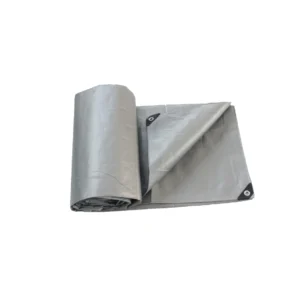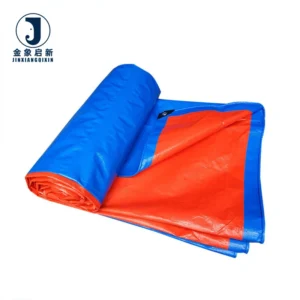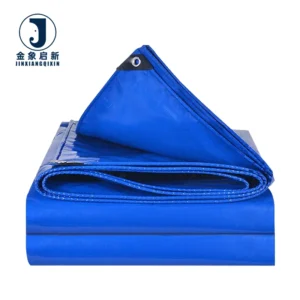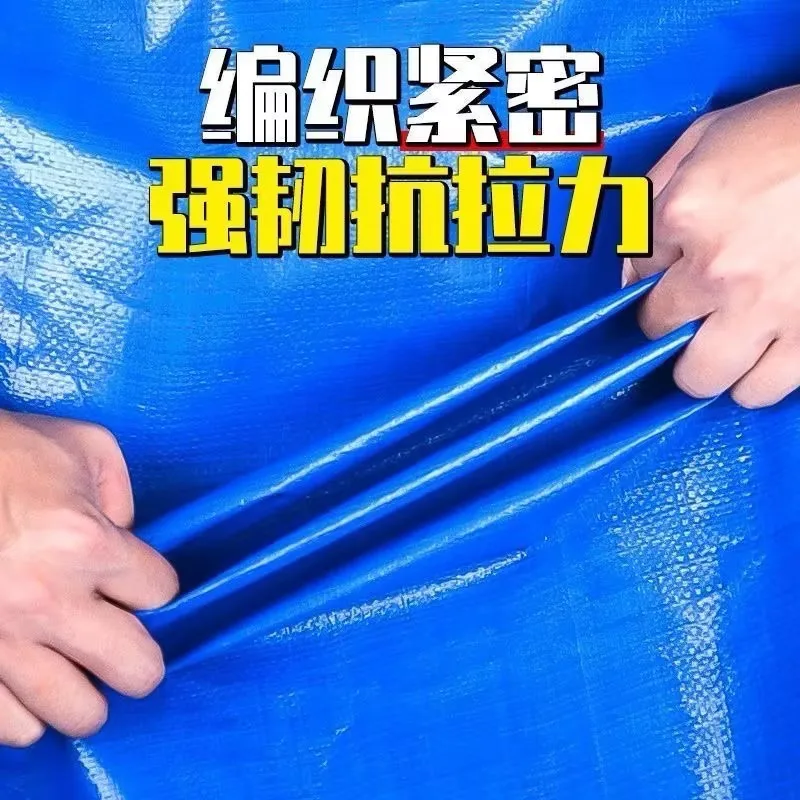
Deep process control over coating weight and adhesion — every roll of PE woven tarpaulin is weighed and inspected against the purchase order specification before dispatch, eliminating the mismatch between quoted and delivered material.
Technical Specifications
| Parameter | Value |
|---|---|
| Product Type | PE Tarpaulin |
| Base Fabric | PE woven fabric with PE coating |
| Weave Style | Plain |
| Waterproof | Yes |
| Mildew Resistance | Yes |
| UV Treatment | UV resistant (test basis not stated in source) |
| Construction | Heavyweight |
| Custom Sizes | Available |
| Custom Colors | Available |
Application Suitability
| Application | Exposure & Requirement |
|---|---|
| Flatbed and curtain-side truck load protection | Constant highway wind load, repeated tie-down flex, rain and road spray, UV exposure during parked intervals |
| Trailer and caravan weather cover | Long-term outdoor storage exposure, wind-driven moisture, UV degradation on upper surfaces |
| Outdoor tent and event shelter | Ground moisture, overhead rain, repeated assembly and teardown stress at grommet and pole contact points |
| Construction site equipment shelter | Abrasive dust, debris impact, standing water, forklift and crane proximity hazards |
Why a Generic-Size Cover Fails Before the Fabric Does
A cover cut to a standard size leaves loose material at every corner, and that loose material is the first point where abrasion and water ingress begin.
When a PE tarpaulin for truck and transport cover is ordered in a generic dimension, the excess fabric flaps under highway wind, concentrating stress at the hem and eyelet line. Operators end up cutting, folding or double-tying the surplus just to get a secure fit — each workaround introduces a new failure point. The result is a cover that fails at the edges long before the body of the fabric reaches its service limit [NEED_CITE: tarpaulin edge failure mechanics under aerodynamic load].
Sizing the Cover to the Trailer, Not to the Nearest Stock Roll
Every trailer model has a different load profile, deck height, and tie-down geometry. A PE tarpaulin for truck and transport cover sized to those exact dimensions eliminates loose fabric at the corners and reduces the wind catch that accelerates wear at the hem line. When the cover sits flush against the load, the eyelets carry only the intended tie-down tension rather than fighting the additional drag of excess material. Custom sizing also means the reinforced hem can be positioned precisely where the ratchet strap contacts the cover, preventing the abrasion that generic covers develop within the first few trips.
Hem and Eyelet Construction Under Real Road Stress
The point where a cover fails is rarely the field of the fabric — it is the perimeter. Eyelet spacing and hem reinforcement determine whether the cover survives repeated tie-down cycles or tears out at the first corner under crosswind load. On a curtain-side trailer, the lower hem endures constant rubbing against the chassis rail, and the upper eyelets carry the full lateral force of highway wind. PE tarpaulin for truck and transport cover applications demand a hem construction matched to the specific strap spacing and chassis geometry of the trailer, not a one-size-fits-all edge finish [NEED_CITE: tie-down load distribution across tarpaulin eyelet patterns].
Reading the Specification Sheet Beyond the GSM Number
A heavyweight classification tells you the fabric is in a certain range, but it does not explain what gives that weight its functional behaviour. The base fabric denier and plain weave count determine how load is distributed across the warp and weft yarns — a tighter weave with lower denier yarns can outperform a looser weave of heavier yarns in tear propagation resistance. The PE coating applied over the woven base provides the waterproof barrier and contributes to the overall stiffness of the sheet. A stiffer sheet is easier to tension across a load but harder to fold and store, which affects how operators handle it daily. The interaction between base fabric construction and coating weight is what ultimately decides whether the cover performs in road conditions or simply looks adequate on paper.
The Hidden Cost of Specifying by Price Per Square Metre Alone
When buyers compare PE tarpaulin quotations on unit price without verifying the actual delivered weight, they often receive material that is lighter than the specification they approved. A cover that arrives at a lower GSM than ordered will tear at the eyelets under loads it was supposed to handle, and the fleet operator will blame the cover design rather than the material substitution. This pattern repeats across industries where coated fabric is purchased in volume — the quotation states one grade and the roll delivers another. Requesting a pre-shipment weight verification record against the stated specification is the only way to confirm that what was ordered is what arrived [NEED_CITE: coated fabric delivered weight variance in bulk procurement].
What the Production Line Actually Controls
Every roll of PE tarpaulin for truck and transport cover produced in our facility passes through in-process quality checks at the coating stage, where coating weight is measured against the specification before the material moves to finishing. The three full production lines allow scheduling flexibility so that custom-size orders do not get delayed behind standard roll stock runs. The ten-person R&D team works directly from buyer-supplied trailer drawings to develop the cut pattern, ensuring that eyelet placement and hem allowance match the actual tie-down hardware on the vehicle. Before dispatch, every roll is inspected and recorded, giving the buyer a traceable quality record rather than an anonymous shipment.
Documentation & Verification
- Material specification sheet stating base fabric weave count and PE coating weight for each roll
- Pre-shipment inspection record confirming actual fabric weight against the purchase order
- Roll-by-roll packing list with batch identification for traceability after delivery
- UV treatment verification documentation confirming the grade applied to the production batch
- Custom sizing validation record cross-referenced to buyer-supplied trailer model dimensions
Fabrication, Handling & Storage
- Cut sheets with reinforced hem sections at all eyelet positions to distribute tie-down load across the PE woven base
- Store rolls horizontally on a flat surface to prevent permanent creasing in the heavyweight PE coated fabric
- Use heat welding parameters matched to the PE coating thickness for any on-site seam repairs
- Clean with mild detergent and water only — solvent-based cleaners can degrade the PE coating surface
- Allow folded covers to acclimatise before unfolding in cold conditions to prevent cracking at fold lines
Requesting a Specification That Matches Your Fleet
To move from an inquiry to a confirmed specification, we need the trailer model or deck dimensions, the tie-down system type and strap spacing, and the target market for compliance requirements. If you are ordering for a fleet operating under a standard colour scheme, provide the Pantone or RAL reference so we can develop a colour match sample before production. Let us know whether you require finished cut-to-size covers or roll stock for your own fabrication line.
Frequently Asked Questions
Q: How do I provide the exact trailer dimensions for a custom-fit cover?
A: Send the trailer manufacturer’s model drawing or a dimension sketch showing deck length, width, drop side height, and the position of tie-down rails. Our R&D team uses these measurements to develop a cut pattern that positions eyelets and reinforced hems to match your strap hardware, then confirms the layout with you before production release.
Q: What UV and mildew treatment documentation comes with the tarpaulin?
A: Each shipment includes a material specification sheet stating the UV-resistant treatment applied to the batch. For mildew resistance, the PE woven construction itself is inherently resistant, and the specification sheet confirms the waterproof coating integrity. If your market requires a specific test standard, raise this at the inquiry stage so we can arrange the appropriate testing.
Q: Can eyelet spacing and hem reinforcement be adjusted to my tie-down system?
A: Yes. Eyelet spacing is set to match the strap positions on your trailer or flatbed, and the hem reinforcement is sized to carry the load from your specific tie-down hardware. Provide the strap spacing and hardware type during the inquiry, and we will build the hem specification around those parameters.
Q: How are welded seams tested before shipment?
A: Every welded seam on a finished cover is inspected during the pre-shipment quality check. The inspection covers adhesion integrity at the weld line, particularly at corners and stress points where the cover flexes under load. Results are recorded in the pre-shipment inspection report that accompanies the dispatch documentation.
Q: What is the lead time for a custom-size PE tarpaulin order?
A: Lead time depends on the order volume and the level of customisation required. Custom-size covers with specific eyelet layouts and matched colours require a sample approval step before bulk production, which adds to the schedule. We provide the confirmed lead time in the quotation once the specification is finalised.