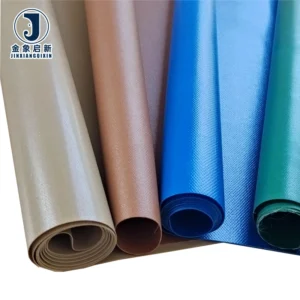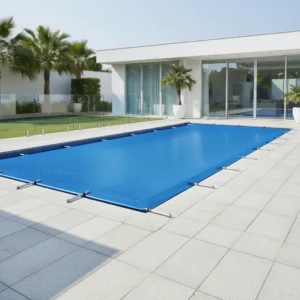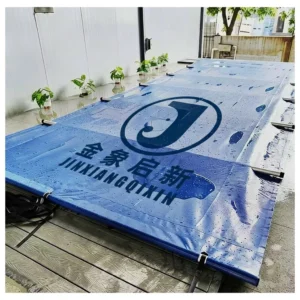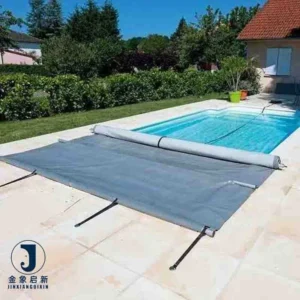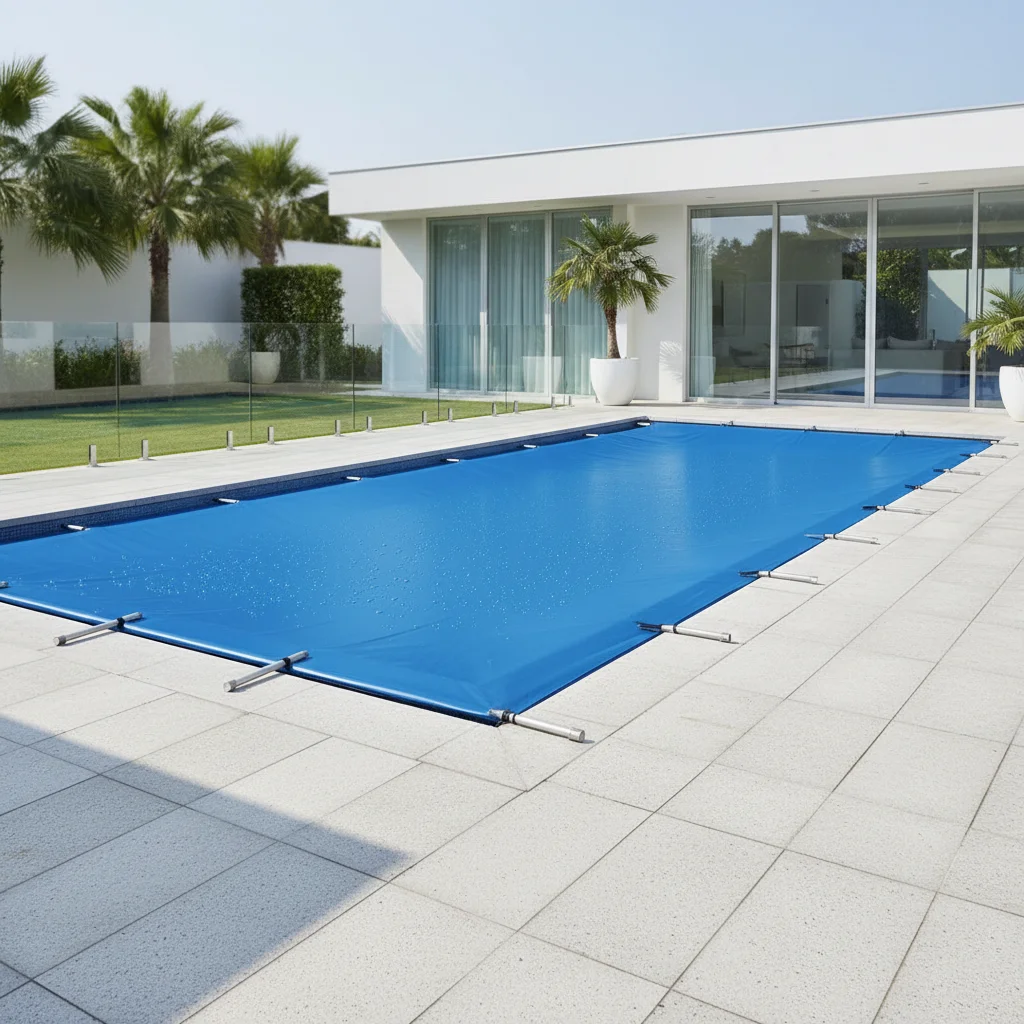
Custom Cut-to-Model Sizing — generic tarps leave gaps and flap in the wind; we cut each PVC pool cover to exact dimensions with reinforced hems and eyelets spaced for wind-load tie-down.
Technical Specifications
| Parameter | Value |
|---|---|
| Product Type | PVC Coated Tarpaulin Pool Cover |
| Coating Material | PVC |
| Weight Grade | Medium Weight |
| Waterproof | Yes |
| Anti-UV | Available (test basis not stated in source — confirm required standard) |
| Finish Options | Glossy or matte |
| Colour Options | Single or double-side colour, custom colour matching |
| Edge Reinforcement | Reinforced hems with eyelet placement to specification |
| Custom Width | Available to project dimension |
| Custom Length | Available to project dimension |
| Pattern Printing | Available |
| Certification | ISO, CE |
Application Suitability
| Application | Exposure & Requirement |
|---|---|
| Residential swimming pool cover | Continuous UV and rain exposure, wind-load tension on hems, debris impact |
| Commercial aquatic facility cover | High-frequency removal and re-installation, chemical splash from pool water, tie-down stress |
| Outdoor recreation water feature | Standing water on cover surface, algae and mildew resistance, seasonal UV load |
| Seasonal pool winterisation | Snow load, freeze-thaw cycling, prolonged UV dormancy period |
Why GSM Alone Fails Pool Cover Buyers at Inspection
Coating weight and base fabric construction must be verified together before the cover is shipped, not argued over at the dock.
I have watched fleet buyers accept a quotation that quotes one GSM, then receive rolls that weigh noticeably less on the scale at arrival. The cover gets installed, stretches under the first wind event, and the buyer is left with a tarp that never fit the pool frame to begin with. With pool covers, underweight material also means thinner coating at the weld lines — exactly where wind-load tension concentrates. [NEED_CITE: GSM verification methods for coated tarpaulin fabrics per ISO 3801]
Fitting the Cover to the Pool, Not the Other Way Around
Pool covers fail most often where the hem meets the tie-down, not in the field of the fabric. A PVC pool cover cut to exact dimensions with reinforced hems distributes the wind-load across more eyelets, reducing point stress. This matters in regions with seasonal storms where the cover stays installed for months without adjustment.
Colour Consistency Across a Multi-Pool Installation
When a resort or aquatic centre orders several pool covers in the same run, colour variation between rolls becomes visible once they are laid out side by side. Batch-to-batch colour consistency is locked at the sample approval stage, so the reference standard is documented before production begins. This prevents the common problem where one cover looks noticeably different from its neighbour under direct sunlight. [NEED_CITE: colour fastness and batch consistency standards for PVC coated textiles]
Reading the Spec Sheet Before the Cover Arrives
Medium weight PVC coated tarpaulin tells you the general grade but not the specific coating weight or base fabric denier. A pool cover that sits in direct sun for an entire season needs the coating and base fabric matched to that duty cycle — a lighter coating on a high-denier base behaves differently from a heavier coating on a loose weave. Ask for the material specification sheet stating actual GSM and base fabric construction, not just a product family range. Welded seam strength depends on coating thickness and adhesion; a thin coating may bond well but offers less abrasion resistance at the hem fold.
What Happens When the Weld Line Fails First
The most common failure point on a pool cover is not the fabric tearing — it is the welded seam splitting where the cover flexes under wind load. If the welding temperature or pressure is set for a different coating weight, the bond will be weaker than the fabric itself. This is why pre-shipment inspection includes checking weld integrity on every panel, not just a visual scan of the surface. A seam that passes a peel test in the factory but was welded at the wrong parameter will open within weeks under real-world tension. [NEED_CITE: heat welding parameters and peel strength testing for PVC coated fabrics]
Why Buy Pool Cover Fabric From a Coated-Fabric Specialist
Three full production lines and 36 sets of professional equipment support bulk roll output and cut-to-size orders simultaneously, so lead times stay predictable for repeat buyers. The 10-person R&D team handles material selection, sample development, and custom sizing — meaning you get a physical sample of your exact colour and eyelet layout before the production run starts. Dedicated QA/QC at every production stage, with 100% inspection before shipment, catches coating weight variance and weld defects before the cover leaves the facility. Pattern printing and branding capability means you can add a facility logo or safety marking directly onto the cover without a secondary finishing step.
Documentation & Verification
- Material specification sheet stating GSM, base fabric, and coating weight per roll
- Anti-UV test report supplied with shipment when UV treatment is specified
- Pre-shipment inspection record with 100% cover-by-cover check
- Roll packing list with dimensions and weight for customs clearance
- ISO and CE certificates covering the manufacturing system
- Certificate of origin for import duty purposes
Fabrication, Handling & Storage
- Heat-weld seams at manufacturer-recommended temperature to match the PVC coating grade
- Space eyelets at intervals that match expected wind-load for the pool cover installation site
- Store rolls upright in shaded, ventilated area to prevent flat-spot deformation on the coating surface
- Avoid dragging cut covers across rough concrete to protect the PVC coating from abrasion damage
- Clean with mild detergent; solvents may attack the PVC coating surface finish
What to Include With Your Pool Cover Enquiry
Send the exact pool dimensions — length, width, and any irregular corners or steps — along with the tie-down method you plan to use. Specify your target market so we confirm any anti-UV or fire classification requirements that apply locally. Indicate whether you need finished cut-to-size covers with eyelets installed, or roll stock for your own fabrication line. Request a sample in your chosen colour and finish before approving the production run.
Frequently Asked Questions
Q: How is the anti-UV treatment verified before shipment?
A: When anti-UV treatment is specified, we supply a test report with the shipment documentation. The test basis depends on the standard required in your market — confirm the applicable standard at the enquiry stage so the correct treatment grade and duration are applied during coating. We do not ship UV-treated material without supporting test data.
Q: Can you cut pool covers to non-rectangular shapes?
A: Yes. We cut to any shape provided the dimensions and corner radii are confirmed in writing before production. Irregular shapes may require additional hem reinforcement at stress concentration points, which we flag during the sample approval stage so there are no surprises on the finished cover.
Q: What eyelet spacing do you recommend for wind-load areas?
A: Standard spacing works for sheltered installations, but exposed pools in windy regions benefit from closer spacing along the windward edge. We confirm eyelet placement with you at the sample stage based on your site conditions, and reinforce the hem around each eyelet to prevent pull-through under tension.
Q: How do you ensure colour consistency across multiple covers?
A: Colour is locked at the sample approval stage using a physical reference standard. All covers in the same order are produced from the same coating batch where possible, and every roll is checked against the approved reference during pre-shipment inspection. Any deviation is caught before dispatch, not at your site.
Q: What is the minimum order for custom-sized pool covers?
A: Minimum order depends on whether you need finished cut-to-size covers or roll stock. Finished covers in standard colours can be produced in smaller quantities, while custom colour or print orders require a minimum run to maintain coating consistency. Share your quantity and specification at the enquiry stage for a specific lead time.