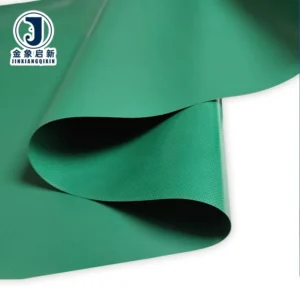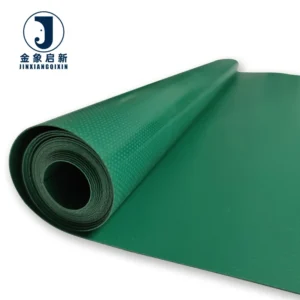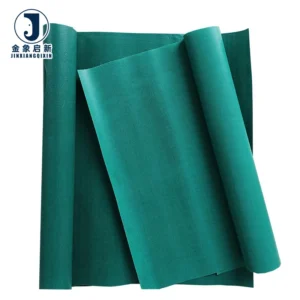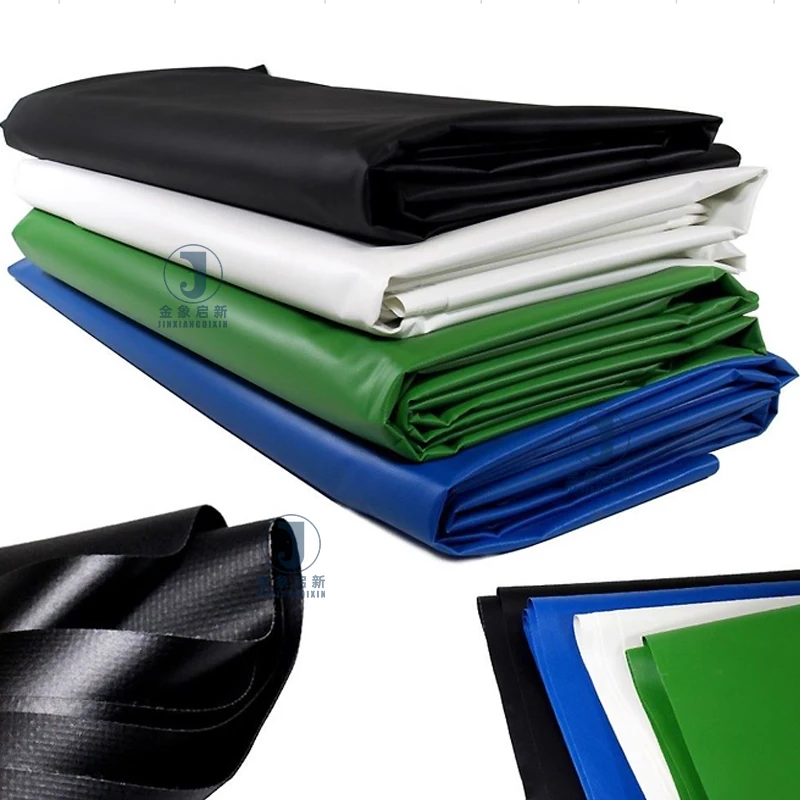
Proven Coating Adhesion — Hot-melt coating technology bonds PVC to high-tenacity polyester at the molecular level, preventing delamination under the repeated flex cycles that truck and trailer covers endure on the road.
Technical Specifications
| Parameter | Value |
|---|---|
| Product Type | PVC Coated Tarpaulin Roll |
| Base Fabric | 100% high tenacity polyester yarns |
| Coating Material | PVC |
| Coating Method | Laminated technology & Hot-melt Coating technology |
| Waterproof | Yes |
| Cold Crack Resistance | Yes |
| Anti-Mildew | Yes |
| Anti-Static | Yes (test basis not stated — confirm certification required for your site) |
| Flame Retardant | Available as special treatment (grade not stated — confirm the grade required for your market) |
| Anti-Cold Treatment | Available as special treatment |
| 3P Treatment | Available as special treatment |
| Tearing Strength | Outstanding for welding (test standard not stated) |
| Adhesion Strength | Good (test standard not stated) |
| Color Fastness | Best color fastness (source value — verify against manufacturer catalog) |
| Outdoor Life | 3-5 years (source value — verify against manufacturer catalog) |
| Key Features | Waterproof, cold crack resistant, anti-mildew, anti-static capable |
Application Suitability
| Application | Exposure & Requirement |
|---|---|
| Truck and trailer load covers | Constant road vibration, tie-down abrasion at corners, seasonal temperature swings, UV exposure |
| Side curtain fabric for transport fleets | Repeated flex cycles at curtain runners, wind load stress, weld seam integrity at panel joints |
| Transport equipment OEM fitment | Model-specific sizing, abrasion resistance at chassis contact points, long-term colour consistency |
| Flatbed and tipper load protection | Direct weather exposure, mechanical stress from cargo shifting, forklift contact during loading |
Why PVC Coated Tarpaulin for Trucks Fails at the Weld Line First
Weld seam failure almost always precedes fabric failure on truck covers because flex stress concentrates at the exact point where two panels meet.
Fleet operators regularly see tarpaulin panels that still look intact while the welded seams split open along the trailer’s highest-flex zones — typically the rear quarter and the areas around tie-down straps. This is not a material defect in the conventional sense. The PVC coated tarpaulin for trucks experiences repeated bending and stretching as the load shifts during transit, and if the tearing strength at the weld is insufficient, the seam gives way long before the body of the fabric shows wear. [NEED_CITE: tensile and tear test methods for coated fabrics per ISO 1421] The result is a cover that needs replacement not because the coating failed or the polyester base degraded, but because the construction method could not handle the operational stress profile.
Coating Adhesion Under Road Vibration and Load Flex
The bonding between the PVC coating and the polyester base fabric determines how well the material holds together when subjected to the constant vibration and flexing of highway transport. Laminated and hot-melt coating technologies create a mechanical and chemical bond that resists separation even where the fabric bends around corners and tie-down points. This adhesion strength is what prevents the coating from peeling away from the base yarns at stress concentration areas, a failure mode common in cheaper PVC coated tarpaulin for trucks where the coating sits on the surface rather than penetrating the weave structure.
Cold Crack Resistance Across Seasonal Operating Ranges
Truck covers operate through temperature extremes that would make lesser materials stiffen and crack. Cold crack resistance ensures the PVC remains flexible in winter conditions, maintaining its protective function when the material is folded, unfolded, or subjected to impact from shifting cargo in freezing temperatures. This characteristic is essential for fleets operating across regions where seasonal temperature variation is significant, as the tarpaulin must perform consistently whether installed in summer heat or winter cold without developing micro-fractures at fold lines. [NEED_CITE: DIN standard test methods for cold crack resistance in coated fabrics]
Reading the Specification Sheet Beyond Surface Weight
The interplay between base fabric denier, weave density, and coating weight determines the actual performance of the material far more than any single parameter alone. A high GSM achieved through heavy coating on a loosely woven base will deliver poor tear resistance because the coating bridges gaps between yarns without structural support from the weave. Conversely, a tightly woven high-tenacity polyester base with moderate coating weight delivers superior tensile and tear performance because the yarn structure carries the mechanical load while the coating provides weather protection and surface durability. Hot-melt coating technology further influences this equation by ensuring the PVC penetrates the weave rather than sitting on top, which improves both adhesion strength and the tearing performance at welded seams. The coating method also affects how the material behaves during fabrication — hot-melt coated fabric typically welds more predictably because the coating is uniformly distributed through the fabric cross-section, giving consistent melt behaviour at the seam.
The Hidden Cost of Specifying on Price Per Square Metre Alone
When procurement decisions focus exclusively on unit cost, the material that arrives often meets the quoted GSM but achieves it through a thicker coating on a lighter base fabric. This construction passes the weight check on the scale but delivers substantially lower tear resistance at the points where the cover flexes most during service. The cover may last through the first season, but by the second, weld seams begin splitting and the coating shows delamination at high-stress zones. [NEED_CITE: field failure analysis of coated fabric seams under cyclic loading] Fleet operators then face replacement costs and cargo exposure claims that far exceed the initial saving on material. Colour variation between rolls in the same order compounds the problem — when a damaged panel is replaced, the patch is visibly different from the surrounding fabric, making the entire trailer look poorly maintained.
Why Transport Fleets Source This PVC Coated Tarpaulin for Trucks Here
Three full production lines with 36 sets of professional equipment provide the capacity to deliver consistent roll stock for fleet-scale orders without the extended delays that smaller operations impose on custom widths and colours. A dedicated 10-person R&D team develops samples within days for custom sizing to specific trailer models, allowing operators to verify fit before committing to bulk production. Every production stage includes QA/QC oversight with 100% pre-shipment inspection, catching colour variation and GSM deviation before the rolls leave the facility rather than after they arrive at the depot. [NEED_CITE: ISO quality management system requirements for coated fabric manufacturing] The 9,180 square metre facility in Jinan supports full customisation from pattern printing to reinforced edge construction, with ISO and CE certification backing the documentation that compliance-sensitive markets require.
Documentation & Verification
- Material specification sheet stating exact GSM, base fabric denier, and coating weight per roll
- Test reports for flame retardant and anti-static treatments where applicable to your order
- Pre-shipment inspection record confirming colour consistency across all rolls in the batch
- Certificate of origin and customs documentation for cross-border logistics
- Roll packing list with individual roll weights and dimensions for receiving verification
Fabrication, Handling & Storage
- Hot-melt coated PVC requires adjusted welding temperature and dwell time versus laminated-only fabrics to achieve full seam penetration
- Store rolls upright on end caps to prevent permanent creasing across the coated surface width
- Allow cold-stored rolls to acclimatise before unrolling to avoid coating micro-fractures at fold lines
- Reinforce tie-down eyelet zones with additional fabric patches to distribute load across the polyester base weave
- Use PVC-compatible cleaners only — solvent-based products can degrade the coating surface over repeated wash cycles
What to Include in Your Enquiry
Provide the specific truck and trailer models you need covers for, along with the operating environment — highway exposure, regional temperature range, and any fire safety or anti-static compliance requirements your target market mandates. Specify whether you require roll stock for in-house fabrication or finished covers cut and welded to model dimensions, along with annual volume estimates and colour or branding requirements. Sample development is available within days to confirm material performance and fit before production commitment.
Frequently Asked Questions
Q: How do I verify the GSM on arrival matches the quotation?
A: Every shipment includes a material specification sheet stating the exact coating weight and base fabric denier for your order. Rolls are inspected at the production facility before dispatch, and you can conduct independent weight verification on receipt by cutting a measured sample from any roll and comparing it against the documented specification.
Q: What flame retardant grades are available and do they meet my market’s requirements?
A: Flame retardant treatment is available as a special option, with the specific grade determined by your target market’s fire safety regulations. Provide your compliance requirements at enquiry stage so the appropriate grade can be specified, tested, and documented with a test report included in your shipment documentation package.
Q: How are welded seams tested to prevent failure at flex points?
A: The material is engineered with outstanding tearing strength for welding, meaning the fabric resists tear propagation at the weld zone where stress concentrates during load flex. Weld parameters are calibrated to the hot-melt coating structure to ensure consistent seam integrity across the full panel length.
Q: What anti-static certification is provided for site compliance?
A: Anti-static treatment is available with test documentation to support site compliance requirements. Specify the standard or certification your operation requires at enquiry stage, and the corresponding test report will be supplied with your shipment to verify the treatment meets the stated performance criteria.
Q: Can the tarpaulin be cut and finished to fit my specific trailer model?
A: Custom sizing to specific truck and trailer models is supported through the R&D team, with samples developed within days for fit confirmation. Provide vehicle dimensions and any reinforcement requirements at tie-down points, and finished covers can be produced with model-specific cuts and welded seam construction.