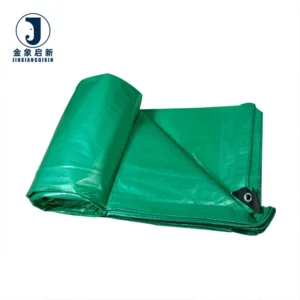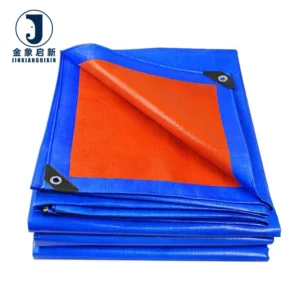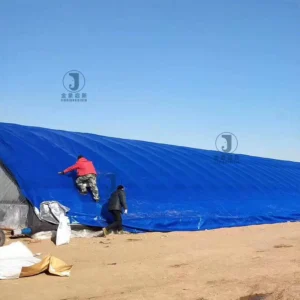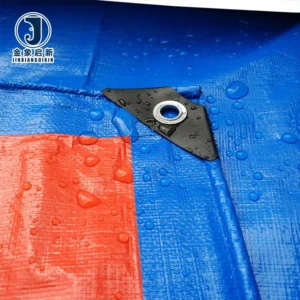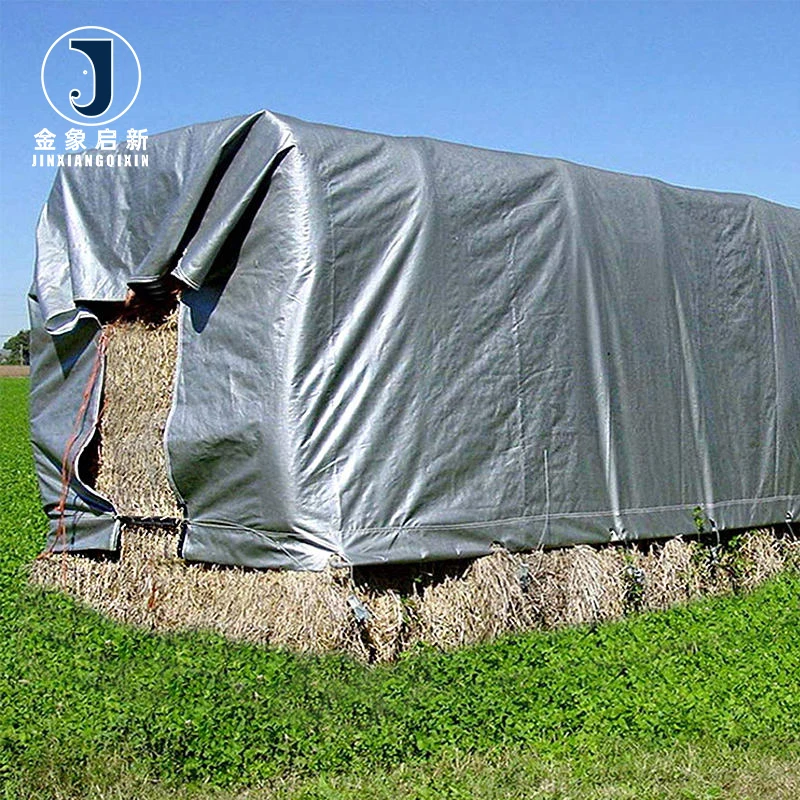
Precision Fitment — covers are dimensioned to the trailer model, not cut from a generic roll, with reinforced hems engineered for the exact tie-down points where transport tarps fail first.
Technical Specifications
| Parameter | Value |
|---|---|
| Product Type | PE Tarpaulin Roll / Finished PE Tarpaulin |
| Material Construction | HDPE woven base with LDPE lamination on both sides |
| Fabric Weight | 45 gsm ~ 400 gsm (confirm the grade for this item) |
| Mesh Count | 6×6, 8×8, 10×10, 12×12, 14×14 |
| Thickness | 0.2–0.4 mm / 8–16 mil |
| Roll Width Options | 6 ft, 8 ft, 10 ft, 12 ft, 2 m, 4 m, 6 m |
| Roll Length Options | 100 yards, 100 meters, or custom |
| Color Options | Blue, Blue/Orange, Green, Grey, Black, Clear, Grey/Green, Orange, or any pantone color |
| Hemming Margin | 4 cm unless specified |
| Roping | PP rope on all four sides |
| Eyelet Options | Galvanized, PC, brass, or aluminum — every 3 ft or 1 m interval |
| Corner Guards | PP or PE reinforced plastic |
| Gussets | Available for heavy-duty tarps |
| Flame Retardant | NFPA 701 listed as option — confirm the grade required for your market |
| UV Treatment | Available — test basis not stated, request test report |
| Key Features | Waterproof, tear resistant, anti-mildew, washable, weather proof, anti-aging |
Application Suitability
| Application | Exposure & Requirement |
|---|---|
| Flatbed trailer load cover | Constant road vibration, wind uplift at highway speed, UV from direct sun, abrasion from load edges |
| Curtain-side trailer fabric | Repeated flexing at fold points, lateral tie-down tension, exposure to road spray and diesel particulates |
| Box trailer rear door cover | Impact from loading docks, frequent opening and closing stress, rain ingress prevention at seal edges |
| Construction equipment wrap | Static outdoor exposure across seasons, UV and moisture, dust and debris contact on site |
| Agricultural pallet cover | Moisture from produce respiration, handling by forklift tines, UV in open-yard stacking |
Why a Generic-Size PE Tarpaulin for Truck and Trailer Cover Fails Within Weeks
A cover that does not match your trailer’s exact dimensions creates stress concentrations at every point where the fabric bridges a gap rather than sitting flush against the load.
Fleet operators often order truck covers by standard width and length, assuming a few extra centimetres of overhang will compensate. In practice, that overhang catches wind at speed, lifts the tarp off the load, and concentrates the entire tie-down force on the nearest eyelet row. Within a short period, the hem tears from the eyelet outward — the most common failure mode on long-haul routes [NEED_CITE: tensile and tear test methods for coated fabrics per ISO 1421]. A PE tarpaulin for truck and trailer cover cut to the specific model eliminates the slack that causes this cycle, keeping the fabric under even tension across the full surface.
Dimensional Fitment and Load-Specific Sizing
Every trailer model has a distinct combination of deck width, side rail height, and rear overhang. A curtain-side trailer needs fabric that folds cleanly into the track channel, while a flatbed requires enough drop to cover the load profile plus wind deflection under way. We dimension each PE tarpaulin for truck and trailer cover against the operator’s trailer drawing, not a catalogue size, so the cover sits flush when tensioned.
Hem Construction and Tie-Down Load Transfer
The PP rope sewn into all four edges serves a structural function: it distributes the tie-down strap load along the hem rather than letting it concentrate at a single eyelet. Galvanized eyelets spaced at one-metre intervals provide multiple attachment points so tension is shared across the full perimeter. Reinforced plastic corner guards at the four corners — the highest-stress tie-down locations — prevent the rope from cutting through the laminated fabric under sustained strap tension.
Reinforcement at the Points Where Transport Covers Actually Fail
Field returns from fleet operators consistently show damage starting at three locations: the corner eyelet where the ratchet strap hooks on, the fold line where the curtain retracts into the track, and the load-edge contact zone where the fabric rubs against sharp cargo profiles. Reinforced plastic corner guards address the first, heavier mesh count grades address the second, and gussets added to high-wear zones address the third [NEED_CITE: DIN 4102 fire classification for building materials]. Specifying the right reinforcement at each of these points extends service intervals substantially.
Reading GSM and Mesh Count Together for Transport Duty
Fabric weight in GSM tells you how much material is in a square metre, but it is the mesh count — the weave density of the HDPE base — that determines how well that weight resists tearing under point loads. A 200 gsm tarp with a 6×6 mesh has thicker individual yarns but fewer of them, meaning a tear, once started, propagates quickly across the open weave. The same weight at 12×12 uses finer, more densely packed yarns, creating a tighter grid that arrests tear propagation. For long-haul PE tarpaulin for truck and trailer cover applications where wind flex and strap tension are constant, the higher mesh count delivers better real-world durability even at identical GSM [NEED_CITE: HDPE weave density and tear propagation in laminated fabrics].
The Cost of Specifying Without Verification
When a quotation states a GSM value but no pre-shipment weight check is performed, the delivered roll can arrive lighter than agreed — sometimes by a margin large enough to change the fabric’s handling and strength characteristics. Similarly, UV treatment claimed on a specification sheet without a supporting test report leaves the buyer exposed to accelerated degradation on open-road routes. Batch colour variation across rolls in the same shipment becomes visible only when two panels hang side by side on adjacent trailers. These are not theoretical risks; they are documented causes of premature cover replacement across logistics fleets. Requesting inspection records and test documentation before dispatch closes each of these gaps.
Why Sourcing PE Tarpaulin for Truck and Trailer Cover Here Makes Sense
Thirty years of coated fabric production gives the manufacturing team direct control over LDPE lamination adhesion — the bond between coating and HDPE weave that determines whether the laminate delaminates under repeated flexing. Three full production lines and 36 sets of professional equipment support bulk roll orders without compressing lead times for fleet-sized quantities. A 10-person R&D team develops samples cut to your exact trailer dimensions within days, not weeks, so you can verify fitment before committing to a full production run. QA inspection runs at every stage, with 100 per cent pre-shipment checks confirming GSM, eyelet spacing, and dimensional accuracy against the purchase specification. The result is a PE tarpaulin for truck and trailer cover that matches what was quoted, every time.
Documentation & Verification
- Material specification sheet stating GSM, base fabric mesh count, and LDPE coating weight per side
- Pre-shipment inspection record confirming roll dimensions, eyelet spacing, and hemming against order
- UV treatment test report documenting exposure basis for long-haul road applications
- Flame retardant certificate for NFPA 701 grade where specified for your market
- Roll packing list with individual roll weights and dimensions for container loading audit
Fabrication, Handling & Storage
- Heat-seal laminated LDPE surfaces at temperatures matched to the coating thickness to avoid delamination at seam lines
- PP rope hemming absorbs tie-down strap tension; position ratchet hooks on the rope, not directly on eyelets
- Store rolls flat on pallets to prevent permanent creasing in the HDPE woven base fabric
- Unfold tarps at ambient temperature to avoid cracking the LDPE laminate in cold-condition transit
- Clean with mild detergent; avoid solvents that degrade the LDPE coating bond on the woven surface
- Cut panels with a 4 cm hemming margin to accommodate the standard PP rope insertion channel
Before You Request a Quote
Tell us the trailer model you are covering — make, deck length, side height, and whether the cover is for flatbed, curtain-side, or box trailer use. Specify the GSM and mesh count range your fleet standard requires, along with any colour or print requirements for branding. If your market requires flame retardant certification, state the standard so we include the correct test documentation with your PE tarpaulin for truck and trailer cover order. We will respond with a specification recommendation and sample development timeline.
Frequently Asked Questions
Q: How do you match the tarpaulin size to my specific trailer model?
A: We work from your trailer’s technical drawing — deck width, length, side drop, and any track or rail clearances — to cut each cover to model-specific dimensions. This eliminates the wind-catching overhang and slack zones that cause generic-size tarps to fail early at the hem and eyelets.
Q: What eyelet spacing and reinforcement options are available for tie-down loads?
A: Standard spacing is every one metre or three feet with galvanized eyelets. Brass, aluminum, and PC options are available. PP rope runs inside all four hems to distribute strap load, and reinforced plastic corner guards protect the highest-stress tie-down points from cutting through under ratchet tension.
Q: How is UV treatment verified for long-haul road exposure?
A: Where UV treatment is specified, we provide a test report documenting the exposure basis and test method used. This lets your procurement team confirm the treatment matches the expected solar exposure on your routes rather than relying on an undocumented claim on the quotation.
Q: Can I order a sample cut to my trailer dimensions before bulk production?
A: Yes. Our R&D team produces samples cut to your exact trailer specifications within days. You install the sample on the trailer, verify fitment and tie-down alignment, and approve before we run the full production batch — eliminating dimensional errors on the bulk order.
Q: What GSM and mesh count do you recommend for heavy-duty truck covers?
A: Higher mesh counts like 12×12 or 14×14 arrest tear propagation better under constant road flex, even at the same GSM as a looser weave. The right combination depends on your load profile, route exposure, and tie-down system. Share your application details and we will recommend the grade that matches your operating conditions.