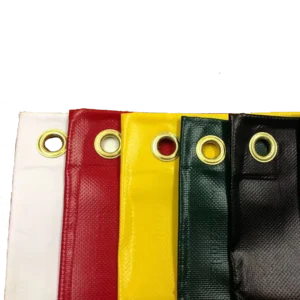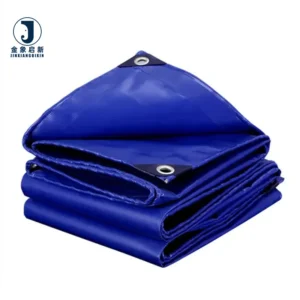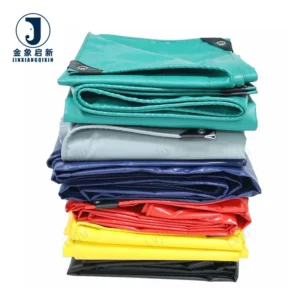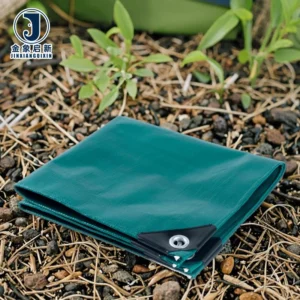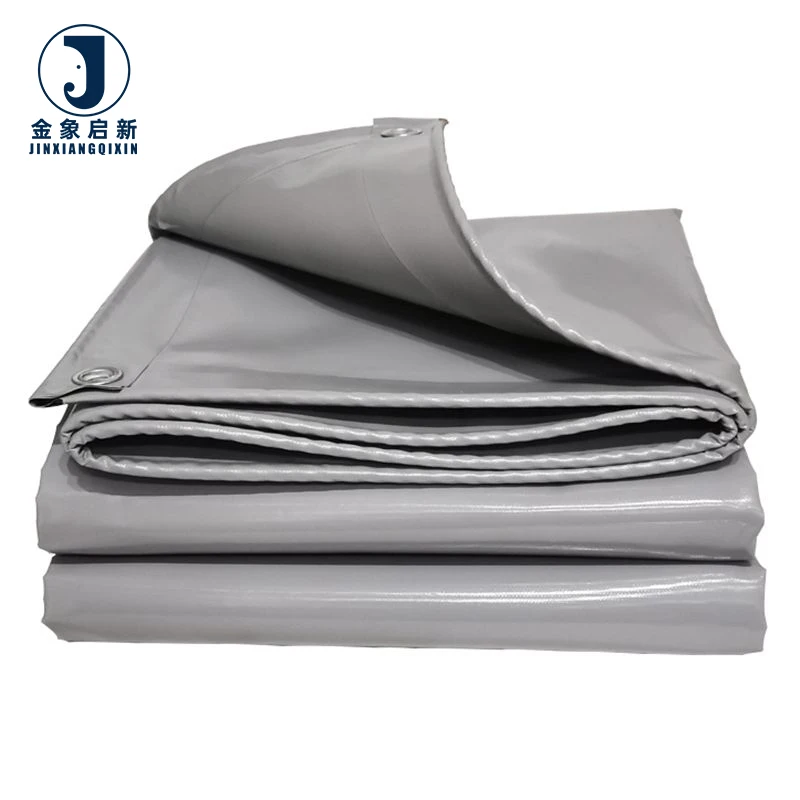
Coating Weight Adhesion Control — nearly 30 years of deep process control over knife-coating parameters ensures the PVC layer bonds uniformly to the base fabric, preventing delamination at high-stress flex points on moving loads.
Technical Specifications
| Parameter | Value |
|---|---|
| Product Type | PVC Knife-Coated Tarpaulin |
| Weight | 500 to 600 g/m² |
| Coating Method | Knife coated |
| Coating Material | PVC |
| Waterproof Rating | Anti-permeable ≥ 20KPa |
| Low-Temperature Flexibility | Not fractured at -30°C |
| Flame Retardancy | Available in flame retardant grades ≤ 10 seconds — confirm the grade required for your market |
| Anti-UV Treatment | Anti-UV treated — confirm test basis for your regional compliance |
| Heat Sealing | High-frequency heat combined, watertight, crack resistant |
| Water Absorption | Almost none, quick drying after rain |
| Chemical Resistance | Acid, alkali, brine corrosion resistant |
| Tensile Strength | High tensile strength — test standard available on request |
Application Suitability
| Application | Exposure & Requirement |
|---|---|
| Truck and trailer side curtains | Constant flexing at load shifts, road debris abrasion, sustained UV and highway spray exposure |
| Custom-fit truck covers | Dimensional accuracy to trailer model, tie-down stress at eyelet and hem points, wind flap fatigue |
| Construction and logistics load covers | Puncture risk from shifting cargo, chemical splash from industrial materials, repeated folding and unfolding |
| Car tents and canopies | Prolonged sun exposure, rain pooling on horizontal spans, frequent assembly and teardown |
Why Generic-Size Covers Fail Where Precision Fitment Matters
A truck cover cut to a generic pattern leaves cargo exposed at the edges and wastes time wrestling fabric into place on-site.
Fleet operators and transport contractors regularly face covers that claim to fit a trailer model but arrive too short at the rear or too loose along the sides. The excess fabric flaps in highway wind, accelerating wear at the hem and eyelet line, while the gaps invite rain ingress and cargo damage [NEED_CITE: fleet cover fitment standards for curtain-side trailers]. This PVC knife-coated tarpaulin for truck and transport applications is cut and welded to the exact dimensions of your specific vehicle, eliminating the guesswork and rework that generic sizing causes.
Precision Cut to Your Trailer Model
Every truck and trailer model has unique body dimensions, door clearance, and tie-down point locations. This PVC knife-coated tarpaulin for truck and transport use is patterned to those exact measurements before cutting and welding begin. Side curtain panels align with track channels, and rear panels allow full door swing without fabric interference. The result is a cover that installs cleanly and stays in place under road-speed wind loads.
High-Frequency Welded Seams at Flex Points
Stitched seams create needle holes that become leak paths, and the thread itself degrades under UV exposure and abrasion. High-frequency heat welding fuses the PVC coating layers into a continuous bond. At the flex points where a loaded trailer sways and the fabric bends repeatedly, the welded seam holds without cracking or peeling, maintaining waterproof integrity through sustained highway use [NEED_CITE: high-frequency welding versus stitched seam failure rates in transport covers].
Chemical and Road-Salt Exposure Resistance
Transport routes through industrial zones or winter-salted highways expose covers to acid splash, alkaline residues, and brine corrosion. The PVC coating formulation resists these chemicals, preventing the surface degradation and embrittlement that untreated fabrics suffer after repeated exposure. This resistance extends the functional service life of the cover in harsh transport environments.
Understanding What the Specification Numbers Actually Mean
Weight in g/m² describes the combined mass of base fabric and PVC coating, but it does not directly state tensile or tear strength. A 500 g/m² fabric with a dense, high-denier base yarn will outperform a 600 g/m² fabric woven from lighter yarns with more coating filler. The knife-coating process pushes PVC into the base fabric under blade pressure, creating mechanical adhesion that supports heat-welding and resists delamination under flex stress — a critical difference from laminated fabrics where the coating sits on the surface. Low-temperature flexibility at -30°C means the PVC formulation remains pliable on cold-climate routes, allowing the cover to be folded, unfolded, and tensioned without cracking at the crease lines. Waterproof rating at ≥ 20KPa indicates the material resists water penetration under sustained hydrostatic pressure, relevant when rain pools on horizontal canopy spans or when highway spray drives water against side curtains at speed.
The Hidden Cost of Specifying on Price Alone
When the quoted GSM does not match the material that arrives, the cover is lighter and thinner than expected. Thinner coating means faster abrasion wear-through at tie-down contact points and earlier UV degradation of the base fabric underneath. Welded seams on underweight material fail prematurely because there is insufficient coating thickness for the high-frequency bond to form properly [NEED_CITE: coating weight verification and weld integrity in PVC tarpaulin]. Covers that crack or leak within the first season of use cost far more in cargo claims and replacement orders than the initial savings from choosing a lower-priced quotation.
Why Source This Fabric Here
Three full production lines and 36 sets of professional equipment maintain consistent output volume, supporting bulk fleet orders without extended delays. A 10-person R&D team develops patterns matched to specific trailer models and adjusts coating parameters for custom requirements. Dedicated QA/QC runs at every production stage, with full inspection before shipment to catch weight variance, colour inconsistency, or weld defects before the material leaves the facility. Samples are developed within days for custom sizing or treatment confirmation, allowing you to verify fit and performance before committing to production volume.
Documentation & Verification
- Weight verification per roll against the stated 500–600 GSM before dispatch
- UV and flame retardant test reports matched to the ordered grade where applicable
- Pre-shipment inspection record confirming dimensional accuracy to trailer model
- Roll packing list with batch reference and colour code for traceability
- Certificate of origin and customs documentation for cross-border shipment
Fabrication, Handling & Storage
- High-frequency welding parameters must match the 500–600 GSM thickness to achieve full bond without scorching the PVC surface
- Eyelet placement should account for the knife-coated fabric stiffness to avoid tearing at hem fold lines under tie-down tension
- Store rolls upright on end caps to prevent flat-spot creasing that becomes permanent in cold temperatures
- Unfold and tension the cover at ambient temperature; forcing cold PVC knife-coated tarpaulin at -30°C flexibility limit requires care to avoid surface scuff marks
- Clean with mild detergent and soft brush; avoid solvent-based cleaners that attack the PVC coating layer
- Repair minor punctures with compatible PVC patch material and heat-activated adhesive matched to the coating formulation
What We Need to Quote Accurately
Provide the specific truck or trailer model, body dimensions, and the number of panels or covers required. Specify the operating climate range and any flame retardant or anti-UV compliance standards your market requires. Confirm whether you need finished covers with eyelets and hem reinforcement or roll stock for your own fabrication line.
Frequently Asked Questions
Q: How is the truck cover sized to match my specific trailer model?
A: We request the exact trailer make, model, and body dimensions including door clearance and track channel positions. The pattern is drafted to these measurements before cutting. A sample panel or detailed dimension drawing is confirmed with you before full production begins, ensuring the PVC knife-coated tarpaulin fits precisely without on-site adjustment.
Q: What eyelet spacing and hem reinforcement options are available?
A: Eyelet spacing is set to match your tie-down system requirements, typically at regular intervals along all edges. Hems are folded and heat-welded to distribute load across a wider fabric area, preventing the eyelet from pulling through the knife-coated material under tension.
Q: How do welded seams perform compared to stitched seams at flex points?
A: High-frequency welded seams create a continuous PVC bond with no needle holes or thread degradation. At flex and abrasion points where the fabric bends repeatedly under load movement, the welded joint maintains waterproof integrity and structural strength without the progressive failure that stitched thread experiences.
Q: What anti-UV test basis supports the weather resistance claim?
A: Anti-UV treatment is applied during coating, and test reports documenting the specific exposure standard and result are provided with shipment where applicable. We recommend confirming the UV compliance standard required for your regional market so the correct grade is specified and documented.
Q: How is GSM verified on arrival to match the quotation?
A: Each roll is weighed and measured during pre-shipment inspection, and the GSM is recorded on the inspection report that accompanies your shipment. This allows you to verify on arrival that the 500–600 GSM stated in your quotation matches the material received, with full batch traceability.