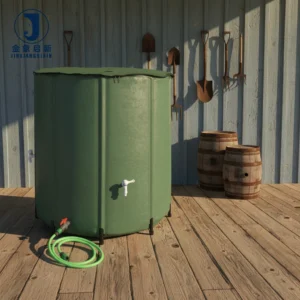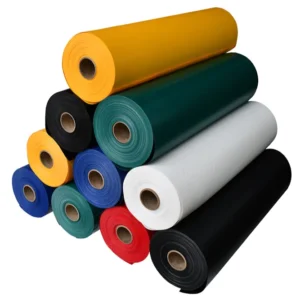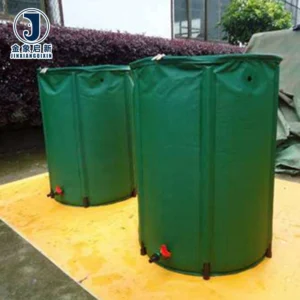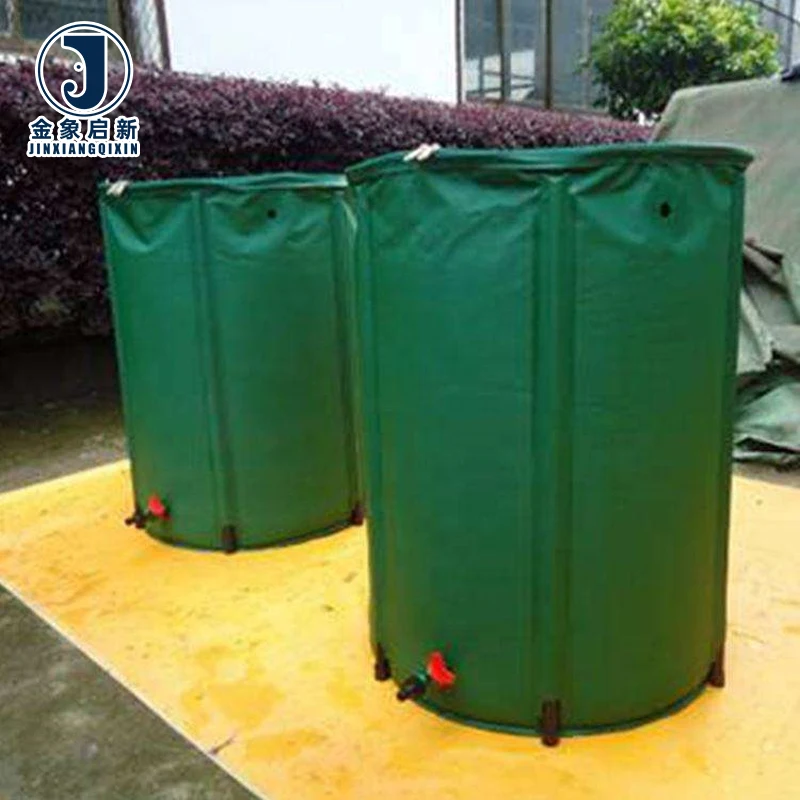
Coated Fabric Process Control — nearly 30 years focused on PVC tarpaulin coating weight and adhesion, applied to flexible water storage tanks that must survive folding, UV exposure and constant water contact without delamination or seam failure.
Technical Specifications
| Parameter | Value |
|---|---|
| Product Type | Flexible PVC Tarpaulin Water Storage Tank |
| Capacity Options | 100L / 225L / 250L / 750L / 1000L |
| Coating Material | PVC tarpaulin |
| Waterproof | Yes |
| UV-Resistant | Yes (test basis not stated in source) |
| Anti-Mildew | Yes |
| Collapsible / Foldable | Yes |
| Application Form | Rain barrel / water butt / hydroponic reservoir / flexitank |
Application Suitability
| Application | Exposure & Requirement |
|---|---|
| Fleet water transport for remote job sites | Road vibration, repeated folding and unfolding, UV exposure during transit |
| Transport yard rainwater harvesting | Standing water contact, seasonal temperature swings, outdoor UV exposure |
| Agricultural and hydroponic reservoirs | Continuous water immersion, nutrient solution chemistry, mildew prevention |
| Construction site temporary water storage | Abrasion from ground contact, dust and debris, frequent relocation |
Why Generic Water Barrels Fail Where Coated Fabric Succeeds
Rigid plastic barrels crack under UV and road vibration — coated fabric flexes instead of fracturing.
Fleet operators and site managers routinely replace cracked rain barrels after a single season of outdoor exposure. The problem is material mismatch: rigid polyethylene has no tolerance for the flexing, thermal expansion and UV degradation that occur during transport or long-term outdoor storage. A collapsible PVC tarpaulin water tank built from transport-grade coated fabric eliminates the brittle failure mode entirely. The fabric flexes under vibration and impact rather than developing stress fractures, and the welded seam construction maintains waterproof integrity at the points where rigid tanks typically split. [NEED_CITE: material failure modes in rotational moulded PE versus PVC coated polyester under cyclic loading]
How Transport-Grade Fabric Translates to Water Storage Performance
The same PVC tarpaulin construction that protects truck and trailer loads from weather and road abrasion is engineered into these water storage tanks. The coated fabric resists puncture from ground contact and handles the hydrostatic pressure of a full tank without stretching or deforming. For fleet operators carrying water to remote sites for dust suppression or equipment washing, the collapsible PVC tarpaulin water tank folds flat when empty, occupying a fraction of the space a rigid barrel would consume in the truck bed.
Welded Seam Integrity Under Hydrostatic and Flex Load
Every seam on these tanks is thermally welded rather than stitched, eliminating needle holes that become leak paths under sustained water pressure. The weld line must match the base fabric in flexibility — a brittle weld will crack at the fold point, while a properly fused seam bends with the material through repeated deployment cycles. This is the same welding discipline applied to truck side curtains that flex thousands of times per journey. [NEED_CITE: thermal welding parameters for PVC coated polyester maintaining peel strength above fabric tear strength]
Reading the Specification Sheet Beyond Capacity Numbers
The capacity rating — whether 100L or 1000L — tells you volume but nothing about how the tank will age outdoors. The base fabric denier and weave density determine whether the tank wall can resist puncture and abrasion over repeated ground contact. The PVC coating weight governs waterproof integrity and chemical resistance to nutrient solutions in hydroponic applications. UV-resistant treatment slows surface degradation and colour fade during continuous outdoor exposure, though the specific test basis should be confirmed for your climate zone. Anti-mildew formulation on the interior surface prevents biological growth that can contaminate stored water and degrade the coating from the inside. Request the material specification sheet to verify that the coating weight and base fabric grade match the demands of your specific application — a light-duty garden rainwater tank and a heavy-duty construction site reservoir require different constructions.
The Hidden Cost of Underspecified Water Storage Fabric
Tanks built from underweight coated fabric develop pinhole leaks at stress points within the first few deployment cycles, typically along fold lines where the coating has insufficient adhesion to the base fabric. When UV treatment is claimed without supporting test data, the surface coating chalks and becomes brittle after months of sun exposure, leading to micro-cracks that compromise waterproof performance. Mildew growth inside tanks lacking anti-mildew treatment contaminates irrigation water and can damage root systems in hydroponic applications. Buyers who specify only by capacity and price often discover these failures after the tanks are already deployed and filled at remote sites. [NEED_CITE: PVC coating adhesion loss mechanisms under cyclic wet-dry exposure]
What This Manufacturer Brings to Water Tank Production
Three full production lines and 36 sets of professional equipment support consistent coating weight and seam welding quality across tank orders of any volume. A 10-person R&D team handles capacity-specific pattern development, ensuring that tank dimensions, fill port placement and outlet positioning match your operational requirements rather than forcing you into a generic shape. Every tank undergoes 100% pre-shipment inspection covering seam weld integrity and leak testing — no unit ships without verification. Deep process control over PVC coating weight and base fabric adhesion means the tank wall will not delaminate at the fold lines after repeated filling and draining cycles. Custom sizing is developed within days, allowing fleet operators to match tank dimensions precisely to available truck bed or trailer deck space.
Documentation & Verification
- Material specification sheet stating PVC coating weight and base fabric denier per capacity grade
- UV treatment test report available — confirm test standard matches your regional climate requirements
- ISO and CE certificates confirming management system and product compliance
- Pre-shipment inspection record documenting seam weld integrity and leak test results per unit
- Roll packing list and certificate of origin for customs clearance
Fabrication, Handling & Storage
- Thermally welded seams on PVC tarpaulin construction require matched temperature and dwell time to prevent brittle weld lines
- Fold empty tanks along established crease lines to avoid random stress points that accelerate coating fatigue
- Store collapsed tanks in dry, shaded conditions to prevent mildew formation on interior surfaces between deployments
- Clean interior with mild detergent compatible with PVC coating — avoid solvents that degrade plasticisers
- Inspect weld lines at fold points before each deployment season for early signs of coating separation
What to Include in Your Enquiry
Provide the installation environment — whether the tank will sit on gravel, concrete or bare ground — along with the expected water chemistry if used for hydroponic or industrial storage. Specify the transport method if the tank will be carried on a truck bed, so dimensions can be matched to available deck space. Indicate your target market’s compliance requirements for UV or material safety testing, and state whether you need sample units for on-site evaluation before committing to a full production run.
Frequently Asked Questions
Q: What capacity options are available for PVC tarpaulin water tanks?
A: Standard capacities include 100L, 225L, 250L, 750L and 1000L. Custom dimensions can be developed to fit specific truck beds, trailer decks or site footprints. Request a specification recommendation based on your volume requirement and available installation space.
Q: Can the tank be customized to fit a specific truck bed or trailer deck?
A: Yes. The R&D team develops custom tank patterns to match your vehicle dimensions and outlet requirements. Provide the usable deck length, width and height clearance, along with fill port and drain valve positions. Sample units can be produced for fitment verification before bulk production.
Q: What UV test basis supports the outdoor durability claim?
A: UV-resistant treatment is applied to the PVC coating, but the specific test standard should be confirmed for your regional climate requirements. Request the test report and verify that the exposure duration and irradiance level match your expected outdoor service conditions.
Q: What seam welding method is used and how is leak integrity tested?
A: Seams are thermally welded to maintain flexibility and waterproof integrity at fold points. Every tank undergoes 100% pre-shipment inspection including leak testing. A pre-shipment inspection record is provided with each order documenting weld verification results.
Q: How is the tank packed and loaded for shipment to avoid fabric crease damage?
A: Tanks are folded along engineered crease lines and packed to prevent random compression marks that could weaken the coating. A roll packing list accompanies each shipment. Confirm container loading requirements with the dispatch team to optimise space and protect the fabric during transit.