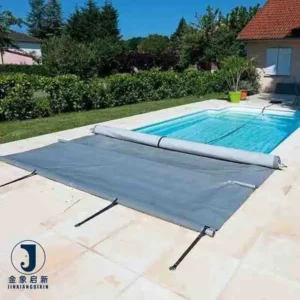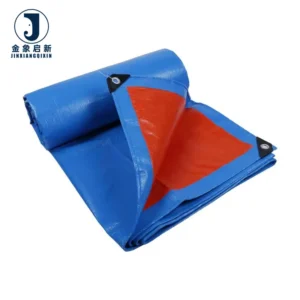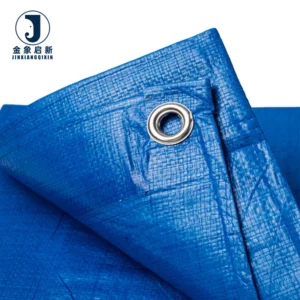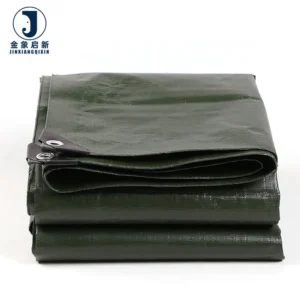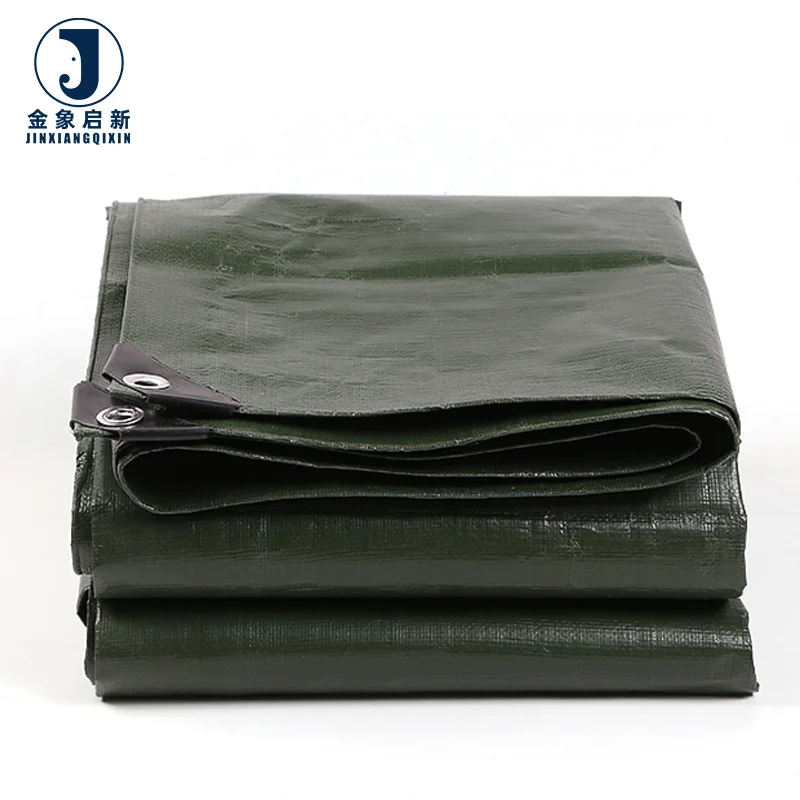
Proven Process Control — Three dedicated production lines maintain strict coating weight adhesion across every PE tarpaulin roll shipped from Jinxiang.
Technical Specifications
| Parameter | Value |
|---|---|
| Product Type | PE Tarpaulin |
| Thickness Options | 5 / 10 / 12 / 16 / 20 Mil |
| Coating Material | Polyethylene (PE) |
| Waterproof | Yes |
| Flame Retardant | Available (grade not stated in source) |
| Anti-UV Treatment | Available (test basis not stated in source) |
| Windproof | Yes |
| Mildew-Proof | Yes |
| Abrasion-Resistant | Yes |
| Applications | Car covers, tent shelters, cargo protection, outdoor covering |
Application Suitability
| Application | Exposure & Requirement |
|---|---|
| Truck and trailer load cover | Wind pressure, road abrasion, direct sunlight, rain ingress, tie-down stress |
| Construction site equipment protection | UV exposure, dust, moisture, rough handling, occasional chemical splash |
| Agricultural stock cover | Prolonged moisture contact, temperature fluctuation, mildew risk, UV degradation |
| Tent and temporary shelter fabric | Structural tension, wind load, repeated assembly and disassembly, sun exposure |
Generic Sizing Fails Where Your Fleet Operates — Heavy Duty PE Tarpaulin Cut to Fit
A cover built around a generic dimension leaves high-stress points exposed to road abrasion and wind lift.
Fleet operators frequently report that tarps bought to nominal sizes gap at the corners of specific trailer models, allowing wind to catch the material and accelerate wear at the eyelets. [NEED_CITE: transport covering standards and trailer load security requirements]. The Heavy Duty PE Tarpaulin range is available for custom sizing against exact vehicle and load dimensions, removing the slack that causes flapping and early seam failure on the open road. When a tarp fits the profile it protects, the tie-down system performs as designed and the material avoids concentrated stress at the corners.
Matching Thickness to the Transport Task
The specification range covers five thickness grades from 5 Mil through 20 Mil, allowing transport operators to select coverage proportionate to the journey and cargo value. Lighter grades handle short-haul weather shielding, while the heavier grades resist the cumulative abrasion of long-distance road transit. Selecting the right Heavy Duty PE Tarpaulin thickness prevents both under-specification, which leads to early replacement, and over-specification, which adds unnecessary weight to every load.
Mildew and Abrasion Resistance in Field Conditions
Construction and agricultural sites expose covers to ground moisture, organic debris and rough surface contact that degrade lesser materials within a single season. The mildew-proof formulation resists biological growth that weakens fabric structure in damp storage conditions. [NEED_CITE: coated fabric mildew resistance test methodology]. Abrasion resistance maintains surface integrity where the tarp contacts pallet edges, steel frames and stacked materials, preserving waterproof performance through repeated deployment and folding cycles.
Reading the Specifications Behind the Thickness Number
Mil thickness describes the total cross-section of the laminated PE structure, but performance depends on how that thickness is distributed between the reinforcing mesh and the outer coating layers. A thicker overall gauge does not automatically translate to higher puncture resistance if the internal weave is sparse or the coating bond is weak. The waterproof capability relies on complete encapsulation of the base fabric, leaving no pathway for moisture to reach the reinforcing yarns. Mildew-proof treatment addresses the interface between the fabric surface and organic contaminants, preventing spore colonisation in humid climates. Flame retardant and anti-UV treatments are available in specific grades — confirm the grade required for your market and application before placing the order.
The Hidden Cost of Specification Mismatch
Selecting a thickness grade without considering the mechanical stress of the application leads to visible failure within weeks rather than years. A tarp that is too thin for heavy cargo contact abrades through to the base mesh at high-wear points, compromising waterproof integrity at exactly the locations where the load flexes most. [NEED_CITE: common failure modes in transport tarpaulin covers]. Where fire retardant claims are made without supporting test documentation, the material may not satisfy the compliance requirements of the site or jurisdiction where it is deployed, forcing replacement at the buyer’s expense.
Why Source Heavy Duty PE Tarpaulin Through Jinxiang
Three full production lines and 36 sets of specialist equipment support reliable volume output without compromising the coating consistency that transport and construction buyers depend on. The 10-person R&D team handles custom sizing, pattern specification and sample development within days of inquiry, enabling buyers to verify fit and performance before committing to bulk. Dedicated QA/QC at every production stage ensures 100% pre-shipment inspection, catching thickness variation and surface defects before the material leaves the facility. Nearly 30 years of coated fabric experience informs the process controls that maintain roll-to-roll consistency across large orders. ISO and CE certified production provides the documentation trail that compliance-driven procurement teams require.
Documentation & Verification
- Material specification sheet confirming selected Mil thickness and base fabric structure
- Fire retardant test report supplied when the applicable grade is confirmed at inquiry stage
- Anti-UV test data provided for grades specified with outdoor exposure requirements
- Pre-shipment inspection record covering 100% visual and dimensional check before dispatch
- Roll packing list detailing quantity, dimensions and net weight per unit
Fabrication, Handling & Storage
- Heat-weld seams using temperature settings matched to the selected Mil thickness to avoid burning through thinner grades
- Reinforce eyelet locations with additional PE patches at high-tension tie-down points on 16 and 20 Mil grades
- Store rolls horizontally on pallets to prevent permanent creasing of the laminated PE structure
- Deploy abrasion protectors at contact points where the tarp meets sharp cargo edges
- Clean with mild detergent and soft brush to preserve the mildew-proof surface treatment
Preparing Your Heavy Duty PE Tarpaulin Inquiry
Specify the exact trailer or load dimensions, the transport route conditions and any site compliance requirements so the correct thickness and treatment grade can be recommended. Confirm whether you require finished cut sizes with edge reinforcement or roll stock for your own fabrication operation. State the annual volume to establish batch consistency parameters and production scheduling across multiple deliveries.
Frequently Asked Questions
Q: How is Mil thickness verified on arrival against the quotation?
A: Every shipment includes a pre-shipment inspection record documenting measured thickness values across sampled positions on each roll or cut sheet. Buyers can cross-reference these recorded measurements against the quoted specification on receipt. Jinxiang maintains in-process QA at every production stage to catch deviation before dispatch, and third-party verification can be arranged upon request.
Q: What fire retardant test standard applies and can you supply the certificate?
A: Fire retardant grades are available within the PE tarpaulin range, but the specific test standard applicable to your market must be confirmed at inquiry stage. Once the required standard is identified, a corresponding test report is generated and included with the shipment documentation. Always specify the exact compliance framework your site or jurisdiction demands before the order is placed.
Q: What is the anti-UV test basis and expected outdoor service life?
A: Anti-UV treatment is available as an option and should be specified with the intended exposure duration and geographic conditions in mind. The treatment formulation is selected based on the confirmed test basis applicable to your market. Provide your deployment environment details during inquiry so the appropriate grade can be recommended for the material thickness you select.
Q: Can the tarp be cut to fit a specific trailer model rather than a generic size?
A: Yes. Custom sizing is available to match exact vehicle profiles, load dimensions and tie-down configurations. Providing the trailer model or precise measurements during inquiry allows the production team to develop a cut pattern that eliminates the excess material causing wind catch and edge wear. Samples can be produced for fit verification before bulk manufacture proceeds.
Q: How is colour consistency maintained across multiple tarps in the same order?
A: Production runs for a single order are scheduled together to ensure uniform pigment dispersion across all rolls and cut sheets. The QA process includes visual comparison under controlled lighting conditions during pre-shipment inspection. Buyers specifying colour-matched covers across a fleet should confirm the reference standard at inquiry so batch consistency can be verified against the agreed benchmark before dispatch.