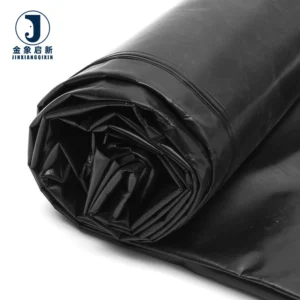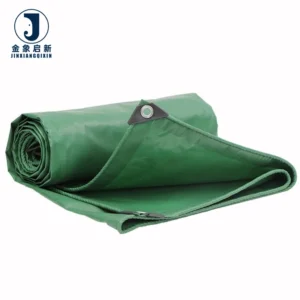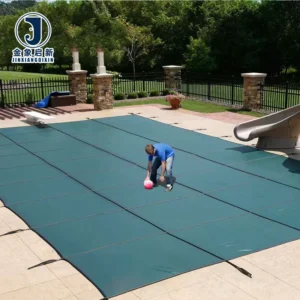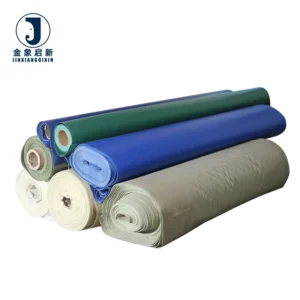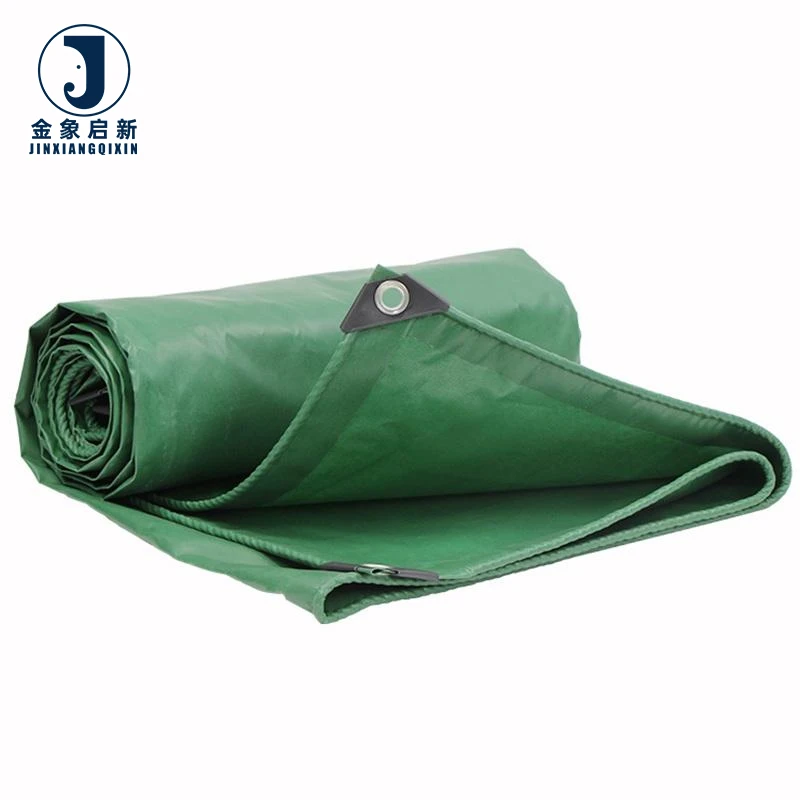
Verified GSM Per Roll — Hot-melt coated PVC tarpaulin stock inspected at every production stage, with weight records matching the quoted specification before dispatch.
Technical Specifications
| Parameter | Value |
|---|---|
| Product Type | PVC Tarpaulin Roll |
| Base Fabric | High-strength polyester mesh fabric |
| Coating Material | PVC |
| Coating Method | Laminated technology & Hot-melt coating technology |
| Weight Options | 350gsm, 420gsm, 500gsm, 550gsm, 600gsm, 750gsm |
| Thickness Options | 0.32mm, 0.35mm, 0.4mm, 0.45mm, 0.5mm, 0.65mm |
| Roll Width | 2m, 2.1m |
| Roll Length | 75m (for 2m width), 50m (for 2.1m width) |
| Surface Finish | Glossy Surface or Matt Surface |
| Color Options | Blue, Red, Yellow, Light Blue, Grey (Customizable) |
| Waterproof Rating | Double-sided 100% waterproof |
| Cold Crack Resistance | Yes |
| Anti-Mildew Treatment | Yes |
| Anti-Static Treatment | Yes (grade not stated) |
| UV Resistance | Sunproof (test basis not stated) |
| Flame Retardant | Available in flame retardant grades — confirm the grade required for your market |
| Service Life | 3-7 years under normal circumstances |
| Certification | ISO, CE |
Application Suitability
| Application | Exposure & Requirement |
|---|---|
| Truck side curtain fabric | Constant flexing at load points, road debris abrasion, UV exposure, wind flap fatigue |
| Flatbed and tipper load covers | Tie-down strap tension, water ingress prevention, daily fold and unfold cycles |
| Lorry and trailer top covers | Standing water runoff, thermal expansion and contraction, long-haul weather variation |
| Cargo ship deck covers | Salt spray, heavy rain, prolonged sun exposure, mechanical handling stress |
| Tent and awning fabrication | Panel welding, dimensional stability under tension, colour consistency across panels |
Why a Generic-Size Truck Cover Costs More Than a Properly Specified PVC Coated Tarpaulin Roll
Fleets lose more to cargo damage and premature cover replacement than they ever save on cheap generic tarps.
A truck cover cut to a generic size flaps in transit, chafes at the corners, and concentrates stress at welded seams that were never meant to handle that specific trailer geometry. The PVC coated tarpaulin roll arrives lighter than the quoted weight, or two rolls installed side by side show a visible colour shift across the trailer flank. Fleet operators end up paying twice — once for the substandard material and again for the replacement. Sourcing by the roll from a supplier that verifies GSM at every stage and cuts to your trailer model eliminates both failures. [NEED_CITE: common tarpaulin failure modes at flex and abrasion points in transport covers]
Side Curtain Fitment Demands More Than Just Weight
When a curtainsider trailer flexes through corners and over uneven road surfaces, the side curtain fabric undergoes repeated bending at the same stress lines. A PVC coated tarpaulin roll with hot-melt coating technology bonds the PVC layer to the high-strength polyester mesh at a molecular level, reducing delamination risk where the fabric folds and unfolds thousands of times per trip. The coating adhesion matters as much as the base fabric denier — a heavy base cloth with poor coating bond will separate at the flex line long before the fabric itself tears. Fleet operators specifying side curtain fabric should request peel strength data alongside GSM.
Roll Dimensions That Match Standard Trailer Geometry
Standard European and Asian trailer bodies fall within predictable width ranges, and cutting from a 2m or 2.1m roll width reduces offcut waste compared to oversized stock. Rolls supplied at 75m for the 2m width and 50m for the 2.1m width give transport equipment builders enough continuous length to produce multiple covers from a single roll without mid-panel joins. Each avoided join is a weld seam that will not fail under road vibration. Buyers ordering for a fleet of mixed trailer models benefit from mapping their dimension requirements against available roll widths before placing a bulk order. [NEED_CITE: material yield and waste reduction in roll-to-cover conversion for transport fabrics]
Coating Technology and What It Means for Weld Performance
The choice between laminated and hot-melt coating technology affects how the PVC tarpaulin roll behaves during fabrication. Hot-melt coating drives PVC into the interstices of the polyester mesh under heat and pressure, creating a mechanical and chemical bond that holds through repeated thermal cycling. Laminated technology bonds pre-formed PVC films to the base cloth, offering a smoother surface finish at a different cost point. For truck covers that will be high-frequency welded at seams and hems, the coating method determines the welding temperature window and the resulting seam strength. Fabricators running their own welding equipment should match their process parameters to the coating type on the roll.
Reading GSM, Thickness and Base Fabric Together
GSM alone does not determine how a PVC tarpaulin roll performs on a truck. A 550gsm roll with a dense, high-tenacity polyester base may outperform a 600gsm roll with a loosely woven base and heavier coating, because tensile and tear strength originate primarily from the yarn structure. Thickness correlates with abrasion resistance — a 0.5mm or 0.65mm sheet withstands more contact wear from tie-down straps and load edges than a 0.32mm sheet. The hot-melt coating method ensures consistent coating weight across the roll width, preventing thin spots that become failure points under flex fatigue. Buyers should request base fabric construction data alongside GSM and thickness to make a complete assessment.
What Happens When the Roll Does Not Match the Quotation
A PVC tarpaulin roll that arrives below the quoted GSM carries less coating and a lighter base cloth than specified, meaning the truck cover will abrade through and fail months earlier than expected. Batch colour variation between rolls in the same shipment becomes visible when panels are welded side by side on a trailer, forcing the fleet to either accept a patchwork appearance or reject the entire order. Weld seams on underweight material fail at the flex point because the coating cannot flow properly into the weld zone. These problems surface only after the truck is loaded and running — when the cost of replacement includes downtime and cargo exposure. [NEED_CITE: pre-shipment inspection methods for coated fabric weight and colour consistency]
Why Sourcing PVC Tarpaulin Roll Stock Here Reduces Procurement Risk
Nearly 30 years of coated fabric production means the coating weight and adhesion process is controlled at every stage, not adjusted after the fact. Three full production lines and 36 sets of professional equipment support bulk roll orders with consistent on-time delivery across multiple GSM grades. A 10-person R&D team handles custom width, colour matching and sample development within days, so fleet operators can verify material before committing to a full container. Dedicated QA/QC runs at every production stage with 100% inspection before shipment, catching GSM deviation and colour drift before the roll leaves the factory. ISO and CE certified processes provide the documentation trail that international logistics companies require for customs clearance.
Documentation & Verification
- Weight verification record per roll against the stated 350gsm–750gsm grade before dispatch
- Colour reference sheet matched to the pre-production sample approved by the buyer
- Coating method declaration confirming laminated or hot-melt technology per roll batch
- Material specification sheet stating base fabric construction and total thickness
- Certificate of origin and customs documentation for cross-border shipment clearance
- UV and flame retardant test reports supplied where the selected grade carries certification
Fabrication, Handling & Storage
- High-frequency weld temperature should match the hot-melt or laminated coating type to avoid seam delamination
- Store rolls horizontally on pallets to prevent permanent creasing across the 2m or 2.1m width
- Allow cold-stored rolls to reach ambient temperature before unrolling to prevent coating crack at low GSM grades
- Use compatible PVC-based adhesives for field repairs on glossy or matt surface finishes
- Plan cutting layout around 75m or 50m roll lengths to minimize transverse joins in finished truck covers
- Reinforce tie-down contact zones with additional fabric layers regardless of the selected thickness grade
What We Need to Quote Your Roll Order Accurately
Provide the trailer models in your fleet, the cover type required (side curtain, top cover or full enclosure), and the operating climate — this determines which GSM grade and treatment package suits your application. Specify your preferred roll width, colour reference, and whether you need gloss or matt finish for welding compatibility with your existing fabrication setup. If your market requires certified flame retardant or anti-static grades, state the standard your end customer demands so we can match the correct material grade and supply the supporting test documentation with the shipment.
Frequently Asked Questions
Q: How is GSM verified to match the quotation on arrival?
A: Every PVC coated tarpaulin roll undergoes weight verification at multiple production stages and again during 100% pre-shipment inspection. A weight record is generated per roll and compared against the quoted specification. This documentation accompanies the shipment so buyers can reconcile the received material against their purchase order immediately on delivery.
Q: What roll width and length minimizes cutting waste for standard trailer models?
A: The 2m width at 75m length and the 2.1m width at 50m length cover most standard trailer body dimensions. Transport equipment builders should map their panel cutting layout against both options before ordering. Choosing the roll width closest to the finished panel width reduces offcut waste and eliminates unnecessary transverse weld seams in the completed truck cover.
Q: How are welded seams tested at flex points before shipment?
A: Weld seam samples are taken from production runs and tested at the flex zones where load movement concentrates stress on a fitted truck cover. Peel strength and seam integrity are checked against the coating method used on the roll. These results are recorded in the pre-shipment inspection report and available to the buyer on request.
Q: Is anti-UV treatment backed by a test report, and what exposure does it cover?
A: UV-resistant grades are available across the product range, but the specific test basis and exposure duration vary by grade. Buyers should confirm the test standard required for their market and operating climate. We supply the relevant test documentation for the grade selected, ensuring the sunproof claim is supported by verifiable data rather than a general description.
Q: How is batch colour consistency controlled across rolls in one order?
A: A colour reference is established from the pre-production sample approved by the buyer. During production, each roll is checked against this reference under controlled lighting conditions. Any roll showing visible deviation is flagged before packing. This prevents the situation where two panels welded side by side on a trailer show a noticeable colour mismatch after installation.