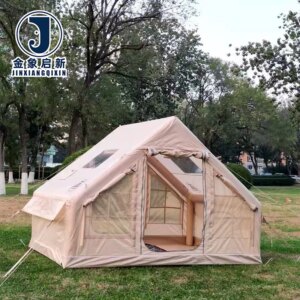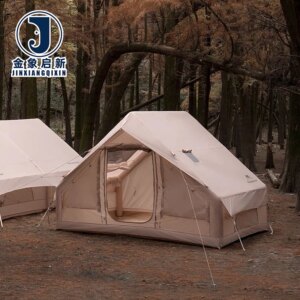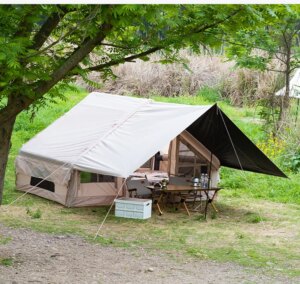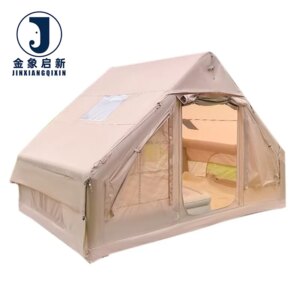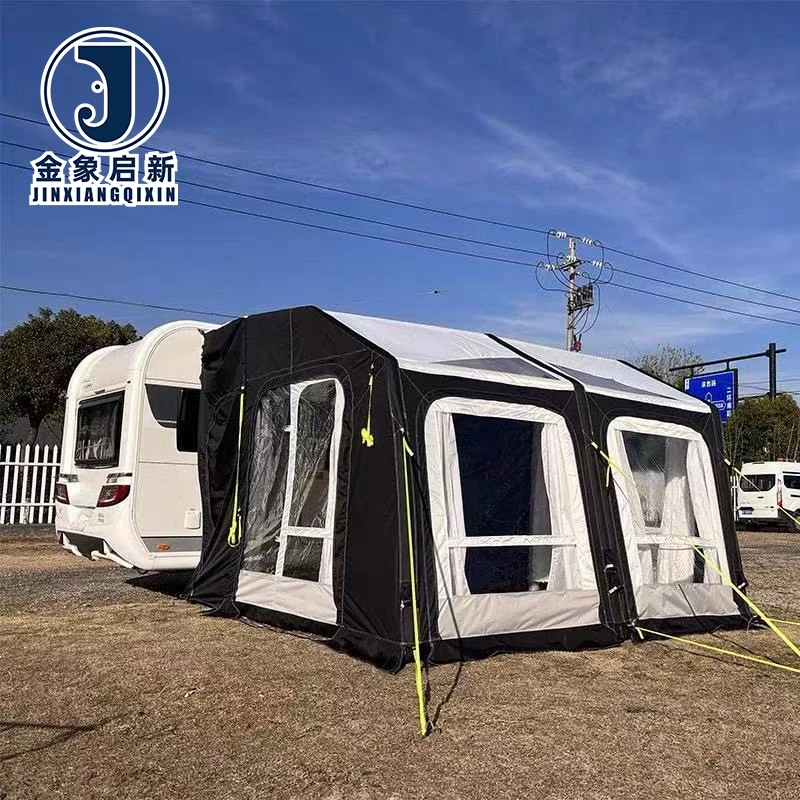
Coated Fabric Process Control — Nearly 30 years focused on PVC coating adhesion and weight consistency, applied to inflatable shelter structures that must hold pressure through repeated deployment cycles.
Technical Specifications
| Parameter | Value |
|---|---|
| Product Type | Inflatable Tent |
| Core Material | PVC tarpaulin |
| Key Performance | Waterproof, UV-resistant, tear-resistant |
| Flame Retardant | Available in fire-retardant grades — confirm the grade required for your market |
| UV Resistance | UV-resistant coating applied — test basis available on request |
| Product Form | Inflatable structure with quick automatic opening mechanism |
| Customization | OEM & ODM, sample customization, pattern printing |
| Quality System | Full-process inspection with dedicated QA & QC staff |
| Certifications | ISO 9001, ISO 14001, ISO 45001, CE |
Application Suitability
| Application | Exposure & Requirement |
|---|---|
| Disaster relief logistics — rapid response units | Repeated inflation and deflation cycles, transport abrasion, wet conditions, urgent deployment timelines |
| Construction site temporary workspace | Prolonged sun exposure, wind loading, dust and debris contact, daily setup and breakdown |
| Equipment storage during maintenance | Water ingress prevention, UV degradation resistance, secure enclosure over extended periods |
| Material staging and on-site coordination | Ground moisture, forklift and foot traffic proximity, weather protection for staged inventory |
| Transport fleet emergency shelters | Roadside deployment, variable weather, compact storage in vehicle compartments |
Why Deployment Speed Fails When the Fabric Cannot Hold Pressure
An inflatable shelter is only as reliable as the coated fabric maintaining its air seal under field stress.
Fleet operators and logistics coordinators have experienced deployment delays caused by inflatable tent fabric for transport and deployment that loses pressure within hours of setup. The failure rarely originates in the inflation mechanism itself. More often, micro-leaks develop at welded seams where the PVC coating did not fully bond to the base fabric, or the material stretches beyond its recovery point after the first inflation cycle [NEED_CITE: tensile and tear test methods for coated fabrics per ISO 1421]. When a disaster response team arrives on site and the shelter cannot maintain structural rigidity, the consequence is not a product return — it is a compromised operation. This inflatable shelter addresses that gap by starting with a PVC tarpaulin core engineered for repeated pressurization, supported by a quick automatic opening mechanism that has been pressure-tested and cycled over 50 times during quality assurance.
Sealed Construction for Repeated Inflation Cycles
The PVC tarpaulin core used in this inflatable structure is selected for its tear-resistant weave and waterproof membrane, two properties that work together during every inflation and deflation event. When the shelter pressurizes, the base fabric distributes load across the warp and weft yarns. If the weave is too loose or the coating too thin, stress concentrates at seam junctions. The coating applied here bonds to the base fabric to maintain air retention across the full panel surface, not just at the inflation point. This matters for inflatable tent fabric for transport and deployment because each setup cycle introduces new fold lines and stress points that the material must tolerate without delamination.
Welded Seams That Match the Fabric Strength
The most common failure point on any inflatable shelter is the welded seam — specifically, the junction where two panels meet and the heat-activated bond must match or exceed the base fabric’s tear strength. During production, seam integrity is tested under controlled inflation conditions. The objective is to confirm that when the structure flexes under wind load or internal pressure fluctuation, the fabric yields before the weld does. This is a deliberate engineering choice: a fabric that fails visibly is easier to diagnose and repair in the field than a seam that separates silently under load [NEED_CITE: heat welding parameters for PVC coated fabrics].
Reading Beyond the Material Data Sheet
The waterproof performance of this PVC tarpaulin comes from the coating membrane that fully encapsulates the base fabric, preventing water penetration through the weave. Tear resistance depends on both the denier of the yarns and the density of the weave — a heavier yarn in a loose weave may tear more easily than a lighter yarn in a tight construction. UV-resistant coating is applied to protect the PVC compound from solar degradation; the specific test basis and exposure rating are available on request so you can verify suitability for your operating climate. Fire-retardant properties are offered in grades that comply with industrial safety standards — confirm the specific grade required for your market before placing an order, as requirements differ between regions and application codes.
What Specification Shortcuts Cost in the Field
When inflatable shelters are produced with PVC tarpaulin that does not meet its stated coating weight, the consequences surface during the second or third deployment cycle. Coating that is lighter than specified tends to crack at fold lines, creating pathways for air loss that compound with each use. Batch-to-batch inconsistency in coating thickness means one shelter in an order may perform differently from the next, which is unacceptable when multiple units are deployed together at a disaster recovery site. Weld failures caused by incorrect heat settings or insufficient dwell time during production result in seam separation at the exact point where the structure flexes most under wind load — typically the ridge and corner junctions [NEED_CITE: field failure analysis of inflatable shelter seam integrity]. These are not cosmetic defects; they render the shelter unusable when it is needed most.
Production Capability Behind Every Unit
Three full production lines and 36 sets of professional processing equipment provide the capacity to fulfil multi-unit inflatable shelter orders without compressing lead times or sacrificing inspection rigour. A 10-person R&D team handles material selection, structural dimensioning, and pattern printing for OEM and ODM projects, developing samples within days so that specifications can be confirmed before bulk production begins. Full-process quality inspection includes dedicated QA and QC staff at every production stage, not just a final check. Each inflatable unit undergoes complete inflation testing under controlled conditions before shipment, with a batch inspection record documenting the results. ISO 9001, ISO 14001, ISO 45001 and CE certifications underpin the management system, providing a documented framework for traceability and continuous process control.
Documentation & Verification
- Material specification sheet stating base fabric type, coating weight, and PVC compound formulation for each batch
- UV and fire-retardant test reports supplied where applicable, matched to the grade specified on the purchase order
- ISO 9001, ISO 14001, ISO 45001 and CE certificates included with shipment documentation
- Pre-shipment inflation test record confirming air retention and structural integrity of every unit
- Product data sheet documenting custom dimensions, material composition, and OEM specifications for engineering records
- Certificate of origin and customs documentation prepared for international dispatch
Fabrication, Handling & Storage
- Heat welding parameters must be calibrated to the specific PVC coating thickness to achieve full seam bond strength
- Store rolled or folded inflatable units in a dry, shaded environment to prevent UV exposure before deployment
- Avoid compressing folded units under heavy loads during transport to prevent permanent crease damage to the PVC membrane
- Clean the tarpaulin surface with mild detergent only; solvents may degrade the coating and compromise air retention
- Field repairs require compatible PVC repair patches and solvent cement matched to the coating formulation
- Inspect all welded seams after each deployment cycle for early signs of delamination before the next inflation
Before You Request a Quote
To ensure the inflatable shelter meets your deployment requirements, share the operating environment including typical weather exposure, the expected frequency of setup and breakdown cycles, and any fire-retardant grade mandated by your local safety regulations. Specify the required structural dimensions, colour preferences, and whether pattern printing or branding is needed on the shelter panels. Indicate your annual volume estimate and whether you need fully fabricated units or roll stock for your own assembly line, so that we can align production scheduling with your procurement timeline.
Frequently Asked Questions
Q: What customization options are available for inflatable tent structures?
A: OEM and ODM customization covers structural dimensions, colour selection, and pattern printing on the PVC tarpaulin surface. Our 10-person R&D team develops samples within days so that specifications can be verified before bulk production. Confirm your required size, colour reference, and any branding requirements with your inquiry.
Q: How is the automatic opening mechanism tested before shipment?
A: Each inflatable shelter undergoes full inflation testing under controlled conditions during pre-shipment inspection. The quick automatic opening mechanism is pressure-tested and cycled over 50 times during quality assurance to verify reliable deployment. A batch inspection record documenting air retention and cycling results accompanies each shipment.
Q: What fire-retardant grade does the PVC tarpaulin meet?
A: Fire-retardant properties are available in grades that comply with industrial safety standards, but the specific grade varies by market requirement. Confirm the fire classification required for your application and region with your inquiry, and we will supply the corresponding test report and certification documentation with your order.
Q: How is colour consistency controlled across multiple units in one order?
A: Batch-to-batch colour consistency is managed through controlled PVC compound mixing and dedicated QA inspection at each production stage. Every roll used in a multi-unit order is checked against the approved colour reference before fabrication. A pre-shipment inspection record documents the visual consistency verification across the full batch.
Q: What is the typical lead time for custom-sized inflatable shelters?
A: Lead times depend on the degree of customization, order volume, and current production scheduling across our three full production lines. Samples are developed within days for approval. Once samples are confirmed, bulk production proceeds with full-process quality inspection. Contact us with your specifications and quantity for a project-specific timeline.