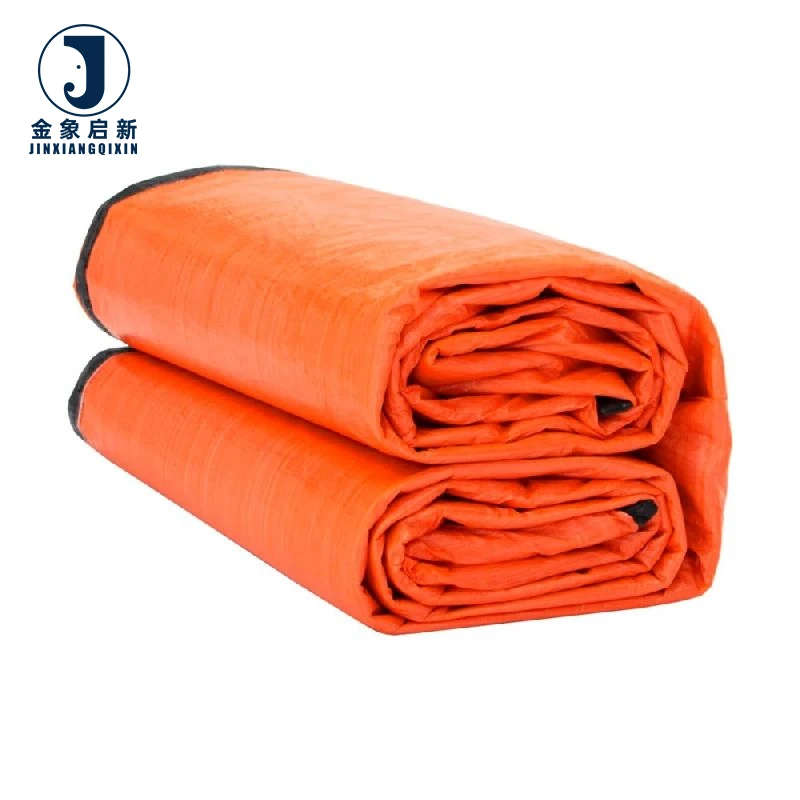
Why Insulated PE Tarpaulin for Concrete Curing Needs More Than Just a Waterproof Claim
Three-layer thermal construction — closed-cell PE foam core sandwiched between PE cloth faces delivers insulation where single-layer tarps fail under cold weather exposure.
| Parameter | Value |
|---|---|
| Product Type | Insulated PE Tarpaulin |
| Material Structure | PE cloth + closed cell PE foam core + PE cloth |
| Thickness Options | 2x2mm, 3×1.5mm, 1x4mm, 5mm, 6mm, 8mm, 12mm |
| Size Options | 6ftx24ft, 8ftx25ft, 12ftx20ft, 12ftx24ft |
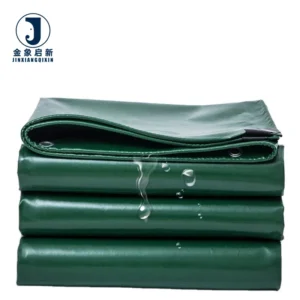
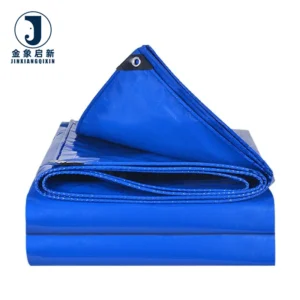
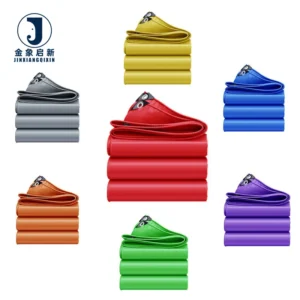
| Color Options | Orange, Black, White, Silver, Customized color |
| Grommet Configuration | Aluminum grommets, hole distance 61cm and 91.5cm |
| Edge Finish | Reinforcement stitch, finished stitched edges |
| Surface Property | Waterproof (test basis not stated) |
| UV Treatment | UV treatment built into tarp base fabric (test basis not stated) |
| Flame Retardant | not stated |
| Anti-Static | not stated |
| Application | Exposure & Requirement |
|---|---|
| Truck and trailer load covering in cold weather | Road vibration, wind-driven rain, thermal retention for cargo |
| Construction site heated enclosure | Vertical wind load, temperature differential, scaffolding tie-down |
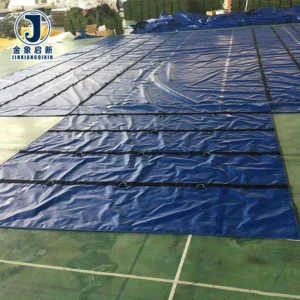
| Concrete curing blanket laid flat | Direct contact with wet concrete, ground moisture, frost protection |
| Outdoor equipment and pallet storage | Prolonged UV exposure, snow load, repeated handling |
What Happens When an Insulated PE Tarpaulin Fails at the Flex Point
Reinforcement stitching at the perimeter is where load transfer actually occurs, not the foam core.
Fleet operators covering trailer loads in winter conditions know the moment a tarp tears: it is rarely the centre panel that gives way first. The failure starts at the grommet or hem, where the fabric meets the tie-down strap and the load shifts under braking or cornering. A generic-size cover compounds the problem because excess material flaps and abrades against the cargo edge [NEED_CITE: tarpaulin failure modes at perimeter stress points in transport applications]. The insulated PE tarpaulin for truck and construction enclosure addresses this through reinforcement-stitched edges and aluminum grommets spaced at 61 cm and 91.5 cm, matching standard tie-down hardware geometry on flatbed and curtain-side trailers.
Cold Weather Transit Demands Insulation That Survives Road Vibration
A single-layer PE tarp provides wind and rain cover but offers negligible thermal retention. When ambient temperature drops below freezing, cargo such as temperature-sensitive chemicals, fresh produce or curing concrete elements needs a barrier that traps heat while flexing with the trailer body. The closed-cell PE foam core in this insulated PE tarpaulin resists compression under load, maintaining its insulating air pockets even when the cover is strapped tight over uneven cargo profiles.
Securing the Cover Against Wind Shear on Open Trailers
Aluminum grommets at 61 cm intervals distribute tie-down load across a wider perimeter zone compared to wider spacing patterns. Rust-proof metal grommets resist corrosion from road salt and de-icing chemicals sprayed during winter transit [NEED_CITE: corrosion resistance requirements for transport tarpaulin hardware in cold climate regions]. The reinforcement stitch at every grommet point prevents the tear propagation that unravels a hem under sustained wind shear on highway-speed transit.
Matching Thickness to the Thermal Retention Requirement
Thickness selection drives the insulation value of the PE foam core. The range from 5 mm through 12 mm covers applications from light frost protection on short-haul transit to deep-freeze enclosure on multi-day static curing. Thinner constructions at 2×2 mm or 3×1.5 mm suit temporary wind block panels where weight and pack-down volume matter more than thermal rating. Specifying thickness requires matching the expected ambient temperature range and exposure duration rather than defaulting to the heaviest option available.
The Hidden Cost of Specifying the Wrong Grommet Spacing
Buyers who focus on fabric weight and overlook grommet geometry often discover the gap after the first storm. Wider grommet spacing leaves unsupported fabric spans between anchor points, and those spans billow under wind gust, concentrating stress at the two nearest grommets until the stitch pulls through [NEED_CITE: wind load distribution across tarpaulin grommet patterns on transport and scaffolding applications]. For fleet-wide deployment where every trailer uses the same strap spacing, matching grommet distance to hardware spacing eliminates slack and the abrasion that follows.
Why Procurement Teams Route Insulated Tarp Orders Here
Nearly 30 years of coated fabric production informs how the PE cloth layers bond to the foam core without delaminating under repeated flex cycles. Three full production lines support batch volume for fleet-wide rollouts where every panel must ship on the same schedule. The 10-person R&D team develops samples for model-specific trailer cut sizes rather than forcing buyers into generic flat dimensions. Dedicated QA at every stage catches grommet spacing deviation before the roll leaves the factory, and 100% pre-shipment inspection verifies thickness and colour match the approved sample.
Documentation & Verification
- Material specification sheet stating PE foam core density and cloth weight per cut piece
- Pre-shipment inspection record confirming grommet spacing matches 61 cm or 91.5 cm order spec
- UV treatment verification referencing the test basis for anti-UV performance claims
- Colour consistency check across multiple panels in the same fleet order batch
- Roll packing list with piece dimensions and thickness grade for each insulated tarp
Fabrication, Handling & Storage
- Stitch reinforcement at all grommet points requires needle size matched to PE cloth denier to prevent perforation tear
- Closed-cell PE foam core must not be stored under heavy compression to avoid permanent thickness loss
- Fold insulated tarps along grommet lines rather than across them to keep reinforcement stitching intact
- Clean PE cloth surfaces with mild detergent only; solvents degrade the waterproof outer layer
- Deploy tarps above 0 °C; below-freezing handling increases crease cracking risk at stitched edges
Requesting a Specification That Fits Your Fleet
Fleet operators and transport equipment builders need to confirm trailer model dimensions, typical cargo profile and the coldest ambient temperature encountered on route. Specify whether grommets at 61 cm or 91.5 cm spacing match existing strap hardware. State colour requirements for fleet branding consistency and whether flame retardant certification is needed for the operating market. Sample approval before bulk production ensures thickness and edge finish meet site conditions.
Frequently Asked Questions
Q: How is the PE foam core thickness verified on arrival, and what tolerance applies to the stated mm value?
A: Pre-shipment inspection records document measured thickness at multiple points across each panel before dispatch. Buyers should request the inspection record alongside the material specification sheet to cross-reference the stated value. Tolerance expectations should be confirmed at sample approval stage, especially for thicker grades like 8 mm and 12 mm where compression during transit can affect initial readings upon unrolling.
Q: Can insulated tarps be cut to fit specific truck trailer models rather than generic flat sizes?
A: Model-specific cut sizes are developed through the sample stage, where the R&D team maps grommet placement to the trailer’s existing tie-down rail geometry. This eliminates excess fabric that flaps and abrades during transit. Confirm the trailer make and model, side curtain rail type and door clearance requirements when requesting a custom cut sample.
Q: What UV test basis supports the anti-UV claim for tarps exposed to direct sunlight on open trailers?
A: UV treatment is built into the PE base fabric rather than applied as a surface coating, which helps maintain performance as the surface undergoes abrasion from cargo contact and road debris. The specific test basis for the UV claim should be requested from the documentation package before specifying for long-term outdoor exposure in high-UV regions.
Q: How is colour consistency maintained when ordering multiple insulated tarps in the same batch for fleet-wide use?
A: Batch production on the same production line with controlled PE resin and pigment dosing reduces roll-to-roll colour variation. The 100% pre-shipment inspection includes visual comparison of panels from the same order. For fleet deployments where tarps are installed side by side on adjacent trailers, request a colour consistency check record with the dispatch documentation.
Q: What grommet spacing and reinforcement options are available for high-wind transport and tie-down load conditions?
A: Standard configuration uses aluminum grommets at 61 cm and 91.5 cm hole distance with reinforcement stitching at every grommet point. For high-wind routes or heavy cargo that shifts under braking, confirm which spacing aligns with your tie-down strap layout. Sample testing under actual load conditions before bulk order placement validates that the perimeter reinforcement holds under your specific transit profile.