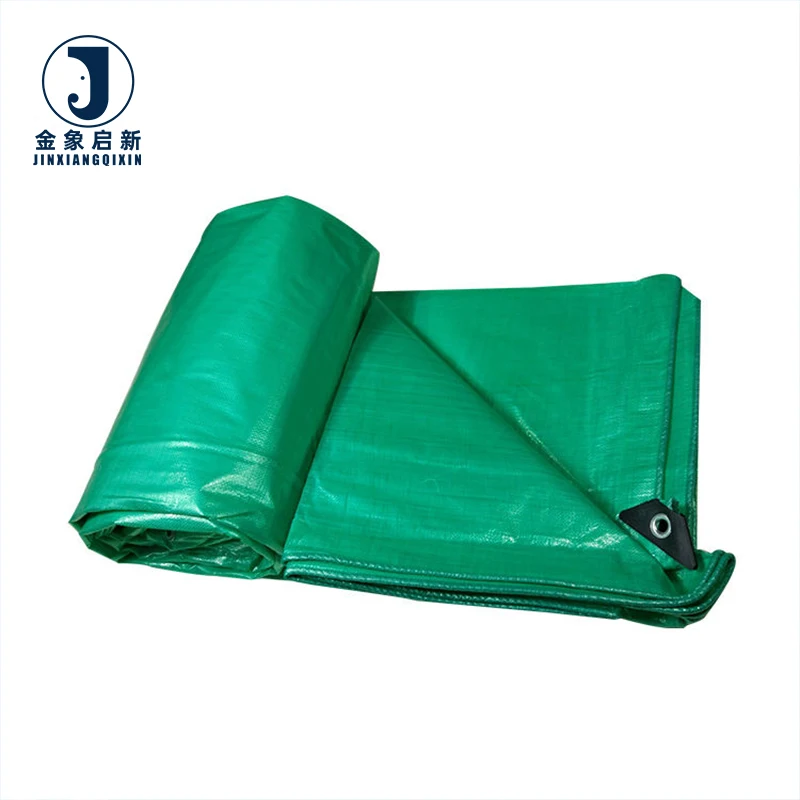
Precision-Coated Fabric Engineering — Every roll of PE tarpaulin for trucks and transport covers passes dedicated QA/QC at every production stage with 100% pre-shipment inspection before dispatch.
Technical Specifications
| Parameter | Value |
|---|---|
| Product Type | PE Tarpaulin |
| Material | HDPE woven fabric with LDPE lamination on both sides |
| GSM Range | 50 g/m² ~ 300 g/m² |
| Thickness | 0.2 mm ~ 0.4 mm (8 mil ~ 16 mil) |
| Weave Density Options | 6×6, 6×7, 7×7, 7×8, 8×8, 9×9, 8×10, 10×10, 12×12, 14×14, 14×16 |
| Roll Width Options | 6 ft, 8 ft, 10 ft, 12 ft / 2 m, 4 m, 6 m |
| Roll Length Options | 100 yards, 100 meters, or custom |
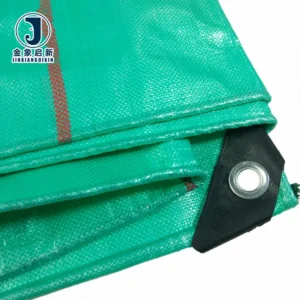
| Finished Edge | All four edges reinforced with PP rope in hem |
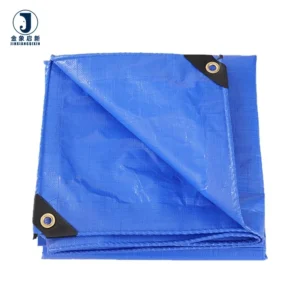
| Eyelet Interval | Galvanized eyelets every 3 ft or 1 meter |
| Corner Reinforcement | Reinforced plastic corners |
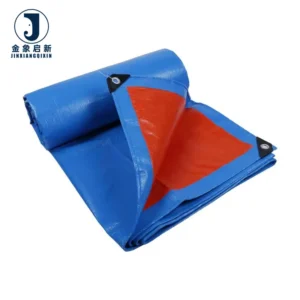
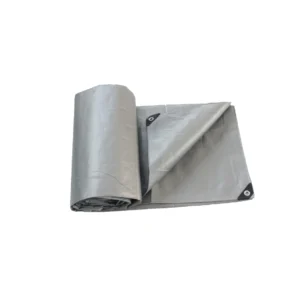
| Color Options | Blue, Blue/Orange, Green, Grey, Black, Clear, Grey/Green, Orange, or custom |
| Key Features | Waterproof, washable, tear resistant, UV treatment available (test basis not stated), mildew proof, anti-aging |
| Certifications | ISO, CE |
Application Suitability
| Application | Exposure & Requirement |
|---|---|
| Flatbed truck load covering | Constant road vibration, wind uplift, UV exposure, tie-down strap abrasion at edges |
| Curtain-side trailer fabric | Repeated flexing at folds, lateral wind pressure, contact with load edges |
| Container top sheet | Standing water pooling, salt-air exposure in intermodal transit, stacking abrasion |
| Boat transport cover | Highway-speed wind flutter, UV degradation, hull contact abrasion |
| Vehicle fleet cover | Daily deployment and folding, surface grit abrasion, moisture ingress at seams |
Why Stated GSM Without Weave Density Creates Transport Cover Failures
The fabric that tears on your trailer at 60 km/h was probably not the one you tested on the sample roll.
Fleet operators often specify a GSM figure and assume it defines the entire performance profile. In reality, two PE tarpaulin sheets at identical weight can behave completely differently under road vibration and wind load. The HDPE base fabric weave density — the mesh count in warp and weft — determines how stress distributes across the sheet when a corner catches wind or a strap bites into the hem. A PE tarpaulin for trucks and transport covers ordered on GSM alone, without locking the mesh count, leaves a critical variable to chance [NEED_CITE: tensile and tear test methods for coated fabrics per ISO 1421]. I have seen heavy-grade coated rolls fail at the weld line while lighter rolls with tighter weave held up for entire seasons, because the base fabric structure, not just the coating weight, absorbs the dynamic loads of transit.
Securing the Load Without Compromising the Cover
Transport-grade PE tarpaulin must survive the specific abuse pattern of truck and trailer operations: straps ratcheting down at fixed intervals, wind getting under loose sections, and the fabric folding and unfolding daily in depot yards. The PP rope-reinforced hems and galvanized eyelets spaced every 3 ft or 1 meter distribute tie-down forces across a wider area of the sheet, reducing the point-load failures that plague generic covers. Reinforced plastic corners address the highest-stress zones where loads flex most during transit — the points where straps change direction and where the cover meets the trailer edge.
Matching Weave Density to the Trailer’s Actual Work
Not every load demands the same fabric. A curtain-side trailer hauling dry goods on motorways needs a different balance of weight and flexibility than a flatbed carrying steel coils in winter rain. The available weave density options — from 6×6 mesh at lower GSM grades through 14×16 at the heaviest — let fleet operators select a PE tarpaulin for trucks and transport covers that matches the load weight, exposure severity, and expected handling frequency. Tighter weave at higher GSM delivers greater tear resistance for abrasive loads; looser weave at moderate weight keeps the cover pliable enough for a single driver to deploy without mechanical assistance [NEED_CITE: mesh count correlation to tear propagation in woven PE fabrics].
Reading the Spec Sheet Beyond the Weight Number
GSM tells you how much material is present per square meter, but it does not explain how that material is distributed between the HDPE yarn and the LDPE lamination. A roll at 150 g/m² could carry a thick coating over a sparse 8×8 weave, or a thin coating over a dense 12×12 base. The former feels substantial in hand but tears easily once the lamination cracks; the latter feels lighter but resists tear propagation far better because the tight weave arrests crack growth. For transport covers subjected to dynamic road loads, the weave density matters as much as total weight. Thickness values of 0.2 mm to 0.4 mm across the GSM range give an additional reference point: two rolls at identical GSM but different thickness indicate different lamination-to-base-fabric ratios, which directly affect low-temperature flexibility and heat-seal behavior at seams.
What Happens When the Cover Fails on the Road
A truck cover that splits at the hem during a night haul exposes the cargo to rain before the driver even notices. Eyelets that pull out under strap tension leave the rear section flapping at highway speed, which accelerates the damage to adjacent panels. Color variation between rolls becomes visible the moment two sheets overlap on the same trailer — not a structural problem, but one that signals inconsistent batch control and raises questions about whether the GSM also drifted. Welded seams that part before the fabric body fails indicate a lamination formulation that did not bond properly to the HDPE weave, a defect that often shows up only after weeks of flexing in service [NEED_CITE: field failure modes of laminated PE transport covers].
Why Procurement Teams Source PE Tarpaulin Here
Nearly 30 years of focused production on coated and laminated fabric means the process control over LDPE lamination weight and adhesion to the HDPE base is established, not experimental. Three full production lines and 36 sets of professional equipment support bulk roll output with consistent weave density and coating weight across the order. The 10-person R&D team handles custom width, color matching, and finished-size cutting so that the PE tarpaulin for trucks and transport covers arrives in the exact format the fleet requires, not a generic dimension that leaves gaps. Dedicated QA/QC at every stage with 100% pre-shipment inspection catches GSM drift, color variance, and eyelet spacing errors before the container is sealed. Sample development within days lets buyers verify fit and performance on an actual trailer before committing to the full order.
Documentation & Verification
- Material specification sheet confirming base fabric weave density, lamination type, and color reference per roll
- GSM verification record with pre-shipment weighing confirming weight matches the purchase order
- Pre-shipment inspection report documenting eyelet spacing, hem reinforcement, and corner patch integrity
- ISO and CE certificates applicable to the production facility and product category
- Roll packing list with individual roll dimensions, weight, and batch identification number
- UV treatment confirmation indicating the additive type and concentration used in the lamination
Fabrication, Handling & Storage
- Heat-seal temperature must match the LDPE lamination grade — confirm settings before welding seams on 0.2–0.4 mm sheets
- Galvanized eyelets require proper die pressure to seat without crushing the PP rope hem reinforcement
- Store rolls vertically on pallets to prevent flat-spotting the HDPE weave across the full 100-meter length
- Deploy at ambient temperature above freezing to avoid lamination cracking on thicker GSM grades
- Clean with mild detergent only; solvent-based cleaners can soften the LDPE surface layer
What to Include in Your Enquiry
Provide the specific trailer model or load dimensions so that the finished-size program can be quoted against your actual coverage requirement rather than a generic sheet. State the target GSM along with the weave density preference if known, and note whether UV treatment is needed for your operating region. Confirm the color and whether roll stock or finished cut-to-size sheets are required, along with the eyelet interval your tie-down system uses.
Frequently Asked Questions
Q: How is the stated GSM verified before shipment and on arrival?
A: Every roll undergoes weight verification during pre-shipment inspection, and the results are recorded against the purchase order specification. Buyers receive an inspection document confirming the measured GSM for each batch. On arrival, you can conduct your own cut-and-weigh check using the documented method to confirm consistency with the shipped record.
Q: What eyelet spacing and hem reinforcement options are available for trailer-specific covers?
A: Standard configuration provides galvanized eyelets every 3 ft or 1 meter with PP rope in all four hems and reinforced plastic corners. Custom intervals can be produced to match your trailer’s existing tie-down rail spacing. Confirm the required spacing at enquiry stage so the cutting and punching pattern is set before production.
Q: How do you ensure color consistency across multiple sheets in one order?
A: All sheets in a single order are produced from the same lamination batch, and pre-shipment inspection includes a visual color comparison across rolls. A batch identification number links every sheet to its production run. If your fleet requires matched color across multiple orders over time, request a retained sample reference at first order.
Q: What custom cut sizes and lead times are available for specific trailer models?
A: Finished sizes can be cut to match flatbed, curtain-side, or container dimensions rather than standard catalog sizes. Samples are developed within days for custom dimensions so you can verify fit before full production. Confirm the exact trailer measurements and required overlap at enquiry to determine the production schedule.