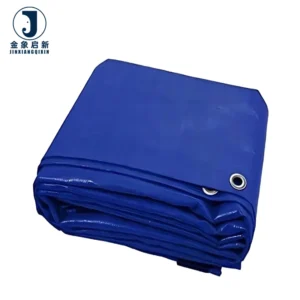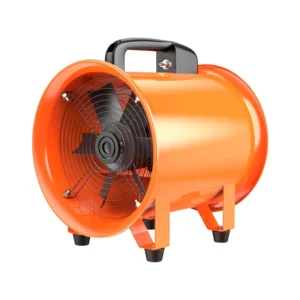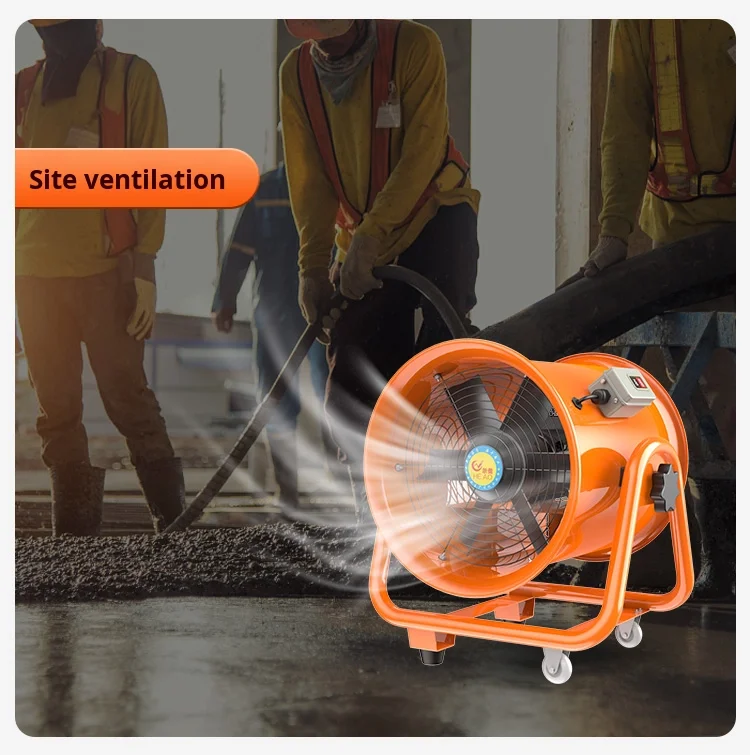
Deep Process Control — coating weight, adhesion and weld integrity verified at every production stage before the ventilation duct or fan system ships to your job site.
Technical Specifications
| Parameter | Value |
|---|---|
| Product Type | Axial Flow Fan |
| Size Options | 200mm / 250mm / 300mm / 350mm / 400mm / 450mm / 550mm / 650mm / 750mm / 850mm / 900mm |
| Power Range | 250W – 5500W |
| Air Volume Range | 1300 m³/h – 28000 m³/h |
| Total Pressure Range | 140 Pa – 320 Pa |
| Voltage | 220V / 380V |
| Noise Level | 57–88 dB(A) (varies by model size) |
| Speed | 3000RPM (source value — verify against manufacturer catalog) |
| Duct Compatibility | Flexible Duct Hose |
| Key Features | Portable configuration, dual voltage support, paired flexible duct system |
| Standards | ISO and CE (per company profile — confirm product-specific certification) |
Application Suitability
| Application | Exposure & Requirement |
|---|---|
| Enclosed truck trailer and container ventilation | Fume and heat buildup during loading; duct routed through confined access points; continuous or intermittent duty depending on turnaround schedule |
| Fleet maintenance bay exhaust | Welding fumes, solvent vapour and particulate extraction; duct routing around vehicle lifts and tooling; noise tolerance in occupied workshop |
| Construction site temporary enclosures | Dust and diesel exhaust displacement; flexible duct deployed through scaffold and hoarding; exposure to site moisture and mechanical damage |
| Tunneling access point ventilation | Confined airflow management; duct runs over extended distances with bends; compliance with site-specific fire and safety protocols |
Why Ventilation Duct Certification Matters More Than Airflow Figures
An axial flow fan paired with flexible duct can move substantial volume, but if the duct material lacks the fire-retardant or anti-static certification your site mandates, the entire system fails compliance before it runs a single shift.
Confirm the duct grade against your site safety plan before specifying — airflow data alone does not clear a ventilation system for deployment.
Contractors often discover mid-project that the flexible duct hose supplied with their portable Axial Flow Fan for construction and factory ventilation carries no documented FR or AS rating. The fan unit itself may perform within specification, yet the duct becomes the compliance weak link. [NEED_CITE: fire classification requirements for ventilation ductwork in confined spaces]. This mismatch causes site shutdowns, re-procurement delays and audit failures that no amount of airflow capacity can resolve.
Matching Fan Diameter to Duct Routing and Airflow Demand
Selecting the correct fan size from the 200mm to 900mm range depends on more than the volume of the space you need to ventilate. Duct length, the number of bends, and the static pressure drop across the flexible hose all reduce effective airflow at the delivery end. An undersized fan running at maximum pressure will deliver far less than its rated m³/h once the duct run extends beyond a few metres. The portable Axial Flow Fan for construction and factory ventilation must be matched to the actual system resistance, not just the free-air figure on the data sheet.
Dual Voltage Configuration and Job-Site Power Compatibility
The 220V/380V dual voltage range allows deployment across different site electrical infrastructures, from temporary generator supply to permanent workshop distribution boards. However, voltage compatibility alone does not guarantee reliable operation. Cable sizing, circuit protection rating, and generator capacity under starting load all affect whether the fan reaches its rated 3000RPM without voltage drop or thermal cut-out. [NEED_CITE: electrical supply requirements for portable industrial ventilation equipment]. Specifying the correct voltage variant and verifying site power capacity before commissioning prevents nuisance tripping and motor burnout on active job sites.
Reading the Specification Sheet Beyond the Headline Numbers
Air volume figures stated in m³/h represent free-air delivery — the fan running without any duct attached. Once flexible duct hose is connected, every metre of length and every bend introduces resistance that reduces actual delivered airflow. Total pressure, stated here between 140 Pa and 320 Pa depending on model, indicates how much resistance the fan can overcome before airflow drops to zero. The practical operating point sits between these extremes. Noise levels ranging from 57 to 88 dB(A) across the size spectrum directly affect whether the unit can operate in occupied spaces or requires exclusion zones. Power consumption from 250W to 5500W determines circuit loading and generator sizing for remote site deployment.
What Happens When the Wrong Ventilation Setup Reaches the Site
Specifying a fan and duct combination based solely on price or availability creates cascading failures once deployment begins. A duct that lacks the required fire-retardant grade will be rejected at the site safety audit, leaving the contractor to source compliant replacement hose under time pressure. [NEED_CITE: site compliance audit rejection rates for non-certified ventilation materials]. An undersized fan struggling against excessive duct resistance overheats, triggers thermal protection, and interrupts ventilation during critical work phases. Mismatched duct diameter and fan outlet create turbulence at the connection point, accelerating wear on the flexible hose and reducing effective airflow below the minimum required for safe occupancy.
Procurement Advantages Built Into This Product Line
Nearly three decades of coated fabric production gives this supply chain direct control over the flexible duct material that pairs with each fan unit. Three full production lines with 36 sets of professional equipment support volume orders with consistent lead times across the 200mm to 900mm size range. A dedicated 10-person R&D team develops matched fan-and-duct configurations for specific ventilation scenarios rather than shipping generic pairings. In-process quality checks at every production stage and 100% pre-shipment inspection ensure that the unit arriving on site matches the specification agreed at quotation. Sample development within days allows contractors to verify duct compatibility, noise levels, and airflow performance before committing to bulk orders.
Documentation & Verification
- Product-specific test report confirming noise level and airflow at stated voltage, not generic company-level certificates
- Flexible duct hose material specification stating base fabric, coating type and any fire-retardant or anti-static grade achieved
- Voltage and power rating label matching the variant ordered, verified against site electrical infrastructure before dispatch
- Pre-shipment inspection record covering fan motor run-test, duct coupling fit and flexible hose integrity check
- Certificate of origin and customs documentation for cross-border shipment to international job sites
Fabrication, Handling & Storage
- Flexible duct hose stored in original packaging away from sharp objects to prevent puncture before deployment
- Duct routing planned to minimise sharp bends that exceed the hose bend radius and restrict airflow
- Fan unit secured on level surface during operation to prevent vibration-induced movement across workshop floors
- Flexible hose inspected for abrasion at connection points after each relocation on active construction sites
- Motor ventilation intakes kept clear of dust and debris accumulation during extended continuous-duty operation
What to Include in Your Enquiry
Provide the dimensions and type of space requiring ventilation, the duct run length and number of directional bends, and your site voltage supply. State any fire-retardant or anti-static certification requirements that apply to the flexible duct material under your local regulations or project specification. Clarify whether you need the fan and duct supplied as a matched set or as individual replacement components.
Frequently Asked Questions
Q: Does the flexible duct hose carry fire-retardant or anti-static certification?
A: Certification status varies by duct material variant. Before specifying, confirm the fire-retardant or anti-static grade required by your site safety plan and request product-specific test documentation. Company-level ISO and CE certificates do not automatically confirm the duct hose meets confined space ventilation standards.
Q: How do I match fan size to duct length and routing bends?
A: Each bend and each metre of flexible duct adds static pressure resistance, reducing delivered airflow below the free-air rating. Provide your total duct run length and bend count so the correct fan diameter and pressure rating can be selected from the 200mm to 900mm range.
Q: What voltage options are available and are they compatible with site generators?
A: Fans are available in 220V and 380V configurations. Confirm your site generator or distribution board capacity, including starting current requirements, to ensure the selected voltage variant operates without nuisance tripping or motor thermal cut-out.
Q: Can the fan and flexible duct be ordered as a matched set?
A: Matched sets are available where fan outlet diameter and duct coupling are configured for direct connection without adapters. Specify your preferred combination at enquiry stage so compatibility is confirmed before production begins.
Q: What documentation ships with the unit for site compliance audits?
A: Standard documentation includes product-specific performance data, voltage and power rating verification, and pre-shipment inspection records. Additional test reports for fire-retardant or anti-static duct grades are available upon request — confirm requirements before order placement.