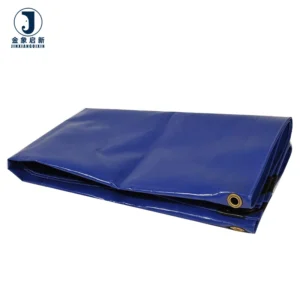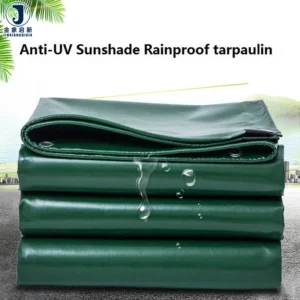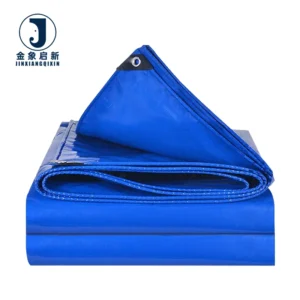
Proven Coating Adhesion — Every roll of PVC coated tarpaulin for truck cover undergoes in-process QA with verified GSM and adhesion checks before dispatch.
Technical Specifications
| Parameter | Value |
|---|---|
| Product Type | PVC Coated Tarpaulin Fabric |
| Material | PVC Vinyl, Knife Coated |
| Weight | At least 450 GSM |
| Base Fabric Construction | Woven Fabric |
| Coating Method | Knife Coated |
| Treatment | Waterproof, Tear-Resistant, Oilproof, Anti-UV (test basis not stated in source) |
| Finish Options | Coated Banner, Black Back Coated options available |
| Custom Size | Available |
| Standards | ISO, CE |
Application Suitability
| Application | Exposure & Requirement |
|---|---|
| Truck side curtain | Constant flexing at load points, road abrasion, wind-driven rain, UV exposure on long-haul routes |
| Flatbed trailer load cover | Direct weather contact, tie-down strap pressure, friction from cargo shifting during transit |
| Outdoor tent fabric | Prolonged sun exposure, rain pooling, repeated assembly and teardown stress at pole contact areas |
| Industrial equipment cover | Oil splash, dust ingress, outdoor storage with temperature cycling and moisture |
| Structural and vehicle protection | Extended outdoor static exposure, UV degradation, surface abrasion from debris |
What Happens When Your Truck Cover Fails at the Seam Before the Fabric Does
Seam failure almost always traces back to coating adhesion and weld compatibility, not the base fabric itself.
When a PVC coated tarpaulin for truck cover splits along a welded seam while the main body of the fabric remains intact, the cargo underneath gets exposed mid-route. This pattern repeats across fleets: the material reaches the end of its service life not because the woven base broke down, but because the coating delaminated at the stress point where the load flexes most. [NEED_CITE: weld peel strength testing methods for coated fabrics per ISO 1421]. Operators then replace entire panels when the real issue was a coating-to-fabric bond that could not withstand repeated load movement.
Built for Moving Loads, Not Static Storage
The 1000-denier woven base in this PVC coated tarpaulin for truck cover is selected specifically for the dynamic stress environment of transport applications. Side curtains on trailers flex every time the vehicle corners, brakes, or encounters crosswinds. A static cover fabric would crack or delaminate under these conditions. The woven construction distributes stress across multiple yarn intersections rather than concentrating it at a single point, which is essential when the fabric is tensioned and released hundreds of times per journey.
Knife Coating Means Reliable Weld Seams
Knife coated PVC construction delivers a uniform coating thickness that is critical for heat welding. When fleet operators or fabricators weld panels together to create custom-sized truck covers, consistent coating weight ensures the seam achieves full fusion without burning through thin spots or failing to bond at thick spots. This PVC coated tarpaulin for truck cover maintains weld integrity at flex points where cargo movement creates repeated stress cycles. [NEED_CITE: knife coating versus dip coating adhesion performance for technical textiles].
How GSM, Denier, and Coating Method Work Together
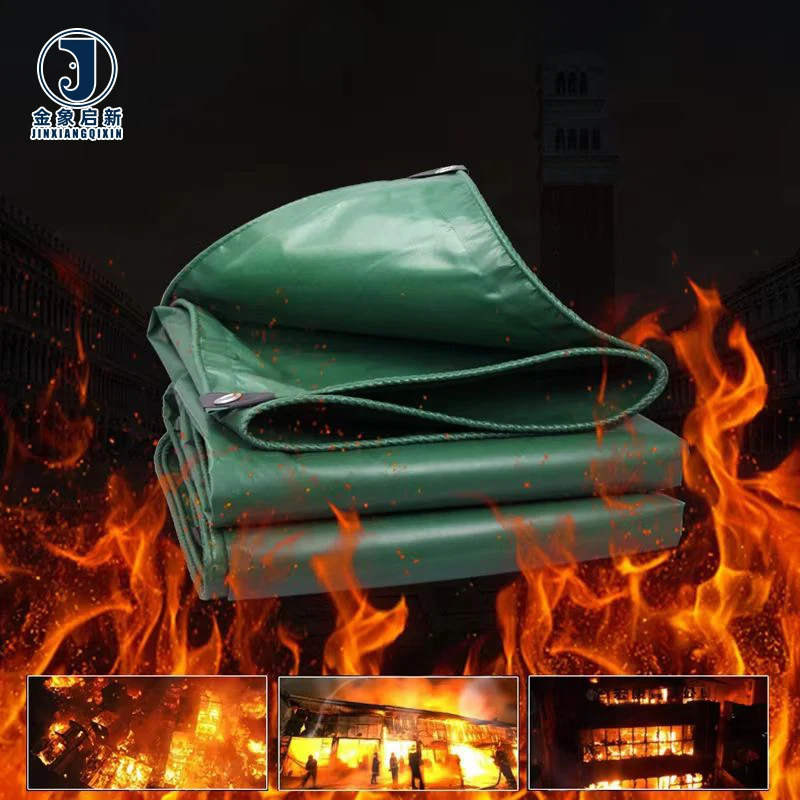
The stated weight of at least 450 GSM includes both the woven base fabric and the PVC coating applied by knife method. This combined weight figure tells you about overall material density but does not, on its own, predict tear strength or weld performance. The 1000-denier yarn in the base weave provides the structural backbone — when a puncture or nick occurs on the road, the denier and weave density determine how far that damage propagates before it is stopped. Meanwhile, the knife coating method forces PVC into the weave interstices under blade pressure, creating a mechanical bond that supports both waterproofing and the peel strength needed for welded seams. The Anti-UV treatment extends functional service life under sun exposure, though specific test basis should be confirmed for your regional compliance requirements. Available in flame retardant grades — confirm the grade required for your market and the applicable standard for your jurisdiction.
The Hidden Cost of Ignoring Batch Colour Consistency
When a fleet orders multiple truck covers and the colour shifts between rolls, the mismatch becomes visible the moment two panels hang side by side on adjacent trailers. This is not a cosmetic concern alone — it signals inconsistent coating formulation between batches, which can extend to adhesion properties and UV treatment levels as well. Operators who skip batch verification often discover the problem only after installation, by which time the entire order is deployed and the cost of selective replacement exceeds the original savings. [NEED_CITE: colour fastness and batch consistency standards for coated technical fabrics].
Why Procurement Teams Source This Fabric Here
Three full production lines with 36 sets of professional equipment provide the capacity to fulfill bulk truck cover orders without sacrificing lead-time commitments. A dedicated 10-person R&D team handles custom sizing requests, matching specific trailer models rather than supplying generic dimensions that waste material and leave gaps. Quality control runs at every production stage with 100% pre-shipment inspection, so GSM and coating adhesion are verified on the actual rolls leaving the facility. Samples are developed within days for custom requirements, allowing fleet operators to test weld parameters and fitment before committing to a full production run. ISO and CE certification underpins the documentation package that accompanies each shipment.
Documentation & Verification
- Weight verification per roll against the stated GSM before dispatch
- Material specification sheet detailing base fabric denier, coating weight, and construction
- Test report documentation for UV and flame-retardant grades where applicable
- Pre-shipment inspection record covering coating adhesion and surface quality
- Roll packing list and certificate of origin included for customs clearance
Fabrication, Handling & Storage
- Heat weld temperature and dwell time should be calibrated to the knife-coated PVC layer for consistent peel strength
- Reinforce hem and tie-down zones with webbing to distribute load away from the coated fabric edge
- Store rolls upright on cores to prevent flat-spotting and creasing in the PVC coating surface
- Allow cold-stored rolls to reach ambient temperature before unrolling to avoid coating crack at low flexibility
- Clean with mild detergent only — aggressive solvents can degrade the PVC coating and Anti-UV treatment layer
- Plan cutting layout to maximise yield from the roll width and reduce welded panel joints on finished covers
Requesting a Specification Match
Provide your specific trailer model, panel dimensions, and the operating environment so we can confirm whether this fabric grade meets your requirements. If your market mandates a particular fire classification or UV test standard, include that in your inquiry along with annual volume estimates and any colour or finish preferences. Let us know whether you need rolls supplied for your own fabrication or if you require cut-to-model finished panels.
Frequently Asked Questions
Q: How do I verify the GSM on arrival matches what was quoted?
A: Every roll ships with a pre-shipment inspection record documenting the measured weight. You can cross-reference this against the material specification sheet included in your documentation package. If you conduct independent weigh-in upon receipt, compare the result to both the quotation and the inspection record to confirm alignment across all three data points.
Q: What vehicle information do you need for custom truck cover sizing?
A: Provide the exact trailer make, model year, and body type along with panel-by-panel dimensions if available. Include details on tie-down point locations and any structural protrusions. This allows us to cut the PVC coated tarpaulin for truck cover to your specific vehicle rather than a generic template.
Q: Can you supply PVC coated tarpaulin fabric with branded printing?
A: Yes, the 10-person R&D team handles pattern printing and branding on coated fabric. Send your artwork files and colour references early so we can develop a printed sample for your approval before the full production run begins.
Q: Why do welded seams sometimes fail before the fabric itself?
A: Weld failure typically results from inconsistent coating thickness or incorrect welding temperature for the specific PVC formulation. Knife coated construction delivers uniform coating weight that supports reliable weld fusion. Always run test welds on sample material before committing to full panel fabrication.
Q: How do you ensure colour consistency across multiple rolls for a fleet order?
A: All rolls in a single order are produced from the same coating batch with dedicated QA checks for colour match at every production stage. The pre-shipment inspection includes side-by-side visual comparison so that any variance is caught before dispatch rather than after installation on your vehicles.