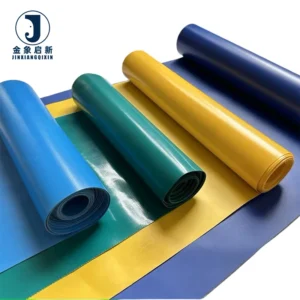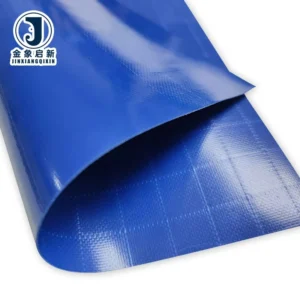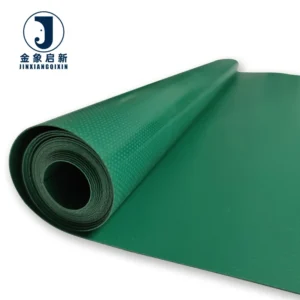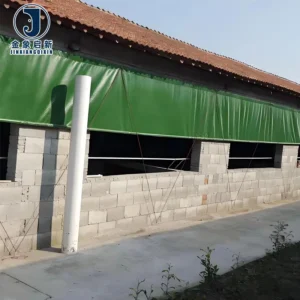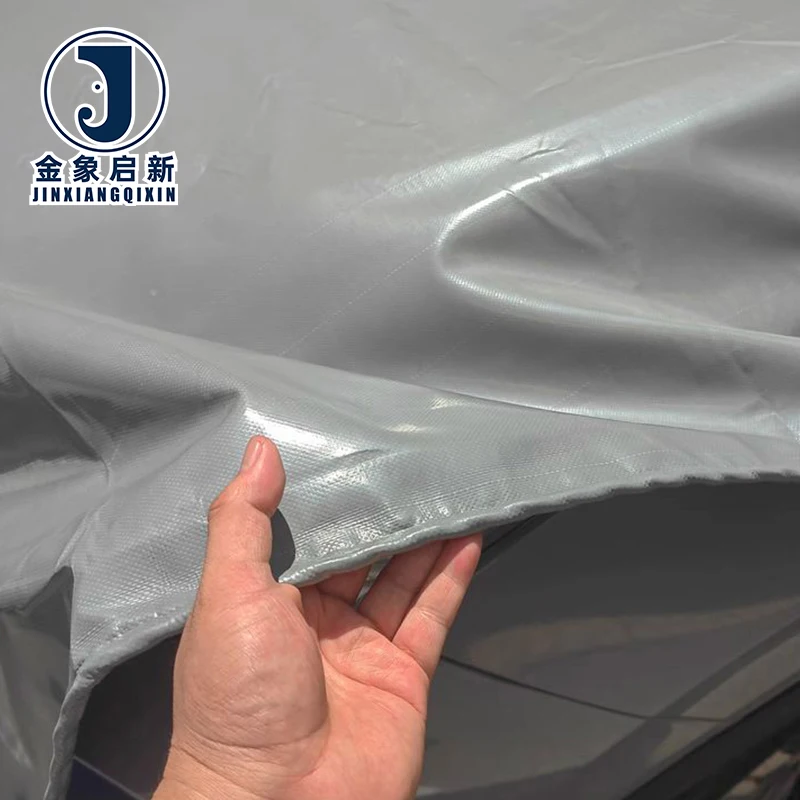
Coating Process Control — Nearly 30 years focused on coated fabric production supports repeatable GSM and adhesion quality across every roll of PVC coated tarpaulin for farm cover shipped from our lines.
Technical Specifications
| Parameter | Value |
|---|---|
| Product Type | PVC Coated Tarpaulin |
| Coating Material | PVC |
| Base Fabric | Woven polyester (plain weave) |
| Waterproof Rating | Fully waterproof coated construction |
| Anti-Static Treatment | Anti-static (grade not stated — confirm grade required for your poultry environment) |
| Surface Style | Plain |
| Color Options | Customizable — available across a range of colors to match farm branding or site requirements |
| Supply Format | Roll stock |
Application Suitability
| Application | Exposure & Requirement |
|---|---|
| Broiler and chicken farm side-wall covers | Constant moisture, ammonia-laden air, wind flex at tie-down points, daily temperature swings |
| Pig and sheep shelter tents | Abrasive contact with livestock, rain and mud splash, UV from open-sided structures |
| Agricultural feed and equipment covers | Prolonged water pooling on horizontal surfaces, mechanical abrasion from loading and unloading |
| Livestock windbreak panels | Sustained wind load causing fabric flutter, stress concentration at grommet and hem lines |
Why Roll-to-Roll Color Consistency Matters More Than the Color Card Suggests
Matching swatches in the showroom does not guarantee matching shelters across the farm.
Farm operators ordering multiple rolls of PVC Coated Tarpaulin for Farm Cover often discover visible shade variation only after installation, when panels sit side by side under natural daylight. A difference that looks minor on a sample card becomes a visible stripe across a row of broiler houses or pig shelters. Batch-to-batch color control is not a cosmetic preference — it signals consistent coating formulation, which directly affects waterproof integrity and long-term weather resistance. [NEED_CITE: coating formulation variables that influence color and UV stability in PVC tarpaulin production]
What Separates Farm-Grade Tarpaulin from General-Purpose Covers
Agricultural environments expose coated fabric to conditions that general-purpose tarps are not formulated to handle. Ammonia from poultry litter, organic acids from manure, and constant condensation inside livestock shelters attack coatings that lack chemical resistance. PVC Coated Tarpaulin for Farm Cover must maintain its waterproof barrier despite these exposures, which means the coating adhesion to the base fabric is as important as the coating thickness itself. When adhesion fails, moisture penetrates the weave and accelerates fabric degradation from the inside out.
Tension, Flex, and the Reality of Wind Load on Farm Shelters
Livestock shelters and poultry houses rarely sit in still air. Side curtains open and close, wind causes constant fabric flutter, and seasonal storms place sudden peak loads on the entire structure. The woven base fabric in this PVC coated tarpaulin resists tear propagation under these cyclic stresses, but the real test is how the material behaves at the seams. Heat-welded joints must carry the same load as the parent fabric, and weld quality depends on coating formulation compatibility with the welding temperature window. [NEED_CITE: tensile and tear test methods for coated fabrics per ISO 1421]
Reading the Specification Sheet Beyond the GSM Number
GSM tells you how much material is present per square meter, but it does not distinguish between a heavy coating on a light base fabric and a balanced construction. For farm covers, a higher proportion of coating weight relative to base fabric denier improves waterproof performance but may reduce tear strength if the underlying weave is too sparse. The plain weave construction in this product aims for a balance that suits the mixed demands of agricultural shelters — water resistance on exposed surfaces, mechanical durability at stress points, and enough flexibility for fabrication into custom-sized covers. The anti-static treatment, where specified, reduces dust and particulate adhesion on shelter interiors, which matters in poultry environments where airborne feather dust and feed particles accumulate rapidly on horizontal and inclined surfaces.
What Happens When the Specification Does Not Match the Application
Choosing a PVC coated tarpaulin based on price per roll without verifying GSM on arrival leads to covers that fail before the farming cycle ends. A lighter material than quoted means thinner coating, reduced waterproof margin, and faster breakdown under UV and moisture. Color inconsistency across rolls forces farm operators to either accept a patchwork appearance or reject the shipment, delaying shelter construction during critical seasons. Welded seams on under-specified material tend to fail at the points where the load flexes most — typically at tie-down straps and ridge-line connections — leaving livestock exposed during storms. [NEED_CITE: common failure modes in agricultural tarpaulin covers related to GSM variance]
Why Sourcing This PVC Coated Tarpaulin for Farm Cover Here Makes Sense
Three full production lines and 36 sets of professional equipment give this facility the capacity to maintain coating weight consistency across large-volume farm cover orders, rather than squeezing production through a single line where parameter drift is harder to control. A 10-person R&D team handles material selection and color matching directly, which means custom color requests for farm-wide visual consistency are developed in-house rather than outsourced. Every roll undergoes dedicated QA/QC inspection at each production stage, with 100% pre-shipment inspection verifying weight, color, and surface quality before dispatch. The coating process control developed over nearly 30 years of specialized production directly addresses the GSM verification concerns that agricultural buyers raise most often. Samples for custom widths, colors, and treatments are developed within days, allowing farm project planners to confirm material suitability before committing to full production volumes.
Documentation & Verification
- Material specification sheet stating GSM, base fabric denier, and coating weight for every roll
- Color reference card with batch number for cross-roll consistency checking on site
- Pre-shipment inspection record confirming 100% QC coverage before dispatch
- Test report for anti-static treatment where grade has been specified at order stage
- Roll packing list with individual roll weights and dimensions for receiving verification
Fabrication, Handling & Storage
- Heat-weld seams using temperature settings matched to the PVC coating formulation — test on offcuts first
- Reinforce grommet positions at tie-down points where wind load concentrates on the plain weave base
- Store rolls upright on pallets to prevent flat-spot deformation of the PVC coated surface
- Avoid dragging rolls on abrasive ground during unloading to protect the waterproof coating layer
- Use mild detergent for cleaning shelter covers — solvents may attack the PVC coating bond
- Allow custom-width rolls to acclimate to site temperature before unrolling to reduce creasing
What to Include With Your Farm Cover Inquiry
To specify the right PVC Coated Tarpaulin for Farm Cover for your project, share the livestock type and shelter configuration, the climatic conditions at your farm site, and whether you need roll stock or pre-cut panels with edge reinforcement. If your market requires anti-static or other treatment grades for regulatory compliance, state the standard your facility must meet. Specify target colors and whether visual consistency across all rolls in the order is critical for your installation plan.
Frequently Asked Questions
Q: How can I verify the GSM weight of each roll matches the quoted specification?
A: Every shipment includes a packing list with per-roll weight data and a material specification sheet stating the agreed GSM. We conduct 100% pre-shipment inspection weighing sample sections against the stated value. You can cross-check on arrival using a calibrated scale and the dimensions recorded on the roll label.
Q: How do you control color consistency when I order multiple rolls for one farm project?
A: Custom color orders are produced in a single batch run with the same coating formulation. Each roll receives a batch reference number, and we provide a color reference card for on-site comparison. Pre-shipment inspection includes visual side-by-side checking of rolls within the same order before packing.
Q: What test evidence can you supply for anti-static or UV treatment claims?
A: Where a specific grade or standard is stated at order stage, we supply the corresponding test report with the shipment documentation. If your poultry operation or local regulation requires a particular anti-static classification, confirm the grade needed before quotation so the correct treatment is applied and documented.
Q: What custom dimensions and reinforcement options are available for farm cover projects?
A: Rolls are available in custom widths and lengths to match your shelter dimensions and minimize on-site waste. Eyelet spacing, hem reinforcement, and edge treatment can be specified based on the tie-down method and wind load conditions at your farm site. Confirm requirements during the sample approval stage.