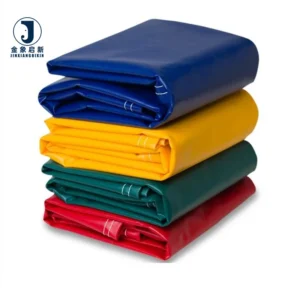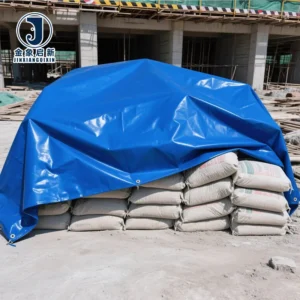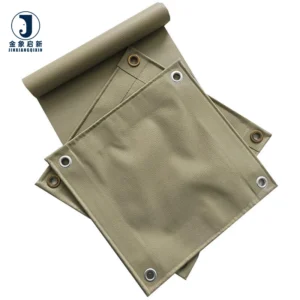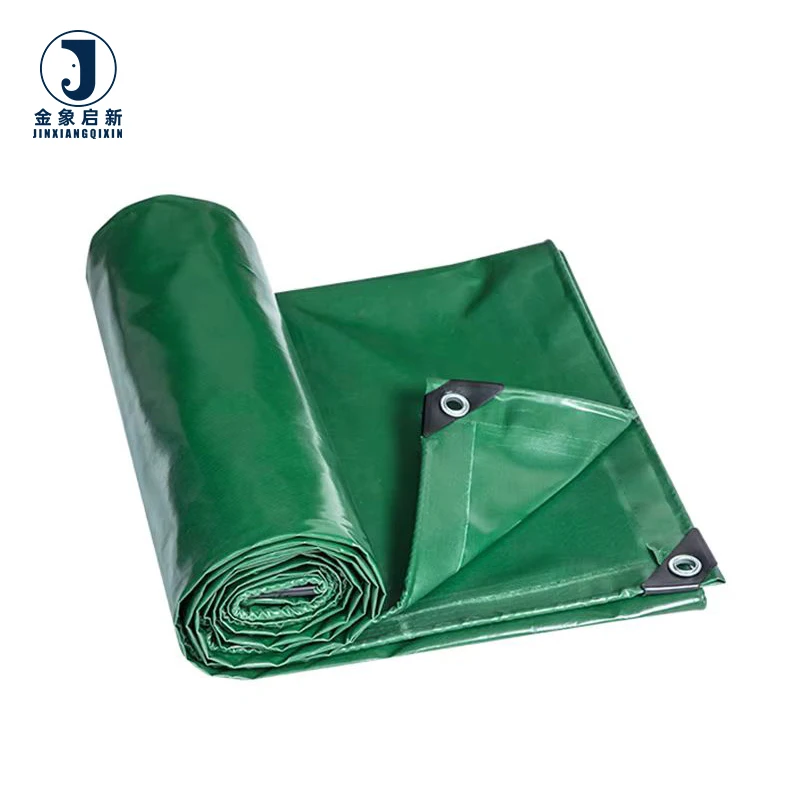
Consistent Batch Delivery — Three full production lines with dedicated QA at every coating stage ensure roll-to-roll GSM and colour uniformity across fleet-sized orders of PVC coated tarpaulin fabric.
Technical Specifications
| Parameter | Value |
|---|---|
| Product Type | PVC Coated Fabric |
| Base Fabric Denier | 500D–2000D (super heavy grade) |
| Total Thickness | 1.2–1.5 mm (super heavy) / 0.70–1.0 mm (heavy-duty) / 0.35–0.45 mm (medium) |
| Weight (GSM) | 1100–1500 g/m² (super heavy) / 700–1000 g/m² (heavy-duty) / 400–500 g/m² (medium) |
| Coating Material | PVC |
| Coating Method | Lamination technology and hot melt coating technology |
| Tensile Strength | Warp 2500–3000 / Weft 2200–2800 N/5cm (super heavy, test basis not stated in source) |
| Flame Retardant | Available in flame retardant grades — confirm the grade required for your market |
| UV Treatment | Anti-UV treatment available — confirm test basis for your specification |
| Anti-Static | Anti-static treatment available — confirm surface resistance standard required |
| Anti-Mildew | Mold proof |
| Waterproof | Fully waterproof coated construction |
| Cold Resistance | Cold resistant cracking formulation |
| Color | Customizable, single and double side options |
| Printing Option | Custom printing available |
| Certification | ISO, CE |
Application Suitability
| Application | Exposure & Requirement |
|---|---|
| Truck and trailer load covering | Road weather, tie-down abrasion, UV exposure, repeated flex at load points |
| Side curtain fabric for transport equipment | Constant flexing cycles, edge abrasion at roller tracks, weld integrity at stress seams |
| Custom-fit vehicle model covers | Precise dimension matching, reinforced tie-down zones, fleet branding consistency |
| Flatbed and curtain-side trailer wraps | Wind load during transit, cargo shift stress, long-haul weather resistance |
Why Seam Failure Happens Before the Fabric Gives Out
Welded seams splitting while the surrounding PVC coated tarpaulin fabric remains intact is a pattern we encounter repeatedly when working with fleet operators.
Hot melt coating adhesion directly determines whether a heat-welded seam holds as long as the fabric itself.
Most transport covers fail at the seam first because the coating bond to the base fabric is weaker than the tensile load applied during flexing. When a truck cover flexes over a shifting load or a side curtain cycles through repeated opening and closing, the stress concentrates exactly where two panels meet. If the lamination between the PVC layer and the polyester base has insufficient peel strength, the weld line becomes the weakest link — the fabric itself may show no damage, but the seam delaminates under repeated mechanical stress [NEED_CITE: peel strength and weld performance test methods for PVC coated fabrics].
Specifying PVC coated tarpaulin fabric for truck and trailer covers requires understanding coating adhesion as a separate property from base fabric tensile strength. Both must be adequate for the application, and both should be verifiable before the material enters production.
Coating Bond Integrity at Flex Points
The hot melt coating and lamination technology used across this PVC coated tarpaulin fabric range creates a continuous adhesive bond between the polyester base and the outer PVC layers. For truck and trailer applications, this bond is critical at the points where the cover wraps around cargo or where a side curtain folds into its track. Heat-welded seams rely on the PVC layers of two panels fusing together — if the coating-to-base bond is inconsistent, the fused seam pulls away from the base fabric rather than distributing stress across the panel. Fleet operators specifying PVC coated tarpaulin fabric should request peel strength data alongside tensile values to confirm weld durability under road conditions.
Matching Fabric Weight to Trailer Exposure Profiles
Not every position on a trailer demands the same fabric weight. Roof sections face sustained UV and pooling water, while lower side panels encounter road spray, stone impact and tie-down strap abrasion. Heavy-duty grades in the 700–1000 g/m² range serve the main body and side curtain panels, where flex cycling is most frequent. Super heavy grades above 1100 g/m² are better suited to flatbed covers and high-wind routes where the fabric must resist cargo shift loads without stretching. Specifying PVC coated tarpaulin fabric by exposure zone — rather than one grade across the entire vehicle — balances durability with weight and handling ease during daily operation [NEED_CITE: tensile and tear test methods for coated fabrics per ISO 1421].
Understanding the Specification Layers
Base fabric denier and knitting density interact directly with the PVC coating weight to produce the final physical properties of the roll. A 2000D super heavy base with a lamination coating delivers high tensile strength numbers, but those numbers are meaningful only when the coating method supports adequate peel strength for welding. Hot melt coating penetrates the weave structure more thoroughly than simple lamination, which improves the bond at weld lines — the exact location where truck covers experience their highest cyclic stress. Thickness readings between 0.35 mm and 1.5 mm across the product family correspond to distinct use cases: medium grades for lighter covers and equipment wraps, heavy-duty for side curtains, and super heavy for flatbed and high-load applications where the fabric must bridge unsupported spans without sagging or tearing under wind load.
The Real Cost of Underspeccing a Fleet Cover
Ordering a generic weight grade for an entire fleet often leads to premature failure on the most exposed panels. A lighter fabric on a flatbed cover that runs long-haul motorway routes will show coating abrasion at the tie-down contact points far earlier than expected, forcing replacement cycles that disrupt fleet scheduling. Colour variation between rolls sourced from different production batches becomes visible the moment two covers are installed on adjacent vehicles — a problem that compounds when the fleet expands and matching stock is no longer available. Flame retardant treatment specified on the purchase order but unsupported by a test report can result in a rejected delivery at a compliance-sensitive depot, delaying vehicle certification and generating re-procurement costs that far exceed the original material savings [NEED_CITE: fire classification requirements for transport and logistics facility materials].
Production Consistency for Repeat Fleet Orders
Three full production lines with 36 sets of professional equipment support bulk output of PVC coated tarpaulin fabric with maintained coating weight tolerances across the production run. A 10-person R&D team handles custom colour matching, pattern printing and sizing specifications for fleet-specific requirements, developing samples within days rather than weeks. In-process QA checkpoints at every coating and lamination stage catch GSM drift and colour deviation before rolls reach final winding. One hundred percent pre-shipment inspection ensures that what arrives at your receiving dock matches the approved sample in weight, colour and weld performance. Documentation travels with every roll — specification sheets, test reports and packing lists that support your incoming quality checks and customs clearance.
Documentation & Verification
- Material specification sheet confirming GSM, base denier and coating weight per roll
- UV and flame retardant test reports supplied where treatment grades are specified
- Pre-shipment inspection record documenting 100% QA before dispatch
- Roll packing list with net and gross weight supporting receiving verification
- Certificate of origin and customs documentation for international shipments
Fabrication, Handling & Storage
- Heat weld super heavy grades at parameters matched to 1.2–1.5 mm total thickness
- Reinforce tie-down zones on heavy-duty side curtain panels at strap contact points
- Store rolls upright on core to prevent flat-spot creasing on the PVC coating surface
- Allow cold-resistant rolls to acclimatise before unrolling in sub-zero yard conditions
- Use mild detergent only — solvent cleaners degrade the lamination coating bond layer
- Plan panel cutting layout to minimise transverse welds across the trailer length
Requesting a Specification Match
To move from inquiry to sample, we need the specific trailer models in your fleet, the typical cargo profiles and routes, and any fire retardant or anti-static requirements set by your depot or terminal operator. Confirm the target GSM, preferred colour reference and whether custom printing or branding is required across the order. Let us know if you need rolls for your own fabrication line or finished covers cut and welded to vehicle dimensions.
Frequently Asked Questions
Q: How do I verify the GSM of PVC coated tarpaulin fabric when rolls arrive?
A: Request a material specification sheet stating GSM, base fabric denier and coating weight for each roll. Our 100% pre-shipment inspection records include weight verification. On receipt, you can cross-check by cutting a measured sample and weighing it — any deviation beyond tolerance should be flagged against the dispatch documentation.
Q: What is the lead time for custom width and colour on fleet-specific covers?
A: Custom colour, width and printing specifications typically require multi-week lead times depending on batch size and treatment requirements. Samples are developed within days for approval before full production begins. Minimum order quantities vary by specification — confirm your requirements during the quotation stage.
Q: How is truck cover sizing handled for specific trailer models?
A: We work with the exact dimensions of your trailer model rather than generic cut sizes. The R&D team develops a cut pattern matched to the vehicle profile, including eyelet placement and reinforcement zones at high-stress points. Approved samples ensure fitment accuracy before production.
Q: Will colour match across all rolls in a large fleet order?
A: Batch consistency is controlled through in-process QA at every coating stage. All rolls for a single fleet order are produced together to eliminate roll-to-roll colour variation. Pre-shipment inspection verifies colour uniformity before dispatch, so covers installed side by side present a consistent appearance.
Q: How are welded seams validated before shipment?
A: Weld integrity depends on hot melt coating adhesion to the base fabric. Production includes in-process weld testing on sample panels from the same batch. The pre-shipment inspection record documents seam performance checks alongside fabric weight and colour verification.