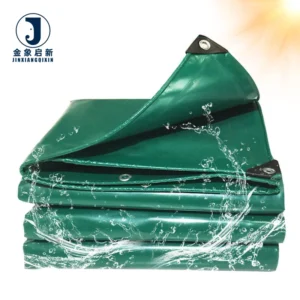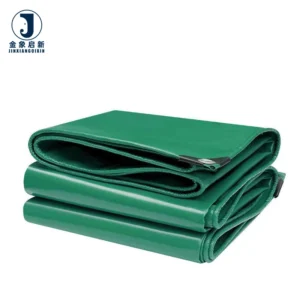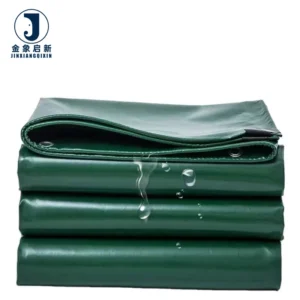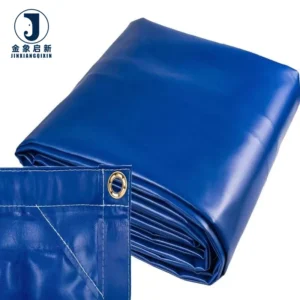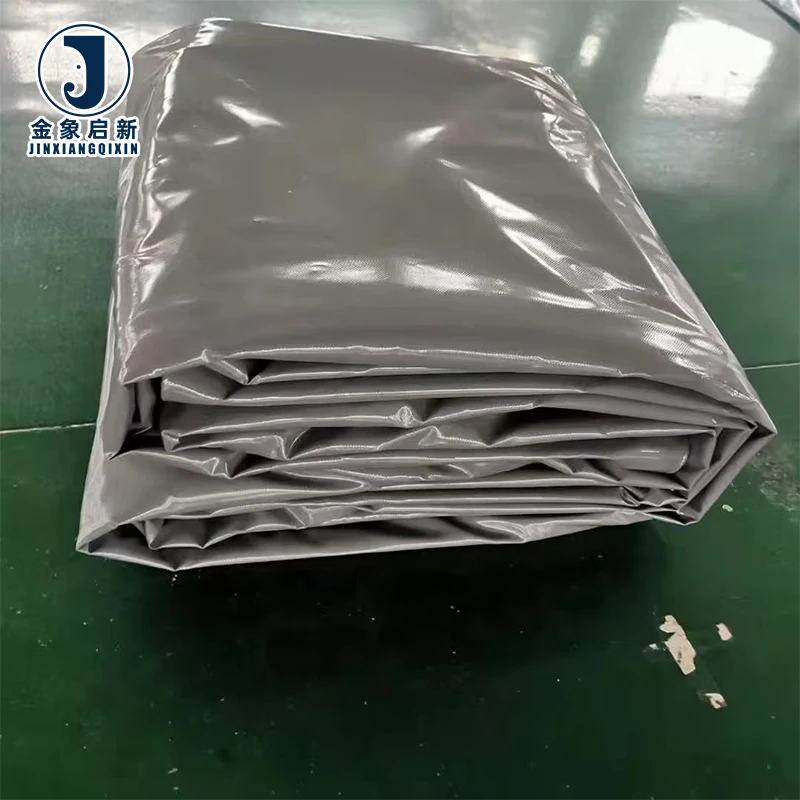
Deep Coating Process Control — every roll of this PVC coated truck tarpaulin is weighed and measured against the quoted GSM before leaving the production line, with a 100% pre-shipment inspection record provided for fleet orders.
Technical Specifications
| Parameter | Value |
|---|---|
| Product Type | PVC Coated Tarpaulin Roll for Truck Cover |
| Base Fabric Denier | 200DX300D, 500DX500D, 840DX840D, 1000DX1000D (confirm grade for load type) |
| Weight Range | 250gsm-1500gsm (confirm the grade for this item) |
| Color Options | Blue, Yellow, Black, Green, White, Grey, Orange |
| Finish | Available in glossy or matte finish |
| Size Options | 3x4m, 6x8m, 8x10m, 10x12m or custom made |
| UV Treatment | Customized (test basis not stated in source — request report) |
| Flame Retardant | Available in flame retardant grades (grade not stated — confirm for your market) |
| Anti-Fungal | Treated (standard not stated in source) |
| Temperature Range | -15ºC to 70ºC |
| Working Life | 3-10 years depending on usage environment (source value — verify against manufacturer catalog) |
| Key Features | Waterproof, rain-resistant, abrasion resistant, good flexibility and adhesion strength |
| Printing Option | Customized brand printing |
| Standards | ISO, CE |
Application Suitability
| Application | Exposure & Requirement |
|---|---|
| Flatbed truck load covering | Constant road vibration, tie-down strap abrasion, UV exposure, wind-driven rain at highway speeds |
| Curtain-side trailer fabric | Repeated flexing along vertical tracks, lateral tension at roller mechanisms, flex-point seam stress |
| Box trailer rear and side panels | Impact from loading equipment, friction at door guide rails, exposure to de-icing salt in winter logistics |
| Transport equipment side curtain builds | Dimensional accuracy for track systems, weld-line integrity at panel joins, fleet colour consistency |
| Fleet replacement tarpaulins | Model-specific cut to match OEM trailer dimensions, eyelet alignment with existing tie-down hardware |
Why a Generic-Size PVC Coated Truck Tarpaulin Fails Before the Fabric Does
A truck cover cut to a generic rectangle will always fail first at the welded seams where the trailer flexes and the load shifts.
Fleet operators routinely report that replacement tarpaulins ordered by standard dimensions arrive too tight at the corners or too loose along the sides, causing the fabric to flap against the load at speed. This flapping concentrates stress at the welded seams and eyelet zones, and the PVC coated truck tarpaulin tears along the weld line long before the coated fabric itself reaches the end of its service life. The problem compounds across a fleet: every vehicle with a slightly different trailer bed dimension gets the same cover, and the failure pattern repeats [NEED_CITE: common failure modes in transport tarpaulin weld seams under cyclic road load].
Cut to the Trailer, Not to a Catalogue Dimension
Ordering a PVC coated truck tarpaulin by generic width and length ignores the reality that no two trailer models share the same bed profile, corner radius or tie-down rail position. This fabric is cut and welded to your specific trailer make and model, with the eyelet spacing aligned to your existing ratchet strap and hook positions. The hem reinforcement is concentrated at the zones where the load flexes most during transit, rather than applied uniformly where it adds weight without adding protection.
Reinforcement Where Road Stress Concentrates
The high-stress zones on a moving truck cover are predictable: the welded seams at panel joins, the eyelet rows at tie-down points, and the bottom hem where the fabric meets the trailer floor rail. These areas receive additional PVC coating layers and welded reinforcement strips before the cover leaves production. The reinforcement pattern is matched to the trailer type, so a curtain-side application gets flex-zone treatment along the vertical tracks while a flatbed cover gets abrasion padding at the corner gussets [NEED_CITE: reinforcement strategies for coated fabric at cyclic stress points in transport applications].
Reading the Specification Sheet Beyond the GSM Number
Coating weight alone does not determine how a PVC coated truck tarpaulin performs under road conditions. The base fabric denier, ranging from 200DX300D up to 1000DX1000D, defines the tensile and tear resistance of the woven polyester scrim inside the coating. A 630 GSM fabric with a 1000DX1000D base will resist puncture and tear propagation substantially better than the same GSM laid over a lighter 200DX300D scrim, because the thicker yarns absorb and distribute point loads across a wider area of the weave. The glossy or matte finish choice affects not just appearance but also surface cleaning behaviour and how well branded printing adheres over repeated wash cycles. Temperature range from -15ºC to 70ºC sets the operating envelope: below this range the PVC coating becomes brittle and crack-prone, while above it the coating softens and may stick to itself when folded.
The Cost of Skipping the Sample Approval Step
When a fleet operator approves a PVC coated truck tarpaulin order without checking a physical sample, the risks show up after delivery. Colour variation between rolls becomes visible once the covers are installed side by side on adjacent trailers, forcing a full reorder to maintain fleet appearance. A flame retardant grade claimed on the quotation but unsupported by a test report can result in a failed site compliance audit at the destination terminal. Welded seams that were not tension-tested during production may delaminate under the first heavy load cycle, leaving the cargo exposed and the carrier liable for damage [NEED_CITE: coating adhesion and weld integrity testing for PVC tarpaulin in logistics].
What Backs the Product Beyond the Quotation
The production facility runs three full lines with 36 sets of professional equipment, giving this PVC coated truck tarpaulin a reliable throughput for fleet-scale orders without splitting production across subcontractors. A 10-person R&D team handles the pattern cutting, custom sizing and sample development, meaning the trailer model fitment is verified before bulk production begins. Every roll passes through a dedicated QA/QC process at each production stage, with 100% inspection completed before dispatch and a pre-shipment inspection record included in the documentation package. Colour reference is documented per roll to prevent batch variation across multi-trailer fleet orders.
Documentation & Verification
- Material specification sheet stating base fabric denier and coating weight per roll
- Pre-shipment inspection record confirming 100% inspection before dispatch
- Colour reference documented per roll for fleet colour consistency
- ISO and CE certificates included with each shipment
- UV and flame retardant test reports provided where applicable — confirm the grade required
Fabrication, Handling & Storage
- Heat-weld seams using temperature and dwell settings matched to the specific coating thickness and base fabric denier
- Position eyelets and reinforced hems at measured tie-down intervals matching the trailer rail hardware spacing
- Store rolls upright on pallets to prevent flat-spot deformation on the PVC coating surface
- Allow cold-stored rolls to reach ambient temperature before unrolling to avoid coating crack at low flex
- Clean glossy finish surfaces with non-solvent detergent to preserve the coating surface and printed branding
What to Include With Your Enquiry
Specify the trailer make, model and bed dimensions so the cut pattern matches your fleet hardware. Confirm whether your terminal or destination market requires a particular flame retardant or UV test standard, and state the quantity of covers needed per trailer type. If you require branded printing or a specific fleet colour, provide the Pantone or RAL reference with your enquiry so a sample can be produced for approval before bulk cutting begins.
Frequently Asked Questions
Q: How do you verify the GSM matches the quoted specification on arrival?
A: Every roll is weighed and measured against the stated GSM during the 100% pre-shipment inspection, and a material specification sheet stating the base fabric denier and coating weight is included with the documentation package. This allows you to cross-check the delivered material against your original quotation before the covers are installed on the fleet.
Q: Can truck covers be cut to fit a specific trailer make and model?
A: Covers are cut to the exact dimensions of your trailer model, including corner radius and tie-down rail position. The sample approval step lets you verify the fit on one vehicle before the full fleet order enters production, preventing the generic-size mismatch that causes flapping and premature seam failure on the road.
Q: How are welded seams reinforced at flex and tie-down stress points?
A: Additional PVC coating layers and welded reinforcement strips are applied at panel joins, eyelet rows and hem zones where road vibration and load shift concentrate stress. The reinforcement pattern is matched to the trailer type, so curtain-side and flatbed applications each receive treatment at their specific high-stress locations.
Q: How is colour consistency controlled across rolls in a fleet order?
A: Colour reference is documented per roll during production, and the QA/QC process checks batch-to-batch colour before dispatch. This prevents the visible variation that appears when covers from different rolls are installed side by side on adjacent trailers in the same fleet.
Q: What UV and flame retardant treatment options are available?
A: UV and flame retardant treatments are available as customized options, and test reports are provided where applicable. Because specific grades and test standards vary by market, state your compliance requirement in the enquiry so the correct grade can be confirmed and documented before production.