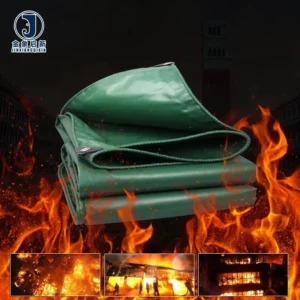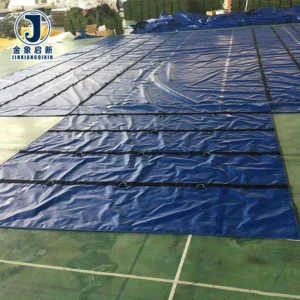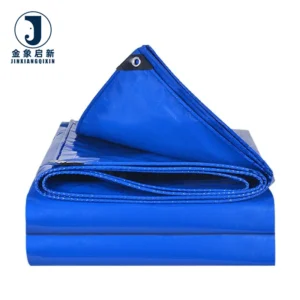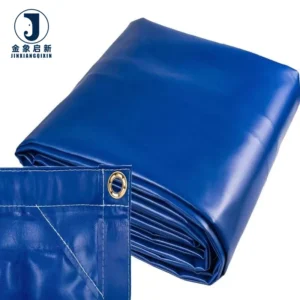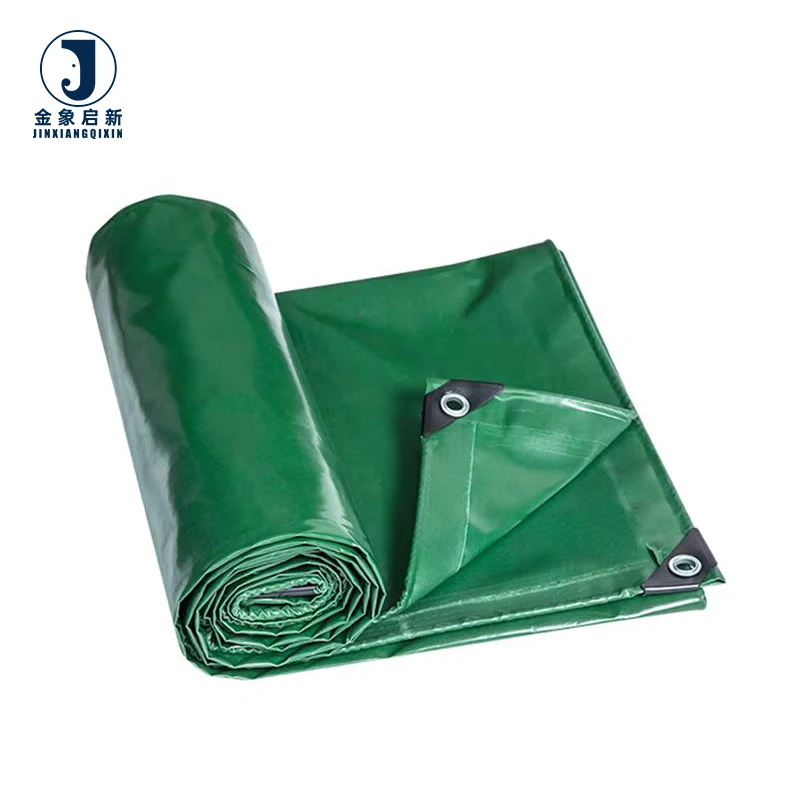
Coated Fabric Process Control — Three dedicated production lines and 36 sets of professional equipment maintain tight tolerances on coating weight and adhesion for every PVC coated tarpaulin roll that leaves the facility.
Technical Specifications
| Parameter | Value |
|---|---|
| Product Type | PVC Coated Tarpaulin |
| Base Fabric Construction | Woven |
| Coating Material | PVC Vinyl |
| Coating Method | Knife Coated |
| Weight | At least 450 g/m² |
| Waterproof | Yes |
| Anti-UV Treatment | Available — confirm the grade required for your market |
| Tear-Resistant | Yes |
| Roll Format | Available |
| Custom Size | Available |
Application Suitability
| Application | Exposure & Requirement |
|---|---|
| Truck and trailer side curtains | Constant flexing at load points, road abrasion, tie-down strap friction, sustained weather exposure |
| Flatbed load covers | Direct rain and snow contact, wind lift at highway speed, UV degradation from prolonged sun exposure |
| Transport equipment enclosures | Mechanical contact with cargo edges, repeated folding and unfolding, temperature fluctuation |
| Vehicle and equipment protection | Standing water, dust ingress, puncture risk from sharp corners on machinery |
| Construction site covers | Abrasion against scaffolding and steel, wind-driven rain, temporary structural tension loads |
Why Generic-Size Covers Fail Where Your Load Flexes Most
PVC coated tarpaulin for truck and trailer covers must be dimensioned to the exact vehicle model, not a catalogue size that leaves gaps or overhangs.
A flatbed cover ordered in a generic dimension typically leaves the tailgate exposed or drags on the road surface, and the first failure point is almost always where the tarpaulin wraps around a corner or tie-down rail. Fleet operators who replace covers mid-season often find that the fabric itself is intact but the seams and hems tore at the stress concentration points [NEED_CITE: common failure modes in heavy-duty transport covers under cyclic loading]. A cover cut to your specific trailer model eliminates these overhang and gap issues, and reinforcement can be placed exactly where your strapping pattern concentrates load.
Matching the Cover to the Trailer Model
Fleet operators specifying PVC coated tarpaulin for truck and trailer covers need a fabric that accounts for the actual geometry of the vehicle, including door clearance, tailgate swing arc, and tie-down rail position. A knife coated construction with a woven base provides the tear resistance needed at the points where ratchet straps pass through eyelets or wrap around corners. Custom sizing to the trailer model means the cover lies flat against the load without excess material that can flap in highway wind or collect standing water in folds.
Road and Weather Exposure Demands Coating Integrity
The knife coated PVC layer is applied directly onto the woven base fabric, producing a bond that resists delamination even when the cover is folded tightly around sharp cargo edges. Transport routes expose the fabric to road salt spray, diesel exhaust residue, and sustained UV radiation, all of which attack lower-grade coatings first at the surface and then at the interface with the base fabric. Anti-UV treatment is available in grades suited to different climate intensities — confirm the grade required for your operating region before placing a bulk order [NEED_CITE: UV degradation testing standards for PVC coated fabrics used in transport applications].
Reading the Specification Sheet Beyond the GSM Number
The stated weight of at least 450 g/m² is a combined figure that includes both the woven base fabric and the PVC coating layers applied by the knife coating process. A higher GSM does not automatically mean a stronger cover — what matters is how that weight is distributed between the base fabric denier and the coating thickness. A roll with a heavy coating over a loosely woven base may show acceptable GSM on the scale but tear easily at eyelet points under strap tension. Knife coating delivers a more uniform coating thickness across the roll width compared to dip or spray methods, which reduces the risk of thin spots that become failure origins under road vibration and load shift. The woven construction of the base fabric contributes tear resistance by forcing any rip to change direction at each yarn intersection, slowing propagation [NEED_CITE: relationship between base fabric weave density and tear propagation resistance in coated textiles].
The Hidden Cost of Batch-to-Batch Inconsistency
When a fleet operator orders multiple rolls to cover a group of identical trailers, colour variation between rolls becomes visible the moment two covers are installed side by side on adjacent vehicles. Weight inconsistency is less obvious at receiving but surfaces when covers cut from lighter rolls wear through at flex points months earlier than those cut from heavier rolls in the same batch. These problems are not caught by a quick visual check at the dock — they require systematic measurement and comparison against the material specification sheet before the rolls are released to the cutting floor [NEED_CITE: quality inspection protocols for batch consistency in coated fabric production].
Why Sourcing PVC Coated Tarpaulin Here Works for Fleet Specifications
Coating weight and adhesion are controlled through the knife coating process across three full production lines, giving the capacity to fulfil fleet-wide replacement orders without sacrificing consistency from the first roll to the last. A dedicated quality check runs at every production stage, with final inspection covering weight verification against the quoted GSM before any roll is packed. The R&D team handles custom sizing to specific trailer model drawings, including eyelet spacing and hem reinforcement matched to the vehicle’s tie-down pattern. Samples can be developed and dispatched for approval before bulk production begins, so the buyer confirms hand feel, colour, and weight on a physical piece rather than relying on a data sheet alone. All documentation — from material specification sheets to pre-shipment inspection records — travels with the shipment for receiving verification.
Documentation & Verification
- Material specification sheet stating GSM, base fabric weave, and coating type per roll
- Weight verification record measured against quoted GSM before dispatch
- Pre-shipment inspection report covering visual defects and dimensional checks
- Roll packing list with net and gross weights for customs clearance
- Certificate of origin included for trade compliance documentation
Fabrication, Handling & Storage
- Heat weld seams at manufacturer-recommended temperature to avoid burning the PVC coating layer
- Reinforce eyelet zones with additional PVC patches to distribute tie-down strap loads across the woven base
- Store rolls upright on pallets to prevent flat-spot deformation of the knife coated surface
- Unroll and allow the fabric to relax at ambient temperature before cutting to avoid dimensional drift
- Clean with mild detergent only — solvent-based cleaners can soften the PVC coating and reduce surface integrity
- Plan cutting layout to minimise waste and reduce the number of welded seams on each finished cover
Preparing Your Inquiry for Accurate Quotation
Provide the specific truck or trailer model, including dimensions and the tie-down rail layout, so the cover can be sized and reinforced to match. Specify the operating climate and whether anti-UV treatment at a particular grade is required for your market. Indicate the total number of vehicles to be covered and whether you need finished covers with eyelets and hems or roll stock for your own fabrication.
Frequently Asked Questions
Q: Can the tarpaulin be cut to my exact trailer model rather than a standard size?
A: Yes. Custom sizing is available based on your trailer model drawings, including door clearance, tailgate arc, and tie-down rail position. The R&D team reviews your dimensions and develops a sample for approval before bulk production begins, ensuring the finished cover fits without gaps or overhang.
Q: How is GSM verified on delivery and what happens if the roll is lighter than quoted?
A: Every roll undergoes weight measurement during the pre-shipment inspection, and the result is recorded against the quoted GSM on the inspection report that accompanies the shipment. Any roll falling outside the agreed tolerance is flagged before dispatch so the buyer receives only verified material.
Q: What eyelet spacing and hem reinforcement options are available for tie-down points?
A: Eyelet spacing and hem reinforcement are specified to match your trailer’s tie-down pattern. The woven base fabric provides tear resistance at stress points, and additional PVC patches can be applied at high-load zones to distribute strap tension and prevent pull-through during transit.
Q: How is colour consistency controlled across multiple rolls in the same order?
A: Colour is checked at multiple production stages and again during the final pre-shipment inspection. Rolls destined for the same order are compared side by side under controlled lighting to detect variation before packing, so panels match when installed on adjacent vehicles.
Q: What is the recommended heat welding versus stitching approach for seams at high-flex areas?
A: Heat welding is preferred for seams on knife coated PVC tarpaulin because it fuses the coating layers into a continuous bond without needle holes that can wick water. The woven base fabric supports clean weld lines, and the recommended temperature range should be confirmed with the supplied material specification sheet before production.