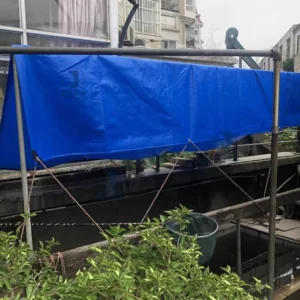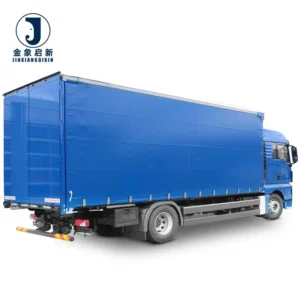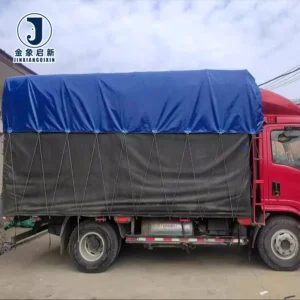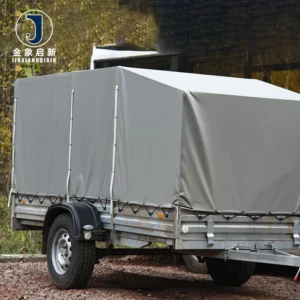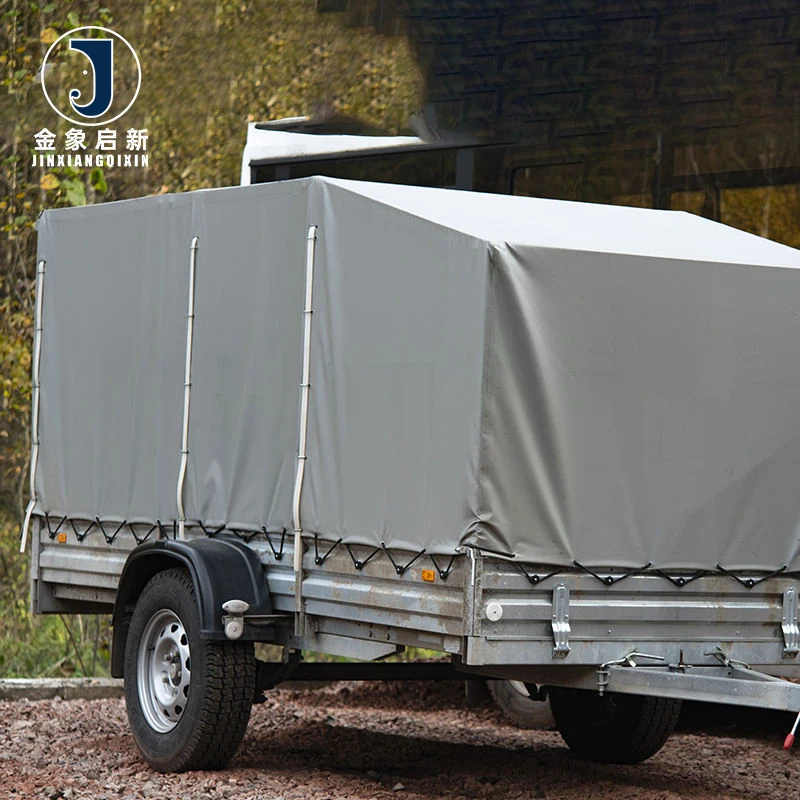
Coating Process Control — Hot-melt and laminated coating technology applied across three full production lines ensures consistent adhesion and verified weight for every PVC Coated Truck Tarpaulin roll shipped.
Technical Specifications
| Parameter | Value |
|---|---|
| Product Type | PVC Coated Truck Tarpaulin |
| Coating Material | PVC |
| Base Fabric | High-strength polyester mesh fabric |
| Coating Method | Laminated technology & Hot-melt Coating technology |
| Weight (GSM) | 350gsm / 420g / 500gsm / 550gsm / 600gsm / 750gsm |
| Total Thickness | 0.32mm / 0.35mm / 0.4mm / 0.45mm / 0.5mm / 0.65mm |
| Roll Width | 2m / 2.1m |
| Roll Length | 75m (for 2m width) / 50m (for 2.1m width) |
| Color | Blue / Red / Yellow / Light blue / Grey (Customized) |
| Key Features | Cold Crack Resistance, Anti-Mildew, Waterproof, Sunproof, Best color fastness |
| Special Treatments | Flame retardant (grade not stated in source), Anti-static (grade not stated in source) |
| Service Life | 3-7 years under normal circumstances |
| Standards | ISO, CE |
Application Suitability
| Application | Exposure & Requirement |
|---|---|
| Truck awning / side curtain | Constant flexing at load points, road debris abrasion, prolonged UV exposure, high-speed wind load |
| Cargo ship cover | Saltwater spray, heavy wind shear, prolonged sun exposure, repeated folding and unfolding on deck |
| Tent cover | Sustained weather exposure, structural tension at frame contact points, seasonal packing and redeployment |
| Construction covers | Job-site abrasion from concrete and steel, UV exposure over multi-month projects, rain and dust containment |
| Equipment covers | Outdoor storage, moisture ingress prevention, UV degradation over idle periods |
Why Generic-Sized Truck Covers Cost More Than They Save
A PVC Coated Truck Tarpaulin for fleet that arrives in a generic cut will flap at the rear, pool water at the centre, and wear through at the corners long before the fabric itself reaches end of life. Pattern-cutting each cover to the exact trailer dimensions eliminates the excess fabric that causes wind drag and premature abrasion. [NEED_CITE: aerodynamic drag and fabric fatigue caused by oversized covers on moving vehicles]
Fleet operators replacing worn covers often order a standard rectangle and accept the compromise. The excess material bunches at tie-down points, creating friction zones that degrade the coating within the first season. At highway speeds, a loose cover acts as a brake, increasing fuel consumption while the constant flapping fatigues the welded seams. A model-fit PVC truck cover aftermarket supplier addresses this by cutting to the trailer’s measured profile, adding material only where reinforcement is needed and removing it where it causes harm.
Model-Fit Pattern Design for Trailer Geometry
Every trailer profile has distinct dimensions: the crown of the roof, the drop at the rear doors, the wheel arch cutouts on curtain-siders. A PVC Coated Truck Tarpaulin for fleet must account for each contour to prevent water pooling and wind-induced flutter. Our R&D team develops a cutting pattern from the trailer’s measured dimensions, so the cover sits tight against the load without excess material that can catch wind or rub against the bodywork during transit.
Reinforcement Strategy at High-Stress Zones
The points where a truck cover fails first are predictable: the tie-down strap anchors, the rear corners where the cover is folded and pulled, and the roof edges where the fabric wraps around the frame rail. Hot-melt coating technology provides strong PVC-to-polyester adhesion at these zones, supporting the additional layers and patches applied during fabrication. When the load shifts or the trailer flexes over uneven road surfaces, these reinforced sections distribute the stress across a wider area rather than concentrating it at a single seam or eyelet. [NEED_CITE: stress distribution methods at reinforcement patches on heavy-duty tarpaulin covers]
Reading GSM, Coating Method, and Thickness Together
GSM alone tells you how much material is present per square metre, but it does not tell you how that weight is distributed between the polyester base fabric and the PVC coating. A heavier coating layer increases waterproofing and surface abrasion resistance but adds stiffness, which can work against you on a side curtain that folds repeatedly. The laminated and hot-melt coating process bonds the PVC layers to the high-strength polyester mesh under heat and pressure, producing a composite where the base fabric carries the tensile and tear load while the coating handles environmental exposure. Total thickness values from 0.32mm to 0.65mm reflect different balances of these two contributions, and selecting the right grade depends on whether the cover will be deployed and removed daily or left in place for extended periods.
The base fabric’s polyester mesh construction provides dimensional stability, meaning the cover will not stretch or distort after installation — a critical requirement when the cover must remain sealed against rain ingress over long-haul routes.
The Hidden Cost of Batch Inconsistency Across Rolls
When a fleet operator orders multiple covers for a uniform vehicle fleet, visible colour variation between rolls turns a routine replacement into a noticeable quality issue. The same applies to GSM: if one roll measures lighter than quoted, that cover will reach end of life ahead of the others, creating an asymmetric maintenance schedule that defeats the purpose of fleet standardisation. Batch-to-batch consistency in both weight and colour is a production discipline issue, not a material issue — it requires dedicated QA/QC intervention at the coating and colouring stages, with verification before the rolls are packed. [NEED_CITE: colour fastness and weight consistency testing methods for coated fabrics per ISO standards]
Welded seams represent another consistency risk. If the heat and pressure settings are not calibrated to the specific GSM and coating formulation of that batch, the weld can become the first point of failure — splitting at the seam while the surrounding fabric remains intact. This is particularly damaging on a PVC Coated Truck Tarpaulin for fleet, because the load flexes most at the welded joints, and a weak weld will open under routine road vibration.
What Process Control Delivers for Transport Covers
Three full production lines with 36 sets of professional equipment allow production runs to be scheduled without compressing lead times, which is when coating weight and colour consistency tend to drift. A 10-person R&D team handles pattern development, ensuring that each PVC truck cover aftermarket supplier inquiry is translated into a precise cutting template before production begins. Dedicated QA/QC checkpoints operate at every production stage, with 100% inspection before shipment catching weight deviations and coating defects before they leave the factory. Samples are developed within days for custom sizing and colour requirements, so the buyer can verify fit and appearance before committing to a full production run.
Documentation & Verification
- Material specification sheet stating GSM, base fabric type, and coating method for each roll
- Pre-shipment inspection record confirming actual coating weight against the quoted GSM
- UV and flame-retardant test reports provided where those treatments are specified for the order
- Roll packing list and certificate of origin included with every dispatch
- ISO and CE certificates supplied to support import compliance in the destination market
Fabrication, Handling & Storage
- Heat-weld seams at temperatures matched to the specific GSM grade and coating method to ensure adhesion exceeds base fabric tear strength
- Reinforce tie-down and corner zones with additional PVC patches bonded by hot-melt process before eyelet installation
- Store rolls upright on a flat surface to prevent permanent creasing in the polyester mesh base fabric
- Allow rolls to acclimatise before unrolling in cold conditions, as cold crack resistance has a lower temperature boundary
- Use mild detergent for cleaning; avoid solvents that degrade the PVC coating surface and reduce colour fastness
- Plan cutting layout from 2m or 2.1m roll widths to minimise offcuts and welded seam count on large covers
Specifying Your PVC Truck Cover Requirement
To provide an accurate specification, share the trailer model and year, the deployment environment including typical temperature range and exposure conditions, and whether the cover will be removed daily or left in place. If your market requires flame-retardant or anti-static certification, specify the grade your local regulations demand. Colour and width preferences, along with the estimated annual volume, will determine production scheduling and roll consistency planning.
Frequently Asked Questions
Q: How do you ensure the truck cover fits my specific trailer model?
A: We develop a cutting pattern from the exact measured dimensions of your trailer, including roof crown, rear drop, and wheel arch profiles. The R&D team prepares the template and produces a sample for your approval before full production begins, so the PVC Coated Truck Tarpaulin for fleet sits tight against the load without excess material that causes wind drag or abrasion.
Q: What reinforcement options are available at tie-down and flex points?
A: We apply additional PVC patches at strap anchors, rear corners, and roof-edge wrap points, bonded using the same hot-melt coating process used for the main fabric. These reinforcement zones distribute stress across a wider area, preventing the localised tearing that occurs at high-flex points when the load shifts during transit.
Q: How is GSM verified on arrival, and what documentation accompanies shipment?
A: Every roll is inspected before dispatch, and a pre-shipment inspection record confirms the actual coating weight against the quoted specification. The shipment includes a material specification sheet, roll packing list, and certificate of origin so you can verify the PVC truck cover aftermarket supplier delivery matches the purchase order.
Q: What UV and flame-retardant test reports are supplied with treated grades?
A: Where UV or flame-retardant treatments are specified in your order, the corresponding test reports are included with the shipment documentation. We recommend confirming the specific grade required by your destination market regulations before placing the order, as available grades vary by treatment type and market standard.
Q: What is the lead time and minimum order for custom-fit truck tarpaulin covers?
A: Lead time depends on the customisation level and order volume, with sample development completed within days for fit and colour approval. Minimums vary by colour, width, and printing requirements. Contact our sales team with your trailer specifications and annual volume to receive a detailed schedule and production plan.