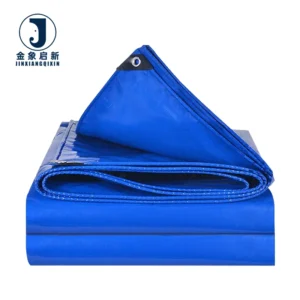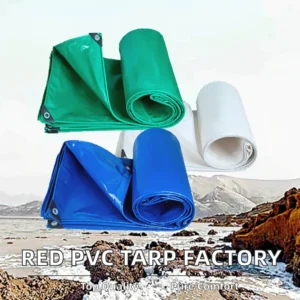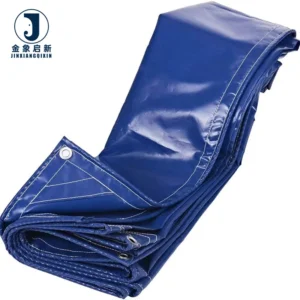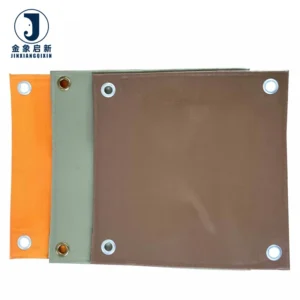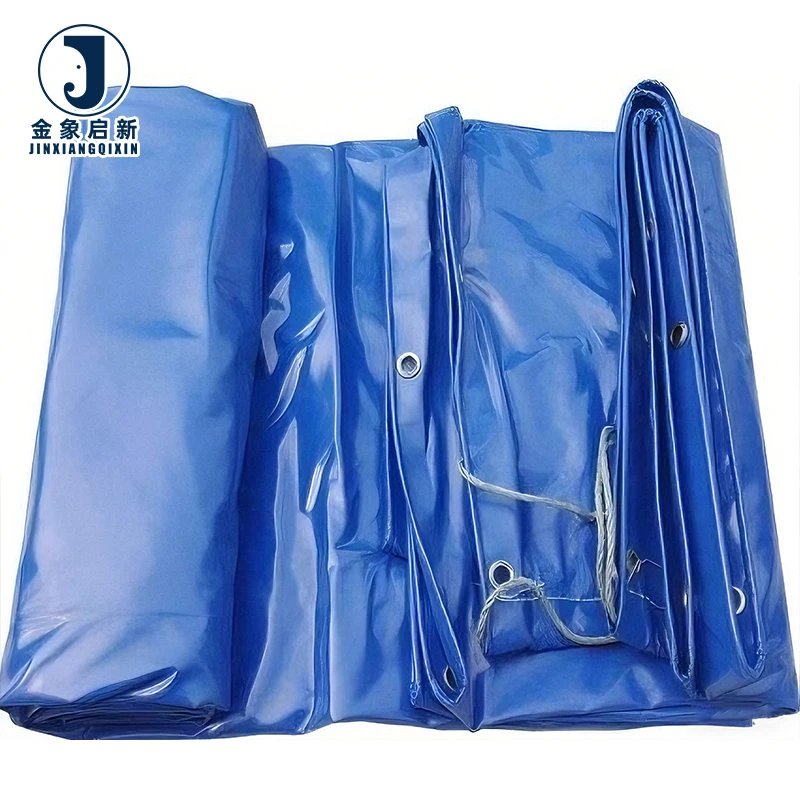
Coating Weight Control — Every roll undergoes in-process adhesion and GSM verification before it leaves the line, ensuring the PVC coated woven tarpaulin fabric dispatched matches the quoted specification.
Technical Specifications
| Parameter | Value |
|---|---|
| Product Type | PVC Coated Tarpaulin |
| Base Fabric Denier | 200D×300D / 500D×500D / 840D×840D / 1000D×1000D |
| Weight (GSM) | 250gsm–1500gsm |
| Coating Material | PVC |
| Surface Finish | Glossy or matte |
| Colour Options | Blue, yellow, black, green, white, or custom |
| Temperature Range | -15°C to 70°C |
| Treatment Options | Waterproof, UV, FR (flame retardant — confirm grade required for your market) and anti-fungal |
| Standard Sizes | 3×4m / 6×8m / 8×10m / 10×12m or custom made |
| Key Features | Tear-resistant, rain-resistant, good flexibility and adhesion strength, good abrasion resistance, eco-friendly |
Application Suitability
| Application | Exposure & Requirement |
|---|---|
| Truck and trailer side curtains | Constant flexing at load points, road abrasion, UV exposure, wind load on tie-downs |
| Flatbed load covers | Direct weather impact, friction from cargo shifting, repeated folding and strapping |
| Equipment transport wrapping | Dust and moisture ingress prevention, puncture risk from sharp edges |
| Logistics fleet roll-stock replacement | Consistent colour batch matching across multiple panels on the same vehicle |
Why Generic-Size Tarps Fail on Moving Loads
A truck cover cut to a standard rectangle leaves excess fabric that flaps, abrades and catches wind — the cover destroys itself before the cargo is ever at risk.
Buying PVC coated tarpaulin fabric for fleet use often means specifying a size that does not match the trailer geometry. The excess material bunches at the rear, rubs against the chassis during cornering, and the hems unravel within weeks of long-haul running. Generic sizing also forces unnecessary welding and eyelet placement where the load does not actually require it, adding weight and cost without improving protection. [NEED_CITE: common causes of tarpaulin failure in road transport]
Model-Specific Fitment for Transport Fleets
When sourcing PVC coated tarpaulin fabric for trucks and transport, the cut pattern should follow the trailer dimensions rather than a standard sheet. Hem placement, eyelet spacing and reinforcement panels are positioned to match the actual tie-down rail locations and the flex zones created by suspension movement. This removes excess material that would otherwise flap in transit and accelerates wear at the very points where load protection matters most.
Roll-to-Roll Colour Consistency Across a Fleet Order
Transport equipment builders and fleet managers installing side curtains or load covers across multiple vehicles need every panel to match. Batch dye-lot tracking ensures that PVC coated tarpaulin fabric supplied for a single order carries consistent colour from the first roll to the last. Without this, panels installed side by side on the same trailer show visible tonal variation that reflects poorly on the finished vehicle. [NEED_CITE: batch colour consistency standards in coated fabric production]
How Denier Selection Affects Tensile Behaviour Under Load
The base fabric denier — from 200D×300D for lighter covers to 1000D×1000D for heavy-duty side curtains — determines how the woven yarn structure distributes tensile stress. Higher denier yarns resist tearing propagation when a puncture occurs at a sharp cargo edge. The PVC coating weight works in parallel: heavier coating adds rigidity and abrasion resistance but reduces fold flexibility. Matching denier to the specific transport application prevents both over-specification and premature failure at stress points. Temperature behaviour between -15°C and 70°C means the fabric retains flexibility in winter transport yet does not soften and sag in summer heat loading.
Coating Method and Its Effect on Seam Weld Integrity
PVC coating applied over the woven base fabric determines how well the material welds at seams and hems. Adhesion strength between the coating and the yarn structure controls whether a welded seam holds under repeated flexing or delaminates before the fabric itself fails. For transport covers that undergo constant vibration and load shifting, the weld zone is often the first failure point. Selecting the right coating weight relative to the base denier ensures that thermal welding produces a bond that outlasts the surrounding material. [NEED_CITE: PVC coated fabric weld strength testing methods]
The Cost of Skipping Pre-Shipment GSM Verification
When quoted GSM does not match what arrives at the dock, the entire order may be too light for the intended duty cycle. A transport cover specified at a given weight that arrives lighter will abrade faster at contact points, tear more easily when strap tension is applied, and fail UV exposure sooner than expected. Colour variation between rolls in the same shipment forces fabricators to sort and match panels manually, adding labour and delaying vehicle delivery. These problems are avoidable when every roll is inspected against the specification before dispatch. [NEED_CITE: pre-shipment inspection protocols for coated fabric orders]
Why Procurement Teams Choose This Supply Route
Nearly three decades of focused production on coated fabric means the coating weight and adhesion process is controlled at every stage, not left to chance. Three full production lines with 36 sets of professional equipment support bulk container-load orders of PVC coated tarpaulin fabric without sacrificing on-time delivery. A 10-person R&D team handles custom width, colour matching and sample development within days rather than weeks. Dedicated QA/QC at every production stage with full inspection before shipment means each roll is verified against its specification. ISO and CE certification underpins the production system rather than serving as a label on the box.
Documentation & Verification
- Material specification sheet stating GSM, base denier and coating weight per roll
- UV and flame-retardant test reports supplied for grades where specified
- Pre-shipment inspection record confirming GSM and colour batch reference
- Roll packing list with individual roll weights and dimensions
- Certificate of origin and customs documentation included with dispatch
Fabrication, Handling & Storage
- Thermal welding parameters should match the PVC coating weight to achieve full seam adhesion without scorching
- Eyelet reinforcement patches must span the full coated fabric thickness at hem stress points
- Store rolls upright on cores to prevent flat-spot creasing across the woven base
- Allow cold-stored rolls to reach ambient temperature before unrolling to avoid coating crack at -15°C threshold
- Use only neutral-pH cleaners on glossy or matte surfaces to preserve the anti-fungal treatment layer
- Repair minor punctures with compatible PVC patch material bonded to the coating face, not the base fabric side
What to Include in Your Enquiry
Specify the trailer model or transport equipment dimensions so the cut size and reinforcement layout can be matched to your actual load geometry. Confirm whether you require roll stock by the container or finished panels with eyelets and hems, along with the target market’s fire classification requirements if flame-retardant treatment is needed. Provide colour references and estimated annual volume to enable batch-consistent production planning and sample approval before the full run.
Frequently Asked Questions
Q: How is GSM verified on arrival and what documentation comes with the shipment?
A: Every roll is inspected against the quoted GSM before dispatch. A pre-shipment inspection record, roll packing list with individual weights and a material specification sheet stating base fabric denier and coating weight are included in the shipping documentation.
Q: Can truck covers be cut to fit specific trailer models rather than generic sizes?
A: Covers are cut and finished to match specific vehicle dimensions, with hem placement and eyelet spacing aligned to the actual tie-down rail positions. This eliminates excess fabric that flaps and abrades during transport.
Q: How is colour consistency maintained across multiple rolls in one order?
A: Batch dye-lot tracking is applied throughout production so that all rolls in a single order carry consistent colour. Pre-shipment inspection verifies roll-to-roll matching before dispatch to prevent visible variation on installed panels.
Q: What eyelet spacing and hem reinforcement options are available for tie-down loads?
A: Eyelet spacing and reinforcement patch dimensions are set according to the strap load and flex frequency of the specific transport application. Options include additional fabric layers at high-stress hem zones and spacing intervals matched to standard tie-down rail configurations.
Q: What UV test data can you supply for tarps in continuous outdoor transport exposure?
A: Where UV treatment is specified, a test report referencing the applicable standard is supplied with the shipment. Confirm the UV classification required for your operating environment and market so the correct treatment grade can be applied and documented.