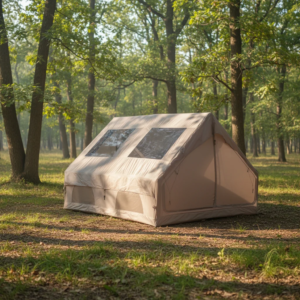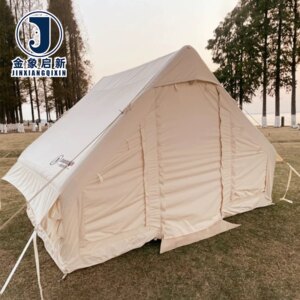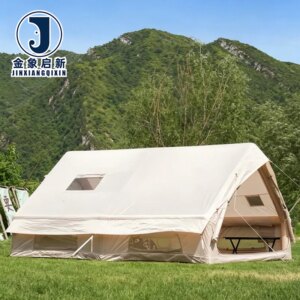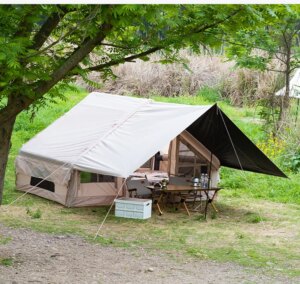
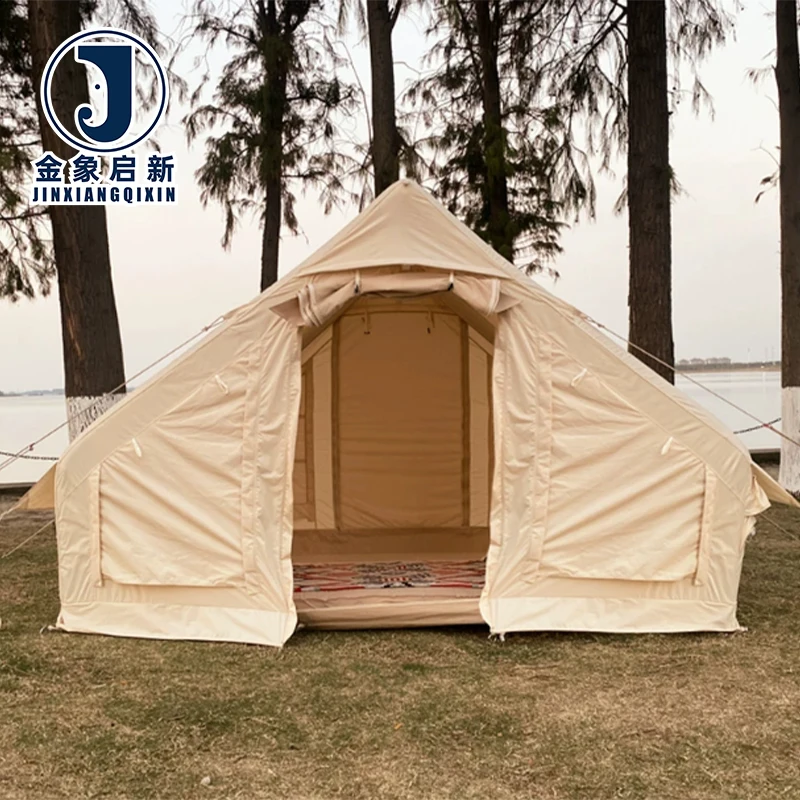
Coating Expertise — Nearly 30 years focused on coated fabric, with deep process control over coating weight and adhesion, applied to PVC inflatable tent fabric production for commercial and transport-compatible temporary shelters.
Technical Specifications
| Parameter | Value |
|---|---|
| Product Type | Inflatable Tent Fabric |
| Core Material | PVC Waterproof Fabric |
| Product Form | Inflatable structure with single layer construction |
| Waterproof Rating | Tested to industry standards (test basis not stated) |
| UV Treatment | UV-Resistant (test basis not stated) |
| Tear Strength | 120N (test standard not stated) |
| Deployment Mechanism | Quick automatic opening |
| Colorfastness | UV-resistant coating ensures colorfastness and material integrity |
| Customization Service | OEM & ODM (sample customization, pattern printing) |
| Production Facility | 9,180 m² with 3 full production lines |
| Processing Equipment | 36 sets of professional equipment |
| R&D Team | 10 technicians |
| Certifications | ISO9001, ISO14001, ISO45001, CE |
Application Suitability
| Application | Exposure & Requirement |
|---|---|
| Commercial event shelter systems | Repeated pack-and-move cycles, sun and rain exposure, fast deployment demand |
| Outdoor equipment rental fleets | High-usage inflation cycles, abrasion from ground contact, UV degradation risk |
| Transport and logistics temporary accommodation | Remote job site weather exposure, frequent relocation, storage in confined compartments |
| Outdoor gear manufacturers producing professional camping lines | Consistent roll-to-roll colour, branded pattern printing, structural integrity under inflation pressure |
| Industrial temporary accommodation at construction sites | Wind load stress, prolonged UV exposure, tear resistance at anchor and seam points |
Why Inflatable Tent Fabric Fails at the Seams Before the Fabric Does
The weakest point in any inflatable structure is not the coated surface — it is where the material flexes under inflation pressure and meets a welded or bonded joint.
Event organizers and fleet operators who deploy rapid-shelter systems know the frustration: the PVC body holds, but the seam splits after a handful of setup cycles. This happens when the fabric’s tear strength and the weld parameters are not matched to the inflation mechanics. A material that tears at a low threshold will pull away from the heat-welded edge long before the coated surface itself degrades. [NEED_CITE: tensile and tear test methods for coated fabrics per ISO 1421]
For commercial operations running Inflatable Tent Fabric manufacturer custom orders, this means requesting tear strength data alongside weld peel-strength results is not optional — it is the only way to confirm the inflatable structure will survive repeated inflation and deflation without seam failure. Generic PVC tarpaulin fabric not engineered for inflation dynamics will consistently underperform in this application.
Covering Moving Loads and Rapid-Deploy Shelters in Transport Operations
Transport fleets and logistics operators increasingly use inflatable structures as temporary covers at loading docks, remote depots, and transit staging areas. Unlike static tarpaulin covers that sit over a flatbed, an Inflatable Tent Fabric manufacturer custom product must hold shape under internal air pressure while resisting wind shear and road dust abrasion. The PVC waterproof fabric construction prevents moisture ingress during both storage and active deployment, protecting cargo and equipment at temporary stops.
UV Resistance and Colorfastness Across Extended Outdoor Deployments
When inflatable shelters remain erected for days or weeks at outdoor events, construction sites, or agricultural operations, UV exposure becomes the primary degradation vector. The UV-resistant coating applied to this inflatable tent fabric is formulated to maintain colorfastness and material integrity under prolonged sun exposure. For rental fleets that cycle structures between jobs, this coating helps prevent the surface chalking and colour shift that signals premature aging to end users. [NEED_CITE: UV degradation testing protocols for PVC coated fabrics]
Reading the Specifications That Actually Matter for Inflatable Structures
Tear strength at 120N indicates how the fabric resists propagation once a nick or puncture occurs — critical for inflatable structures where internal pressure places constant stress on every panel. However, tear strength alone does not define durability; the base fabric denier and weave density determine how loads distribute across the material before a tear initiates. The single-layer construction of this PVC inflatable tent fabric reduces packed volume for transport logistics, but it also means the coating adhesion to the base fabric must carry the full structural load without delamination.
Waterproof performance, tested to industry standards, ensures the fabric prevents water penetration during rain events and ground-contact storage. The quick automatic opening mechanism compatibility means the material must flex rapidly during inflation without developing crease fractures in the coating layer. Understanding how these parameters interact — tear strength, coating adhesion, waterproof integrity, and flex endurance — allows procurement teams to evaluate Inflatable Tent Fabric manufacturer custom options against actual deployment conditions rather than isolated spec-sheet numbers.
The Hidden Cost of Specifying Inflatable Fabric Without Application Context
Purchasing teams that select inflatable tent fabric based solely on price per metre or nominal GSM frequently encounter failures that surface only after deployment. Batch-to-batch colour variation becomes visible when multiple inflatable units stand side by side at a commercial event, forcing costly replacements or rejections. Fabric that lacks verified UV-resistant treatment fades and embrittles within a single season of rental use, generating warranty claims and damaging the rental operator’s reputation. [NEED_CITE: common failure modes in PVC inflatable structures under commercial use]
Weld failures on inflatable panels often trace back to fabric that was not specified with inflation pressure dynamics in mind — the material may meet general-purpose tarpaulin standards but lack the peel strength needed where seams flex under internal air pressure. These failures do not appear during incoming inspection; they emerge in the field, where the cost of a failed inflatable structure includes not just the replacement fabric but lost rental revenue and emergency logistics.
Why Source Inflatable Tent Fabric Through This Production Facility
Three full production lines and 36 sets of professional equipment provide the capacity to fulfil bulk roll orders for inflatable tent fabric while maintaining batch consistency across the production run. The 10-person R&D team handles material selection, pattern printing development, and custom sizing, enabling OEM and ODM programmes for outdoor gear brands that require branded inflatable products without managing their own coating operations.
Dedicated QA and QC staff conduct a 7-point inspection process from raw material incoming through final packaging, catching GSM deviation and coating adhesion issues before rolls leave the facility. Pre-production samples are developed within days for custom inflatable tent fabric requirements, allowing buyers to validate colour, weight, and weld behaviour before committing to mass production. Full ERP batch tracking ensures every roll of Inflatable Tent Fabric manufacturer custom product is traceable back to its coating run and raw material lot.
Documentation & Verification
- Material specification sheet stating GSM, base fabric type, and PVC coating weight per roll
- Waterproof rating and UV resistance test report supplied with each production batch
- ISO9001, ISO14001, ISO45001, and CE certification documentation accompanying every order
- Pre-shipment inspection record confirming tear strength and visual consistency
- Certificate of origin and customs documentation for cross-border inflatable fabric shipments
- Roll packing list with individual roll weights and dimensions for container loading
Fabrication, Handling & Storage
- Heat-weld inflatable panel seams using temperature settings matched to the PVC coating thickness to prevent burn-through or weak bonds
- Store rolls upright on pallets in a dry, shaded area to avoid flat-spot deformation of the single-layer PVC fabric
- Allow cold-stored inflatable tent fabric rolls to acclimatise before unrolling to prevent coating crack at low temperatures
- Use mild detergent and soft cloth for cleaning; avoid solvent-based cleaners that degrade the UV-resistant coating surface
- Plan cutting layouts to maximise yield from roll width and minimise cross-grain seams in pressurised inflatable panels
- Repair minor field punctures with compatible PVC patch kits applied to clean, dry fabric surfaces
What to Include in Your Inflatable Tent Fabric Enquiry
Provide the intended deployment environment and expected exposure conditions — whether the inflatable structures will serve short-duration events, extended construction site use, or long-term rental fleet cycles. Specify any fire-retardant or compliance certifications required by your target market, along with preferred colour references and whether pattern printing or branded panels are needed. Confirm the required roll width, estimated annual volume, and whether you need finished cut-and-welded inflatable panels or raw fabric rolls for your own fabrication line.
Frequently Asked Questions
Q: How is GSM and material weight verified upon delivery for inflatable tent fabric orders?
A: Each roll undergoes weight verification at the pre-shipment inspection stage, with the measured GSM recorded against the stated specification on the inspection report. This documentation accompanies the shipment so buyers can cross-check on arrival. The 7-point QC process ensures coating weight consistency before rolls are packed and dispatched.
Q: What UV resistance test data supports the claimed outdoor lifespan?
A: The UV-resistant coating applied to this PVC inflatable tent fabric is tested to support colorfastness and material integrity under prolonged sun exposure. Specific test reports are available per production batch, detailing the test basis and results. Buyers should request the UV test documentation with their sample approval to confirm suitability for their target climate and deployment duration.
Q: Can custom widths, colors, and pattern printing be accommodated with low minimums?
A: The 10-person R&D team develops pre-production samples for custom width, colour, and pattern printing requirements within days. Minimum order quantities depend on the specific customisation scope and are confirmed during the quotation stage. OEM and ODM programmes are supported, allowing outdoor gear brands to integrate branded inflatable tent fabric into their product lines.
Q: How is batch-to-batch color consistency controlled across roll production?
A: Colour matching is managed through the coating process with reference standards checked at multiple points during production. The full-process QA system flags deviation before rolls reach final packaging. ERP batch tracking links each roll to its coating run, enabling traceability if colour consistency questions arise after delivery.
Q: What fire-retardant or compliance certifications are available for specific market requirements?
A: The production facility holds ISO9001, ISO14001, ISO45001, and CE certifications. For inflatable tent fabric orders requiring specific fire-retardant grades or market-specific compliance documentation, buyers should confirm the required standard during the enquiry stage. Available flame retardant grades can be matched to the compliance framework of the destination market.