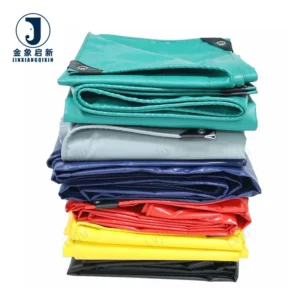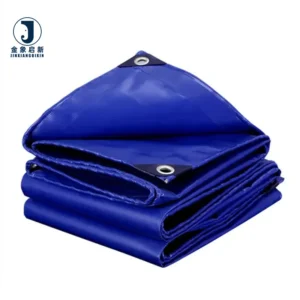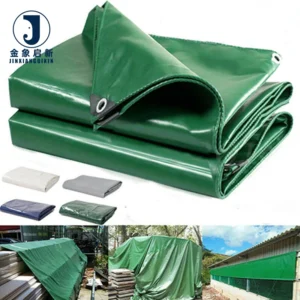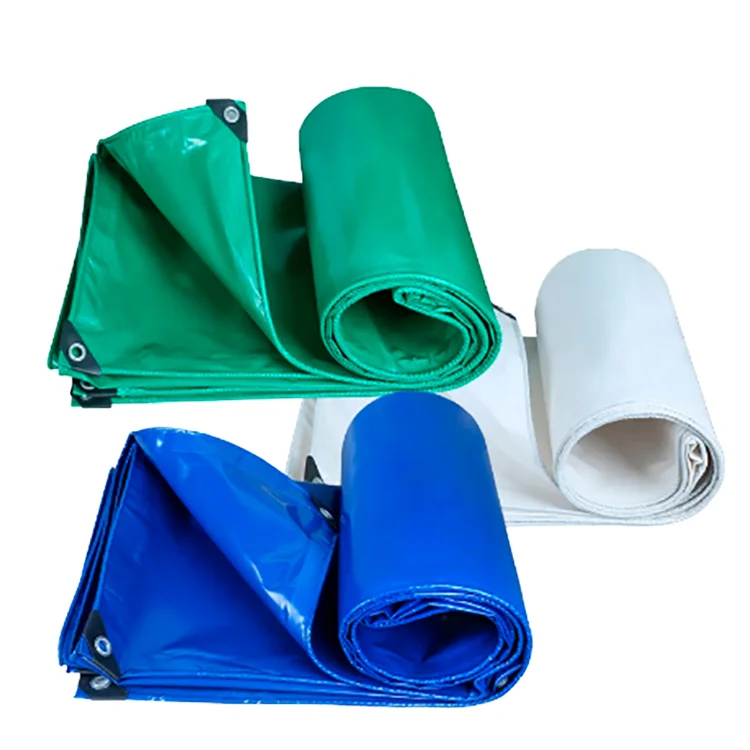
Three Full Production Lines — every roll of PVC knife-coated tarpaulin for truck and trailer covers runs through dedicated coating and curing stages, ensuring batch-to-batch consistency across an entire fleet order.
Technical Specifications
| Parameter | Value |
|---|---|
| Product Type | PVC Knife-Coated Fabric |
| Coating Material | PVC |
| Coating Method | Knife Coated |
| Weight | 500GSM |
| Base Fabric Style | Plain woven / Tricot anti-pull base |
| Waterproof Rating | Anti-permeable ≥ 20KPa |
| Flame Retardant | ≤ 10 seconds (grade not stated — confirm grade required for your market) |
| Low-Temperature Flexibility | Not fractured at -30°C |
| Chemical Resistance | Acid, alkali and brine resistant |
| Mildew Resistance | Mildew proofing treatment (test basis not stated) |
| UV Treatment | Anti-UV (test basis not stated) |
| Surface Properties | Abrasion-resistant, wrinkle resistant |
| Standards Available | ISO, CE |
Application Suitability
| Application | Exposure & Requirement |
|---|---|
| Truck side curtain fabric | Constant flexing at load-bearing points, road debris abrasion, UV and weather exposure |
| Flatbed trailer load covers | Tie-down strap friction, wind flap fatigue, rain and snow ingress |
| Curtain-sider trailer builds | Repeated sliding mechanism travel, welded seam integrity at vertical panels |
| Fleet replacement tarpaulins | Model-specific fitment, colour match to existing fleet livery |
Why "Waterproof" Is Not Enough for a Truck Cover That Actually Lasts
The failure point on a truck tarpaulin is almost never the fabric itself — it is the seam, the eyelet zone, or the flex point where the load shifts. A waterproof rating only tells you that water will not pass through the membrane under static pressure. On a moving trailer, the fabric endures cyclic bending, strap abrasion and wind-driven rain at velocities far exceeding a lab hydrostatic test. When the base fabric lacks sufficient tear strength or the coating adhesion is weak, micro-cracks open at high-stress zones long before the waterproof membrane is compromised. [NEED_CITE: tensile and tear test methods for coated fabrics per ISO 1421]. Fleet operators who specify PVC knife-coated tarpaulin for truck and trailer covers based solely on waterproof claims often see failures within the first season of operation.
How Base Fabric Weave Determines Cover Lifespan on the Road
The plain woven and tricot anti-pull base options in this fabric serve different mechanical roles. Plain woven construction provides consistent tensile strength in both warp and weft directions, suitable for flat panels that experience uniform tension. Tricot anti-pull base introduces a multidirectional yarn structure that resists tear propagation when a puncture or cut initiates at an eyelet or tie-down point — the most common failure origin on a loaded trailer. Selecting the correct base fabric style directly affects how long the cover survives before a small damage zone becomes a full panel replacement.
Coating Adhesion and What It Means for Welded Seams
Knife coating applies a controlled PVC layer directly onto the base fabric, building adhesion through mechanical penetration into the yarn structure. This matters for truck side curtains because panels are joined by heat welding, and a weld that fails before the fabric does indicates poor coating-to-yarn bonding rather than a welding machine problem. When the coating weight and penetration are consistent across the roll, weld parameters remain stable from panel to panel, reducing rework on the production floor. The 500GSM weight grade provides sufficient coating mass to achieve reliable weld strength without excessive material stiffness that would complicate handling during installation. [NEED_CITE: peel strength testing methods for coated fabric welds].
Reading Between the Numbers on the Spec Sheet
Waterproof rating at ≥ 20KPa indicates the membrane resists water penetration under moderate static head pressure, relevant for covers exposed to sustained rainfall rather than submerged conditions. Low-temperature flexibility at -30°C means the PVC compound remains pliable enough to fold and handle without brittle fracture in cold-climate transport routes — a critical threshold for winter logistics in northern markets. The anti-permeable rating does not account for dynamic water exposure from road spray at highway speed, so the real-world waterproof performance depends equally on seam construction and edge sealing. Chemical resistance to acid, alkali and brine addresses coastal route salt exposure and industrial zone fallout that degrades lesser coatings over time.
What Happens When the Wrong Fabric Grade Goes on a Trailer
Specifying a lighter weight grade for a side curtain application leads to premature failure at the vertical weld seams where the fabric flexes with every load shift. When flame-retardant treatment is claimed without a verified grade, the cover may pass a visual inspection but fail a site safety audit at a mining or construction facility. Colour inconsistency between rolls in a multi-cover fleet order becomes visible the moment the trucks are parked side by side at the depot — forcing a costly replacement or a full repaint. Welded seams that delaminate under cyclic stress create water ingress paths that are difficult to locate and impossible to repair permanently in the field. [NEED_CITE: common causes of coated fabric seam failure in transport applications].
Why Operators Source This Fabric Here
Three full production lines allow simultaneous running of different colour and treatment specifications, so a fleet order with mixed vehicle types does not queue behind a single-line bottleneck. A 10-person R&D team develops cut-to-model samples within days, enabling fitment verification before the full production run commits material. Dedicated QA/QC at every production stage with full pre-shipment inspection catches GSM deviation and colour drift before rolls leave the facility. Coating weight and adhesion are controlled through deep process knowledge built over decades of focused PVC coated fabric production, not outsourced from a trading desk. Every dispatch ships with the documentation chain that fleet compliance audits require.
Documentation & Verification
- Pre-shipment weight verification record confirming 500GSM against quotation per roll
- Material specification sheet stating base fabric style, coating weight and treatment details
- Test report for flame-retardant grade where applicable to the specified order
- Roll packing list with batch reference for colour traceability across fleet orders
- Certificate of origin and customs documentation for international shipment
Fabrication, Handling & Storage
- Heat weld at temperatures matched to the 500GSM PVC coating thickness for full penetration
- Reinforce eyelet zones with additional PVC patches to distribute tie-down strap loads
- Store rolls horizontally on pallets to prevent permanent creasing of the knife-coated surface
- Allow cold-stored rolls to reach ambient temperature before unrolling to avoid coating crack
- Clean with mild detergent only — solvents may degrade the anti-UV surface treatment layer
What to Include in Your Inquiry
Provide the specific truck or trailer model numbers so the cover dimensions can be matched to actual vehicle geometry rather than generic templates. State the operating climate range and route exposure profile — coastal salt, industrial chemical fallout, or extended UV — to determine which treatment package applies. Confirm whether flame-retardant certification at a specific grade is required by your destination market or site safety policy. Indicate the quantity of covers and whether you need the fabric supplied as rolls for in-house fabrication or as finished cut-and-welded covers with eyelets installed.
Frequently Asked Questions
Q: How is the cover sized to fit my specific truck or trailer model?
A: We request the vehicle make, model and body dimensions, then develop a cut pattern that accounts for hem allowance, eyelet placement and panel overlap. A sample cover is produced for fitment verification before the full fleet order enters production, eliminating the material waste and gap exposure that generic-size templates create.
Q: What eyelet spacing and hem reinforcement options are available for tie-down loads?
A: Eyelet spacing is set according to the tie-down strap pattern used by your fleet, with reinforced PVC patches applied behind each eyelet to distribute load across the base fabric. Hem construction uses folded and welded edges rather than stitched seams, preventing water ingress through needle holes at the highest-stress perimeter zones.
Q: How do you ensure colour consistency when ordering covers for an entire fleet?
A: All rolls in a single fleet order are produced from the same coating batch with colour reference checked at multiple points along the production run. A pre-shipment inspection record documents the colour match, and any roll falling outside tolerance is separated before dispatch so your fleet does not show visible variation when parked together.
Q: How does the fabric perform at flex points where the load shifts during transit?
A: The tricot anti-pull base fabric option provides multidirectional tear resistance at zones where the cover bends repeatedly against the load. Combined with the knife-coating adhesion, this construction resists delamination at flex points that cause earlier failure in lighter or single-direction woven alternatives.