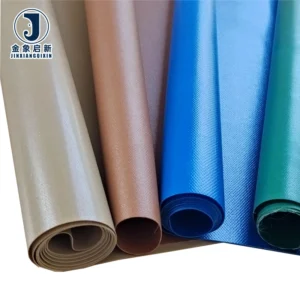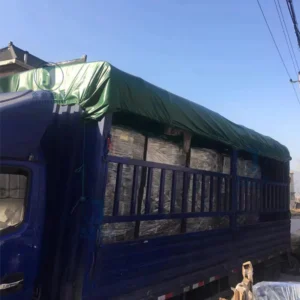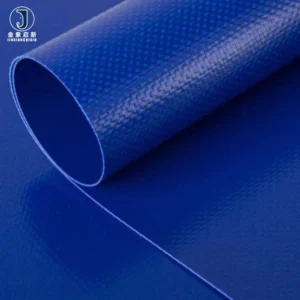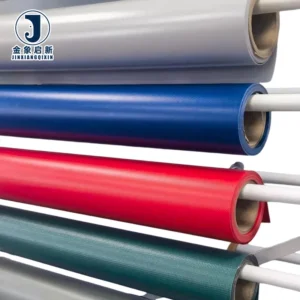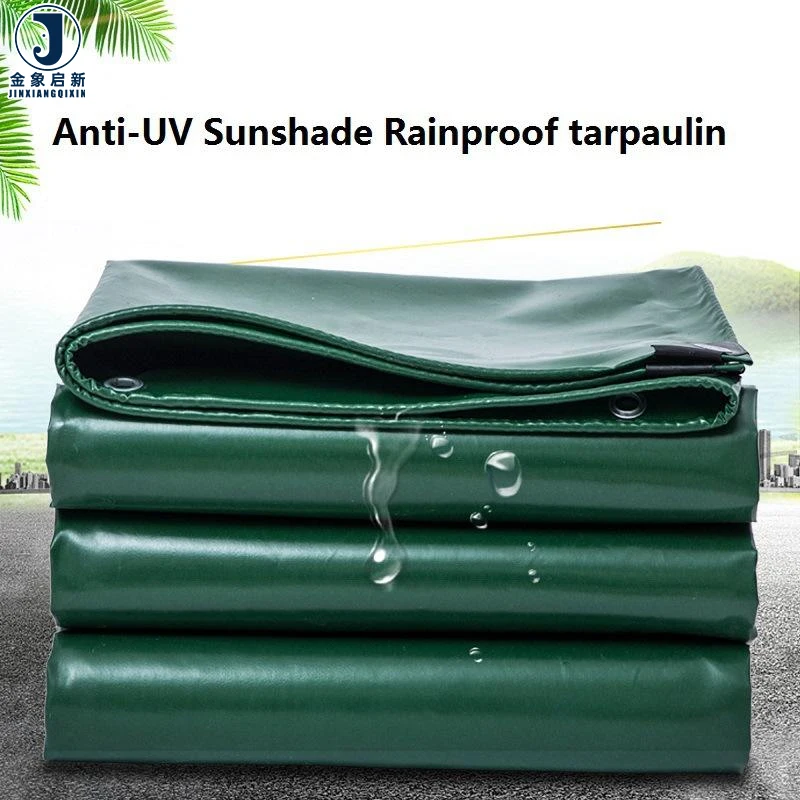
Process Control Over Adhesion — hot-melt coating on high-tenacity polyester mesh ensures consistent bond strength at every weld line, verified through in-process QA on each roll before dispatch.
Technical Specifications
| Parameter | Value |
|---|---|
| Product Type | PVC Coated Tarpaulin Roll |
| Material | PVC + High-strength polyester mesh fabric |
| Coating Technology | Laminated technology & Hot-melt coating technology |
| Weight (GSM) | 350gsm / 420gsm / 500gsm / 550gsm / 600gsm / 750gsm |
| Total Thickness | 0.32mm / 0.35mm / 0.4mm / 0.45mm / 0.5mm / 0.65mm |
| Roll Size | 2m width × 75m length / 2.1m width × 50m length |
| Finish Product Size | Custom items as per customer’s needs, or sold by inventory |
| Color | Blue / Red / Yellow / Light blue / Grey (Customized) |
| Cold Crack Resistance | Yes |
| Waterproof | Yes |
| Sunproof | Yes (test basis not stated in source) |
| Anti-Mildew | Yes |
| Anti-Static Treatment | Grade not stated — confirm the grade required for your market |
| Flame Retardant | Available in flame retardant grades — confirm the grade required for your market |
| Special Treatments | Anti-cold, Anti-mildew, 3P (available on request) |
| Standards | ISO, CE |
Application Suitability
| Application | Exposure & Requirement |
|---|---|
| Truck side curtains | Constant flexing, highway vibration, road debris abrasion, tie-down load at eyelets |
| Flatbed trailer covers | Full weather exposure, UV radiation, wind lift, load shift stress at weld seams |
| Curtain-sider replacements | Model-specific cut dimensions, colour match across panels, repeated roll-up cycles |
| Tipper and tanker covers | Chemical splash, heavy rain, thermal expansion cycles, high-tension fastening |
| Cargo ship deck tarpaulins | Salt spray, permanent moisture, heavy cargo contact, prolonged UV exposure |
Why a Generic-Size Truck Cover Fails Before the Fabric Does
A PVC coated tarpaulin for truck and transport use that arrives cut to a standard dimension rather than your specific trailer model will flap at speed, abrade at the edges, and expose the load within weeks of dispatch.
The problem is rarely the fabric itself. Fleet operators regularly replace covers that tore at the hem or split at a weld line not because the material was underweight, but because the cover did not sit flush against the trailer frame. Every kilometre of highway vibration works the loose section harder. The PVC coated tarpaulin for truck and transport then fails at the exact point where fit was poorest, not where the load is heaviest. [NEED_CITE: ISO 1421 tensile and tear test methods for coated fabrics] Weld seams carry the dynamic load during transit, and a misaligned panel places that load on a seam that was never designed for that stress vector.
Weld Integrity at Flex Points Under Highway Load
The base fabric in this PVC coated tarpaulin for truck and transport uses high-tenacity polyester yarns, which provide the tensile backbone the coating bonds to. Hot-melt coating technology drives the PVC into the mesh structure rather than sitting on top of it, creating adhesion strength that matters most when a welded seam is flexed repeatedly. A side curtain on a curtain-sider trailer folds and unfolds with every delivery stop; the weld line must hold across thousands of those cycles without delamination or crack propagation.
Matching Roll Dimensions to Your Trailer Template
Roll stock is supplied in 2m × 75m or 2.1m × 50m configurations, with custom width and length available to reduce offcut waste. For fleet operators running multiple trailer models, ordering by the roll in a width that matches your largest panel dimension minimises the number of transverse welds needed. Fewer welds mean fewer potential failure points under road vibration and wind load. Custom sizing to specific truck and trailer model dimensions ensures the finished cover seats correctly on the frame from day one.
GSM, Thickness and the Coating-to-Yarn Relationship
Weight and thickness are often quoted together, but they describe different things. GSM measures the total mass per square metre — base fabric plus coating — while thickness reflects the overall caliper of the finished material. A 750gsm / 0.65mm grade carries more PVC coating mass over the same polyester mesh, which increases abrasion resistance and stiffness but also raises the minimum temperature at which the material remains flexible. The 350gsm / 0.32mm grade suits light-duty side curtains that need to fold tightly. [NEED_CITE: relationship between GSM, base fabric denier and tear resistance in coated polyester fabrics] Hot-melt coating delivers stronger yarn encapsulation than lamination at equivalent weight, which directly affects how well the material holds a heat-welded seam under tension.
The Hidden Cost of Specifying the Wrong Grade for Your Route
A cover specified for regional delivery routes will not survive cross-country haulage if the GSM and treatment package were chosen for the shorter run. Colour inconsistency between rolls in the same order becomes visible the moment two panels are installed side by side on a trailer, forcing a full replacement rather than a patch. Anti-UV treatment claimed without a supporting test report leaves the buyer exposed when the cover fades or embrittles earlier than expected, particularly on flatbed loads running south-facing routes in high-insolation climates. [NEED_CITE: UV degradation test standards for PVC coated polyester tarpaulins] Weld seams that fail before the fabric body does point to a coating adhesion issue, not a weight issue — and the replacement cost includes downtime for the entire trailer.
What You Get When Sourcing This PVC Tarpaulin Roll
Three full production lines with 36 sets of professional equipment support bulk roll output with consistent coating weight across the production run, so the GSM stated on the quotation is the GSM that arrives on the dock.
A 10-person R&D team handles custom width, colour matching and pattern printing from sample stage through to container loading, with samples developed within days rather than weeks.
Dedicated QA/QC runs at every production stage with 100% inspection before shipment, catching colour drift and coating adhesion deviations before rolls are packed.
Material specification sheets, pre-shipment inspection records and test documentation ship with every order, giving the buyer a verifiable paper trail from inquiry to installation.
Nearly 30 years of focused production on coated fabric means the process parameters for each GSM grade are established and repeatable, not experimental.
Documentation & Verification
- Material specification sheet stating GSM, base fabric, coating weight and colour reference per roll
- Pre-shipment inspection record confirming dimensions and visual quality against the agreed spec
- Test reports for flame retardant and anti-static grades where applicable to your market
- Weight verification per roll against the stated GSM before dispatch
- Roll packing list with lot traceability for colour batch consistency
- Certificate of origin and customs documentation for international shipment
Fabrication, Handling & Storage
- Hot-melt coated rolls weld at standard PVC heat-weld temperatures; verify settings on a test strip before full panel assembly
- Reinforce eyelet zones with additional PVC patches when the 750gsm grade is used for heavy tie-down loads
- Store rolls upright on pallets in dry conditions to prevent edge compression marks on the 2m or 2.1m width
- Allow cold-stored rolls to acclimatise to ambient temperature before unrolling to prevent coating crack at low GSM grades
- Use PVC-compatible cleaners only; solvent-based products will attack the coating surface on both laminated and hot-melt finishes
- Lay panels flat and align grain direction before cutting to maximise yield from each 75m or 50m roll length
What to Include With Your Inquiry
Send your trailer model designation, panel dimensions and the specific GSM grade you need so the quotation reflects your actual cut pattern. If your operating route crosses climate zones, specify whether cold crack resistance or anti-UV treatment takes priority. Confirm any fire safety or anti-static compliance your transport regulations require so the correct test reports are prepared before production.
Frequently Asked Questions
Q: How do I match tarpaulin GSM and thickness to my truck or trailer model?
A: Start with the load type and exposure. Flatbed covers carrying abrasive cargo in all-weather routes typically need the heavier GSM grades, while side curtains that fold frequently perform better at lighter grades for flexibility. Share your trailer model and operating climate so the correct weight and treatment package can be recommended with supporting specification data.
Q: Can you supply rolls in custom width and length with eyelets and reinforced hems?
A: Yes. Rolls are available in standard 2m × 75m and 2.1m × 50m formats, with custom dimensions produced to match your trailer panel layout. Provide your drawing or trailer model number so hem reinforcement and eyelet spacing align with your tie-down system. Samples are developed within days for approval before full production.
Q: What flame retardant and anti-static certifications come with the roll?
A: Flame retardant and anti-static treatments are available in specific grades. The applicable test report is included with your shipment once the grade is confirmed at inquiry stage. Tell us which fire safety standard your market or transport regulation requires so we match the treatment and documentation accordingly.
Q: How do you guarantee colour consistency across multiple rolls in one order?
A: Every roll in a single production run is inspected against the agreed colour reference before packing. The pre-shipment inspection record documents this check. If your order spans multiple production batches, we flag this at quotation stage and confirm batch alignment with you before dispatch to prevent visible colour variation once installed.
Q: What is the expected service life under highway conditions?
A: Service life depends on the GSM grade selected, the route climate, and how well the cover fits the trailer frame. The material specification sheet states the baseline durability characteristics for each grade. We recommend specifying the grade based on your actual operating conditions and provide after-sales support for on-site repair guidance when needed.