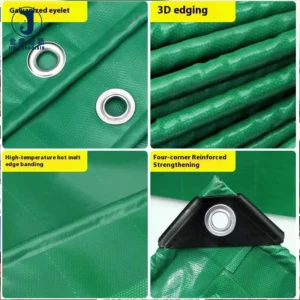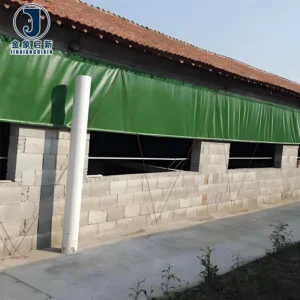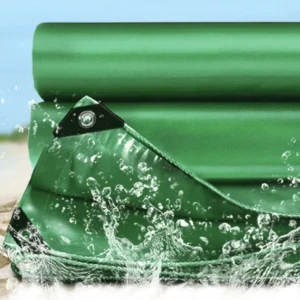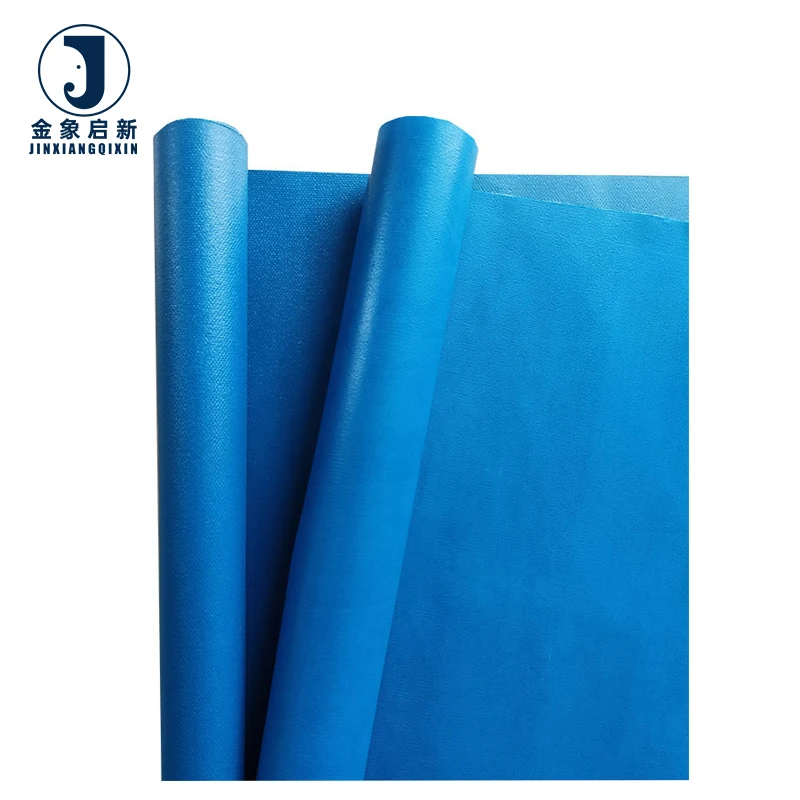
Precision-Coated for Fleet Fitment — Jinxiang’s hot-melt coating process bonds PVC to high-strength polyester mesh, ensuring the tarpaulin maintains seam integrity under the constant flexing and road abrasion that generic truck covers cannot withstand.
Technical Specifications
| Parameter | Value |
|---|---|
| Product Type | PVC Coated Tarpaulin |
| Base Fabric | High-strength polyester mesh fabric |
| Coating Material | PVC |
| Weight Options | 350gsm / 420gsm / 500gsm / 550gsm / 600gsm / 750gsm |
| Total Thickness | 0.32mm / 0.35mm / 0.4mm / 0.45mm / 0.5mm / 0.65mm |
| Coating Technology | Laminated technology & Hot-melt coating technology |
| Roll Width | 2m / 2.1m |
| Roll Length | 75m (for 2m width) / 50m (for 2.1m width) |
| Colour Options | Blue / Red / Yellow / Light Blue / Grey (Customizable) |
| Key Features | Waterproof, Cold Crack Resistance, Anti-Mildew, Anti-Static treatment (surface resistance not stated in source), Sunproof (test basis not stated in source), Flame Retardant (grade not stated in source) |
| Standards | ISO, CE |
Application Suitability
| Application | Exposure & Requirement |
|---|---|
| Truck side curtain fabric | Constant flexing at load points, road debris abrasion, high-speed wind loading, weather exposure across seasons |
| Flatbed load covers | Tie-down strap pressure, UV and rain exposure, repeated folding and unfolding at depots |
| Trailer roof and rear door seals | Water ingress prevention, thermal expansion and contraction, contact with metal frame edges |
| Transport equipment production-line fitment | Batch colour matching across multiple trailers, weldability for seam construction, dimensional stability during fabrication |
Why a Quoted GSM Does Not Guarantee the Cover Will Survive the Route
The weight printed on the invoice means nothing if the coating adhesion fails before the fabric does.
Fleet operators regularly receive PVC coated truck tarpaulin that matches the quoted GSM on the scale yet delaminates at the weld line within months of service. The failure is rarely the base fabric tearing — it is the coating separating from the polyester mesh at the exact points where the load flexes during transit [NEED_CITE: tensile and tear test methods for coated fabrics per ISO 1421]. When a side curtain billows at highway speed, the repeated stress concentrates at the eyelet zone and the hem fold, demanding both adequate GSM and verified coating adhesion to keep the material intact.
Coating Adhesion Determines Real-World Durability on the Road
The hot-melt coating technology used in this PVC Coated Truck Tarpaulin forces the PVC compound into the polyester mesh under heat and pressure, creating a mechanical bond that resists peeling at welded seams. Laminated technology provides an alternative construction where pre-formed PVC films are bonded to the base fabric, offering a different balance of flexibility and seam strength. For fleet operators replacing side curtains, the choice between these two coating methods affects how the material behaves when heat-welded on the shop floor and how it resists delamination under years of road vibration.
Sizing to the Trailer, Not to a Generic Chart
A truck cover cut to a standard dimension will always leave gaps or excess material that flaps in transit, accelerating wear at the edges. This PVC coated tarpaulin is available in roll form so that transport equipment builders and fleet maintenance shops can cut panels to the exact dimensions of the specific trailer model in service. The 2m and 2.1m roll widths cover the majority of side curtain and flatbed applications, while custom cutting from roll stock eliminates the compromise inherent in off-the-shelf sized covers [NEED_CITE: DIN standard test methods for dimensional stability of coated textiles].
Reading the Specification Sheet Beyond the GSM Number
The GSM value indicates total weight per square metre but does not isolate how much of that weight comes from the base fabric versus the coating. A 550gsm material with a heavier base fabric and lighter coating will generally show higher tear resistance than one where most of the weight sits in the coating layer. The thickness range from 0.32mm to 0.65mm correlates with the GSM options but also reflects the coating build-up, which directly influences weld temperature settings and cold-weather flexibility. Hot-melt coated fabrics typically allow a wider welding temperature window compared to laminated alternatives, reducing the risk of burn-through or incomplete fusion during fabrication.
The Hidden Cost of Choosing the Wrong Roll Specification
Ordering a lighter GSM than the application demands leads to premature tearing at tie-down points, forcing the fleet to replace covers far earlier than expected. Conversely, specifying a heavier material than necessary adds dead weight to every trailer in the fleet and increases fuel consumption over thousands of kilometres. Batch colour variation between rolls becomes visible the moment two panels are installed side by side on the same trailer, requiring rework and delaying vehicle release [NEED_CITE: colour fastness and batch consistency standards for coated fabrics]. Weld failures that occur before the fabric itself tears indicate a mismatch between the coating technology selected and the welding parameters used on the production floor.
Why Sourcing This PVC Coated Truck Tarpaulin Through Jinxiang
Three full production lines and 36 sets of professional equipment support consistent output across large fleet orders without sacrificing lead-time reliability. The 10-person R&D team develops samples within days when a specific GSM, colour, or treatment combination is required for a new trailer model. Dedicated QA/QC inspection at every production stage catches coating weight deviations and colour drift before rolls are packed for dispatch. Material specification sheets accompany each shipment, clearly stating the GSM, base fabric details, and coating method so that receiving teams can verify the product against the original quotation. Available flame retardant grades and anti-static treatments can be confirmed for markets that require documented compliance — request the specific test report for your jurisdiction.
Documentation & Verification
- Weight verification per roll against the stated GSM before dispatch
- Material specification sheet listing base fabric, coating weight, and colour reference
- Test reports for UV and flame-retardant grades supplied where applicable
- ISO and CE certificates included with each consignment
- Pre-shipment inspection record documenting roll-by-roll quality checks
- Certificate of origin and customs documentation for international freight
Fabrication, Handling & Storage
- Hot-melt coated rolls tolerate a broader welding temperature range, reducing burn-through risk on the shop floor
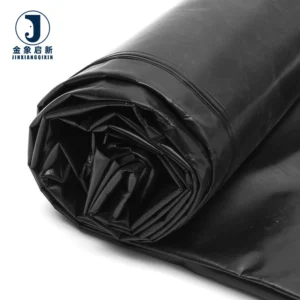
- Store rolls horizontally on racks to prevent flat-spot creases on the 2m or 2.1m width
- Allow cold-stored rolls to reach ambient temperature before unrolling to avoid coating crack damage
- Reinforce eyelet zones with extra PVC patches when fabricating covers from 350gsm or 420gsm grades
- Use compatible PVC-based cleaners to maintain the anti-mildew surface treatment without stripping the coating
What to Include in Your Enquiry
Provide the trailer model and exact panel dimensions so that the roll width and length can be matched to minimise offcuts. Specify the operating environment — highway fleet, off-road construction logistics, or cold-chain transport — to confirm whether cold crack resistance or a particular treatment grade is required. Indicate the annual roll quantity and whether you need finished cut-to-size covers or raw roll stock for your own fabrication line.
Frequently Asked Questions
Q: How do you confirm the PVC coated truck tarpaulin fits a specific trailer model rather than a generic size?
A: We work from the vehicle manufacturer’s dimensional drawings or your field measurements to recommend the correct roll width and cutting plan. This avoids the gaps and excess overlap that generic-sized covers produce. Our team provides a cutting layout that accounts for hem allowances and eyelet placement specific to your trailer’s tie-down rail configuration.
Q: What reinforcement is available at eyelets and hem folds to handle flex-point stress?
A: Reinforcement patches in matching PVC material can be heat-welded behind eyelet zones and hem folds before the eyelets are punched and set. The hot-melt coating technology provides strong patch adhesion, preventing the peeling that causes eyelets to pull through under strap tension during transit.
Q: How is colour consistency maintained when ordering multiple rolls for a fleet?
A: Rolls within a single production batch are matched against the approved colour reference before packing. Our pre-shipment inspection record documents this check so that panels cut from different rolls install side by side without visible shade variation across the trailer exterior.
Q: What lead time and minimum order apply to custom GSM or colour requirements?
A: Custom GSM and colour orders follow typical multi-week production timelines depending on the specification complexity and order volume. Sample development is completed within days for approval before full production begins, ensuring the material meets your requirements before commitment to the full roll quantity.
Q: How does welded seam strength compare to the fabric tear strength under load flexing?
A: Properly heat-welded seams on hot-melt coated PVC tarpaulin achieve bond strength that meets or exceeds the base fabric tear resistance. The key factor is matching the welding temperature and dwell time to the specific GSM and coating thickness, which our fabrication guidelines address for each weight grade supplied.