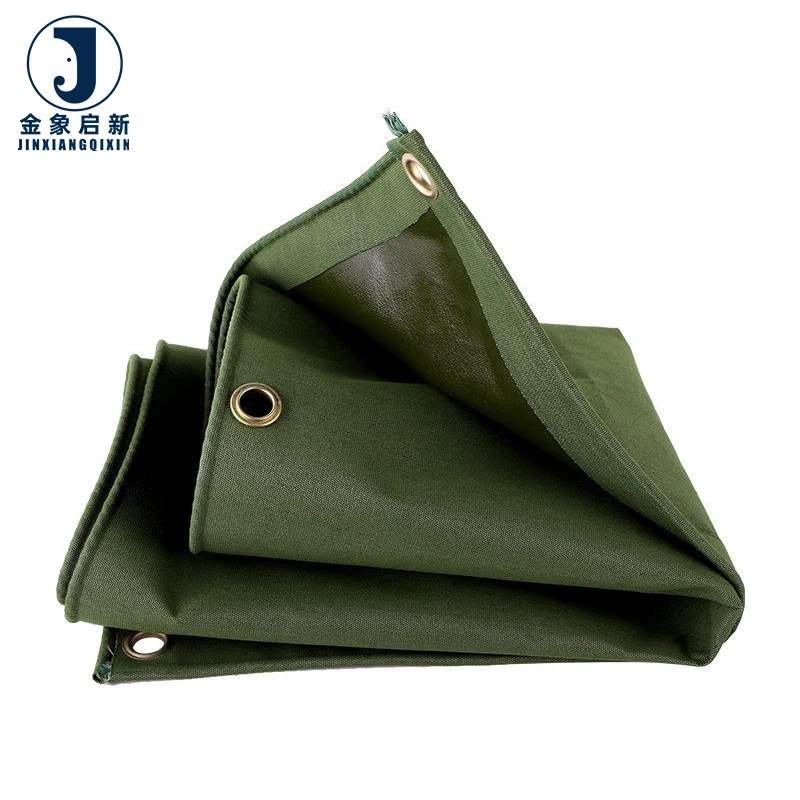
Process-Controlled Coating — dedicated production lines with in-process QA maintain consistent laminate weight and adhesion across every roll of canvas tarpaulin aftermarket supplier stock.
Technical Specifications
| Parameter | Value |
|---|---|
| Product Type | Canvas Tarpaulin |
| Weight | 600 GSM |
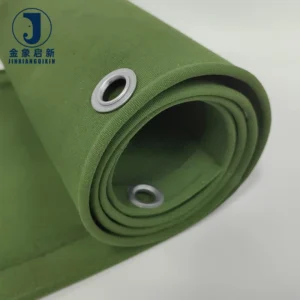
| Base Fabric | Woven Plain Canvas |
| Coating Method | Laminated |
| Waterproof | Yes |
| UV Treatment | UV Resistant (test basis not stated) |
| Flame Retardant | Yes (grade not stated) |
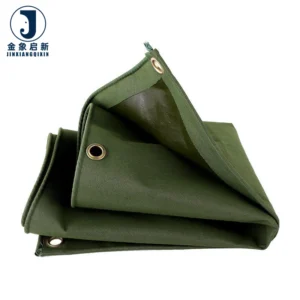
| Edge Reinforcement | Reinforced Edges |
| Grade | Super Heavy Duty |
Application Suitability
| Application | Exposure & Requirement |
|---|---|
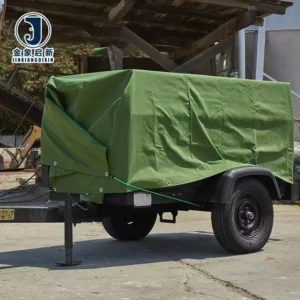
| Truck and trailer flatbed loads | Weather, road spray, abrasion from tie-down tension, daily flex cycles at edges |
| Construction site equipment and material covers | Prolonged outdoor UV exposure, wind-driven rain, dust and debris impact |
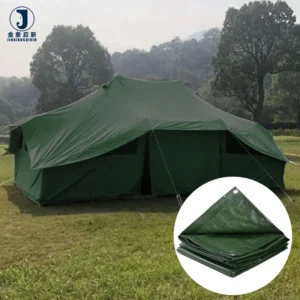
| Outdoor camping and temporary shelter sheeting | Ground moisture, repeated folding and packing, moderate UV exposure |
| Industrial covering and storage | Puncture risk from sharp materials, sustained weather exposure, mechanical handling |
What Happens When a Canvas Tarpaulin Aftermarket Supplier Quotes GSM but Delivers Less
A 600 GSM canvas tarpaulin only protects your load if that weight actually arrives on the truck.
Fleet operators and transport builders encounter this repeatedly: the quotation states one specification, and the roll or cut cover that arrives weighs noticeably less. Thinner laminate, lower-density base fabric, or both — the savings are absorbed by the supplier and the failure risk lands on your cargo. A canvas tarpaulin aftermarket supplier that verifies weight at every production stage removes this uncertainty before the material leaves the factory [NEED_CITE: ISO 1421 test methods for coated fabric mass per unit area].
Load Protection Under Tie-Down Tension
When a flatbed load is secured with ratchet straps, the tarpaulin concentrates stress at every edge and grommet line. This laminated canvas tarpaulin at 600 GSM provides a woven plain canvas base that distributes tie-down forces across the fabric plane rather than allowing localised tearing. The reinforced edges prevent the hem from pulling away under sustained highway-speed wind load and repeated strapping cycles.
Weather and Road Spray Resistance
The laminated coating forms a continuous waterproof barrier that blocks rain, road spray, and wind-driven moisture from reaching the cargo. Unlike spray-on treatments that wear through after a single season, lamination bonds the coating to the base fabric under heat and pressure, maintaining the barrier even where the cover flexes over uneven loads during transit.
Verifying Flame Retardant and UV Claims
Many buyers receive flame retardant and UV resistant claims with no documentation to support them. This 600 GSM canvas tarpaulin is available in flame retardant grades — confirm the grade required for your market and request the matching test report before production [NEED_CITE: fire classification standards for transport and construction covers]. UV resistance is similarly available with supporting test documentation on request, so you can validate long-term outdoor exposure suitability against your regional requirements.
How 600 GSM and Lamination Work Together on the Truck
Weight alone does not determine how a tarpaulin performs under load. The 600 GSM figure represents the combined mass of the woven plain canvas base and the laminated coating together. A denser base fabric contributes more to tensile and tear strength, while the laminate provides waterproofing and surface abrasion resistance. Lamination bonds the coating layers to the canvas under controlled heat and pressure, producing a structure where the coating resists delamination even at fold lines and high-flex zones near grommets. The woven plain canvas weave interlocks yarns in both warp and weft directions, limiting how far a puncture or cut can propagate across the fabric surface — a critical factor when covers are dragged across rough cargo or construction materials.
The Hidden Cost of Underspecifying Your Transport Cover
A tarpaulin that weighs less than quoted will fail first at the edges, where tie-down hardware concentrates force. Fleet operators who accept unverified GSM end up replacing covers mid-season instead of at planned intervals, and cargo claims follow when weather penetrates a thinned laminate. Reinforced edges only function if the surrounding fabric has sufficient weight and density to hold the reinforcement in place. Colour inconsistency across rolls in a single order forces operators to mix mismatched covers on the same fleet, creating visible differences that reflect poorly on the transport company’s professionalism [NEED_CITE: batch consistency standards for coated fabric production].
Why Source This Canvas Tarpaulin Here
Three full production lines and 36 sets of professional equipment support bulk output without compressing quality checks. A 10-person R&D team handles custom sizing, eyelet placement, and sample development specific to your trailer dimensions. Dedicated QA/QC runs at every production stage with 100% pre-shipment inspection, so weight, colour, and dimensional accuracy are verified before dispatch. Samples for custom requirements are developed within days, allowing you to confirm material hand, colour, and edge construction before committing to a full production run.
Documentation & Verification
- Material specification sheet stating 600 GSM, woven plain canvas base, and laminated coating type
- UV and flame retardant test reports matching the grade specified on your quotation
- Pre-shipment inspection record covering weight verification, colour check, and dimensional accuracy
- Roll packing list with per-roll identification for traceability after delivery
- Certificate of origin and customs documentation for cross-border shipment
Fabrication, Handling & Storage
- Laminated coating at 600 GSM responds well to hot-air welding — confirm temperature and speed on a test piece first
- Reinforced edges should be specified with grommet spacing matched to your tie-down pattern
- Store rolls upright on a flat surface to prevent permanent creasing in the woven canvas base
- Avoid dragging the laminated surface across abrasive ground during on-site deployment
- Clean with mild detergent and water; avoid solvents that may attack the laminate bond line
Specifying Your Transport Cover Requirement
Provide the trailer model or load dimensions, tie-down configuration, and the environmental conditions your fleet operates in. If your market requires a specific fire classification for transport covers, state the standard and grade so we can match the treatment and supply the corresponding documentation. Confirm whether you need roll stock for your own fabrication or finished cut-to-size covers with edge reinforcement and grommet placement.
Frequently Asked Questions
Q: How do I verify the 600 GSM on delivery matches what was quoted?
A: Every shipment includes a pre-shipment inspection record with per-roll weight verification. You can also conduct a simple GSM check on arrival by cutting a measured sample and weighing it. If any discrepancy is found, the inspection record provides the baseline to resolve the issue with the supplier before the material enters your production or fleet operation.
Q: What flame retardant grade is available and does it match my regional standard?
A: Flame retardant treatment is available in multiple grades. Specify the standard your market or job site requires — such as a building materials classification or transport fire standard — and request the matching test report with your quotation. This ensures the grade supplied aligns with your compliance obligations before production begins.
Q: Is UV resistance supported by a test report?
A: UV resistant treatment is applied to this laminated canvas tarpaulin and supporting test documentation is available on request. The test basis confirms how the fabric performs under sustained UV exposure, allowing you to validate suitability for your specific outdoor duration and regional solar intensity conditions before placing a bulk order.
Q: What custom widths, lengths, and edge configurations can I order?
A: Roll stock and cut-to-size covers are available with custom dimensions to match your trailer model or project requirement. Specify width, length, grommet spacing, and edge reinforcement type during the inquiry stage. The R&D team develops a sample within days so you can confirm fit and construction before full production runs.
Q: What documentation ships with each order?
A: Each shipment includes a material specification sheet, pre-shipment inspection record, roll packing list, and certificate of origin. UV and flame retardant test reports are included where applicable to the grade specified on your quotation. Customs support documentation is provided for international shipments to streamline your import process.