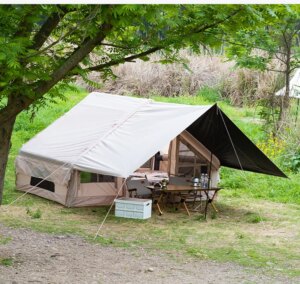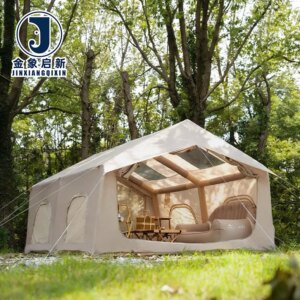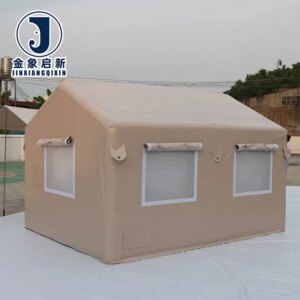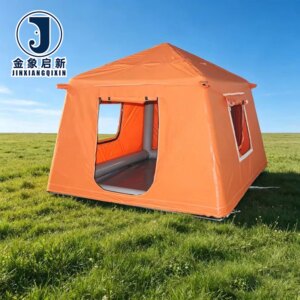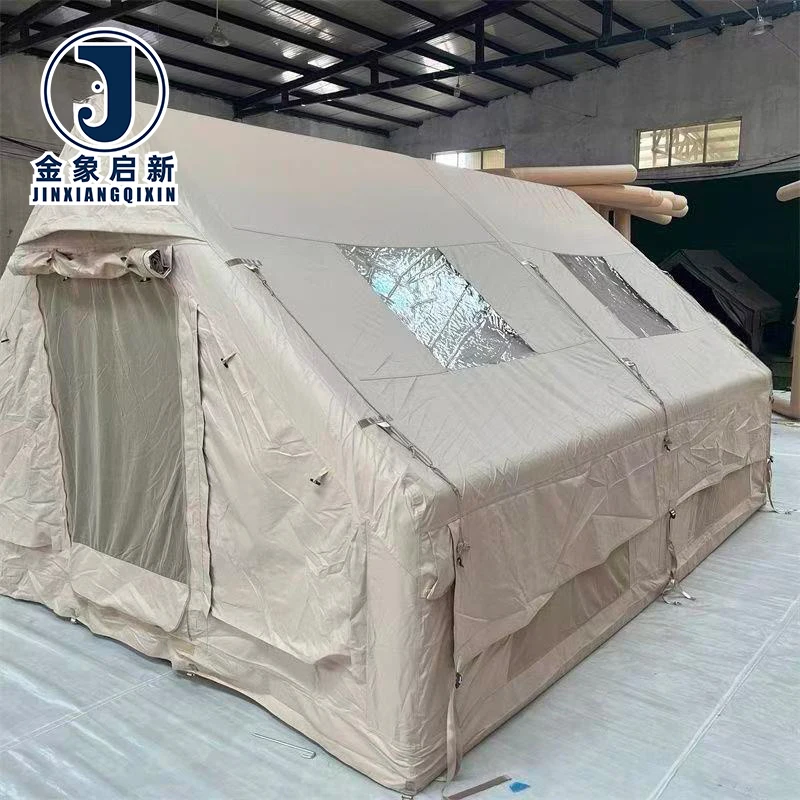
Coating Process Control — three full production lines with dedicated QA at every stage ensure roll-to-roll consistency for inflatable tent fabric orders.
Technical Specifications
| Parameter | Value |
|---|---|
| Product Type | Inflatable Tent |
| Core Material | PVC tarpaulin |
| Product Category | PVC Tent |
| Key Performance | Waterproof, UV-resistant (test basis not stated in source), tear-resistant, fire-retardant (grade not stated in source), anti-static (standard not stated in source) |
| Capacity | 6-8 Person |
| Season Rating | 4 Season |
| Opening Mechanism | Automatic Opening |
| Customization Service | OEM & ODM (sample customization, pattern printing, material selection, product design) |
| Certifications | ISO9001, ISO14001, ISO45001, CE |
Application Suitability
| Application | Exposure & Requirement |
|---|---|
| Commercial camping equipment rental fleets | Repeated inflation and deflation cycles, abrasion from ground contact, UV exposure across seasons, frequent transport and storage |
| Expedition and commercial shelter systems | Multi-season weather exposure, wind loading on inflated structure, remote deployment requiring field repair capability |
| Industrial event temporary structures | High foot traffic proximity, rapid setup and teardown schedules, compliance with venue fire safety requirements |
| Outdoor gear manufacturer product lines | Batch consistency across production runs, pattern printing for brand identity, integration with proprietary valve and frame systems |
What Batch Inconsistency Costs an Inflatable Tent Manufacturer
Roll-to-roll colour and weight variation is the fastest way to fail a container inspection at your warehouse.
When you order a full container of inflatable tent fabric for a commercial product line, one off-spec roll means finished tents sit side by side on a showroom floor showing visible shade differences. Buyers notice. Rental fleets deploy mismatched units to the same event site. The complaint lands on your desk, not the mill that shipped the fabric [NEED_CITE: colour consistency tolerances in coated fabric batch production].
Weight variance is harder to spot but more damaging. A roll that arrives lighter than the quoted specification produces inflated structures with lower tear resistance at stress points. Your production team adjusts heat welding parameters mid-run without knowing the coating weight has shifted, and seam failures appear in the field weeks later.
Inflatable Tent Fabric Sourcing Requires More Than a Datasheet
Commercial outdoor gear manufacturers need an inflatable tent fabric supplier that treats each production run as a traceable batch, not a bulk commodity pour. The PVC tarpaulin core must deliver consistent coating adhesion across every metre, because inflatable tent structures place continuous stress on welded seams during inflation and under wind load. Our 10-person R&D team develops pre-production samples matched to your valve configuration and panel geometry before mass production begins.
Weld Integrity Depends on Coating Uniformity
Heat-welded seams on inflatable tent structures carry the internal air pressure and resist the flexing that occurs during setup, wind gusts, and occupant movement. When coating weight varies across a roll, the welding temperature that produces a strong bond on one section causes burn-through or incomplete fusion on another [NEED_CITE: heat welding parameters for PVC coated fabrics]. Consistent PVC tarpaulin coating application is not a premium feature — it is the baseline requirement for inflatable tent fabric that holds pressure through a rental season.
Material Specification Breakdown for Inflatable Tent Applications
The PVC tarpaulin core material determines how an inflatable tent performs under sustained internal pressure and external weather loading. Waterproof construction prevents moisture penetration through the fabric body, which matters when tents remain inflated through multi-day rain events on expedition sites or commercial campgrounds.
Tear resistance is governed by the base fabric denier and weave density working together with the coating weight. A heavy coating on a light base fabric produces stiffness without proportional tear strength, while a dense base fabric with adequate coating adhesion stops tear propagation at puncture points [NEED_CITE: tensile and tear test methods for coated fabrics per ISO 1421].
Fire-retardant and anti-static treatments are available for inflatable tent fabric — confirm the specific grade and standard required for your destination market before ordering. Venue regulations and national fire codes vary significantly, and supplying the wrong grade means tents fail site inspection after delivery.
UV-resistant treatment extends service life for tents deployed across multiple seasons. Request the test basis applicable to your product line to verify the treatment matches the claimed performance duration for commercial rental or expedition use.
The Hidden Cost of Skipping Pre-Production Samples
Manufacturers who approve inflatable tent fabric from a datasheet alone absorb the full cost of batch variation. Without a physical sample tested on your own welding equipment, you commit to production parameters that may not match the coating behaviour of the actual shipment. Seam failures at inflated stress points appear only after finished tents reach end users, turning a material cost saving into warranty claims and fleet replacement expense [NEED_CITE: inflatable structure seam failure modes under cyclic pressure loading].
Colour inconsistency discovered after cutting and welding means scrapping finished panels rather than rejecting raw rolls. The labour, valve hardware, and trim components already assembled into off-shade tents compound the material write-off.
Why This Inflatable Tent Fabric Source Fits Commercial Production
Three full production lines and 36 sets of processing equipment support container-volume orders with maintained scheduling reliability for inflatable tent fabric buyers planning seasonal stock builds.
A dedicated 10-person R&D team handles material selection, pattern printing development, and custom panel sizing — reducing the back-and-forth between your design department and the fabric supplier during sample approval.
QA inspection runs at every production stage rather than only at final packing, catching coating weight drift and colour shift before rolls reach the warehouse rather than after they reach your cutting table.
Full OEM and ODM capability covers sample customization through to pattern printing and product design input, supporting outdoor gear manufacturers building branded inflatable tent lines.
Pre-shipment inspection records ship with every order, giving your receiving team documented verification tied to batch numbers rather than relying on spot checks alone.
Documentation & Verification
- Material specification sheet listing base fabric type, coating weight, and treatment options per inflatable tent fabric order
- Pre-shipment inspection record with 100 percent roll inspection before dispatch
- Batch-specific quality reports traceable to order number for inflatable tent production runs
- Fire-retardant and UV-resistant test reports provided where applicable to stated grades
- ISO9001, ISO14001, ISO45001, and CE certificates included in export documentation
Fabrication, Handling & Storage
- Set heat welding temperature to match the specific PVC tarpaulin coating weight — test on a sample offcut before running full panels
- Allow welded seams to cool fully under pressure before folding inflatable tent panels to prevent bond creep
- Store rolls upright on end caps to avoid flat-spot deformation that transfers into the finished inflatable structure
- Use compatible PVC adhesive for field repairs on rental fleet tents rather than general-purpose sealants
- Cut panels with grain direction aligned to primary inflation stress axes for maximum tear resistance
Planning Your Inflatable Tent Fabric Order
Specify the deployment environment — rental fleet rotation, expedition shelter, or event structure — along with the fire safety and compliance standards your destination market requires. Confirm whether you need raw roll stock for your own cutting line or pre-cut panels matched to your tent model dimensions. Share your pattern printing artwork and colour references early so sample development runs in parallel with your production planning timeline.
Frequently Asked Questions
Q: How do I verify GSM and coating weight when inflatable tent fabric rolls arrive?
A: Request the batch-specific inspection report shipped with your order, which documents measured weight per roll. Conduct receiving inspection by cutting a measured sample from each roll and weighing it against the stated specification. Flag any roll falling outside tolerance before cutting begins, and reference your pre-production sample approval as the baseline for comparison.
Q: What fire-retardant grade do I need for inflatable tents in my market?
A: Fire safety requirements for inflatable structures vary by country and venue type. Identify the applicable standard for your destination market — building codes, event venue regulations, or camping equipment directives — and specify the required grade at inquiry stage. Test reports matching the stated grade ship with your order when the treatment is confirmed during sample approval.
Q: How is batch-to-batch colour consistency maintained across roll orders?
A: Each production run uses controlled coating formulation and in-process colour checks at multiple stages. Pre-production samples are approved against your colour reference before mass production. The pre-shipment inspection record documents colour verification per roll, and any roll showing visible deviation is held before packing.
Q: What MOQ applies to custom widths and printed branding on inflatable tent fabric?
A: Minimum order quantities depend on the specific width, colour, and printing complexity requested. Custom widths and pattern printing require dedicated line setup, so MOQ reflects the production run length needed to maintain coating consistency. Submit your dimensions and artwork at inquiry stage for a confirmed minimum and lead time.
Q: What should I consider for heat welding inflatable tent PVC fabric?
A: Welding temperature and dwell time must match the specific coating weight of your batch. Test parameters on sample offcuts from the actual production rolls before running full panels. Consistent coating application across the roll prevents sections that burn through or fail to fuse, which are the most common causes of seam failure in inflated structures.