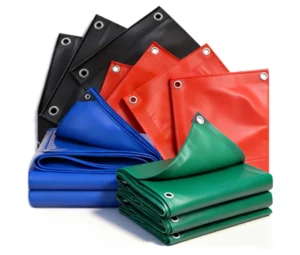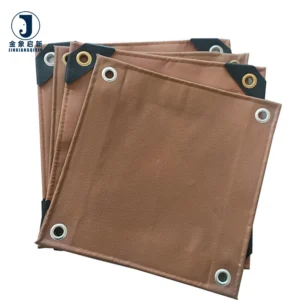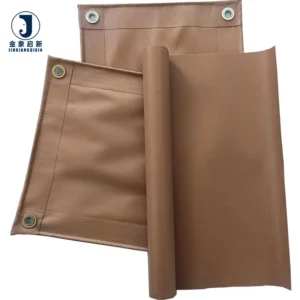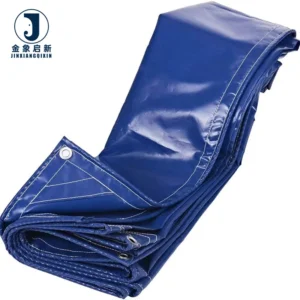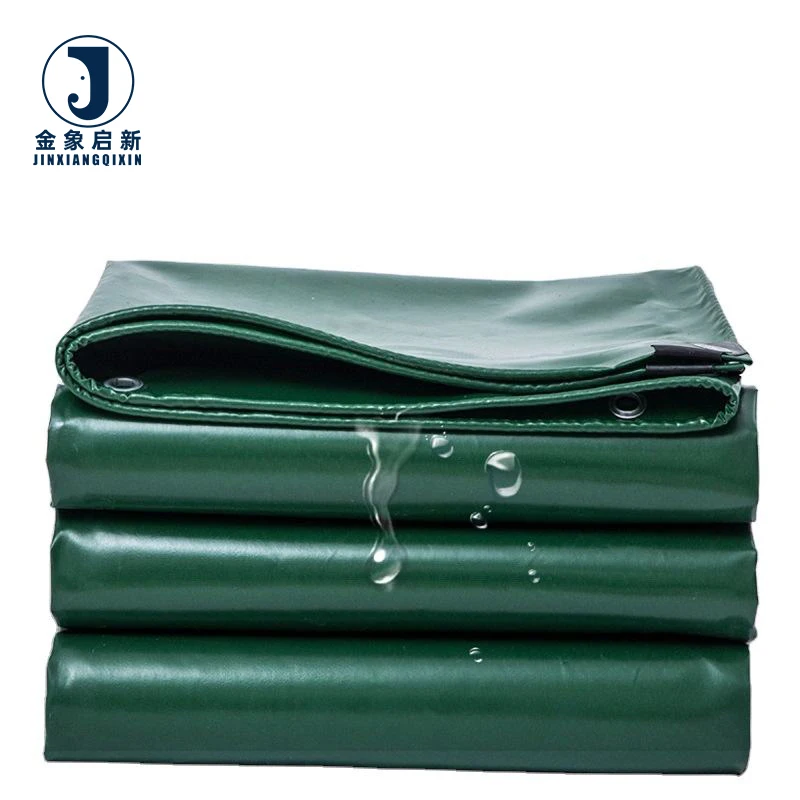
Trailer-Specific Cut and Fit — We build flatbed tarpaulins to your actual trailer dimensions, not generic templates, with reinforced hems and tie-down points engineered for road exposure and load flex.
Technical Specifications
| Parameter | Value |
|---|---|
| Product Type | PVC Coated Tarpaulin |
| Water Resistance | Water resistant |
| UV Treatment | Anti-UV (grade not stated in source) |
| Flame Retardant | Flame retardant (grade not stated in source) |
| Face Construction | Double-faced |
| Color Options | Multiple colors available |
| Form | Roll / Sheet |
Application Suitability
| Application | Exposure & Requirement |
|---|---|
| Flatbed truck and trailer cargo covering | Constant highway flex, wind abrasion, rain, and UV exposure |
| Lumber and building material transport | Edge protection, heavy load shifting, moisture resistance |
| Heavy-duty freight weather protection | Prolonged outdoor exposure, tie-down stress at grommets |
| Fleet standardization across mixed trailers | Model-specific sizing, batch color consistency |
Why Generic-Size Tarps Fail on Flatbed Trailers
Flatbed truck tarpaulin for transport fleets must be cut to the specific trailer model, not a one-size template.
Generic-size covers shift at highway speed, expose load edges to rain, and concentrate stress at eyelets that were not positioned for the actual tie-down points on your trailer. A tarp that is six inches too short on a lumber load leaves the end grain exposed to moisture ingress. One that is too loose flaps against the cargo, wearing through the coating within months. The fitment problem is responsible for a significant share of early tarp replacement in transport fleets. [NEED_CITE: common causes of tarpaulin failure in flatbed transport operations]
Model-Specific Fitment for Flatbed and Step-Deck Trailers
Every flatbed trailer has distinct deck length, side rail height, and tie-down spacing. A flatbed trailer tarpaulin that is measured and cut to those exact dimensions eliminates the edge exposure and wind flap that destroy generic covers. We request the trailer make, model, and deck measurements before cutting, so the cover sits flush against the load and the tie-down points align with the reinforced eyelet positions.
Reinforced Hems and Eyelet Placement at High-Stress Points
The edges and corners of a flatbed cover absorb the most stress during transit. Reinforced hems distribute the load across a wider fabric area, while eyelet spacing matched to your trailer’s tie-down rails prevents localized tearing. When the tarp flexes over an uneven load at speed, these reinforcement details determine whether the cover lasts through the season or fails at the first stress concentration. [NEED_CITE: tensile and tear test methods for coated fabrics per ISO 1421]
Understanding Coated Fabric Weight and Base Construction
Fabric weight alone does not define how a PVC coated tarpaulin performs under transport conditions. The base fabric denier and weave density, combined with the coating method and adhesion strength, collectively determine tensile and tear resistance. A heavy coating applied to a loosely woven base will crack at the flex points before the coating itself wears through. Conversely, a tightly woven high-denier base with moderate coating weight often outperforms a heavier but poorly bonded construction on the road. The double-faced construction in this product provides uniform weather resistance and structural contribution from both surfaces, which matters when the tarp is folded, dragged, and re-deployed daily. Coating adhesion to the base fabric is the property that keeps the material acting as one unit rather than delaminating under load flex. [NEED_CITE: relationship between base fabric construction and coated fabric performance]
The Hidden Cost of Unverified Material Claims
When a quotation states a certain GSM but the material arriving on site is lighter, the cover will not deliver the tensile strength or abrasion resistance the fleet relied on. When anti-UV or flame retardant treatment is claimed without a supporting test report, the tarp may pass visual inspection but fail compliance checks or degrade prematurely under sun exposure. Batch color variation across rolls in a single fleet order becomes visible once the covers are installed side by side on parked trailers. These specification gaps drive early replacement costs and fleet downtime that far exceed the initial material savings. [NEED_CITE: DIN 4102 fire classification for building materials and transport covers]
Why Source This Flatbed Trailer Tarpaulin Here
Three full production lines and 36 sets of professional equipment support bulk fleet orders with reliable on-time delivery, whether you need ten covers or a full container of roll stock. The 10-person R&D team handles model-specific pattern development, custom sizing, and sample production so you can verify fitment before committing to a fleet quantity. Dedicated QA/QC at every production stage includes 100% pre-shipment inspection, catching seam and eyelet issues before the covers leave the factory. Nearly 30 years of focused coated fabric production provides deep process control over coating weight and adhesion consistency across rolls. Sample development within days lets you test material hand, color match, and weld behavior against your in-house standards before the main production run begins.
Documentation & Verification
- Material specification sheet stating GSM, base fabric denier, and coating type for this tarpaulin grade
- UV and flame retardant test reports documenting the grade and test standard applied
- Pre-shipment inspection record covering seam integrity, eyelet reinforcement, and dimensional accuracy
- Color reference confirmation ensuring roll-to-roll consistency across fleet orders
- Certificate of origin and customs documentation supporting international transport shipments
Fabrication, Handling & Storage
- Weld temperature and dwell time must be matched to the PVC coating thickness for full seam adhesion
- Eyelet placement should align with reinforced hem zones to distribute tie-down stress across the double-faced construction
- Store rolls flat and avoid stacking heavy loads on top to prevent permanent creasing in the coating layer
- Allow cold-stored tarpaulin to reach ambient temperature before unfolding to avoid coating crack at fold lines
- Use mild detergent only for cleaning to preserve the surface finish and any applied treatment
- Lay out the full sheet for pattern nesting before cutting to minimize waste on custom trailer sizes
What We Need to Quote Your Flatbed Fleet Order
Provide your trailer make, model, and exact deck dimensions so we can develop a cut-to-fit pattern. Specify the flame retardant grade or transport compliance standard required in your operating region, along with target color and whether you need finished covers with eyelets or roll stock for in-house fabrication. If you are standardizing across a mixed fleet, share the full list of trailer types so we can batch the order for color consistency.
Frequently Asked Questions
Q: How do you ensure the tarp fits my specific flatbed or step-deck trailer model?
A: We request the exact trailer make, model, deck length, and rail height before cutting. Each flatbed truck tarpaulin is patterned to those dimensions rather than a generic template, and we can produce a sample cover for fitment verification before the full fleet order enters production.
Q: What flame-retardant grades are available, and do they meet regional transport safety requirements?
A: Flame retardant treatment is available in multiple grades. We need your specific compliance standard or regional regulation to match the correct grade and supply the corresponding test report with the shipment, rather than shipping a generic flame retardant claim without documented backing.
Q: How is GSM verified on arrival to match the quoted weight?
A: Every roll undergoes weight verification against the stated GSM before dispatch, and the pre-shipment inspection record documents the result. This ensures the material you receive matches the specification on the quotation and supports your incoming quality check.
Q: How do you control color consistency across multiple rolls in a single fleet order?
A: Color matching is managed at the coating stage with reference standards checked against each production batch. For fleet orders spanning multiple trailers, we group production to maintain roll-to-roll consistency and document the color reference on the material specification sheet.
Q: Can I order a sample before committing to a fleet quantity?
A: Samples are developed within days for custom requirements, including your specified color, treatment, and cut dimensions. This lets you evaluate material hand, weld behavior, and fitment on your actual trailer before approving the main production run.