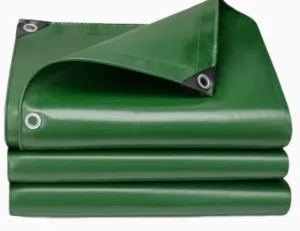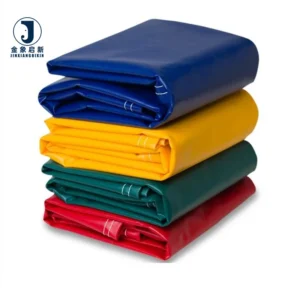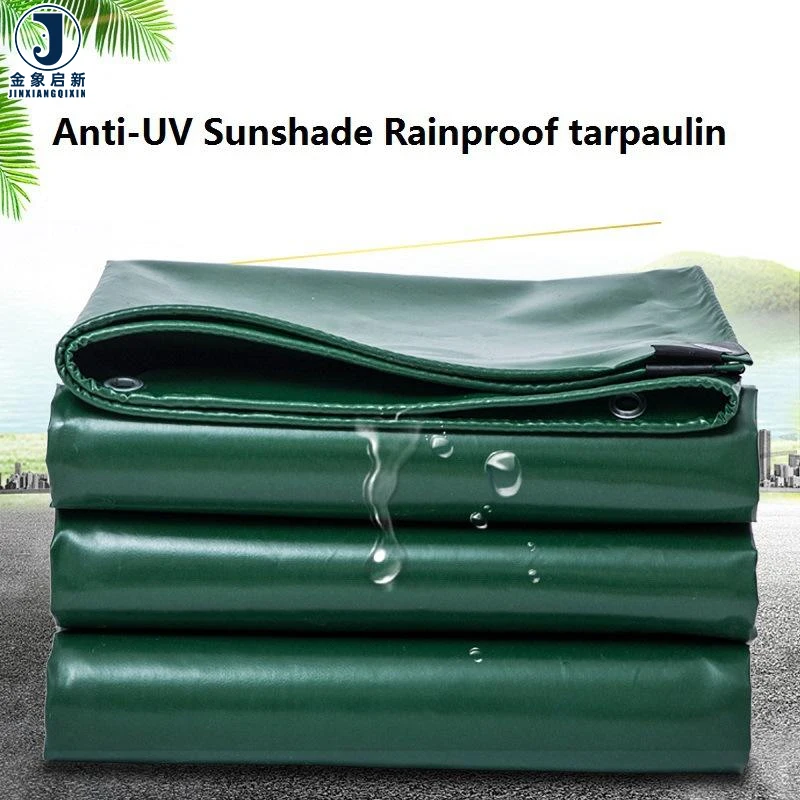
Deep Process Control Over Coating — 30 years focused on coated fabric, with 100% inspection verifying GSM, coating adhesion, and dimensional accuracy for every PVC Coated Tarpaulin Truck Cover before dispatch.
Technical Specifications
| Parameter | Value |
|---|---|
| Product Type | PVC Coated Tarpaulin |
| Base Fabric Yarn Count | 500D × 500D Polyester |
| Coating Material | Double-sided PVC |
| Weight Range | 450–900 g/m² (exact grade specified per order) |
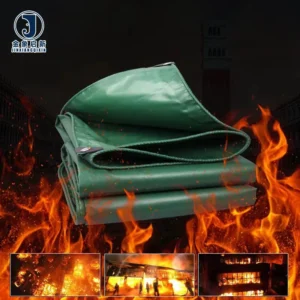
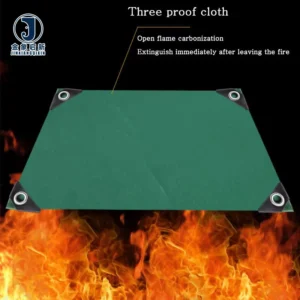
| Flame Retardant Option | Available — confirm required grade for target market |
| Anti-UV Treatment | Available — test basis to be confirmed per requirement |
| Water Resistance | Fully waterproof coated construction |
| Surface Texture | Smooth, leather-like finish |
| Repair Method | Hot air welding compatible |
| Certifications | ISO, CE (company-level compliance) |
Application Suitability
| Application | Exposure & Requirement |
|---|---|
| Flatbed truck load cover | Road abrasion, wind flap at highway speed, tie-down tension at corners |
| Trailer side curtain | Constant flexing at roller tracks, UV exposure on south-facing routes |
| Machine and equipment cover | Outdoor weathering, dust ingress prevention, secure fitment over irregular shapes |
| Construction fleet vehicle cover | Job-site debris impact, chemical splash from site materials, repeated removal and folding |
Why Generic Sizing Fails on the Road
Generic-size truck covers that do not match your trailer model lead to fabric bunching, wind flap, and premature seam failure — our PVC Coated Tarpaulin for Truck Cover is cut to exact vehicle dimensions.
Covers cut to your trailer model eliminate the stress points that destroy generic tarps within the first season.
Fleet operators who buy off-the-shelf dimensions end up with excess fabric that flaps at speed, creating a whipping action that concentrates fatigue at the eyelet line. [NEED_CITE: fatigue failure mechanisms in flexible PVC structures under dynamic wind loading]. The result is not a slow wear — it is a sudden seam split on the motorway, with the load exposed and the delivery delayed. Dimensional precision matters more than picking a heavier grade to compensate for poor fit.
Model-Specific Pattern Cutting for Fleet Fitment
Each PVC Coated Tarpaulin for Truck Cover is patterned from the exact dimensions of your truck or trailer model, not from a generic size chart. This eliminates the excess fabric that causes wind catch and the short-fall that leaves load corners exposed. When the cover sits flush against the vehicle profile, the tie-down system works as designed — distributing tension evenly across the hem rather than concentrating it at two or three overloaded eyelets.
Reinforcement Where the Load Flexes Most
The areas around tie-down points and trailer corners experience cyclic stress every time the vehicle brakes, turns, or encounters crosswinds. Standard heat-welded seams in these zones can part before the fabric body shows any sign of wear. We reinforce high-flex zones with additional PVC patches welded over the seam line, ensuring the join outlasts the surrounding material. [NEED_CITE: cyclic stress concentration at tie-down points in transport tarpaulins]. This is critical for fleets running long-haul routes where a mid-journey cover failure is a logistics disruption, not just a fabric issue.
Reading the Specification Sheet Beyond GSM
Buyers often anchor on gsm as the single measure of quality, but the 500D × 500D polyester base fabric is what carries the tensile and tear load — the PVC coating seals and protects. A high gsm achieved by loading the coating with filler rather than increasing the base fabric density will feel heavy on the roll but will tear more easily under point load. The relationship between yarn denier, weave density, and coating weight together determines how the PVC Coated Tarpaulin Truck Cover handles a sharp corner on a steel load or a tie-down strap pulled tight in wind. [NEED_CITE: relationship between base fabric denier, weave density and tensile performance per ISO 1421]. Specifying by GSM alone leaves two of the three variables uncontrolled.
The Hidden Cost of Skipping Pre-Shipment Verification
Fleets that accept delivery without checking cover dimensions against the specified vehicle model often discover the mismatch only when the first cover is thrown over a load. At that point the entire batch may be wrong, and the trucks are running uncovered while replacements are produced. Similarly, flame retardant or anti-UV treatments claimed on the quotation without a supporting test report become a compliance problem when a port authority or site safety officer asks for documentation. [NEED_CITE: import compliance failures for coated textiles lacking market-specific certification]. These are not material defects — they are specification verification failures that a pre-shipment inspection record prevents entirely.
Why Sourcing PVC Coated Tarpaulin Truck Covers Here Works
Three full production lines with 36 sets of professional equipment give us the capacity to run fleet-scale orders without sacrificing dimensional accuracy on individual covers. Our 10-person R&D team develops a sample cut to your trailer model within days, so you approve the pattern before bulk production starts — not after. Dedicated QA/QC inspects every roll and every finished cover before packing, checking GSM, colour consistency, and weld strength at tie-down zones. [NEED_CITE: 100% pre-shipment inspection protocol for coated fabric products]. For transport equipment builders, we supply side curtain fabric with the same abrasion-resistant flex-zone construction used on our finished covers.
Documentation & Verification
- Material specification sheet listing exact GSM, 500D × 500D base fabric denier, and PVC coating weight for the ordered grade
- Pre-shipment inspection record confirming cover dimensions against specified truck or trailer model drawings
- Test reports for flame retardant and anti-UV treatments where applicable to destination market regulations
- Roll packing list with weight and dimension summary for customs and freight planning
- Certificate of origin and ISO/CE compliance documentation for import clearance
- Welded seam strength verification at high-flex tie-down and eyelet reinforcement zones
Fabrication, Handling & Storage
- Hot air welding temperature must be matched to the specific PVC coating weight of the ordered grade for full peel strength
- Eyelet spacing should be calculated based on the cover dimensions and expected tie-down tension, not set to a generic interval
- Rolls must be stored upright on pallets to prevent flat-spotting and permanent creasing of the 500D base fabric
- Cold-weather transport requires allowing the PVC coating to acclimatise before unrolling to avoid low-temperature cracking
- Abrasive cleaners must be avoided on the smooth leather-like surface to preserve the coating finish and UV treatment layer
- Field repairs use hot air welding compatible with the double-sided PVC coating — no adhesive patches required
What We Need to Quote Your Covers Accurately
Provide the exact truck or trailer model numbers in your fleet, along with any non-standard body modifications that affect cover dimensions. Confirm whether your destination market requires a specific flame retardant grade or UV test standard for compliance. Let us know your annual cover volume and whether you need finished, ready-to-fit covers or roll stock for your own fabrication facility.
Frequently Asked Questions
Q: How do you ensure the truck cover fits my specific trailer model dimensions?
A: We request the manufacturer’s dimensional drawing or take measurements from a physical trailer of the same model. A sample cover is produced and fitted for approval before bulk cutting begins. The pre-shipment inspection record then confirms every finished cover against those approved dimensions, so what arrives matches the pattern you signed off.
Q: What flame retardant grades are available, and which standards do they meet?
A: Flame retardant treatment is available in multiple grades, but the correct grade depends on your destination market’s transport or site safety regulations. We confirm the required standard — such as a specific national or industry classification — before production and supply the corresponding test report with the shipment documentation.
Q: How is UV resistance tested, and what service life can be expected on the road?
A: Anti-UV treatment is applied during coating and the specific test basis is confirmed based on your route climate and exposure conditions. We supply the test documentation applicable to the grade produced. Expected service life depends on geographic UV index, daily exposure hours, and whether the cover is deployed or stored when not in transit.
Q: How are seams and eyelets reinforced at high-flex tie-down points?
A: At zones where tie-down straps create cyclic stress, additional PVC patches are heat-welded over the primary seam to distribute load across a wider area. Eyelet placement is calculated from the cover dimensions and fleet tie-down system, not set to a generic spacing, so tension is shared across multiple anchor points rather than concentrated.
Q: Can custom branding be applied to fleet covers without affecting fabric performance?
A: Pattern printing and logo application are available on the PVC surface. The printing process is compatible with the coating chemistry so that the waterproof seal and any flame retardant or UV treatment remain intact across the printed area. We confirm print placement does not interfere with welded seam lines or eyelet reinforcement zones.