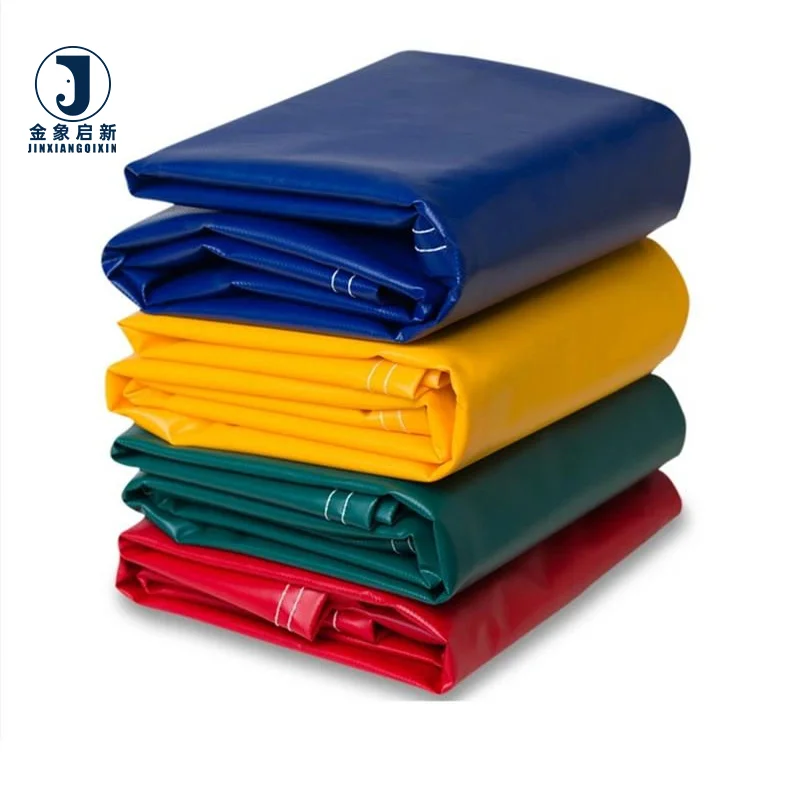
Coated Fabric Process Control — Nearly 30 years focused on PVC coating weight and adhesion, applied here to truck and trailer covers that face constant flexing and road abrasion.
Technical Specifications
| Parameter | Value |
|---|---|
| Product Type | PVC Coated Tarpaulin |
| Material | PVC coated fabric |
| Thickness | 0.35-1.5 mm |
| Weight | 400-1500 g/m² |
| Knitting Density | 500D-2000D |
| Tensile Strength (Warp) | 1500-3000 N/5cm (test standard not stated) |
| Tensile Strength (Weft) | 1200-2800 N/5cm (test standard not stated) |
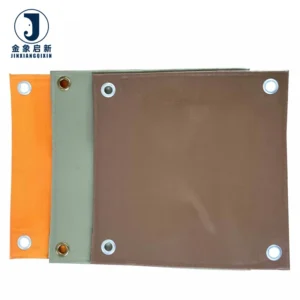
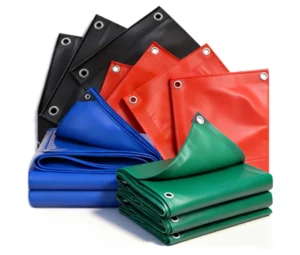
| Color | Blue, Green, Grey, Black, Orange, Custom |
| UV Treatment | Available (test basis not stated — confirm requirement for your route exposure) |
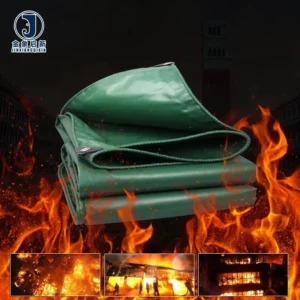
| Key Features | Waterproof, Tear Resistant, Mildew Proof, Anti-aging |
| Certifications | ISO, CE |
Application Suitability
| Application | Exposure & Requirement |
|---|---|
| Truck side curtain | Constant flexing at load points, road spray, abrasion against cargo edges |
| Flatbed trailer cover | Direct UV and weather exposure, wind lift on highway, tie-down stress at hems |
| Tipper and dump truck tarpaulin | Heavy load contact, repeated deployment and stowage, abrasion from aggregate |
| Farm load covering on open trucks | Dust, moisture, sun exposure during transport, frequent handling |
| Transport equipment side panels | Vibration wear at mounting rails, UV degradation over long service intervals |
Why Fitment to Trailer Model Matters More Than Fabric Weight Alone
A PVC coated tarpaulin for truck and transport that does not match the specific trailer dimensions will fail at the edges before the fabric itself wears out.
Fleet operators ordering generic-size covers often find gaps at corners and loose sections that flap at highway speed. This flapping concentrates stress at the grommets and hems, leading to tear propagation that no amount of base fabric strength can prevent. A cover cut to the exact trailer model eliminates slack and keeps the load secure [NEED_CITE: wind-induced flutter fatigue on flexible truck enclosures].
Cut-to-Model Sizing for Moving Loads
Every truck and trailer model has distinct body dimensions, rail positions, and load profiles. A PVC coated tarpaulin for truck and transport must account for these specifics to sit flush against the cargo area. Covers that are even slightly oversized create pockets where water collects and wind catches, accelerating wear at the attachment points.
Reinforcement Where the Road Stresses the Cover Most
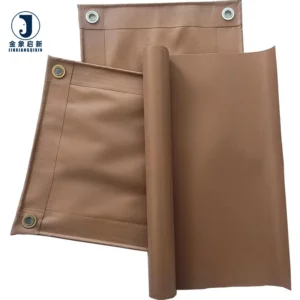
The hem line and tie-down positions carry the highest mechanical load during transit. Reinforced edges and correctly spaced eyelets distribute the tension across a wider area of the coated fabric, preventing pull-through. On side curtain applications, the vertical flex zone where the trailer articulates demands additional attention to seam construction [NEED_CITE: tensile and tear test methods for coated fabrics per ISO 1421].
Reading the Thickness and Denier Range for Truck Use
The available thickness range from 0.35 mm to 1.5 mm and denier options from 500D to 2000D span from light transport covers to heavy-duty side curtains. Thicker coating with higher denier base fabric delivers greater puncture resistance against sharp-edged cargo. Lower denier with lighter coating suits farm and general-purpose covers where weight and handling ease matter more than impact protection.
Matching Coating Thickness to Cargo Contact
The PVC coating layer serves as the primary barrier against moisture, abrasion, and UV degradation. Thicker coatings in the upper range provide a larger sacrificial layer that protects the base fabric during contact with rough cargo surfaces. The base fabric denier determines how well the material resists tear propagation once the surface coating is compromised. These two parameters must be evaluated together — a heavy coating on a low-denier base may crack under flex stress, while a high-denier base with thin coating may allow water penetration through micro-abrasions. Glossy or matte finish options affect surface friction and cleaning behaviour during routine fleet washing [NEED_CITE: relationship between coating adhesion and peel strength in PVC laminated fabrics].
The Cost of Overlooking Weld Seam Integrity
A welded seam that fails before the surrounding fabric is one of the most common reasons for premature truck cover replacement. The heat and pressure applied during welding must be calibrated to the specific coating thickness and base fabric density. Incorrect parameters leave a bond that separates under the repeated flex loads experienced during highway transit. Fleet operators replacing covers mid-service cycle face both material cost and vehicle downtime [NEED_CITE: weld seam peel strength testing for PVC coated textiles].
Procurement Verification for Fleet Specifications
Batch colour consistency across rolls matters when multiple covers are installed side by side on a fleet. The dedicated QA/QC process includes inspection at every production stage, with verification that the GSM on arrival matches the quoted specification. UV treatment availability is confirmed against the specific test basis required for the route climate, rather than relying on general claims. Pre-shipment inspection records accompany each dispatch for buyer review.
Documentation & Verification
- Weight verification per roll against the stated GSM before dispatch
- Material specification sheet stating base fabric denier and coating details
- Test report for UV treatment provided where applicable to the order
- ISO and CE certificates included with shipment documentation
- Roll packing list with individual roll identification for traceability
- Certificate of origin and customs support documentation
Fabrication, Handling & Storage
- Heat welding temperature must match the selected coating thickness to avoid seam delamination
- Eyelet placement at hems should account for the base fabric denier to prevent pull-through
- Store rolls horizontally on pallets to avoid permanent creasing in the PVC coating layer
- Allow rolls to acclimatise before unrolling in cold conditions to prevent surface cracking
- Use mild detergent for cleaning to preserve the coating surface and any UV treatment
- Cut panels with sealed edges to prevent water ingress into the base fabric weave
Request a Specification Recommendation
Provide the specific truck or trailer model, typical cargo type, and route climate conditions so the correct denier and coating thickness can be recommended. Indicate whether the requirement is for finished covers cut to size or roll stock for in-house fabrication. Specify any colour matching or UV treatment requirements aligned with your market standards.
Frequently Asked Questions
Q: How is the tarpaulin cut to fit my specific trailer model?
A: We require the exact trailer make, model, and body dimensions to produce a cover that fits without slack or gaps. This cut-to-model approach eliminates the edge flapping and stress concentration that generic-size covers cause. Our 10-person R&D team handles the pattern development and sample approval before bulk production begins.
Q: Can you maintain colour consistency across a fleet order?
A: Batch colour consistency is controlled through dedicated QA/QC at every production stage. Multiple rolls for a single fleet order are produced under matched conditions, and pre-shipment inspection confirms no visible variation when covers are installed side by side on adjacent vehicles.
Q: How do you verify GSM matches what was quoted?
A: Each roll undergoes weight verification against the stated GSM as part of the pre-shipment inspection process. The inspection record accompanies the shipment documentation, giving buyers a verifiable check that the material received matches the specification agreed on the quotation.
Q: What reinforcement is available at tie-down and flex points?
A: Reinforced hems and strategically placed eyelets distribute tie-down tension across the base fabric. The reinforcement specification is matched to the selected denier and coating thickness, ensuring the attachment points hold under road vibration and wind load without tearing through the PVC coated fabric.
Q: How is UV treatment validated for road exposure?
A: UV treatment is available as an option, and the specific test basis must be confirmed against the exposure conditions of your transport routes. We provide the applicable test report with the shipment so buyers can verify the treatment level matches their regional climate and service expectations.