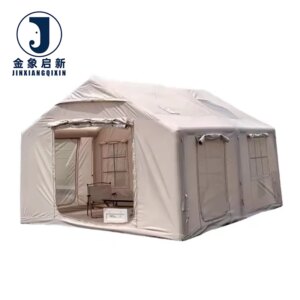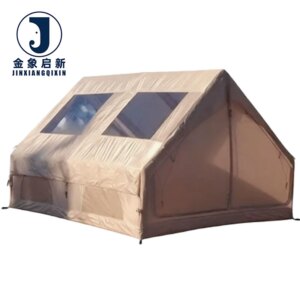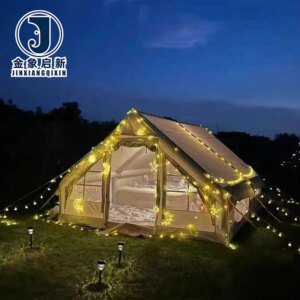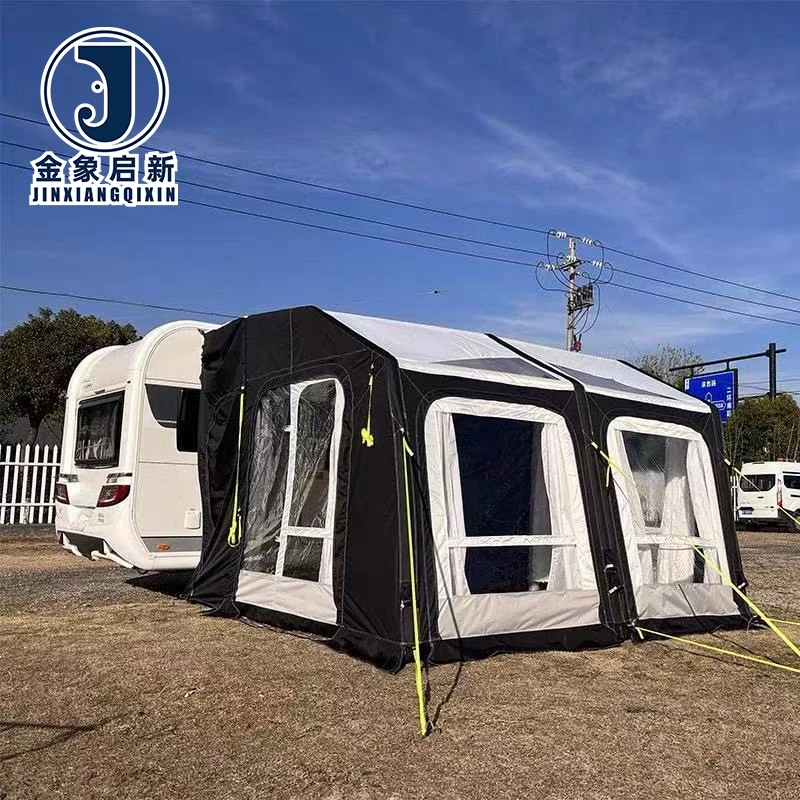
Automated QA Protocols — every inflatable structure undergoes full inflation and seam pressure testing before dispatch, catching deployment failures before they reach your site.
Technical Specifications
| Parameter | Value |
|---|---|
| Product Type | PVC Inflatable Tent |
| Core Material | PVC tarpaulin |
| Key Performance | Waterproof, UV-resistant (test basis not stated in source), tear-resistant |
| Flame Retardant | Fire-retardant properties mentioned (grade not stated in source) |
| Product Form | Inflatable structure with quick automatic opening mechanism |
| Customization Service | OEM & ODM (sample customization, pattern printing) |
| Quality Control System | Full-process quality inspection with dedicated QA & QC staff |
| Standards | ISO 9001, ISO 14001, ISO 45001, CE |
Application Suitability
| Application | Exposure & Requirement |
|---|---|
| Construction site temporary workspace | Rain, wind, dust ingress; requires rapid single-person setup between work phases |
| Equipment storage during maintenance | UV exposure, moisture, ground abrasion; must shield sensitive machinery |
| Disaster recovery logistics | Unpredictable weather, high-tempo deployment cycles, repeated inflation and pack-down |
| Material staging at transport depots | Constant handling, forklift proximity, sun and precipitation exposure |
| Roadside fleet maintenance | Wind loading, road spray, low-light deployment conditions |
Why Automatic Opening Reliability Matters More Than Fabric Weight for Field Shelters
A tent that fails to inflate on deployment costs more in downtime than any material upgrade can offset.
Fleet operators and site managers often specify shelters by PVC thickness alone, assuming heavier fabric guarantees field performance. In practice, the opening mechanism is the single point of failure during rapid response. When an inflatable tent must be deployed in minutes at a breakdown site or disaster staging area, a seized valve or fatigued inflation bladder turns the shelter into dead weight. [NEED_CITE: mechanical fatigue testing standards for inflatable structures]
We cycle the automatic opening mechanism more than 50 times during quality assurance to replicate the deployment stress a field unit faces across its service life. This is not a cosmetic check — each cycle is inspected for valve seal integrity, bladder pressure retention, and structural frame rigidity after inflation.
Deployment Speed Under Real Field Pressure
When a transport fleet needs emergency cover for a stranded load or a construction crew requires immediate weather protection for staged materials, setup time is measured against schedule loss. The Inflatable Tent for truck and transport operations opens through an automatic mechanism that eliminates manual pole assembly, reducing deployment to a single-operator task. The PVC tarpaulin membrane holds its inflated form under wind loading, maintaining internal clearance for personnel and equipment movement throughout the shift.
Durability at the Flex and Abrasion Points
Transport-adjacent operations expose shelters to ground abrasion from gravel yards, repeated folding during site relocation, and UV loading during extended outdoor staging. The PVC construction resists tear propagation at fold lines and contact points where the shelter meets uneven ground. Seam integrity is pressure-tested to prevent moisture intrusion that would compromise stored cargo or sensitive equipment staged inside the Inflatable Emergency Shelter for industrial deployment.
How PVC Coating Weight and Base Fabric Density Interact in Inflatable Structures
Inflatable shelters place unique demands on coated fabric because the membrane must hold internal air pressure while resisting external wind shear and point loads from tie-downs. The base fabric denier and weave density determine how well the material resists tearing when a seam or anchor point concentrates stress. Coating weight — expressed in GSM — contributes to puncture resistance and waterproof integrity, but a high GSM applied to a loosely woven base will delaminate under repeated inflation cycles. [NEED_CITE: tensile and tear test methods for coated fabrics per ISO 1421] The coating method affects how well the PVC bonds to the base yarns; poor adhesion shows up first at welded seams where the shelter is joined. Specifying an inflatable tent requires confirming both the base fabric construction and the coating weight as a matched system rather than evaluating either value in isolation. Available in flame retardant grades — confirm the grade required for your market before placing an order.
What Happens When Inflatable Shelter Specifications Are Mismatched to the Site
A shelter specified without accounting for local wind conditions may collapse under gust loads that a correctly rated structure would absorb. When the PVC membrane is too light for the inflation pressure required, seams begin to weep air within hours of deployment, forcing continuous re-inflation and pulling maintenance staff away from primary tasks. [NEED_CITE: inflation pressure and seam stress correlation in temporary structures] Colour inconsistency between production batches becomes visible when multiple shelters are deployed side by side at a logistics hub, undermining the professional appearance of a coordinated staging area. Fire-retardant certification that does not match the receiving site’s safety requirements can halt operations entirely until compliant shelters are sourced and swapped in.
Why Procurement Teams Source Inflatable Shelters from Jinan Jinxiang
Our 10-person R&D team develops custom-sized inflatable structures with sample validation before bulk commitment, allowing you to confirm dimensions, valve placement, and inflation behaviour against your specific staging footprint. Three full production lines and 36 sets of processing equipment support volume orders without compressing the inflation testing cycle that every unit must pass. Dedicated QA and QC staff inspect raw PVC material for coating thickness and adhesion before production begins, catching coating defects that would otherwise surface as seam failures in the field. [NEED_CITE: pre-production material inspection protocols for coated technical textiles] Full inflation testing under controlled conditions is recorded per unit, so your receiving team can verify performance against the inspection data before accepting delivery.
Documentation & Verification
- Material specification sheet confirming PVC base fabric, coating weight, and colour reference per batch
- UV and flame-retardant test reports included where applicable to the grade ordered
- Pre-shipment inflation test record with cycle count and pressure retention data per unit
- Seam pressure-test results confirming waterproof integrity before packing
- ISO 9001, ISO 14001, ISO 45001, and CE certificates included in the dispatch documentation package
- Certificate of origin and customs documentation for cross-border shipment
Fabrication, Handling & Storage
- Weld seams using temperature settings matched to the specific PVC coating weight to avoid delamination at inflation stress points
- Store deflated shelters in dry, shaded conditions to prevent UV degradation of the PVC membrane surface before first deployment
- Avoid folding along the same crease line repeatedly to reduce fatigue cracking in the PVC coating layer
- Clean the PVC surface with mild detergent only; solvents will attack the coating adhesion at seam lines
- Inspect valve seals and bladder connections before each inflation cycle to catch wear before it causes field failure
What to Specify When Requesting a Quotation
Provide the intended deployment environment, including typical wind exposure, ground conditions, and expected duration of each setup cycle. Confirm whether your site requires a specific fire-retardant grade for compliance audits, and note any colour or printed branding requirements for project identification. Indicate the quantity and whether you need sample validation of the automatic opening mechanism before committing to full production volume.
Frequently Asked Questions
Q: How is the automatic opening mechanism tested for reliability in repeated deployment?
A: Each mechanism is cycled more than 50 times during quality assurance, with inspection of valve seals, bladder pressure retention, and frame rigidity after every cycle. This replicates the deployment stress the Inflatable Tent for truck and transport use will face across multiple field setups and teardowns.
Q: What fire-retardant grade does the PVC fabric carry, and does it meet site safety requirements?
A: Fire-retardant properties are available, but the specific grade depends on the product configuration ordered. Confirm your site’s required classification — whether B1, M2, NFPA 701, or another standard — before production so the correct PVC formulation is applied and documented.
Q: Can the inflatable tent be custom-sized to fit specific vehicle bays or staging footprints?
A: OEM and ODM customization covers size adjustments, colour selection, and pattern printing. Our R&D team develops a sample unit for dimensional and structural validation before bulk production, ensuring the Inflatable Emergency Shelter for industrial deployment matches your exact staging or maintenance bay dimensions.
Q: How is waterproof integrity verified at seams before shipment?
A: Every seam is pressure-tested during the full inflation inspection cycle. The test confirms that no moisture penetrates welded joints under operational air pressure, and the results are recorded in the pre-shipment inspection documentation provided with each order.
Q: What documentation is provided for compliance audits on industrial sites?
A: Each shipment includes a material specification sheet, applicable UV and flame-retardant test reports, pre-shipment inflation test records, and ISO 9001, ISO 14001, ISO 45001, and CE certificates. This documentation package supports site safety audits and receiving inspections for the Inflatable Camping Tent.