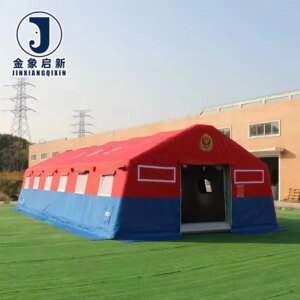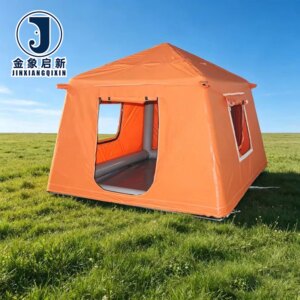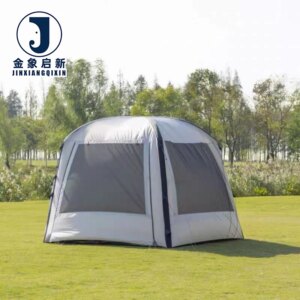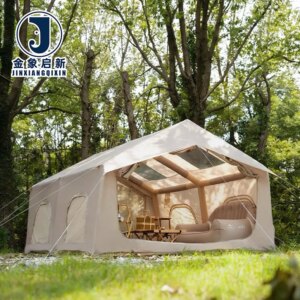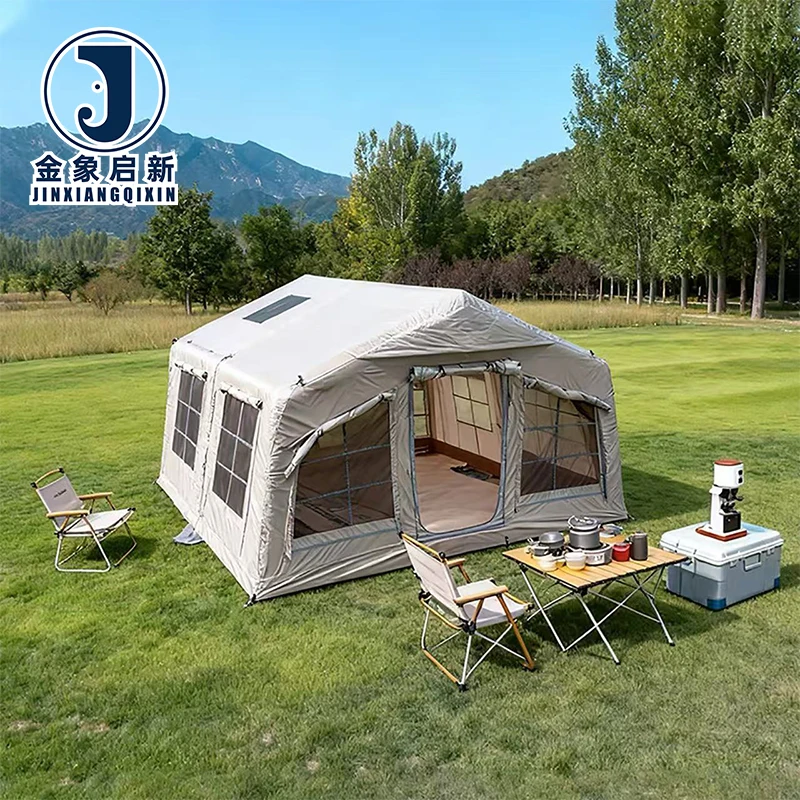
Custom PVC inflatable tent fabric engineered for transport-exposed outdoor structures — custom sizing eliminates on-site rework.
| Parameter | Value |
|---|---|
| Product Type | Inflatable Tent |
| Core Material | PVC tarpaulin |
| Key Performance | Waterproof, UV-resistant, tear-resistant, fire-retardant, anti-static |
| Customization Service | OEM & ODM (sample customization, pattern printing, material selection, product design) |
| Quality Control System | Strict full-process quality inspection with dedicated QA&QC staff on site |
| Standards | ISO9001, ISO14001, ISO45001, CE |
Application Suitability
| Application | Exposure & Requirement |
|---|---|
| Temporary Shelter for Construction Site Operations | Prolonged UV exposure, abrasion from site equipment, wind load, fire safety compliance |
| Outdoor Event Facilities (Festivals, Exhibitions) | Weather protection, crowd safety (fire-retardant), branding integration, frequent assembly/disassembly |
| Commercial Camping Grounds and Glamping Resorts | Aesthetic durability, guest safety, resistance to environmental stress, long-term waterproof integrity |
Why Generic Dimensions Fail On-Site When Deploying Inflatable Structures
Custom sizing eliminates on-site rework and ensures structural integrity.
When you source an Inflatable Tent Fabric for transport and outdoor cover that is cut to a generic size, it rarely fits the specific structural frame or trailer model it is intended to protect. This mismatch forces contractors to improvise with secondary fixings, which compromises the waterproof seal and places undue stress on the welded seams. In commercial glamping or event scenarios, a poorly fitted membrane can lead to air leakage, reducing the stability of the inflatable structure during high winds. [NEED_CITE: structural load distribution in tensioned fabric assemblies].
Engineered for Transport-Exposed and Temporary Applications
This Inflatable Tent Fabric for transport and outdoor cover is designed to withstand the mechanical stresses of inflation and deflation cycles. The PVC tarpaulin core provides the necessary tensile strength to maintain the structure’s shape when pressurized, while the coating formulation resists the micro-abrasions that occur when the fabric folds and unfolds. Whether used for a roadside temporary shelter or a remote expedition base, the material maintains its dimensional stability across varying temperatures.
Compliance and Safety in High-Risk Environments
For construction and mining applications, fire safety is a non-negotiable requirement. We offer this PVC inflatable tent fabric in fire-retardant grades — confirm the grade required for your market before specifying. The anti-static treatment options further reduce the risk of ignition in volatile environments, a critical factor for temporary storage units housing sensitive equipment or flammable materials. [NEED_CITE: fire safety standards for temporary structures in construction zones].
Material Architecture and Performance Drivers
The performance of this PVC tarpaulin is driven by the interplay between the base fabric’s denier and the coating weight. A higher density weave provides superior tear resistance, preventing a small puncture from propagating into a catastrophic failure. The coating process—whether knife-over-roll or dip-coating—determines the adhesion strength; high adhesion is vital for heat-welded seams, ensuring the joint is as strong as the fabric itself. Furthermore, the UV-resistant treatment is integrated into the coating to prevent polymer degradation, while the anti-static additives are dispersed evenly to ensure consistent surface resistivity across the entire membrane.
The Commercial Impact of Specification Mismatches
Selecting a fabric based solely on initial cost often leads to significant operational losses. If the material lacks adequate tear resistance, a minor snag during installation can render an entire inflatable unit unusable. Similarly, if the batch colour consistency varies between rolls, a resort operator may end up with a mismatched village of tents, damaging the brand’s premium positioning. Fire-retardant certifications that arrive after the product does can cause project delays and legal liabilities, especially when municipal inspectors require on-site documentation for public event structures. [NEED_CITE: cost analysis of material failure in temporary event infrastructure].
Why Procurement Teams Specify This Fabric
Jinan Jinxiang approaches Inflatable Tent Fabric for transport and outdoor cover as a technical component, not a commodity. Our 10-person R&D team handles the material selection and pattern printing to match your specific engineering drawings. With 3 full production lines and 36 sets of professional processing equipment, we maintain batch consistency across high-volume orders for glamping resorts. We provide 100% pre-shipment inspection, ensuring that the GSM and coating thickness match your purchase order exactly.
Documentation & Verification
- Material specification sheet stating base fabric, coating type and colour reference
- Test report for UV and flame-retardant grades where applicable
- Pre-shipment inspection record with 100% inspection before dispatch
- ISO and CE certificates with customs documentation support
Fabrication, Handling & Storage
- Heat welding parameters must be adjusted for the specific PVC tarpaulin coating thickness
- Reinforce high-stress areas like valve ports and tie-down points with additional layers
- Store rolls horizontally in a cool, dry environment to prevent permanent creasing
- Avoid dragging the fabric over abrasive surfaces during on-site installation
- Clean with mild, non-solvent detergents to preserve the UV-resistant top coat
Initiating a Technical Inquiry
To ensure we provide the correct material for your inflatable tent project, please share the operational environment and expected wind loads. Specify if your market requires a particular fire-retardant grade or anti-static certification. Indicate whether you need raw rolls or finished, heat-welded panels with custom pattern printing.
Frequently Asked Questions
Q: What fire-retardant or anti-static certifications can be supplied with the inflatable tent?
A: We supply test reports and certificates corresponding to the specific treatment applied to your batch. Because safety regulations vary by region, you must confirm the required grade for your local jurisdiction before ordering. We then align our production to meet that specific standard.
Q: Can dimensions and branding be fully customised for a project or resort rollout?
A: Yes, our OEM & ODM services include custom sizing and pattern printing. Our R&D team reviews your CAD files or design concepts to ensure the branding aligns with the structural seams and inflation valves. We produce a sample for your approval before mass production begins.
Q: What documentation accompanies each batch shipment?
A: Every shipment includes a packing list, material specification sheet, and relevant test reports. We also provide Certificates of Origin and customs support documents. For projects requiring compliance verification, we ensure the fire-retardant or UV test reports match the batch numbers on the rolls.
Q: How are samples handled before committing to a production order?
A: We develop samples within days for custom requirements. This allows you to test the material’s hand-feel, welding behaviour, and colour accuracy in your own facility. Once the sample is approved, we lock in the production parameters for the remainder of the order.
Q: What is the recommended storage and handling procedure to preserve tent material performance?
A: The PVC tarpaulin should be stored away from direct sunlight and extreme temperatures. Avoid placing heavy objects on top of the rolls, as this can cause permanent deformation. When handling, ensure the surface is free of sharp objects that could compromise the waterproof coating.