Deep Coating Process Control — nearly 30 years focused on PVC coated fabric gives us direct command over adhesion, coating weight, and seam integrity in every inflatable structure we produce.
Technical Specifications
| Parameter | Value |
|---|---|
| Product Type | PVC Inflatable Tent |
| Core Material | PVC Tarpaulin |
| Product Form | Extended Type, Single Layer Construction |
| Key Performance | Waterproof, Windproof, Quick Automatic Opening, 4-Season Design |
| Customization Service | OEM & ODM (sample customization, pattern printing) |
| Production Facility | 9,180 m² with 3 full production lines |
| Processing Equipment | 36 sets of professional equipment |
| R&D Team | 10 technicians |
| Quality Control | Full-process inspection with dedicated QA & QC staff |
| Certifications | ISO9001, ISO14001, ISO45001, CE |
Application Suitability
| Application | Exposure & Requirement |
|---|---|
| Emergency response command centers | Continuous occupancy, rapid deployment, all-weather shelter for personnel and communications equipment |
| Temporary storage for relief supplies | Moisture protection, wind resistance, secure enclosure in disaster zones with no existing infrastructure |
| Equipment maintenance shelters in disaster zones | Abrasion from tools and machinery, weather exposure during extended field repairs |
| Field workspace for engineering recovery teams | Year-round outdoor exposure, quick setup without heavy machinery, structural stability under wind load |
Why Welded Seams Fail Before the Fabric Does on Inflatable Shelters
Seam failure on a PVC Inflatable Tent for truck and transport cover applications almost always traces back to inconsistent heat input during welding, not the material itself.
Fleet operators and emergency procurement teams have encountered inflatable shelters that hold pressure during factory testing but develop slow leaks within weeks of field deployment. The failure concentrates at welded joints where the air bladder flexes under wind load or where the structure meets the ground anchor points. [NEED_CITE: ISO 1421 tensile and tear test methods for coated fabrics]. When the welding temperature or dwell time drifts outside the window that matches the coating formulation, the bond degrades under cyclic stress. This is why pre-shipment inflation testing matters more than a static pressure check.
Rapid Deployment Without Heavy Machinery
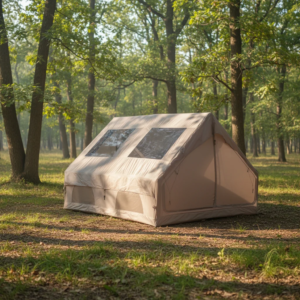
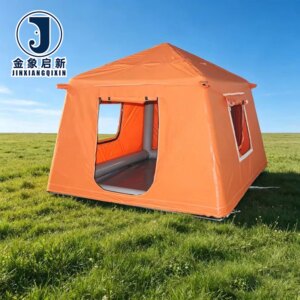
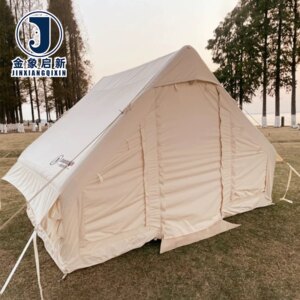
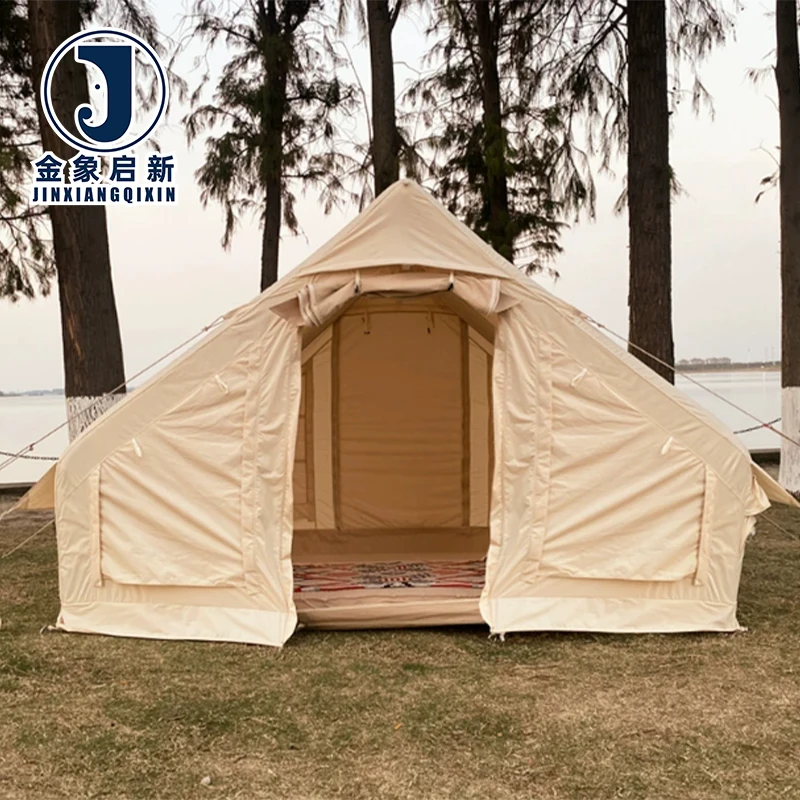
The quick automatic opening mechanism on this PVC inflatable disaster relief tent allows a small team to establish a weatherproof enclosure in time-critical scenarios. The extended type design maximizes usable interior volume relative to the packed footprint, which matters when transport capacity is limited. Fleet operators covering emergency logistics routes need a shelter that deploys without cranes or specialized inflation rigs. The single layer construction keeps the packed weight manageable while the PVC tarpaulin shell maintains waterproof and windproof performance through the initial inflation and continued air retention cycle.
Structural Stability Under Adverse Conditions
Wind resistance in an inflatable shelter depends on continuous internal pressure balanced against the tensile capacity of the PVC tarpaulin shell and its welded seams. [NEED_CITE: wind load testing for temporary inflatable structures]. The 4-season design addresses the temperature range where PVC coating transitions from flexible to brittle, ensuring the air bladder maintains pressure retention in cold environments without cracking at fold lines. Single layer construction reduces the number of weld lines compared to multi-layer designs, directly lowering the probability of seam-related air loss. This PVC Inflatable Tent for truck and transport cover scenarios performs reliably when conventional frame tents would require extended assembly time and heavier logistics support.
Reading the Material Beyond the Spec Sheet
GSM alone does not determine whether a PVC tarpaulin shell will hold air under sustained internal pressure. The base fabric denier and weave density establish the tensile floor, while the coating weight and adhesion method determine how well that base fabric translates into a sealed air bladder. A lighter base fabric with higher coating weight may pass a static pressure test but fail when the structure flexes under wind load, because the coating cracks at the fold points where the base fabric does not provide enough support. Knife-over-edge coating typically delivers stronger adhesion to the base fabric than lamination, which directly affects how well the welded seams resist peeling under cyclic pressure changes. The single layer construction on this inflatable shelter balances the PVC tarpaulin weight against the packed dimensions required for transport and storage. Available in flame retardant grades — confirm the grade required for your market before specifying.
The Cost of Skipping Inflation Testing Before Dispatch
Procurement teams that accept inflatable shelters without unit-by-unit inflation verification face two failure modes. The first is a slow leak at a welded seam that only manifests after hours of continuous operation, forcing field teams to locate and repair the leak under emergency conditions. The second is batch inconsistency where some units hold pressure within specification while others require continuous topping off, creating unpredictable maintenance burden across a fleet of shelters. [NEED_CITE: pre-shipment quality inspection protocols for inflatable structures]. Both failures trace back to insufficient process control during welding and the absence of a sustained pressure hold test that runs long enough to catch slow leaks.
What Nearly 30 Years of Coated Fabric Focus Brings to Inflatable Shelter Production
Three full production lines and 36 sets of professional processing equipment support the volume required for multi-unit emergency shelter orders without sacrificing per-unit inflation testing. The 10-person R&D team handles pattern printing, custom sizing, and sample development specific to inflatable structure geometry, not just flat sheet cutting. Dedicated QA and QC staff conduct inspection at every production stage, catching seam defects before the unit reaches final assembly. ISO9001, ISO14001, ISO45001, and CE certifications document the management systems behind consistent output across large batch runs. OEM and ODM customization extends beyond color selection into structural design modifications validated through sample production before full-scale manufacturing begins. This PVC Inflatable Tent for truck and transport cover deployment scenarios benefits directly from process knowledge accumulated across decades of PVC tarpaulin production.
Documentation & Verification
- Material specification sheet confirming PVC tarpaulin base fabric, coating type, and stated weight per unit
- Batch-specific quality inspection report documenting inflation test results and seam integrity checks
- ISO9001, ISO14001, ISO45001, and CE certification documentation available with each shipment
- Pre-shipment inflation and air retention test record for each individual tent unit
- Customization parameter confirmation covering dimensions, pattern printing, and design modifications
Fabrication, Handling & Storage
- Heat welding parameters must match the specific PVC tarpaulin coating formulation to prevent seam peeling under internal pressure
- Store packed units in dry conditions away from direct sunlight to preserve PVC coating flexibility across seasons
- Inspect welded seams visually before each deployment cycle, focusing on anchor points and bladder junctions
- Avoid sharp folds across the same line repeatedly to prevent crease-induced coating fatigue on the single layer shell
- Clean the PVC tarpaulin surface with mild detergent only, as solvent-based cleaners degrade coating adhesion at seams
What We Need to Start Your Sample
Provide the intended deployment scenario including typical wind exposure and temperature range so we can recommend the appropriate PVC tarpaulin specification for your inflatable shelter. Confirm whether your market requires a specific flame retardant grade or other compliance documentation. Let us know the unit dimensions, quantity range, and whether pattern printing or branding is required on the outer shell. We will develop a sample for your performance validation before moving to full production.
Frequently Asked Questions
Q: What customization options are available for dimensions, printing, and design modifications?
A: Our R&D team supports OEM and ODM customization including custom dimensions, pattern printing on the PVC tarpaulin shell, and structural design modifications to the extended type form. Sample production is available to validate performance and fit before full-scale manufacturing. Confirm your specific requirements and target market compliance needs during the inquiry stage.
Q: Which certifications and test reports are provided with each shipment?
A: Each order ships with ISO9001, ISO14001, ISO45001, and CE certification documentation alongside a batch-specific quality inspection report. The inspection report covers inflation test results, air retention data, and seam integrity checks. Material specification sheets detailing the PVC tarpaulin composition are available on request for compliance verification.
Q: Is sample production available before committing to full-scale manufacturing?
A: Yes, sample development is standard practice for custom inflatable tent orders. The sample allows you to verify inflation performance, air retention, welded seam quality, and overall dimensions under your actual deployment conditions before we proceed to full batch production.
Q: What is the typical production lead time for customized inflatable tent orders?
A: Lead times depend on the scope of customization, order volume, and current production scheduling across our three full production lines. Custom dimensions and pattern printing add time for sample approval before manufacturing begins. Confirm your required delivery window during the inquiry stage for an accurate schedule.
Q: How should the tent be stored and handled to maintain material integrity?
A: Store packed PVC inflatable tent units in a dry, shaded environment to prevent UV degradation of the PVC tarpaulin coating during storage. Avoid placing heavy objects on packed units to prevent permanent creasing. Inspect seams and surfaces before each deployment, and clean only with mild detergent to preserve coating adhesion.