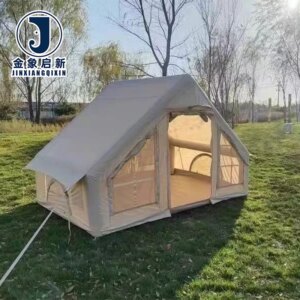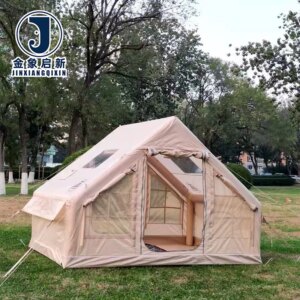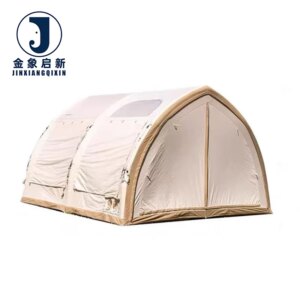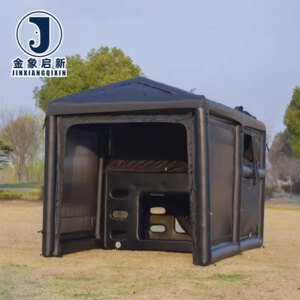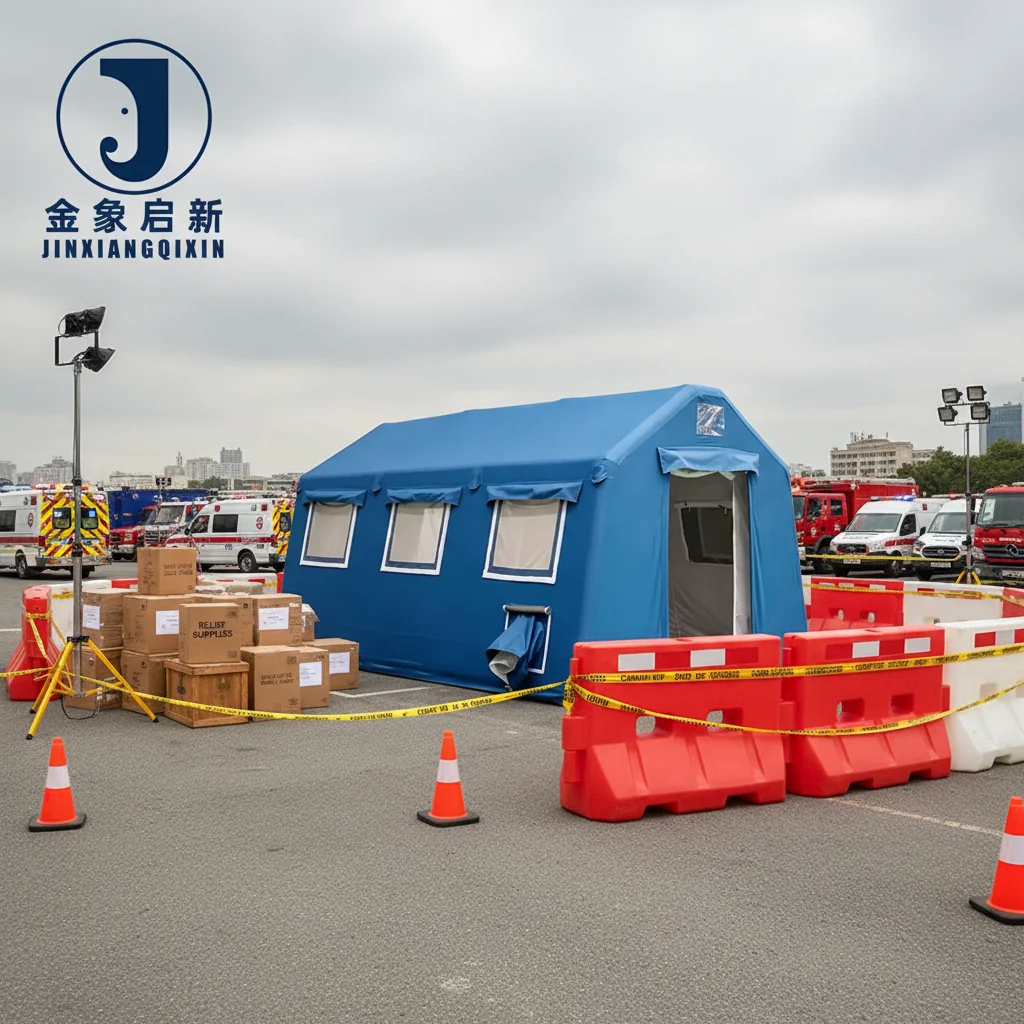
Precision-Coated PVC Fabric for Inflatable Shelters — Every batch of PVC inflatable tent fabric undergoes 100% pre-shipment inspection, with airtightness validated through a 24-hour inflation pressure test before dispatch.
Technical Specifications
| Parameter | Value |
|---|---|
| Product Type | Inflatable Tent |
| Core Material | PVC Tarpaulin |
| Waterproof Rating | >3000mm |
| Season Rating | 4-Season |
| Opening Mechanism | Quick Automatic Opening |
| Structure | Single-layer PVC construction |
| Product Form | Family Shelter |
| Customization Options | Material thickness adjustments, custom color matching, logo printing, size modifications, pattern printing |
| Flame Retardant | Available in flame retardant grades — confirm the grade required for your market |
| UV Treatment | Available with UV treatment — request test basis for your compliance standard |
| Anti-Static | Available on request — confirm requirements for your application |
| Certifications | ISO9001, ISO14001, ISO45001, CE |
Application Suitability
| Application | Exposure & Requirement |
|---|---|
| Mobile field stations | Constant inflation pressure, wind loading, repeated deployment cycles, abrasion at ground contact points |
| Temporary event shelters | High foot traffic, rapid setup and teardown, weather exposure across seasons, branding visibility |
| Industrial site accommodations | Dust, chemical exposure, temperature extremes, structural integrity under continuous occupation |
| Remote project locations | Extended deployment without maintenance access, UV exposure, precipitation, transport and storage stress |
| Equipment storage shelters | Moisture ingress prevention, internal climate stability, resistance to accidental impact and puncture |
Why Seams Fail Before the Fabric Does in Inflatable Structures
Seam integrity — not base fabric strength — determines whether an inflatable shelter holds pressure when the load flexes at its stress points.
When an inflatable tent fabric is pressurized, the highest stress concentrates at welded joints and curvature transitions. The base PVC tarpaulin may hold >3000mm of water head without issue, but if the heat-sealed seam was not calibrated to the specific coating weight and thickness of that batch, the bond fails under inflation pressure. We see this repeatedly: the fabric itself remains intact while the weld line delaminates at the flex zone. [NEED_CITE: heat sealing parameters for PVC coated fabrics per manufacturer guidelines]
For buyers sourcing PVC inflatable tent fabric for commercial or industrial shelters, the specification conversation must go beyond material weight alone.
Coating Consistency Across the Roll
A single-layer PVC construction means the coating carries both the waterproof barrier and the structural bonding surface for heat-sealed seams. As an Inflatable Tent Fabric manufacturer, we control coating weight at every production stage on three dedicated lines. Batch-to-batch consistency in coating adhesion directly determines whether a seam welded at one end of the roll behaves identically to one welded at the other. Inconsistent coating means variable seam strength, which in inflatable structures translates to unpredictable pressure loss. [NEED_CITE: coating adhesion test methods for PVC tarpaulin per ISO standards]
Pressure Retention and the 24-Hour Validation Protocol
Every inflatable unit we produce undergoes a 24-hour inflation and pressure test before shipment. This is not a sample-check procedure — it applies to every unit. The test verifies airtightness at all heat-sealed seams and validates that the single-layer PVC construction maintains structural geometry under sustained internal pressure. For buyers deploying shelters in remote project locations where repair access is limited, this pre-shipment validation eliminates the risk of discovering seam leaks on site.
Reading the Specification Sheet Beyond GSM
The >3000mm waterproof rating indicates the hydrostatic head the PVC tarpaulin coating can resist before water penetrates the fabric face. However, in inflatable tent applications, waterproof performance is only one requirement. The 4-season rating reflects the material’s ability to maintain flexibility and coating adhesion across temperature ranges encountered in year-round deployment — from cold-weather stiffness to heat-induced softening. Material thickness adjustments available through our customization process allow buyers to match the PVC weight to their specific climate and pressure requirements. The quick automatic opening mechanism depends on the fabric maintaining sufficient rigidity to hold tube geometry while remaining pliable enough for rapid inflation.
The Cost of Underspecifying Your Inflatable Tent Fabric
Selecting a lighter PVC tarpaulin to reduce material cost creates downstream failures that are expensive to remedy. Coating that is too thin for the intended inflation pressure leads to micro-leaks at seam junctions, discovered only after the shelter is deployed and pressurized in the field. [NEED_CITE: field failure analysis of inflatable structures under sustained pressure] A shelter that loses pressure gradually requires constant re-inflation, consumes more energy from blowers, and eventually fails at a seam under wind loading — a failure that could have been prevented by matching material thickness to the design pressure from the start.
Why Buyers Source This Inflatable Tent Fabric Here
Our 10-person R&D team handles material thickness adjustments, custom color matching, and pattern printing in-house, eliminating the delay of external printers. Three full production lines and 36 sets of professional processing equipment support bulk orders with consistent coating weight across every roll. The 24-hour inflation pressure test on every unit means you receive verified airtight shelters, not units that depend on your own QA to catch seam failures. Pre-production samples are developed within days, allowing you to validate material feel, seam behavior, and color accuracy before committing to bulk production. Every shipment includes a batch-specific quality inspection report covering waterproof performance and structural integrity.
Documentation & Verification
- Material specification sheet confirming PVC tarpaulin coating weight and base fabric construction per roll
- Batch-specific quality inspection report covering waterproof rating verification and seam integrity
- Pre-production sample delivered for material validation before bulk production commitment
- ISO9001, ISO14001, ISO45001, and CE certificates included in documentation package
- Packing list with roll-level traceability and certificate of origin for customs clearance
Fabrication, Handling & Storage
- Heat-sealed seams calibrated to the specific PVC coating thickness of each production batch
- Custom size modifications cut to exact dimensions to eliminate field trimming and material waste
- Single-layer PVC construction stored flat or on core rolls to prevent permanent creasing at fold lines
- Cold-weather deployment requires gradual inflation to allow PVC tarpaulin to reach operating flexibility
- Logo printing and pattern printing applied with coating-compatible inks verified for adhesion to PVC surface
Preparing Your Inflatable Tent Fabric Inquiry
To move from inquiry to sample, provide your deployment environment, expected inflation pressure range, and target market compliance requirements. Specify the color, dimensions, and any branding or pattern printing needed across the shelter surface. Indicate whether you require finished inflatable units or PVC tarpaulin fabric rolls for your own fabrication line. Confirm if flame retardant or anti-static grades are mandated by your site safety regulations.
Frequently Asked Questions
Q: How is material thickness and waterproof performance verified before shipment?
A: Every production batch undergoes coating weight verification and a >3000mm waterproof rating check documented in a batch-specific quality inspection report. Additionally, completed inflatable units are subjected to a 24-hour inflation and pressure test to confirm airtightness at all heat-sealed seams. This report ships with your order.
Q: What customization options are available for inflatable tent fabric?
A: Our in-house R&D team handles material thickness adjustments, custom color matching, size modifications, logo printing, and pattern printing. Pre-production samples are developed for client validation before bulk commitment, ensuring the PVC tarpaulin specification matches your deployment requirements exactly.
Q: How are welded seams tested to prevent failure under inflation pressure?
A: Heat-sealed seams are calibrated to the specific coating weight of each batch and validated through a 24-hour continuous inflation pressure test on every unit. This process identifies seam weakness at flex points and curvature transitions before the shelter leaves the production facility.
Q: What certifications ship with each inflatable tent order?
A: Each order includes ISO9001, ISO14001, ISO45001, and CE certificates alongside the material specification sheet, batch inspection report, packing list, and certificate of origin. Flame retardant grade documentation is available on request — confirm the specific standard required for your market before ordering.
Q: What is the sample and production lead time for custom inflatable tents?
A: Standard samples are developed within 7–10 working days, while customized samples with specific thickness, color, or printing requirements take 10–15 working days. Standard production orders are completed in 15–20 working days, with pre-production sample approval required before bulk fabrication begins.