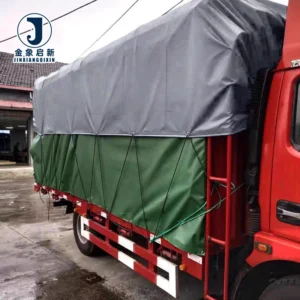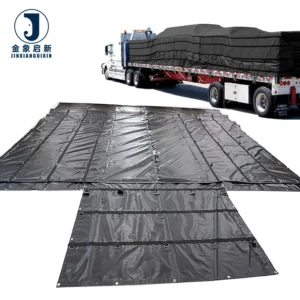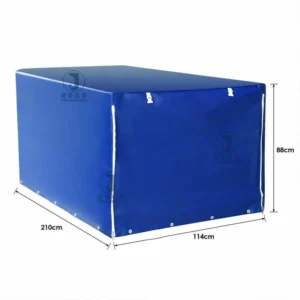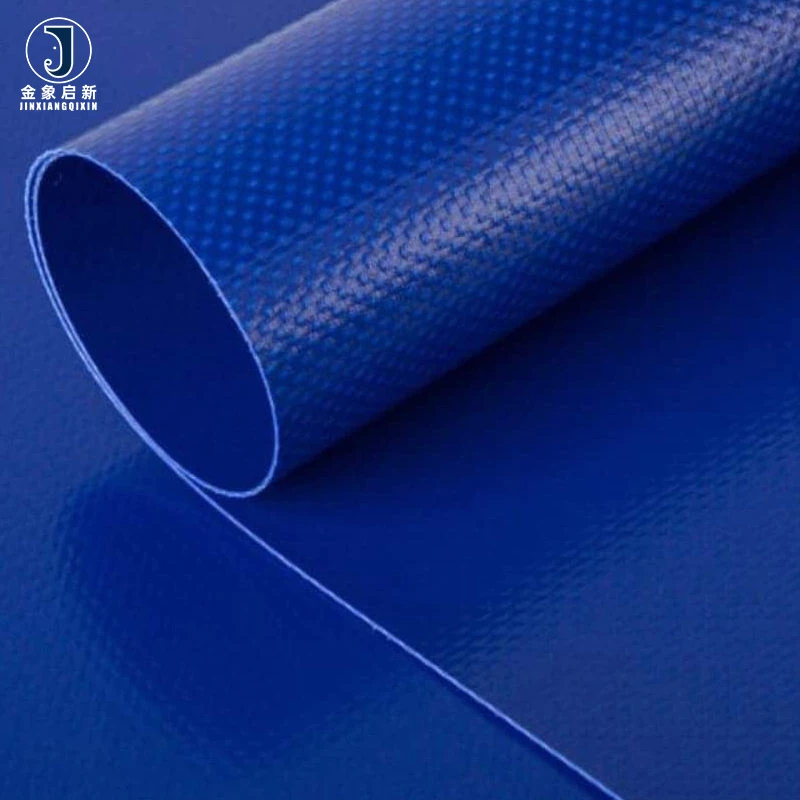
Precision patterned for your fleet — Covers are cut to exact vehicle dimensions from hot-melt PVC coated polyester, eliminating the fitment gaps that cause flapping and abrasion on the road.
Technical Specifications
| Parameter | Value |
|---|---|
| Product Type | PVC Coated Tarpaulin |
| Base Fabric | High-strength polyester mesh fabric |
| Coating Material | PVC |
| Coating Technology | Laminated technology & Hot-melt Coating technology |
| Weight (GSM) | 350gsm / 420gsm / 500gsm / 550gsm / 600gsm / 750gsm |
| Total Thickness | 0.32mm / 0.35mm / 0.4mm / 0.45mm / 0.5mm / 0.65mm |
| Width | 2m / 2.1m |
| Roll Length | 75m (2m width) / 50m (2.1m width) |
| Color Options | Blue / Red / Yellow / Light blue / Grey (Customized) |
| Special Treatments Available | Flame Retardant; Anti-Static; Anti-cold; Anti-mildew; 3P Etc. |
| Key Features | Cold Crack Resistance, Anti-Mildew, Anti-Static treatment, Waterproof, Sunproof, Best color fastness |
| Standards | ISO, CE |
Application Suitability
| Application | Exposure & Requirement |
|---|---|
| Truck side curtains | Constant flexing at load points, road abrasion, tie-down stress, wind buffeting |
| Trailer top covers | Direct UV exposure, pooling water, thermal expansion and contraction |
| Flatbed load protection | Heavy cargo abrasion, multi-point tie-down tension, weather during transit |
| Transport equipment builds | Side curtain fabric requiring consistent roll-to-roll color and weld strength |
| Fleet replacement covers | Model-specific fitment matching original equipment dimensions |
Why a Generic PVC Truck Cover Fails Where Your Load Flexes Most
The seam fails before the fabric does because the coating adhesion was never matched to the flex cycle.
When a PVC truck cover is cut to a standard size rather than your trailer’s exact dimensions, the excess material flaps at highway speed. That flapping concentrates stress at the welded seams. Hot-melt coating technology delivers stronger coating-to-yarn adhesion than basic lamination, which means the weld line holds through repeated flex cycles. [NEED_CITE: tensile and tear test methods for coated fabrics per ISO 1421]
Fleet operators who specify a PVC truck Cover for fleet use without confirming the coating method often see seam delamination within the first season. The fabric itself remains intact, but the bonded joint separates where the load shifts most — typically at the rear third of a curtain-sided trailer. This is not a material failure. It is a process specification failure.
Pattern-to-Vehicle Fitment Eliminates the Flap Zone
A PVC truck cover that matches your trailer model’s exact panel dimensions sits flush against the frame. There is no loose fabric to catch crosswinds or vibrate against tie-down buckles. Our R&D team develops each cover pattern against your vehicle drawings before production begins. Sample approval confirms the fit before the full run is cut and welded. This step prevents the most common reason fleet operators reject a batch upon delivery — a cover that is technically the right size but functionally wrong for the trailer geometry.
Coating Adhesion Determines Weld Life at Stress Points
The hot-melt coating process forces PVC into the polyester mesh under heat and pressure, creating a mechanical bond between coating and yarn. [NEED_CITE: coating adhesion test methods for PVC coated polyester fabrics] When the fabric is heat-welded at seams and eyelet reinforcements, this bond resists peeling under load flex. Laminated technology is also available for applications where cost-per-square-meter matters more than peak weld strength. The choice between the two depends on where the cover sits in your fleet’s rotation — daily long-haul curtains demand the hot-melt process, while occasional-use flatbed covers may suit the laminated option.
Reading GSM in Context with Base Fabric Density
A 650 GSM PVC truck cover is not automatically stronger than a 550 GSM one. The weight comes from both the polyester base fabric and the PVC coating applied to it. A heavier coating on a low-denier mesh adds thickness without proportional gains in tear resistance. Conversely, a tightly woven high-tenacity polyester base at a moderate GSM can outperform a heavier fabric in tensile tests. Our specification sheets break down the base fabric weight and coating weight separately, so you can match the construction to the actual mechanical demands of your trailer type rather than selecting on GSM alone.
What Happens When Specification Mismatches Reach the Fleet
When GSM on the quotation does not match GSM on arrival, the cover is lighter than the fleet specification requires. Thinner material at tie-down points abrades through within months instead of seasons. When color varies between rolls in the same order, a fleet running twenty identical trailers ends up with visible shade differences across the lineup. [NEED_CITE: color fastness and batch consistency standards for coated fabrics] Welded seams that were set with incorrect temperature or dwell time delaminate at the flex zone, leaving the cargo exposed mid-route. These are not edge cases. They are the direct result of skipping verification steps between order confirmation and dispatch.
Why Fleet Operators Source This PVC Truck Cover Here
Three full production lines with dedicated equipment for hot-melt and laminated coating allow us to hold GSM tolerances across a full container load of rolls. The 10-person R&D team handles pattern development for your specific trailer model, producing samples within days rather than weeks. Every roll undergoes 100% pre-shipment inspection with results recorded against your purchase order specification. Custom widths and colors are produced on dedicated lines, preventing the color drift that occurs when multiple grades share the same coating head. Documentation travels with the shipment — not as an afterthought, but as part of the dispatch package.
Documentation & Verification
- Material specification sheet stating exact GSM, base fabric denier, and coating weight for your order
- Color reference confirmed against approved sample before production begins
- Pre-shipment inspection record included with roll packing list
- Test reports for available flame retardant and anti-static treatments upon request
- Certificate of origin and customs documentation prepared per destination market
Fabrication, Handling & Storage
- Heat-weld seams at manufacturer-recommended temperature for the specific hot-melt or laminated coating grade
- Reinforce eyelet zones with additional PVC patches before punching to distribute tie-down load
- Store rolls upright on end caps to prevent flat-spot creasing across the 2m or 2.1m width
- Allow rolls to acclimate to ambient temperature before unrolling in cold conditions to avoid coating stiffness
- Clean with mild detergent only — solvent-based cleaners can degrade the PVC surface finish
What We Need to Specify Your PVC Truck Cover Correctly
Provide your trailer model designation and panel dimensions, or share drawings if you are a transport equipment builder. Tell us the coating technology you prefer and the GSM grade that matches your fleet specification. If your destination market requires specific fire classification or anti-static certification, confirm the standard name so we can verify treatment availability before sampling. Let us know whether you need finished covers or roll stock for your own fabrication line.
Frequently Asked Questions
Q: How do you ensure the PVC truck cover fits our specific trailer model?
A: We develop each cover pattern from your vehicle drawings or physical measurements before production. A sample is produced and sent for your approval to confirm fitment around frame rails, tie-down points, and curtain runners. Only after sample sign-off does the full batch enter cutting and welding.
Q: How do you verify GSM matches what was quoted when the material arrives?
A: Every roll is weighed and measured during our pre-shipment inspection. The inspection record states the actual GSM and coating weight alongside the quoted specification. This document is included in your dispatch package, so you can cross-reference on arrival without arranging independent testing.
Q: What reinforcement options exist for high-stress tie-down and flex zones?
A: We apply additional PVC patches at eyelet zones and along hem lines where tie-down straps concentrate load. The hot-melt coating process ensures these patches bond at the yarn level, not just the surface. Reinforcement layout is confirmed during the pattern approval stage.
Q: How do you maintain color consistency across a fleet order of multiple covers?
A: All rolls for a single fleet order are coated in one production run on a dedicated line. Color reference is locked to the approved sample. The pre-shipment inspection checks shade uniformity roll-to-roll before packing, preventing the visible variation that appears when covers from different batches are installed side by side.