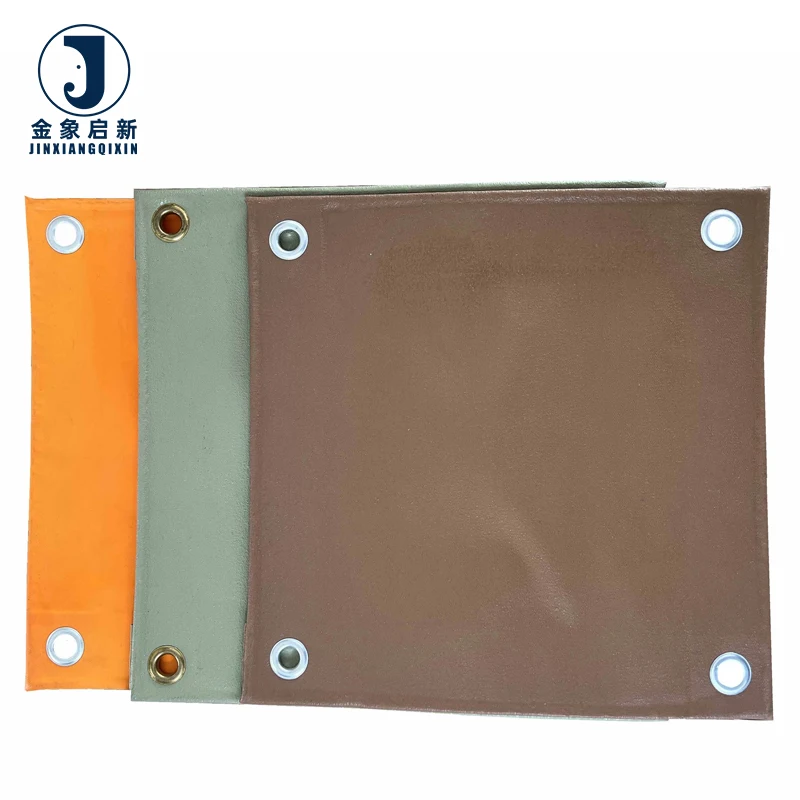
Proven Process Control — Nearly 30 years of PVC coating expertise delivers verifiable GSM consistency and seam integrity on every truck and trailer cover we produce.
Technical Specifications
| Parameter | Value |
|---|---|
| Product Type | PVC Coated Tarpaulin |
| Coating Material | PVC |
| Weather Resistance | Good (1-3 years outdoor life — verify against manufacturer catalog) |
| Anti-UV Treatment | Available (grade not stated — confirm requirement for your market) |
| Flame Retardant Grade | Available (grade not stated — confirm requirement for your market) |
| Anti-Static | Available (standard not stated — confirm requirement for your market) |
| Anti-Cold Treatment | Available |
| Anti-Mildew Treatment | Available |
| Certifications | ISO, CE |
| Custom Sizing | Cut to specific truck and trailer model dimensions |
Application Suitability
| Application | Exposure & Requirement |
|---|---|
| Truck and trailer load covering | Constant road vibration, weather exposure, abrasion at flex points, tie-down stress |
| Side curtain fabric for transport equipment | Repeated flexing and folding, wind load, UV and rain exposure, weld seam durability |
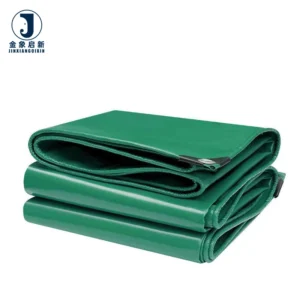
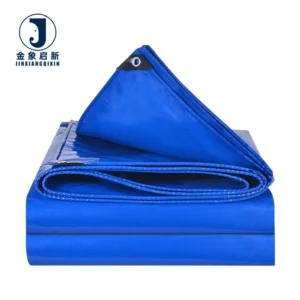
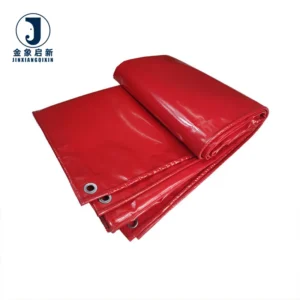
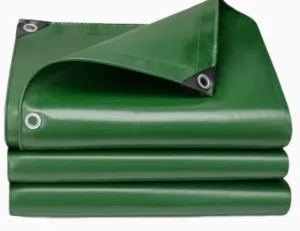
| Fleet-wide standardised covers | Cross-vehicle fitment accuracy, colour consistency across mixed-model orders, long-term weathering |
| Heavy equipment transport | Puncture risk from sharp load edges, high tie-down tension, extended outdoor staging |
Why Generic Sizing Undermines PVC Coated Tarpaulin Performance on the Road
A cover that fits the model protects the load; a cover that almost fits creates failure points.
When a PVC coated tarpaulin for truck and transport is cut to a generic dimension rather than a specific trailer model, the misalignment shows up immediately. Eyelets sit off-centre from the tie-down rails, forcing the fabric to stretch unevenly. Hems that should lie flat against the trailer deck instead pull away, letting wind and water underneath. The fabric takes stress in places it was not designed to, and seams open within weeks. Fleet operators replacing covers every few months often blame the material, when the root cause is a sizing error that was never corrected before production [NEED_CITE: common causes of premature tarpaulin failure in fleet operations].
Model-Specific Fitment Eliminates the Most Common Cover Failures
Every trailer model has a different deck height, side rail profile, and tie-down point layout. A PVC coated tarpaulin for truck and transport must be cut and hemmed against those exact dimensions. When the eyelet spacing matches the trailer’s anchor points, the cover tensions evenly and the load stays sealed. This precision is what separates a cover that lasts through years of daily use from one that needs patching after the first long haul.
Reinforcing Seams Where the Load Flexes Most
The highest stress on any truck cover occurs where the load shifts and the fabric bends — typically over the rear axle and at the tailgate edge. Welded seams in these zones must carry forces that would separate a standard join. Our production process places reinforced welds at these engineered stress zones rather than relying on uniform seam weight across the entire panel. This targeted reinforcement keeps the seam intact longer than the surrounding fabric, which is the correct failure sequence [NEED_CITE: weld seam stress distribution in flexible transport covers].
Reading Between the GSM and the Base Fabric
GSM tells you the total weight of coating and base fabric combined, but it does not tell you how that weight is distributed. A PVC coated tarpaulin can reach a given GSM through heavy coating on a light base cloth or through lighter coating on a dense woven scrim. The first gives you stiffness and surface protection; the second gives you tensile and tear resistance. For truck and trailer covers that face tie-down tension and road vibration, base fabric denier and weave density matter as much as the coating weight. Specifying GSM without specifying base fabric leaves half the performance picture undefined. The interplay between coating adhesion and scrim construction determines whether the material holds together at the weld line or delaminates under cyclic loading.
The Real Cost of Underspecified Transport Covers
When a fleet orders covers based on price per square metre without verifying the GSM on arrival, the lighter material may pass visual inspection but fail under operational stress. Flame retardant claims unsupported by test reports surface only when a site inspector asks for documentation — and the shipment is rejected. Colour variation between rolls in the same order becomes visible the moment two covers are installed on adjacent trailers, forcing a full replacement to maintain fleet appearance. These are not material defects; they are specification gaps that could have been closed before production started [NEED_CITE: financial impact of specification mismatches in bulk fabric procurement].
Why Procurement Teams Consolidate Their Transport Cover Supply Here
Three full production lines and 36 sets of professional equipment mean your truck cover order moves through cutting, welding, and inspection without queueing behind unrelated product runs. Our 10-person R&D team develops custom sizing and pattern layouts from your trailer model drawings, confirming fitment before production begins. Dedicated QA/QC runs at every stage, with 100% pre-shipment inspection verifying GSM, colour reference, and seam integrity against your specification sheet. Samples for custom dimensions and treatment options are developed within days so you can validate fit and performance before committing to the full order. Documentation arrives with the shipment: material specification sheet, test reports for any claimed treatments, ISO and CE certificates, and a pre-shipment inspection record that ties each roll or finished cover back to the original quotation.
Documentation & Verification
- Material specification sheet stating GSM, base fabric denier, coating weight, and colour reference for every cover produced
- Test reports for flame retardant and anti-static grades supplied when those treatments are specified in the order
- Pre-shipment inspection record confirming custom dimensions match the stated trailer model before dispatch
- Roll packing list with individual cover identification tied to the purchase order
- Certificate of origin and customs documentation included for international fleet procurement
Fabrication, Handling & Storage
- Weld temperature and dwell time adjusted to the specific PVC coating weight for consistent seam peel strength
- Eyelet placement confirmed against trailer model tie-down drawings before hem folding and welding
- Finished covers folded with interleaving film to prevent coating adhesion between layers during transit
- Anti-cold treated covers remain flexible for installation in sub-zero staging yards without cracking at fold lines
- Anti-mildew treatment prevents storage degradation when spare covers are held in humid depot conditions
What We Need to Quote Your Fleet Cover Accurately
Provide the exact trailer make, model, and year for each vehicle in the fleet, along with the number of covers required per model. Confirm whether your operating region mandates a specific flame retardant grade or anti-static standard so we can match the correct treatment and supply the corresponding test documentation. Specify the colour reference from a standard system or provide a physical sample for matching, and indicate whether you need finished covers with eyelets and hems or roll stock for in-house fabrication.
Frequently Asked Questions
Q: How do I verify the GSM on arrival matches what was quoted?
A: Request the material specification sheet that accompanies your shipment. It states the quoted GSM, base fabric denier, and coating weight. Weigh a measured sample on arrival using a calibrated scale and compare against the stated value. Any discrepancy should be flagged before installation so that a replacement can be processed while the order documentation is current.
Q: What test reports come with flame retardant or anti-static covers?
A: When flame retardant or anti-static treatment is specified in your order, we supply the corresponding test report with the shipment. The report identifies the grade or standard tested against. Confirm the specific grade your fleet depot or customer site requires before placing the order so the correct treatment is applied and documented.
Q: Can eyelet placement and hem reinforcement be customised to my trailer?
A: Yes. We work from your trailer model drawings to position eyelets at your tie-down points and reinforce hems at high-stress zones. Provide the rail profile, anchor spacing, and any corner radius details so the cover fits without modification on arrival.
Q: How is colour consistency maintained across multiple covers in one order?
A: All covers in a single production run are coated from the same batch of PVC compound, with colour checked against the reference standard at the coating stage. The pre-shipment inspection record confirms colour uniformity across the entire order before dispatch.
Q: What is the typical lead time for a custom-fit truck cover order?
A: Lead time depends on order volume and the complexity of custom sizing across your fleet mix. After sample approval, standard custom orders move through production, inspection, and packing within typical multi-week timeframes. Confirm your required delivery date at the quotation stage so we can schedule accordingly.