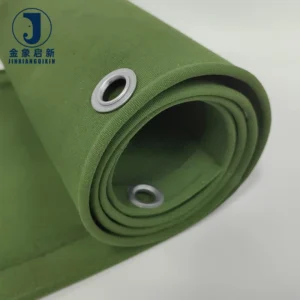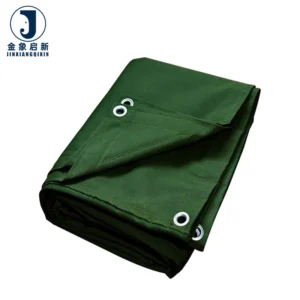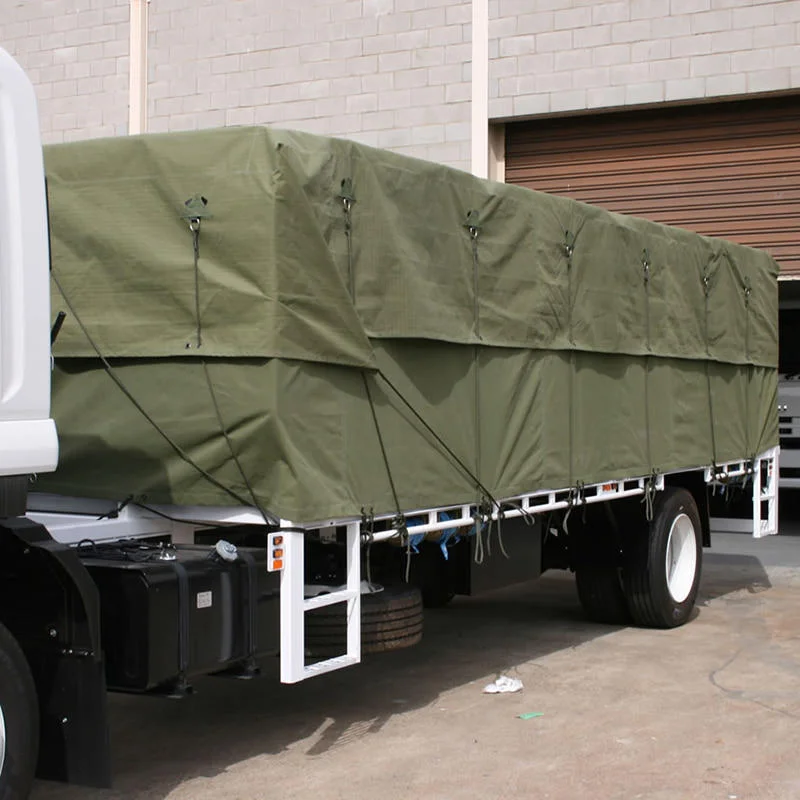
Coating adhesion control — Every roll of PVC tarpaulin truck cover undergoes in-process QA at the coating stage to ensure the laminated or hot-melt bond between PVC and polyester base holds under the flexing a trailer demands.
Technical Specifications
| Parameter | Value |
|---|---|
| Product Type | PVC Lorry Tarpaulin Truck Cover |
| Base Fabric | High-strength polyester mesh fabric |
| Coating Material | PVC |
| Weight (GSM) | 350gsm, 420gsm, 500gsm, 550gsm, 600gsm, 750gsm (confirm grade for your application) |
| Total Thickness | 0.32mm, 0.35mm, 0.4mm, 0.45mm, 0.5mm, 0.65mm |
| Coating Method | Laminated technology & Hot-melt Coating technology |
| Roll Width | 2m, 2.1m |
| Roll Length | 75m (for 2m width), 50m (for 2.1m width) |
| Color Options | Blue, Red, Yellow, Light blue, Grey (Customized) |
| Anti-Mildew | Yes (grade not stated — confirm requirement) |
| Anti-Static | Treatment available (standard not stated — confirm for your site) |
| Waterproof | Yes (rating not stated) |
| UV Treatment | Sunproof treatment applied (test basis not stated — request report) |
| Cold Crack Resistance | Yes |
| Color Fastness | Best color fastness claimed (grade not stated) |
| Finish Product Size | Custom items as per customer’s needs or sold by inventory |
| Printing Option | Custom printing of brand accepted |
| Standards | ISO, CE |
Application Suitability
| Application | Exposure & Requirement |
|---|---|
| Truck and trailer side curtains | Constant flexing at load shift points, road debris abrasion, wind-driven rain, UV from daily outdoor parking |
| Cargo ship and container covers | Salt-laden atmosphere, sustained UV, pooling water on horizontal surfaces, tie-down tension at hems |
| Truck awning and transport fleet covers | Repeated deployment and stowage cycles, thermal expansion across seasons, fuel and grease splash at loading docks |
| Tent cover and temporary site shelters | Wind uplift load on seams, prolonged UV, handling abrasion during erect and strike |
Why Stated Weight Does Not Guarantee a Working PVC Tarpaulin Truck Cover
GSM tells you how much material is on the roll — the coating method and base fabric construction tell you whether it will survive the trailer.
Fleet operators routinely receive covers that match the quoted GSM on the scale yet delaminate or tear within the first season. The reason is that weight alone says nothing about the adhesion between the PVC coating and the polyester mesh, the denier of the yarns carrying the tensile load, or whether the co*NEED_CITE: tensile and tear test methods for coated fabrics per ISO 1421]. A lighter fabric with hot-melt coating driven into the mesh can outlast a heavier laminated fabric when the trailer flexes through cornering and braking. Specifying a PVC tarpaulin truck cover aftermarket supplier that verifies both GSM and coating adhesion at the pre-shipment stage removes the guesswork that leads to early cover failure.
Covering the Moving Load: Where the PVC Tarpaulin Truck Cover Actually Fails
The highest stress on any truck cover is not the centre panel — it is the flex zone where the fabric bends over the trailer frame or rubs against the load during transit. Laminated and hot-melt coating technologies behave differently at these points. Hot-melt coating penetrates the polyester mesh, locking the PVC into the yarn structure and giving the welded seam something solid to bond to when the fabric is folded and heat-sealed. This is why a PVC tarpaulin truck cover built with hot-melt coating resists delamination at the hem and eyelet line far longer than a surface-laminated equivalent under identical route conditions.
What Fleet Operators Need from Roll-to-Roll Consistency
When a transport fleet orders a dozen covers for mixed trailer models, colour variation between rolls is immediately visible once the covers are installed side by side at the depot. Batch consistency in both pigment and coating thickness is a production control issue, not a material issue. The 36 sets of professional equipment on site allow dedicated line allocation per order, so the same coating head and colour batch run the full quantity without mid-run changeover [NEED_CITE: coating weight consistency across production runs for PVC tarpaulin]. This matters especially when a fleet standardises on a single colour for corporate identity and the covers must match across vehicles parked in a row.
Reading the Spec Sheet: What GSM, Thickness and Coating Method Mean Together
GSM and thickness are related but not interchangeable. A 600gsm fabric at 0.5mm thickness indicates a dense base fabric carrying more of the weight, which translates to higher tensile and tear strength from the yarns themselves. A 600gsm fabric at 0.65mm thickness indicates a heavier coating layer, which improves waterproofing and abrasion resistance but adds stiffness that works against the fabric at flex points. The coating method — laminated versus hot-melt — determines whether that coating is a surface film or an integrated part of the mesh. Hot-melt coating at a given GSM will typically show higher peel strength at the weld line because the PVC has bonded through the weave rather than sitting on top of it. For truck side curtain applications where the fabric flexes thousands of times per journey, peel strength at the weld matters more than tensile strength at the centre panel.
The Hidden Cost of a Cover Cut to the Wrong Size
Generic off-the-shelf tarpaulin sizes force the installer to fold excess material or leave gaps at the trailer edges. Both create problems: folded material traps water and accelerates mildew, while gaps expose cargo to rain and road spray. Worse, the tie-down points end up in the wrong position relative to the trailer hooks, putting uneven tension on the fabric and pulling the eyelets through the hem within weeks. Covers cut and welded to the specific trailer model eliminate both problems because the eyelet spacing, hem depth and corner cuts match the vehicle’s tie-down geometry [NEED_CITE: tie-down load distribution on fitted truck covers versus generic tarps].
What Production Capability Means for Your Order
Three full production lines running in parallel mean your PVC tarpaulin truck cover order does not queue behind unrelated products. The 10-person R&D team handles sample development for custom sizing and vehicle model fitment, producing samples within days so you can confirm dimensions and fabric grade before bulk production begins. Dedicated QA/QC runs at every production stage — base fabric inspection, coating weight check, colour matching, weld strength verification — with a full pre-shipment inspection record generated before any roll leaves the facility. Custom width, colour and print orders carry the same inspection rigour as standard stock, and the documentation package travels with the shipment so your receiving team can verify on arrival.
Documentation & Verification
- Material specification sheet listing confirmed GSM, base fabric denier and coating method per roll
- Pre-shipment inspection record confirming weight verification against stated GSM before dispatch
- UV and anti-static test reports supplied where treatment is specified for your market requirements
- Roll packing list with individual roll weights and dimensions for receiving verification
- Certificate of origin and customs documentation supporting cross-border transport clearance
Fabrication, Handling & Storage
- Hot-melt coated rolls accept heat welding at standard PVC temperatures — test weld parameters on a sample piece before production runs
- Cold crack resistant formulation allows deployment in low temperatures without the fabric becoming brittle at fold lines
- Store 2.1m width rolls upright on pallets to prevent flat-spotting and permanent creasing across the coating layer
- Avoid dragging cut covers across concrete surfaces — the polyester mesh base will abrade if pulled under load
- Clean with mild detergent and soft brush; solvents may degrade the PVC coating surface and reduce colour fastness
- Allow full material relaxation after unrolling before cutting and welding to prevent dimensional drift in finished covers
Before You Request a Quote
Specify the exact trailer models in your fleet, the typical route exposure conditions such as coastal salt air or high-altitude UV, and whether you need roll stock or finished cut-and-welded covers. If your market requires flame-retardant or anti-static certification, state the standard your site demands so the correct grade can be quoted and tested. For orders requiring colour consistency across multiple covers, provide a RAL or Pantone reference and indicate whether custom brand printing is needed on the fabric face.
Frequently Asked Questions
Q: How is GSM verified on arrival and what documentation supports the quoted weight?
A: Every roll undergoes weight verification during pre-shipment inspection, and the result is recorded on the inspection report that ships with your order. You can cross-check the stated GSM against the roll weight and dimensions listed on the packing list when the goods arrive at your depot.
Q: Can truck covers be cut to fit specific trailer models rather than generic sizes?
A: Yes. The R&D team develops samples cut to your exact trailer dimensions within days, allowing you to confirm fit and eyelet placement before bulk production. This eliminates the excess material folding and cargo exposure that generic sizes cause on site.
Q: How are welded seams reinforced at the flex points where loads shift most?
A: Hot-melt coating penetrates the polyester mesh, giving the weld a stronger bond than surface-laminated fabric. Weld parameters are tested during sample development to match the specific GSM and thickness of your chosen grade.
Q: What cold crack resistance performance can be expected across seasonal temperature changes?
A: The PVC formulation includes cold crack resistance, keeping the fabric flexible at low temperatures without becoming brittle. Confirm the minimum operating temperature required for your routes so the appropriate grade is selected from the available range.
Q: How is batch colour consistency maintained when ordering multiple covers for the same fleet?
A: Dedicated line allocation ensures the full order runs on the same coating head with the same pigment batch, preventing the roll-to-roll colour variation that becomes visible when covers are installed side by side across a fleet.