Specification Integrity Guaranteed — Every roll of PVC coated truck tarpaulin ships with verified GSM matching the quotation, backed by deep process control over coating weight and adhesion.
Technical Specifications
| Parameter | Value |
|---|---|
| Product Type | PVC Tarpaulin Truck Cover |
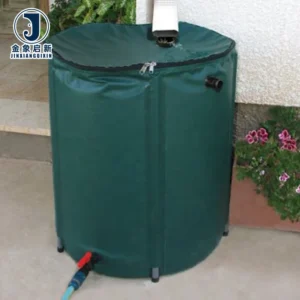
| Material | PVC + High-strength polyester mesh fabric |
| Weight (GSM) | 350 / 420 / 500 / 550 / 600 / 750 gsm (confirm required grade) |
| Total Thickness | 0.32 / 0.35 / 0.4 / 0.45 / 0.5 / 0.65 mm (confirm required grade) |
| Coating Method | Laminated technology & Hot-melt coating technology |
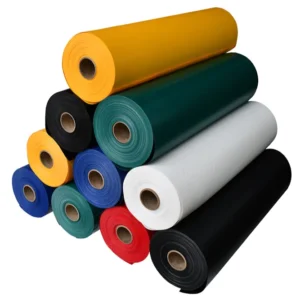
| Roll Size | 2m × 75m or 2.1m × 50m |
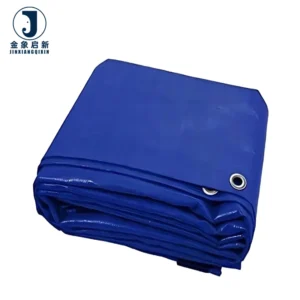
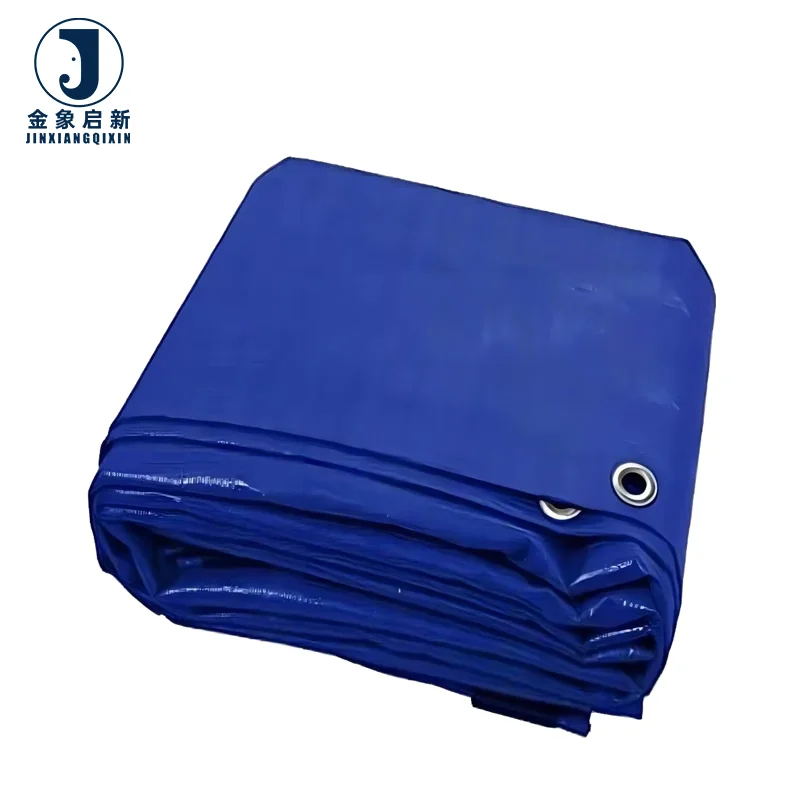
| Finish Product Size | Custom cut to trailer model or sold from inventory |
| Color Options | Blue / Red / Yellow / Light blue / Grey (customized available) |
| Cold Crack Resistance | Rated for low-temperature flexibility |
| Key Features | Waterproof, sunproof, anti-mildew, anti-static treatment, outstanding tearing strength for welding, color fastness |
| Flame Retardant | Available in flame retardant grades — confirm the grade required for your market |
| UV Treatment | Available with UV stabilisation — confirm test basis for your region |
| Service Life | 3–7 years under normal circumstances |
Application Suitability
| Application | Exposure & Requirement |
|---|---|
| Truck side curtain and trailer cover | Constant flexing at load points, road debris abrasion, weather cycling, tie-down stress at hems |
| Lorry and flatbed load protection | UV exposure on long-haul routes, wind flap fatigue, rain ingress prevention |
| Cargo ship deck cover | Salt spray, sustained moisture, heavy cargo contact, puncture risk from shifting loads |
| Transport equipment side panel | Repeated rolling and folding, tension from ratchet straps, colour consistency across panels |
Why Coated Fabric Fails Where the Trailer Flexes Most
Seam failure at flex zones costs fleets far more than fabric replacement.
Welded joints on truck covers endure repeated bending every time a trailer articulates or a load shifts during transit. When the coating adhesion is insufficient, the seam peels open well before the base fabric shows any sign of wear. Fleet operators then face unscheduled downtime, cargo exposure, and replacement freight costs that far exceed the original material investment. I have seen heavy-grade coated rolls fail at the weld line while the surrounding fabric remained intact — [NEED_CITE: tensile and tear test methods for coated fabrics per ISO 1421].
Hot-Melt Coating and the Adhesion Advantage at Weld Zones
The PVC tarpaulin truck cover relies on hot-melt coating and laminated technology to bond the PVC layers to the high-strength polyester mesh base. This process drives coating material into the fabric structure under heat and pressure, creating a mechanical interlock that resists delamination when the material flexes. For transport fleets running side curtains that fold and unfold daily, this adhesion strength directly determines how long welded seams survive before cracking or peeling apart at the stress concentration points.
Model-Specific Sizing Eliminates the Generic Cover Problem
A PVC tarpaulin truck cover cut to a generic rectangle rarely fits a specific trailer profile cleanly. Excess fabric flaps in the wind, creating fatigue points; short fabric leaves cargo exposed. This PVC coated truck cover for transport is produced to the exact dimensions of the trailer model in question, with hem reinforcement and eyelet spacing matched to the tie-down configuration of that vehicle. Fleet operators specifying covers for mixed fleets receive individually sized units rather than a single stock dimension forced across different trailer types.
Reading the Specification Sheet Beyond the GSM Number
GSM tells you weight per square metre, but it does not tell you how that weight is distributed between the base fabric and the coating. A 600 gsm roll with a heavy coating over a light base fabric will tear more easily than a 550 gsm roll built on a denser polyester mesh with a thinner, well-bonded coating. The high-strength polyester mesh used here provides the structural skeleton, while the PVC coating delivers weather protection and weldability. Hot-melt coating produces stronger peel adhesion than simple knife-over-roll methods, which matters when fabricators heat-weld seams that must survive years of flexing. Thicker grades in the 0.5 mm to 0.65 mm range add abrasion resistance for heavy cargo contact, while lighter grades at 0.32 mm to 0.4 mm suit applications where weight and pack-down size matter. [NEED_CITE: coating adhesion and peel strength testing for PVC coated polyester fabrics]
The Hidden Cost of Ignoring Batch Colour Consistency
When multiple truck covers in a fleet are installed side by side, even a slight colour shift between rolls becomes immediately visible. This happens when coating batches are mixed inconsistently or pigment dosing drifts during long production runs. For transport equipment builders delivering branded fleets, a visible colour mismatch undermines the professional appearance the client expects. Worse, inconsistent coating weight across rolls means some covers in the same order may age and fade at different rates, creating a patchwork appearance within the first year of service. [NEED_CITE: colour fastness and batch consistency standards for coated technical textiles]
Why Procurement Teams Source This PVC Coated Truck Cover Here
Coating weight and adhesion are controlled at every stage of the production line, so the GSM on the quotation is the GSM that arrives at your dock. The 10-person R&D team develops custom sizing and sample runs within days, letting you verify fit and weld behaviour before committing to a full production order. Each roll undergoes 100 percent inspection before shipment, with pre-shipment records documenting the actual weight and coating condition. Material specification sheets accompany every order, stating the exact base fabric, coating weight, and colour reference. Production capacity across three full lines supports bulk fleet orders with consistent roll-to-roll quality, while ISO and CE certified processes underpin the documentation trail your compliance team requires.
Documentation & Verification
- Material specification sheet stating exact GSM, base fabric construction, and coating weight per roll
- Pre-shipment inspection record confirming 100 percent roll check before dispatch
- Test reports for UV stabilisation and flame retardant grades where applicable, with stated test basis
- Roll packing list with individual roll weights and dimensions for receiving verification
- Certificate of origin and customs documentation for international transport shipments
Fabrication, Handling & Storage
- Hot-melt coated seams require calibrated heat and dwell time; test weld parameters on each PVC grade before production runs
- Hem reinforcement and eyelet spacing should match the tie-down load pattern of the specific trailer model
- Store rolls horizontally on pallets to prevent edge deformation and permanent creasing in the polyester mesh
- Allow cold-stored rolls to reach ambient temperature before unrolling to avoid coating crack in low-temperature conditions
- Clean PVC surfaces with mild detergent only; solvent-based cleaners can degrade the coating and reduce sunproof performance
What We Need to Quote Your Truck Cover Order
Provide the trailer make, model, and year so we can confirm the exact cover dimensions and hem configuration. Specify the GSM grade and colour you need, along with any flame retardant or anti-static certification your market requires. Let us know whether you need finished covers with eyelets and reinforced hems or roll stock for your own fabrication line, and share your target order volume so we can confirm lead time.
Frequently Asked Questions
Q: How is the GSM of the PVC tarpaulin truck cover verified against the quotation?
A: Each roll is weighed and measured during pre-shipment inspection. The inspection record documents the actual weight per square metre alongside the quoted specification, so you can confirm on arrival that the material matches what was agreed. This prevents the common problem of receiving lighter fabric than ordered.
Q: Can truck covers be cut to fit specific trailer models rather than generic sizes?
A: Yes. Finish product dimensions are produced to the exact measurements of your trailer model, including side curtain profiles, rear door configurations, and cab-over shapes. This eliminates excess fabric that flaps in transit and ensures tie-down points align correctly with the vehicle chassis.
Q: How is colour consistency controlled across multiple rolls in one order?
A: Pigment dosing and coating mix are held constant throughout a single production batch. Rolls destined for the same order are produced consecutively under identical parameters, and visual inspection against the approved colour reference is performed before packing to prevent visible mismatch when covers are installed side by side.
Q: What eyelet spacing and hem reinforcement options are available?
A: Eyelet spacing and hem construction are configured to match the tie-down system of your trailer. Reinforced hems with additional PVC strip welding are available at high-stress zones such as corners and strap contact points, preventing the fabric from pulling through under ratchet tension.
Q: What documentation ships with each order for customs and fleet compliance?
A: Every shipment includes a material specification sheet, pre-shipment inspection record, roll packing list, and certificate of origin. For treated grades, UV and flame retardant test reports are provided with the applicable test basis stated, supporting both customs clearance and fleet safety compliance requirements.