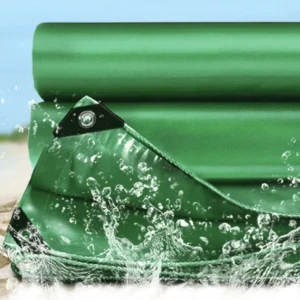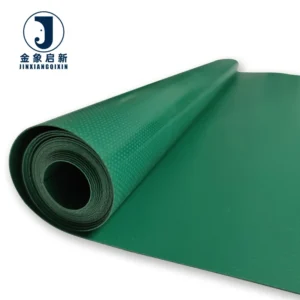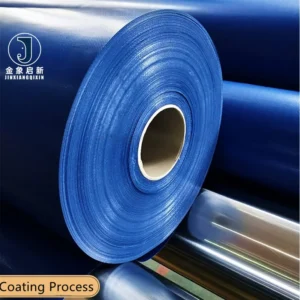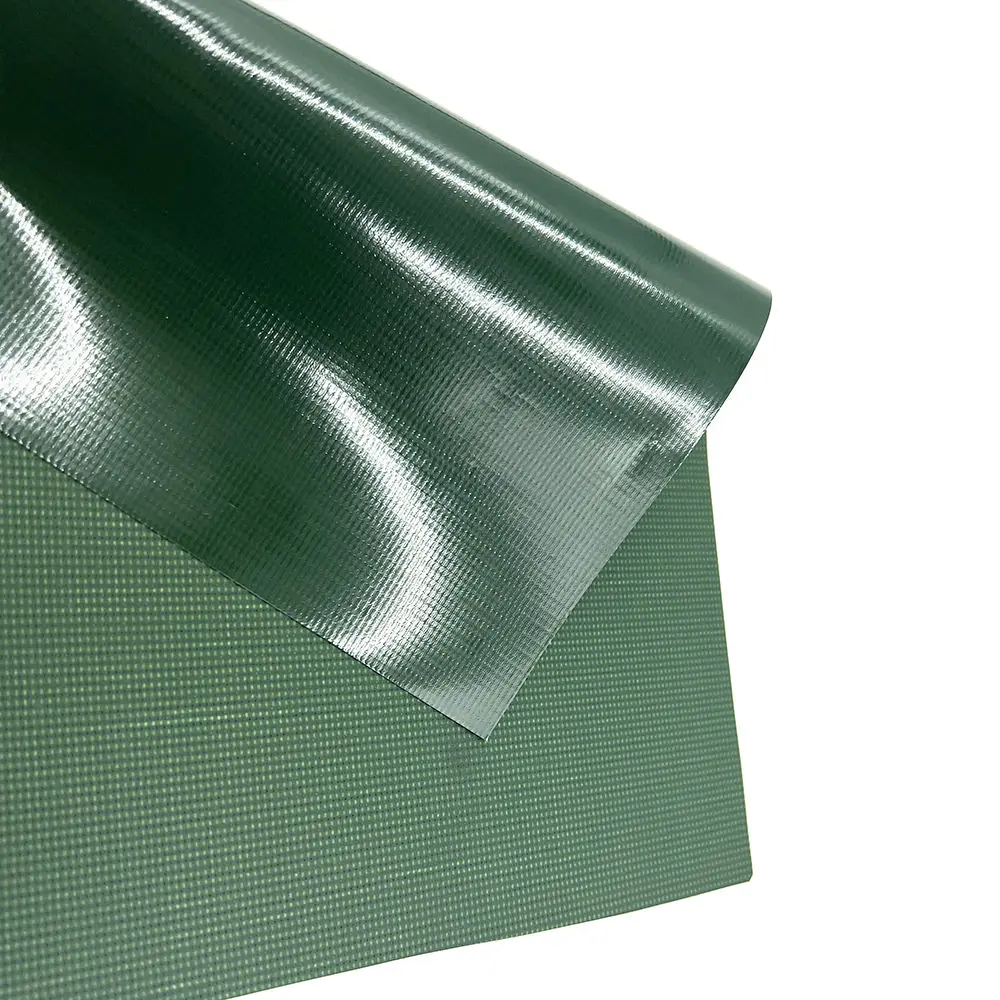
Coated Fabric Process Control — Knife coating parameters verified at every production stage to maintain consistent adhesion and weight across rolls of green PVC tarpaulin for transport applications.
Technical Specifications
| Parameter | Value |
|---|---|
| Product Type | PVC Coated Tarpaulin Roll |
| Material | PVC Knife Coated Fabric |
| Colour | Green |
| Welding Options | HF, Hot Air, Sewing |
| UV Treatment | Claimed (test basis not stated in source) |
| Flame Retardant | Claimed (grade not stated in source) |
| Additional Treatments | Antibacterial, Mildew Proof, Anti-oxidation |
| Flexibility | Highly flexible, resistant to cracking |
| Maintenance | Self-cleaning surface |
| Standards | ISO, CE |
Application Suitability
| Application | Exposure & Requirement |
|---|---|
| Truck and trailer side curtains | Constant flexing at load points, road debris abrasion, sustained UV and weather exposure |
| Flatbed and curtain-sider covers | Tie-down strap friction, wind flap fatigue, rain and spray ingress prevention |
| Fleet replacement covers | Model-specific fitment, reinforced hem and eyelet zones, colour match across vehicles |
| Transport equipment new builds | Fabricator welding compatibility, batch consistency for multi-unit production runs |
Why Stated GSM Is Not the Only Measure That Matters for PVC Coated Tarpaulin for Truck and Transport
A roll can hit the quoted GSM yet still fail early if the base fabric denier and coating adhesion are not balanced to the application.
Fleet operators have received PVC coated tarpaulin for truck and transport covers that matched the weight on the spec sheet but tore at the hem within months. The problem usually sits below the surface: a lighter base yarn compensated by heavier coating to reach the target weight. The fabric feels right on the scale but lacks the tensile backbone to handle the flex and pull of a loaded trailer in transit [NEED_CITE: tensile and tear test methods for coated fabrics per ISO 1421]. Knife coated construction addresses this by forcing the PVC into the weave rather than sitting on top, which improves peel strength at the seam where covers fail most often.
Covering a Moving Load: What the Road Demands from the Fabric
A truck cover does not sit still. It flexes with every suspension movement, rubs against tie-down straps, and catches wind load at highway speed. This green PVC coated tarpaulin for truck and transport applications is engineered for that dynamic environment. The knife coated construction bonds the PVC layer into the base fabric, creating a composite that resists delamination when the material folds and unfolds repeatedly at the hem and eyelet zones.
Welding Options and Seam Integrity Under Load Flex
Seam failure accounts for a significant share of premature cover replacements in transport fleets. This fabric supports high-frequency welding, hot-air welding, and traditional sewing, giving fabricators the flexibility to choose the method that matches the stress profile of each panel. Hot-air welded seams on PVC tarpaulin roll stock produce a continuous bond that distributes load across the joint rather than concentrating it at stitch holes, which is critical for side curtains that flex with every corner the trailer takes [NEED_CITE: hot air welding peel strength on PVC coated polyester fabric].
Reading the Specifications Beyond the Weight Number
GSM tells you how much material is on the roll but not how that material is distributed between base yarn and coating. A knife coated PVC fabric achieves its strength from the interplay of base fabric denier, weave density, and coating penetration. The coating method matters: knife coating forces PVC paste into the yarn interstices under blade pressure, producing higher peel resistance than simple spread coating. This directly affects how well welded seams hold when the fabric flexes under load. The self-cleaning surface treatment reduces dirt accumulation that can accelerate UV degradation on the road, while the claimed anti-oxidation treatment addresses long-term polymer breakdown — though buyers should request the specific test basis for UV and flame-retardant grades required in their operating market.
What Happens When Specification Gaps Reach the Loading Bay
A batch of truck covers arrives with slight colour variation between rolls — visible once installed side by side on a fleet of identical trailers. Or the flame-retardant claim on the paperwork does not match the certification the mine site or airport facility demands at the gate. These are not cosmetic issues; they result in rejected shipments, re-fabrication costs, and vehicles sitting idle while replacement covers are sourced [NEED_CITE: batch colour consistency standards in coated fabric production]. Colour matching across rolls in a single order requires controlled pigment dosing at the coating stage, and any treatment claim must be backed by a test report from a recognised laboratory, not just a line on the data sheet.
Procurement Confidence from Coating Line to Dispatch
The production of this PVC tarpaulin roll is supported by nearly 30 years of focused experience in coated fabric manufacturing. Three full production lines and 36 sets of professional equipment provide the capacity to fulfil fleet-scale orders with consistent lead times. A 10-person R&D team handles custom sizing matched to specific truck and trailer models, pattern printing, and sample development so buyers can verify fit and finish before committing to a production run. Dedicated quality inspection at every stage — from base fabric incoming check through coating weight verification to final roll packing — means the material that ships matches what was sampled and approved.
Documentation & Verification
- Material specification sheet confirming GSM, base fabric denier, and coating weight for each roll
- Test reports for UV resistance and flame-retardant grades where applicable to your market
- Pre-shipment inspection record documenting weight check and colour consistency across the order
- Roll packing list with individual roll weights and dimensions for container loading planning
- Certificate of origin and customs documentation for international shipment clearance
Fabrication, Handling & Storage
- Hot-air welding at recommended temperature settings produces full peel strength on this knife coated PVC fabric
- HF welding suitable for high-speed panel joining on curtain-sider production lines
- Store rolls upright on pallets to prevent flat-spot creases that show through on installed covers
- Allow cold-stored rolls to reach ambient temperature before unrolling to avoid coating crack stress
- Use mild detergent for cleaning; avoid solvent-based products that may affect the self-cleaning surface treatment
- Cut panels with allowance for hem fold-back to maintain reinforced edge strength at eyelet zones
What We Need to Prepare Your Quotation
To provide an accurate specification and lead time, share your target truck or trailer model dimensions, the panel sizes you need, and the annual volume you plan to source. If your operating market requires a specific flame-retardant grade or UV test standard, state the reference so we can match the treatment accordingly. Let us know whether you require rolls in standard width or custom-cut panels finished with hems and eyelets, and whether you would like a sample roll or fabricated panel sent for your approval before production.
Frequently Asked Questions
Q: How can I verify the GSM of the PVC tarpaulin roll when it arrives against what was quoted?
A: We provide a pre-shipment inspection record that documents the actual weight measured on each roll before dispatch. On receipt, you can confirm by cutting a measured sample from the roll edge and weighing it on a calibrated scale. Any discrepancy outside the agreed tolerance should be flagged immediately with the inspection record as your reference document.
Q: What custom sizing options are available for specific truck and trailer model covers?
A: We cut and finish panels to the exact dimensions of your vehicle model, including hem allowances and eyelet spacing matched to your tie-down configuration. Share the trailer make, model, and panel layout drawing, and our R&D team will produce a sample cover for fitment verification before the full production run begins.
Q: Which welding method gives the strongest seam for high-flex truck cover panels?
A: Hot-air welding generally produces the most consistent peel strength on knife coated PVC fabric because it creates a continuous molecular bond across the seam without puncturing the material. HF welding is faster for high-volume production. We recommend testing both methods on sample pieces to confirm which suits your equipment and panel stress profile.
Q: How do you ensure colour consistency when I order multiple rolls for one fleet?
A: Pigment dosing is controlled at the coating stage with batch reference samples held for comparison. Before dispatch, rolls from the same order are checked side by side under standard lighting against the approved colour reference. The pre-shipment inspection record documents this check so you have confirmation before the container is sealed.
Q: What test reports are provided for UV resistance and flame-retardant claims?
A: Test reports are available for the specific UV and flame-retardant grades applied to your order. State the standard required in your market — such as a specific DIN, NFPA, or national building code reference — at the inquiry stage so we can apply the correct treatment grade and supply the matching third-party test documentation with your shipment.