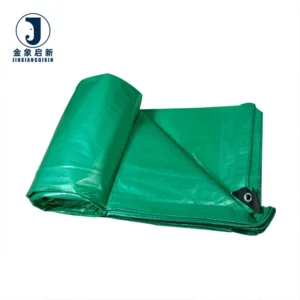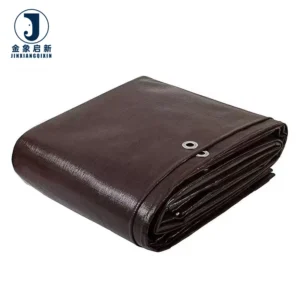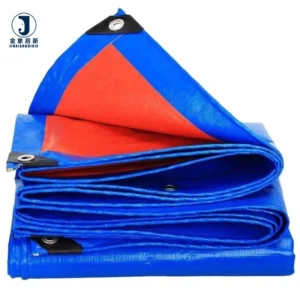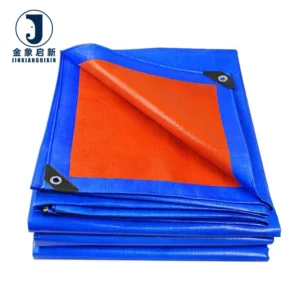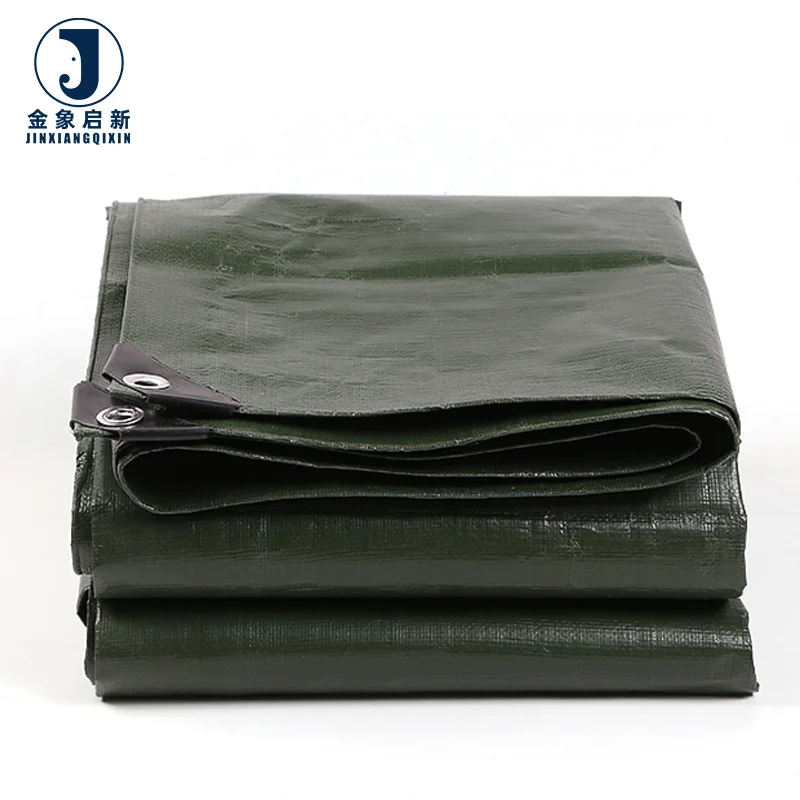
Proven Roll Consistency — three full production lines and 36 equipment sets deliver heavy-duty PE tarpaulin covers that match specification from first roll to last, verified before dispatch.
Technical Specifications
| Parameter | Value |
|---|---|
| Product Type | PE Tarpaulin |
| Thickness Options | 5 / 10 / 12 / 16 / 20 Mil |
| Coating Material | Polyethylene (PE) |
| Waterproof | Yes |
| Fire Retardant | Available in fire retardant grades — confirm NFPA 701 or equivalent standard required for your market |
| Anti-UV Treatment | Yes — request test report to verify exposure duration basis |
| Windproof | Yes |
| Mildew-Proof | Yes |
| Abrasion-Resistant | Yes |
| Key Features | Waterproof, windproof, mildew-proof, abrasion-resistant construction |
Application Suitability
| Application | Exposure & Requirement |
|---|---|
| Truck and trailer cargo covers | Constant road vibration, wind load at flex points, rain and road-spray exposure, UV during transit and yard storage |
| Tent and temporary shelters | Prolonged sun exposure, wind uplift stress at grommets, rain ingress prevention, repeated setup and teardown abrasion |
| Outdoor equipment protection | Standing moisture, dust and debris ingress, UV degradation over extended idle periods |
| Car and vehicle covers | Direct UV exposure, hail and debris impact, moisture trapping leading to mildew if non-breathable |
| Yard and logistics cargo staging | Multi-day weather exposure, forklift and handling contact abrasion, tie-down strap friction at edges |
Why Mil Thickness Alone Does Not Guarantee Cover Survival on the Road
A 16 Mil PE tarpaulin that arrives below quoted thickness will fail at the tie-down points long before the fabric body does.
Fleet operators and transport builders regularly specify a mil grade on paper, only to find the delivered heavy duty PE tarpaulin for trucks and transport measures lighter when unrolled on the dock. The base fabric weave density and the coating adhesion method matter as much as the stated thickness, yet these parameters rarely appear on the purchase order. When a cover flexes over a moving load, the stress concentrates at reinforced edges and tie-down contact zones — the exact locations where under-thickness material tears first [NEED_CITE: tensile and tear test methods for coated fabrics per ISO 1421].
Fitment Precision for Fleet and Trailer Applications
A generic-size truck cover leaves gaps at the rear roll-up door or drags on the ground at the side skirt, both of which invite road spray and wind flap that accelerate edge wear. Specifying the exact trailer model dimensions — including wheel arch clearance and tail lift recess — ensures the heavy duty PE tarpaulin for trucks and transport seats flush against the body. Reinforced hems and correctly positioned eyelets then carry the tie-down load without pulling through the fabric at highway speeds.
Weather and Road Exposure Management in Transit
Transit environments combine UV radiation, driving rain, and diesel exhaust residue that degrades untreated polyethylene over time. Mildew-proof treatment prevents fungal growth where moisture traps between the cover and the cargo surface during multi-day staging. The abrasion-resistant surface handles contact with pallet edges, steel load bars, and strap friction that would otherwise scuff through lighter-grade materials within a single delivery cycle [NEED_CITE: accelerated weathering test methods for polyethylene tarpaulins].
Reading the Specification Beyond the Mil Number
The mil thickness indicates total caliper but does not describe how the base fabric weave contributes to tear propagation resistance. A 12 Mil cover built on a high-denier woven HDPE scrim can outperform a 16 Mil cover that relies primarily on coating thickness for its caliper reading. The weave density in the warp and weft directions determines how far a puncture or edge nick will spread before stopping. Fire retardant grades must be confirmed against the standard applicable in the destination market — NFPA 701, for instance, applies to textile flammability in the United States, while other jurisdictions may reference different test methods. Anti-UV treatment effectiveness depends on the specific test basis used, so requesting the underlying test report ensures the cover matches the expected outdoor service duration rather than relying on a generic claim.
The Hidden Cost of Underspecified PE Covers
When the mil thickness on arrival falls short of the quoted value, the cover may pass visual inspection at the dock yet fail within weeks at the eyelet line where tie-down straps concentrate load. Fire retardant covers shipped without the required test documentation delay site acceptance and can halt operations at regulated construction or event venues. Batch-to-batch variation in material weight means one roll in an order may perform adequately while the next tears under identical tie-down tension, making fault tracing difficult until multiple covers have already been deployed [NEED_CITE: pre-shipment inspection standards for coated fabric roll goods].
Why Source Heavy Duty PE Tarpaulin Here
Nearly 30 years of focused coated fabric production means coating weight and adhesion are controlled at every stage rather than left to supplier variance. Three full production lines with 36 sets of professional equipment support bulk roll output while maintaining consistent thickness across the order. A 10-person R&D team develops custom sizes and samples within days, allowing fleet operators to validate fitment before committing to full production volume. Dedicated quality inspection at each production stage, with 100 percent pre-shipment checking, ensures the mil thickness, treatment performance, and dimensional accuracy match the specification sheet before dispatch.
Documentation & Verification
- Material specification sheet confirming mil thickness and base fabric construction per roll
- Fire retardant test report provided for grades where applicable and requested
- Anti-UV treatment test basis documented to match stated exposure requirements
- Pre-shipment inspection record with dimensional check and eyelet verification
- Certificate of origin and customs documentation for cross-border shipment
Fabrication, Handling & Storage
- Heat-seal temperature settings vary by PE mil grade — confirm parameters before production
- Eyelet spacing must account for tie-down load distribution across the selected thickness
- Store rolls horizontally on pallets to prevent creasing in 5 to 20 Mil sheets
- Unfold in moderate temperatures; cold-stiffened PE may crack if forced open below freezing
- Clean with mild detergent only — solvents may degrade the mildew-proof surface treatment
- Overlap seams by a minimum width when joining panels for large-area cargo staging covers
Starting Your Specification Conversation
Provide the exact trailer or cargo dimensions, the tie-down method in use, and the expected transit or staging duration so the correct mil thickness and reinforcement layout can be recommended. If your market mandates a specific fire retardant standard or your site requires documented UV treatment verification, state the standard name and test basis at inquiry stage to avoid rework. Indicate whether you need finished cut-to-size covers with hem and eyelet configuration or roll stock for in-house fabrication, along with estimated annual volume for production planning.
Frequently Asked Questions
Q: How can I confirm the mil thickness matches what was quoted when the shipment arrives?
A: Request the material specification sheet before dispatch, which states the mil thickness and base fabric construction for your order. On arrival, use a caliper to measure at multiple points across the roll or cover. Our pre-shipment inspection record documents thickness verification at the factory, providing a baseline for your receiving check.
Q: What fire retardant standard applies to PE tarpaulin in my market?
A: Fire retardant requirements vary by jurisdiction and application — NFPA 701 is common in the United States for textile flammability, while other regions reference different standards. State your target market and application at inquiry stage so we confirm whether the grade we supply meets the applicable test method and provide the supporting documentation.
Q: How do I verify the anti-UV treatment will last for my intended outdoor exposure period?
A: Anti-UV claims should be backed by a test report that states the test method and exposure duration basis. Request this report during the sampling stage. Match the reported test duration against your expected service conditions — a cover staged in permanent desert sun faces different degradation than one used for occasional transit protection.
Q: Can the covers be sized to fit a specific trailer model rather than a generic dimension?
A: Yes. Provide the trailer make, model, and body configuration including wheel arch and tail lift details. We develop a sample to validate fitment before full production. This eliminates the gap and drag issues that generic-size covers create at highway speeds, ensuring tie-down points align correctly with the trailer anchoring system.
Q: Do you supply finished covers or only PE tarpaulin roll stock?
A: Both options are available. Finished covers include custom hem reinforcement, eyelet placement, and cut sizing to your specification. Roll stock is supplied for buyers who fabricate in-house. State your preference at inquiry so the quotation reflects the correct scope, and request a sample for approval before bulk production begins.