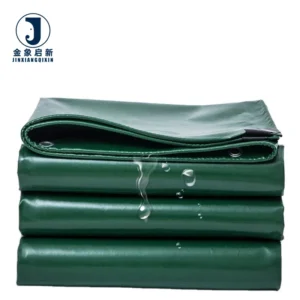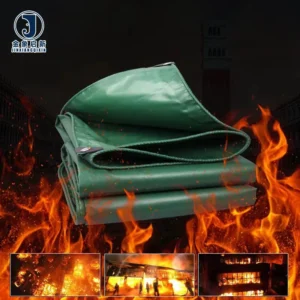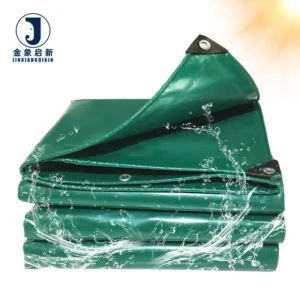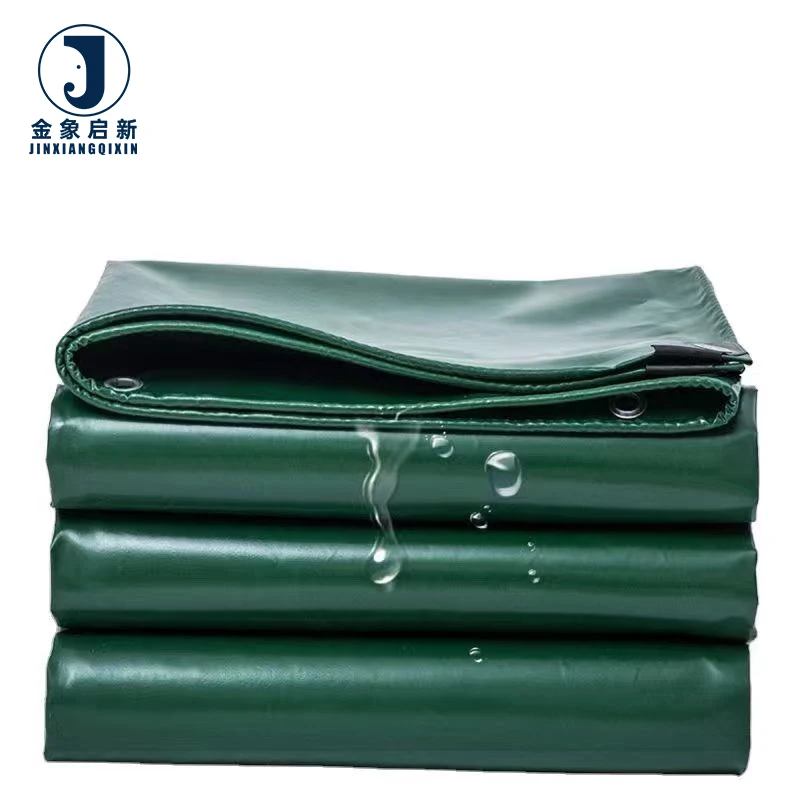
Deep process control over coating weight — Every roll of PVC coated tarpaulin for truck and trailer cover is verified for GSM and adhesion at each production stage, preventing the lighter-than-quoted material that leaves cargo exposed on the road.
Technical Specifications
| Parameter | Value |
|---|---|
| Product Type | PVC Coated Tarpaulin |
| Weight (GSM) | 250gsm–1500gsm (confirm grade for your load type) |
| Base Fabric Denier | 200DX300D, 500DX500D, 840DX840D, 1000DX1000D |
| Surface Finish | Glossy or matte |
| Color Options | Blue, yellow, black, green, white, or custom |
| UV Treatment | Customized (test basis not stated — confirm standard required) |
| Flame Retardant | FR treated (grade not stated — verify against local compliance) |
| Anti-Fungal | Yes |
| Waterproof | Yes |
| Temperature Range | -15°C to 70°C |
| Working Life | 3–10 years depending on usage environment |
| OEM/ODM | Accepted |
| Standards | ISO, CE |
Application Suitability
| Application | Exposure & Requirement |
|---|---|
| Curtain-side trailer fabric | Constant flexing at highway speed, road debris abrasion, UV exposure from long-haul routes |
| Flatbed load covers for lumber and steel | Tie-down strap friction, wind lift at edges, rain and snow ingress prevention |
| Tipper trailer enclosures | Abrasive dust contact, repeated folding and unfolding, temperature swings across seasons |
| Open-deck transport protection | Direct sun exposure, chemical residue from industrial loads, mechanical puncture risk from sharp cargo edges |
Why Generic-Size Covers Fail on Real Truck and Trailer Routes
A PVC coated tarpaulin for truck and trailer cover must match the exact dimensions of the vehicle, not a rounded industry standard.
Fleet operators routinely receive covers cut to generic sizes that leave gaps at the tail gate or excess fabric that flaps loose at speed. That flapping accelerates edge wear, creates noise complaints at depots, and allows water to channel through the gap rather than shedding off the surface [NEED_CITE: wind-induced fabric fatigue on moving vehicles]. The fix is not a thicker material — it is a cover dimensioned to the specific trailer model, with eyelet spacing aligned to the vehicle’s tie-down rails.
How Denier Selection Matches the Load Profile
The base fabric denier — from 200DX300D up to 1000DX1000D — determines how the material handles tensile stress at the points where ratchet straps and tie-downs contact the surface. Side curtain applications on curtain-side trailers demand higher denier counts because the fabric flexes continuously during loading and unloading cycles, and the curtain rail hardware concentrates load at the top edge. Flatbed covers for static loads like lumber or steel coil may perform adequately at lower denier grades, provided the cover is not subjected to frequent repositioning.
Reinforcement at the Points Where Covers Actually Fail
Most PVC coated tarpaulin for truck and trailer cover failures do not occur in the field of the fabric. They occur at the hems, around eyelets, and at welded seams where the material folds or where tie-down hardware presses into the surface. Reinforced hems and strategically spaced eyelets distribute the load from ratchet straps across a wider area, preventing the tear propagation that starts from a single puncture point [NEED_CITE: stress concentration at tie-down contact points on transport covers]. Specifying reinforcement at these high-flex zones costs marginally more at production but prevents roadside repairs and load exposure incidents.
Reading the Specification Sheet Beyond the GSM Number
GSM tells you how much coating and base fabric is present per square metre, but it does not tell you how that weight is distributed. A 900 GSM material with a 500DX500D base and heavy coating may have lower tensile strength than a 750 GSM material built on a 1000DX1000D base with a thinner, more flexible coating. The denier and weave density of the base fabric govern tear resistance and tensile load capacity, while the coating weight governs waterproofing, abrasion resistance, and surface durability. For truck and trailer applications where the cover is handled daily, the balance between base fabric strength and coating flexibility matters more than the headline GSM figure [NEED_CITE: relationship between base fabric denier and tensile performance per ISO 1421]. Surface finish — glossy or matte — affects how dirt and road grime adhere to the cover, with matte surfaces generally showing less visible staining over extended highway use. The stated temperature range of -15°C to 70°C defines the operational window: below -15°C the PVC coating becomes progressively stiffer and more prone to cracking if folded, while above 70°C the material softens and may deform under concentrated tie-down pressure.
The Hidden Cost of Skipping Colour Consistency Checks
When a fleet operator orders multiple covers for a mixed-model trailer fleet, a visible colour shift between rolls becomes immediately apparent once the covers are installed side by side at the depot. This is not a cosmetic complaint — it signals inconsistent coating batches, which can correlate with variations in coating adhesion, UV treatment concentration, and weld strength across the order [NEED_CITE: batch-to-batch coating consistency and its effect on long-term weathering]. Covers from an inconsistent batch may degrade at different rates, forcing staggered replacements that complicate fleet maintenance scheduling. Requesting roll-to-roll colour verification before dispatch prevents this from becoming a yard-side problem.
What This Supply Chain Actually Delivers
Three full production lines and 36 sets of professional equipment support bulk volume orders without sacrificing the dimensional accuracy that truck and trailer covers require. A 10-person R&D team handles custom sizing against specific trailer model drawings, so the cover fits the vehicle rather than the other way around. Dedicated QA/QC at every production stage means GSM, denier, and colour are checked in-process, not just sampled at the end. Samples for custom dimensions and eyelet layouts are developed within days, allowing fleet operators to verify fitment on a single trailer before committing to a fleet-wide order. Pre-shipment inspection covers 100% of the order, not a statistical sample, so the material that arrives at the depot matches the quotation.
Documentation & Verification
- Material specification sheet confirming GSM, base fabric denier, and coating type per roll
- UV and flame retardant test reports stating the grade and standard achieved
- Pre-shipment inspection record verifying dimensions against the trailer model drawing
- Roll-to-roll colour consistency report for multi-cover fleet orders
- ISO and CE certificates accompanying each dispatch
- Certificate of origin and customs documentation for cross-border shipments
Fabrication, Handling & Storage
- Heat-weld seams at temperatures matched to the coating thickness to avoid burning through lighter GSM grades
- Space eyelets no wider than the strap contact zone to prevent fabric pull-through under ratchet tension
- Store rolls upright on pallets to prevent permanent creasing in the PVC coating layer
- Allow cold-stored covers to reach ambient temperature before unfolding to avoid cracking below -15°C
- Use mild detergent and soft brush for cleaning; solvent-based cleaners can degrade the surface finish
- Patch field damage with compatible PVC-coated repair material heat-welded over the affected area
What to Include in Your Enquiry
Provide the specific trailer model or flatbed dimensions, including the tie-down rail positions, so the cover can be dimensioned and eyelet-spaced to match. State the typical cargo type and route conditions — long-haul highway, regional distribution, or off-site construction access — so the denier and GSM can be matched to the abrasion and flex demand. If your market requires flame retardant or UV treatment compliance, specify the standard your site or local authority references.
Frequently Asked Questions
Q: How do I specify a PVC coated tarpaulin for truck and trailer cover that fits my exact trailer model?
A: Provide the trailer manufacturer, model designation, and year, along with measured dimensions of the load area and tie-down rail positions. The cover is then cut and eyelet-spaced to match those coordinates, not a generic industry size. A sample is produced first for physical fitment check on one trailer before the full order runs.
Q: What denier and GSM should I choose for long-haul highway use?
A: Curtain-side trailers on long-haul routes typically require higher denier base fabrics such as 840DX840D or 1000DX1000D to withstand continuous flexing. Flatbed covers for static loads may perform well at 500DX500D. GSM should be selected based on the coating thickness needed for abrasion resistance, not as a standalone strength indicator.
Q: Can I get a test report for UV or flame retardant treatment?
A: UV and flame retardant treatments are available in multiple grades. Request the specific test standard your market or site requires — such as a regional fire classification or UV exposure protocol — so the correct grade is applied and documented with a test report included in your shipment documentation.
Q: How do you ensure colour consistency across multiple covers in one fleet order?
A: All rolls in a single order are produced from the same coating batch. A roll-to-roll colour consistency check is performed before dispatch, and a verification record is included with the shipment documentation so you can confirm the match when the covers arrive at your depot.