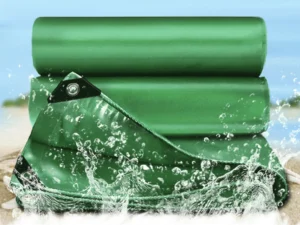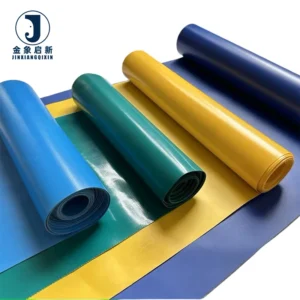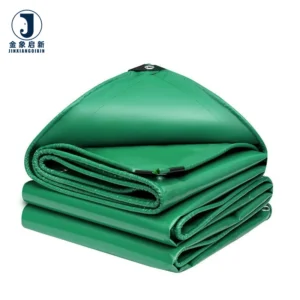
Deep Process Control — Three full production lines maintain consistent PVC coating adhesion across every roll of this knife coated truck cover fabric.
Technical Specifications
| Parameter | Value |
|---|---|
| Product Type | PVC Tarpaulin Roll |
| Material | PVC Knife Coated |
| Color | Gray |
| Coating Method | Knife Coated |
| Features | Tensile, tearing and peeling resistance |
| Treatments | Fire retardant (grade not stated), UV resistance (test basis not stated), antibacterial, mildew proof |
| Chemical Resistance | Oil and stain resistance, acid and alkali resistance |
| Temperature Resistance | High temperature and cold resistance |
| Durability | Anti-oxidation, weather resistance, highly flexible yet resistant to cracking |
| Maintenance | Self-cleaning system |
| Welding Options | HF, Hot Air, Sewing |
Application Suitability
| Application | Exposure & Requirement |
|---|---|
| Truck side curtain | Constant flexing at load points, road debris abrasion, continuous UV exposure |
| Flatbed trailer cover | High tension tie-down stress, wind flap fatigue, weather sealing for cargo |
| Tensile structure membrane | Permanent tension load, wind uplift, solar heat gain and UV degradation |
| Portable storage structure | Snow and rain load, repeated assembly stress, mildew in humid interiors |
| Airport hangar door | Large span wind load, chemical exposure from aircraft fluids, fire safety compliance |
| Stadium roof fabric | High wind uplift, long-term UV and rain exposure, public fire safety standards |
Why Generic Sizing Fails Moving Loads and How Custom-Cut PVC Tarpaulin Roll Solves It
A truck cover that does not match the exact trailer dimensions will fail at the seams or leave cargo exposed at the edges.
Fleet operators ordering standard-width rolls often face excessive off-cuts or insufficient overlap, leading to weak joints and wasted material. When a cover is stretched beyond its intended geometry to fit a specific trailer, the tension concentrates at the eyelets and weld lines, accelerating fatigue. The PVC knife coated tarpaulin for truck cover is available for custom-width production and cut-to-model sizing, eliminating the compromise between generic stock and site requirements. [NEED_CITE: tensile stress concentration at fabric attachment points under dynamic load]
Adhesion Integrity Across the Knife Coated Layer
The knife coating process forces PVC compound directly into the interstices of the base fabric under controlled tension and blade gap. This produces a mechanical lock between coating and yarn that resists delamination when the fabric flexes repeatedly over trailer ribs. Unlike dip or spray methods, knife coating delivers a measurable, even coat weight across the full roll width, which is critical when fabricating side curtains that must hang flat without puckering at the seams.
Flex Resistance at High-Stress Trailer Zones
Truck covers endure cyclical bending at the points where the load shifts during braking and cornering. This PVC tarpaulin roll is engineered to remain highly flexible across a broad temperature range, resisting micro-cracking that typically initiates at these high-flex zones. The self-cleaning surface treatment reduces dirt accumulation that can abrade the coating over time, extending the functional appearance of the cover without frequent washing. [NEED_CITE: cyclic flex fatigue testing methods for coated transport fabrics]
How Coating Method and Base Fabric Define Real-World Performance
Knife coating applies a precise PVC layer onto a woven polyester or nylon base fabric, and the resulting peel strength depends on both the coating weight and the yarn denier. A heavier base fabric with high warp and weft density distributes tear loads across multiple yarns, preventing a small puncture from propagating into a full split. The PVC compound formulation determines low-temperature flexibility; a cover that becomes brittle in winter will crack at the hem when folded or tied down. Surface finish also plays a role — a self-cleaning treatment reduces the adhesion of road grime and biological growth, which otherwise trap moisture against the coating and accelerate plasticiser migration. The full range of welding options (HF, hot air, sewing) means the fabricator can choose the joining method that best suits the seam location and load direction on the specific trailer model.
The Hidden Cost of Overlooking Seam Specification
When a welded seam fails before the fabric body, the entire cover must be replaced or patched in the field, causing vehicle downtime. This often traces back to incorrect hot air temperature or welding speed for the specific PVC formulation, rather than a defect in the roll itself. Batch colour inconsistency across multiple rolls used on the same fleet can also force a partial re-order to achieve a uniform appearance once the covers are installed side by side. [NEED_CITE: welded seam peel strength testing for PVC coated fabrics per ISO 1421]
Why Sourcing This PVC Tarpaulin Roll Here Reduces Specification Risk
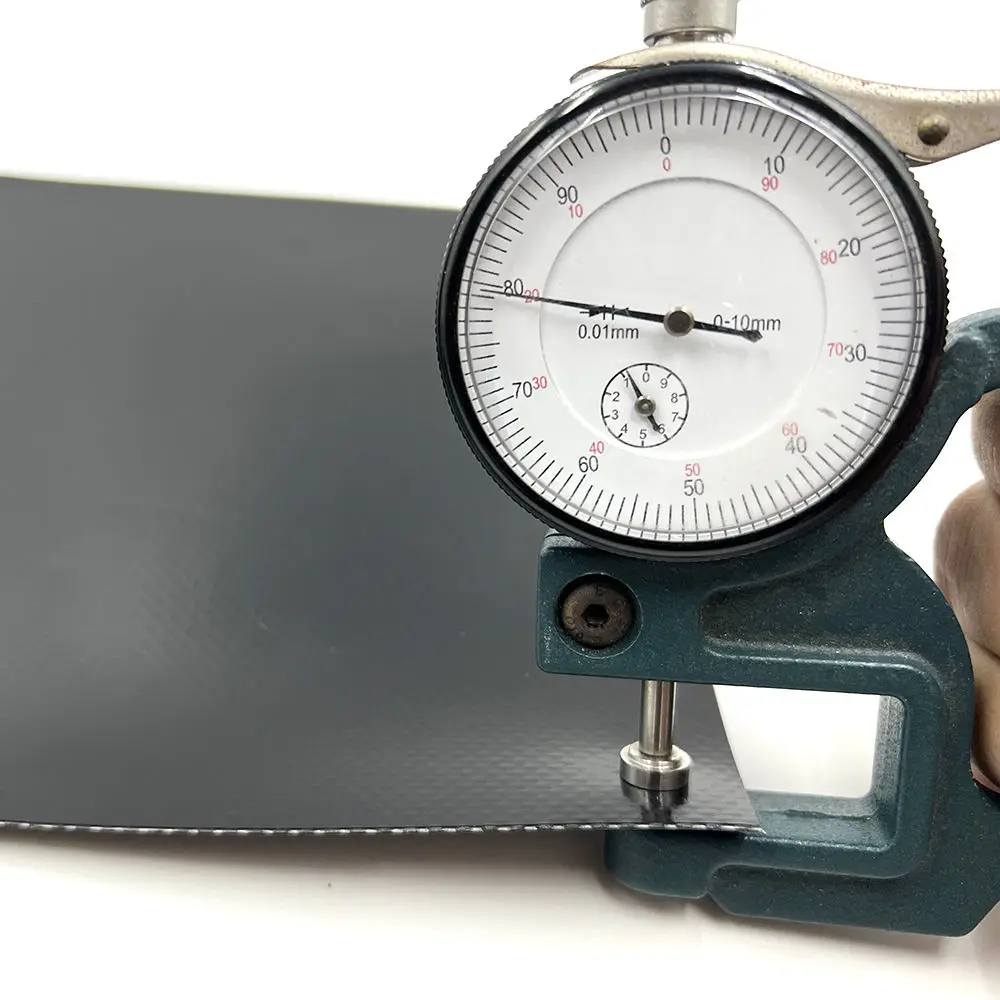
A ten-person R&D team handles material selection and sample development within days, allowing you to confirm weld parameters and colour before full production runs. Dedicated QA and QC at every production stage ensures coating adhesion and seam strength are verified in-process, not just at final inspection. Three full production lines and thirty-six sets of professional equipment support bulk volume with consistent roll-to-roll colour and thickness. Full pre-shipment inspection on every roll catches GSM deviation and surface defects before dispatch. Sample development is available for custom width, eyelet spacing, and colour matching to your existing fleet livery.
Documentation & Verification
- Material specification sheet confirming base fabric denier, coating weight, and GSM for every roll.
- Test report for fire retardant grade when specified for airport hangar or stadium applications.
- Pre-shipment inspection record verifying coating adhesion and colour consistency across the order.
- Roll packing list with individual roll weights and dimensions for container loading planning.
- Certificate of origin and customs documentation for import clearance in your destination market.
Fabrication, Handling & Storage
- Set hot air welder temperature to match the knife coated PVC formulation to avoid scorching or weak bonds.
- Reinforce eyelet zones with an extra layer of the same gray PVC fabric to distribute tie-down stress.
- Store rolls upright on end caps to prevent permanent creasing across the self-cleaning surface.
- Allow cold-stored rolls to reach ambient temperature before unrolling to avoid coating micro-cracks.
- Use non-solvent cleaners on the self-cleaning surface to preserve the treatment integrity.
- Nest pattern pieces across the roll width to minimise off-cut waste on custom trailer covers.
What to Include in Your Enquiry
Specify the exact trailer model, overall cover dimensions, and the tie-down system you use so we can recommend eyelet spacing and hem reinforcement. State your target market’s fire safety classification if the cover will be used on airport or public-access structures. Indicate the annual roll volume and whether you need cut-to-size panels or full rolls only, along with any colour or print requirements for fleet branding.
Frequently Asked Questions
Q: How do you verify the GSM on arrival matches the quoted specification?
A: Every roll undergoes a pre-shipment inspection where a sample is cut, weighed, and measured to confirm the grams per square metre matches the material specification sheet. The inspection record is included with the shipment documentation so you can cross-check on arrival.
Q: What eyelet spacing and reinforced hem options are available for tie-down systems?
A: Standard spacing follows industry practice, but we can adjust pitch and reinforcement patch size to match your specific tie-down hardware. Custom eyelet placement is confirmed during the sample approval stage before bulk production begins.
Q: How does welded seam strength compare to sewn seams at high-flex points?
A: High-frequency and hot air welding fuses the PVC layers into a monolithic joint that typically exceeds the base fabric strength, while sewing creates needle holes that can propagate tears under cyclic flexing. We recommend welding for all load-bearing seams on truck covers.
Q: Can you produce custom widths and cut-to-model sizing for specific trailers?
A: Yes, we can produce custom roll widths and pre-cut panels to exact vehicle dimensions. This eliminates on-site trimming and reduces material waste. Provide the trailer model and cover geometry for a specification recommendation.
Q: How do you ensure colour consistency across multiple rolls for a fleet order?
A: All rolls in a single order are produced in the same batch with controlled pigment dosing and coating parameters. A pre-shipment colour check against the approved reference ensures uniform appearance when covers are installed side by side on your fleet.