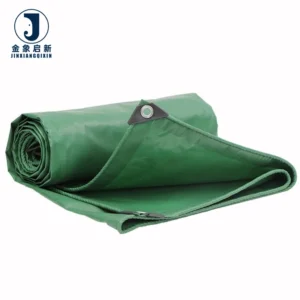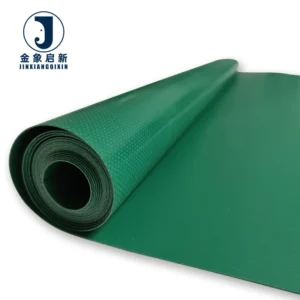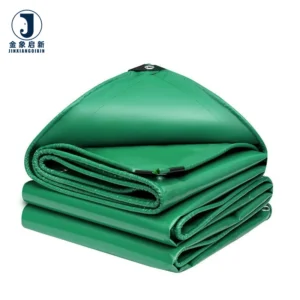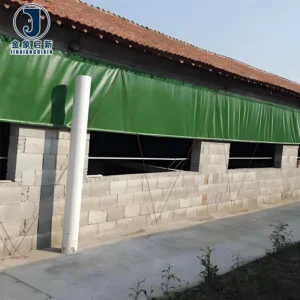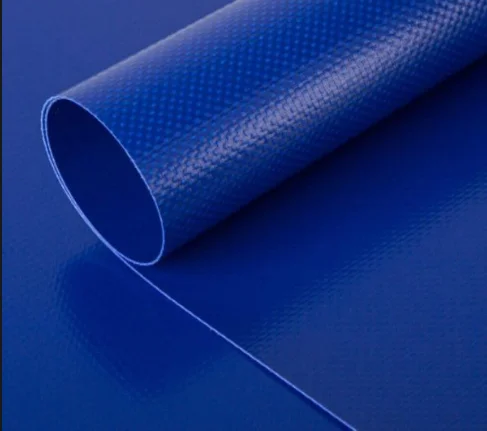
Bulk Roll Consistency — 36 sets of professional equipment across three production lines ensure that GSM, coating weight, and colour remain uniform from the first roll to the last in a container-load shipment.
Technical Specifications
| Parameter | Value |
|---|---|
| Product Type | PVC Knife Coated Tarpaulin Heavy Duty Waterproof Truck Cover Fabric |
| Coating Method | Knife coated |
| Coating Material | PVC |
| Surface Treatment | UV resistance, fire retardant, antibacterial, mildew proof, oil and stain resistance, acid and alkali resistance |
| Welding Options | HF, Hot Air, Sewing |
| Temperature Resistance | High temperature and cold resistance, anti-oxidation, weather resistance |
| Flexibility | Highly flexible, resistant to cracking |
| Maintenance | Self-cleaning surface |
| Flame Retardant | Available in flame retardant grades — confirm the grade required for your market |
| UV Treatment | Available with UV stabilisation — request test report before ordering |
Application Suitability
| Application | Exposure & Requirement |
|---|---|
| Truck side curtains | Constant flexing at load points, road debris abrasion, highway UV exposure, rain and spray |
| Flatbed and tipper covers | Tensile stress from tie-downs, wind flap fatigue, fuel and oil spill contact |
| Tensile and shade structures | Static tensile load, long-term solar exposure, wind uplift at anchor points |
| Portable storage structures | Snow and rain load, thermal expansion cycles, interior condensation |
| Airport hangars and stadium roofs | Large-span tension, fire compliance requirements, public safety exposure |
Why Welded Seams Fail Before the Fabric Does on a Truck Cover
A seam that fails at the flex point means the joining method was not matched to the fabric’s coating chemistry or the dynamic load path.
When a truck cover flexes thousands of times per journey, the welded or sewn joint is the first location to show fatigue. I have seen heavy-grade coated rolls fail at the weld line while the body fabric remained intact. The issue is rarely the PVC knife coated tarpaulin for truck cover itself — it is the heat input, pressure, or dwell time used during fabrication. [NEED_CITE: tensile and tear test methods for coated fabrics per ISO 1421] Matching the welding method to the coating formulation and the stress profile of the specific trailer model is what prevents early seam failure, and that alignment starts at the specification stage, not on the shop floor.
Covering a Moving Load Demands More Than Static Strength
A truck cover lives in a dynamic environment that static tensile data alone cannot predict. The PVC knife coated tarpaulin for truck cover must resist cracking through repeated flex cycles as the load shifts, the suspension articulates, and wind loads the side curtain. Knife coating bonds the PVC layer into the base fabric rather than simply laminating it, giving the material higher peel strength at the coating-to-yarn interface. This matters most at the tie-down points and curtain runners where concentrated stress repeats every trip. Fleet operators who specify material on GSM alone often discover that a lighter fabric with strong coating adhesion outlasts a heavier one with poor peel values.
Seam Integrity Where the Load Flexes Most
The junction between fabric panel and welded seam is where most field failures originate on truck and trailer covers. This PVC knife coated tarpaulin supports high-frequency welding, hot air welding, and conventional sewing, giving fabricators the flexibility to match the joining method to the stress profile of each panel. Side curtain sections that flex continuously benefit from HF welding, which fuses the coating layers into a homogeneous bond. Reinforced hems and load-bearing patches can be hot air welded for additional peel resistance. [NEED_CITE: hot air and HF welding parameters for PVC coated polyester] Sewn seams with UV-stable thread remain appropriate for low-flex zones such as header panels and end flaps.
Reading Between the Specification Sheet Lines
Coating method determines more than surface finish — it controls how the PVC penetrates and locks into the base fabric. Knife coating forces the compound through the weave under blade pressure, creating a mechanical bond that resists delamination under peel stress far better than simple spread coating. The self-cleaning surface treatment reduces dirt adhesion on exposed truck covers, cutting down wash frequency and the chemical exposure that degrades plasticiser over time. Temperature resistance across both high and cold ranges means the fabric remains pliable in winter dispatch yards and stable under summer solar load without softening at the weld lines. Oil, stain, acid, and alkali resistance protect the coating surface in depots and loading bays where fuel spills and cleaning agents are routine.
The Hidden Cost of Specifying on Price Per Kilogram
A roll that arrives lighter than the quoted GSM is a direct material shortfall — less coating, less base fabric, less protection at every stress point. I have reviewed claims where the delivered fabric tested below the stated weight, yet the buyer had no pre-shipment inspection record to reference. Batch-to-batch colour variation becomes visible only after installation, when adjacent panels on a fleet show different tones in direct sunlight. [NEED_CITE: GSM verification methods for coated fabric incoming inspection] Flame retardant claims without a supporting test report leave the buyer exposed at the compliance stage, particularly for airport and stadium structures where fire certification is a contractual requirement. These failures cost far more in rework and downtime than the margin saved on the initial purchase.
Why Fabricators Source This Roll Stock Here
Three full production lines running dedicated coating lines give the facility the capacity to hold batch consistency across container-load orders. A 10-person R&D team handles custom width, colour matching, and sample development, producing samples within days rather than weeks. Dedicated QA/QC runs at every production stage, with 100% inspection before shipment catching GSM deviation and coating defects before rolls leave the factory. The 9,180 m² facility supports bulk roll stock availability, reducing lead time variability for distributors stocking standard grades. Nearly 30 years of focused coated fabric production provides the process knowledge to maintain adhesion and coating weight within tolerance across long production runs.
Documentation & Verification
- Material specification sheet stating GSM, base fabric denier, and PVC coating weight per roll
- Pre-shipment inspection record with roll-by-roll weight verification against the quoted value
- UV and flame retardant test reports provided where specific grades are requested
- Colour reference and batch number assigned to each roll for traceability
- Roll packing list detailing net weight, dimensions, and roll count per consignment
- Certificate of origin and customs documentation prepared for export shipment
Fabrication, Handling & Storage
- HF welding parameters should be calibrated to the specific PVC coating formulation before production runs
- Hot air welding temperature and speed must match the coating thickness to avoid burn-through on lighter grades
- Store rolls upright on pallets to prevent flat-spot deformation of the coating surface
- Allow cold-stored rolls to reach ambient temperature before unrolling to avoid coating crack at the core
- Use neutral pH cleaners on the self-cleaning surface to preserve the treatment layer
- Cut panels with allowance for thermal expansion in large-span tensile and truck cover assemblies
Preparing Your Specification Request
To move from enquiry to sample, share the trailer model or structure dimensions, the exposure conditions your covers face in service, and the fire or compliance grades your market requires. Specify the roll width and annual volume so the production team can confirm availability and batch consistency. If colour matching or pattern printing is needed, provide a reference sample or Pantone code for the R&D team to develop against.
Frequently Asked Questions
Q: How can I verify the GSM on arrival matches the truck cover fabric I ordered?
A: Request a pre-shipment inspection record that lists the measured GSM for each roll. On receipt, take random samples from different rolls and weigh them against the stated specification. Discrepancies should be flagged before fabrication begins, as cutting voids any weight-related claim.
Q: Which welding method works best at the flex points of a truck side curtain?
A: High-frequency welding produces a homogeneous bond that flexes with the fabric without cracking. Hot air welding suits thicker patches and hem reinforcements. Sewn seams are acceptable for static zones. The right choice depends on the stress profile of each panel section.
Q: How is colour consistency maintained across multiple rolls for a fleet order?
A: Each production batch is assigned a colour reference number, and rolls within the same order are drawn from matched batches. Request the batch number on your packing list so that reorders can be cross-referenced for tone continuity across fleet panels.
Q: What flame retardant grades are available, and how do I confirm compliance?
A: Flame retardant grades are available — confirm the specific grade required for your market and application. Ask for the corresponding test report before ordering, as requirements differ between transport, building, and public venue regulations.
Q: Can I order custom widths and lengths for my truck cover production line?
A: Custom widths and lengths are available, and the R&D team can develop samples within days for approval. Provide your cutting layout and panel dimensions so the factory can optimise roll length to minimise offcuts and waste during your fabrication process.